
BuddhistCatholicContemplativeEvangelicalGeneral ChristianHinduJewishLatter-day SaintMuslimNew VisionsProgressive Christian
Beliefs
- Buddhist
- Catholic
- Contemplative
- Evangelical
- General Christian
- Hindu
- Jewish
- Latter-day Saint
- More Voices
- Muslim
- New Visions
- Pagan
- Progressive Christian
Topics
- Religion News
- Food and Religion
- Sports and Religion
- Religious Art
- Religious Music and Entertainment
- Religious Events
- History and Religion
- Style and Religion
- Politics and Religion
- Women in Religion
- Recreation Outdoors and Religion
- Business Finance and Religion
- Careers Workplace and Religion
- Education and Religion
- Family Parenting and Religion
- Health Fitness and Religion
- Home and Religion
- Relationships and Religion
- Technology and Religion
- Travel and Religion
Columnists
- Buddhist Columnists
- Business Finance and Religion Columnists
- Careers Workplace and Religion Columnists
- Catholic Columnists
- Contemplative Columnists
- Education and Religion Columnists
- Evangelists Columnists
- Family Parenting and Religion Columnists
- General Christian Columnists
- Health Fitness and Religion Columnists
- Hindu Columnists
- History and Religion Columnists
- Home and Religion Columnists
- Jewish Columnists
- More Voices Columnists
- Latter Day Columnists
- Muslim Columnists
- New Visions Columnists
- Nonreligious Columnists
- Pagan Columnists
- Politics and Religion Columnists
- Progressive Columnists
- Recreation Outdoors and Religion Columnists
- Relationships and Religion Columnists
- Religion News Columnists
- Religious Art Columnists
- Religious Events Columnists
- Religious Music and Entertainment Columnists
- Sports and Religion Columnists
- Style and Religion Columnists
- Technology and Religion Columnists
- Travel and Religion Columnists
- Women in Religion Columnists
Resource Library
- 2026 Calendar
- Library of World Religions
- The 100 Most Holy Places on Earth
- Patheos Answers
- Podcasts
- Videos
- Faith Leaders Database
- Anglican Episcopalian
- Bahai
- Baptist
- Buddhism
- Christianity
- Confucianism
- Eastern Orthodoxy
- Hinduism
- Holiness and Pentecostal
- ISKCON
- Islam
- Judaism
- Lutheran
- Methodist
- The Church of Jesus Christ of Latter-day Saints
- New Age
- Paganism
- Presbytarian and Reformed
- Protestantism
- Religion Behind the Scenes
- Roman Catholic
- Scientology
- Shia Islam
- Sikhism
- Sufism
- Sunni Islam
- Taoism
- Zen
- See all religions
Research Tools
 Ad-Free & Subscriber Log-In Subscription Support
Follow Patheos 

- Trending:
- Advent
- |
- Forgiveness
- |
- Thanksgiving
- |
- Election
- |
- Seasonal Holidays
- |
- Marriage

- Home
- History and Religion
- The Edicts of Ashoka
The Edicts of Ashoka
Last updated on: August 17, 2022 at 10:11 am by Barbara O'Brien
The Edicts of Ashoka 2022-08-17T10:11:32-05:00 Barbara O'Brien
Patheos Explore the world's faith through different perspectives on religion and spirituality! Patheos has the views of the prevalent religions and spiritualities of the world.
Much of what we know about Ashoka the Great is taken from the edicts of Ashoka, which were inscribed throughout his empire on boulders and on magnificent sandstone pillars. Ashoka the Great reigned from about 268 to 232 BCE.
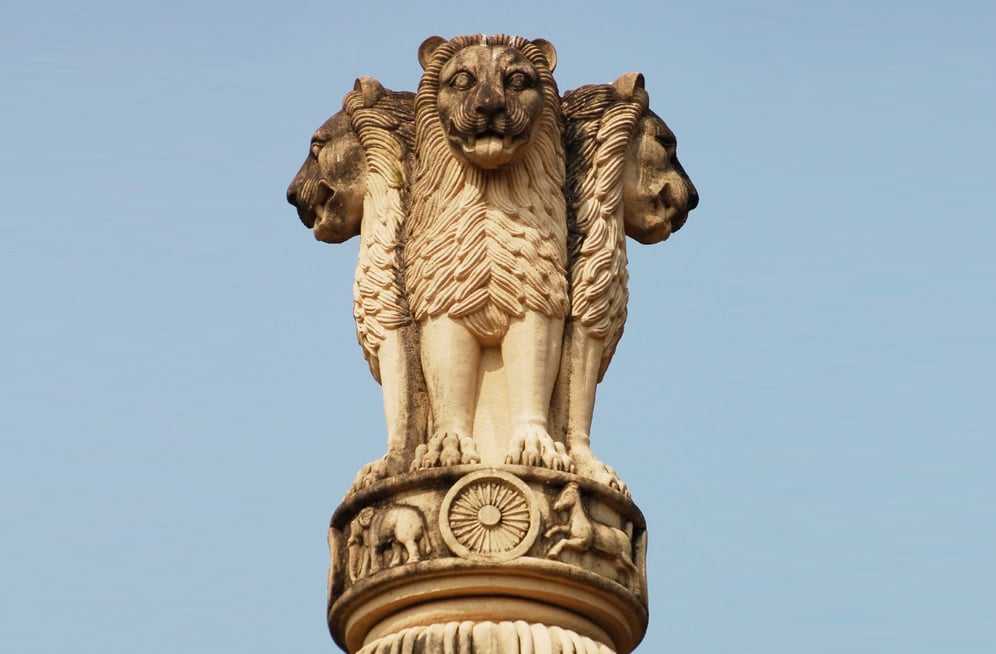
The Capital of an Ashoka pillar of Sarnath, Uttar Pradesh, India. Creative Commons Attribution-Share Alike 4.0 International license
Ashoka’s empire, called the Mauryan Empire, was huge; it took in most of modern-day India and part of Bangladesh as well as portions of what is now Pakistan, Afghanistan, and Iran.
In this post I’d like to talk more about the edicts of Ashoka and what some of the inscriptions say.
Ashoka’s Edict on Religious Tolerance
One of the most famous edict of Ashoka is the twelfth major rock edict, as archeologists label them. This is the earliest known call for religious tolerance in human history.
The Mauryan Empire was religiously diverse. The main religions were Buddhism, Hinduism, and Jainism, but in the western sections of the empire there must also have been Zoroastrianism and other Persian religions, and possibly Hellenic religions as well.
In the twelfth rock edict, Ashoka proclaimed that he honored both ascetics and householders of all religions and called for growth in the essentials of all religions. This growth might happen in many ways, but they all have at their root restraint in speech; not praising one’s own religion while condemning others without good cause. And if there is cause for criticism, let it be expressed gently.
Honoring other religions is beneficial, Ashoka continued, because it reflects well on one’s own religion as well as the religions of others. Likewise, hate speech against other religions reflects badly on one’s own religion as well as the religions of others. Whoever praises his own religion and condemns others with the thought “Let me glorify my own religion,” only harms his own religion. Therefore, one should listen to and respect the doctrines professed by others. All should be educated in the good doctrines of other religions, Ashoka said.
The Conversion of Ashoka
In the thirteenth major rock edict, Ashoka spoke of his conversion to Buddhism. This is a famous story in India that’s even been made into a major motion picture — Aśoka (2001), directed by Santosh Sivan.
In this edict, Ashoka confessed that early in his royal career he had been a brutal conqueror. Engaging in violent invasions appears to have been expected of royalty in those days. He described his conquest of Kalinga (near today’s Odisha, a state of India on the Bay of Bengal), which probably happened about 260 BCE. When he looked upon what he had done he was deeply pained by the wholesale slaughter and suffering of the survivors, he said.
There is no where that people are not devoted to one another, Ashoka continued. The wanton killing of warfare causes much pain to those who survive. It may be that a ruler must punish people for wrongdoing. But henceforth, Ashoka said, he would do this with restraint and impartiality, and without causing physical harm, if possible.
Instead of violent conquest, Ashoka dedicated himself to the dharma.
A Note on the Word Dharma
The word dharma (Sanskrit) appears in nearly every edict. (The edicts written in Pali would have used the Pali variation of the word, dhamma.) Exactly what did Ashoka mean by dharma?
The word dharma first appeared in the Vedas, the most ancient scriptures of Hinduism. Its root word, dham, means “to uphold” or “to support.” Sometimes dharma refers to the force or principle that upholds the natural order of the universe. In Hinduism it also refers to the spiritual disciplines that uphold a moral and righteous life.
In Buddhism, dharma often refers to the teachings of the Buddha, among other things. As Buddhists use the word, it means the great, ineffable truth of the teachings, not just doctrines.
But no extant edict of Ashoka explicitly teaches Buddhist doctrines, and only two mention the Buddha. Instead, the edicts talk about dharma. “What is dharma?” asks the first pillar edict. “Little evil, much good, kindness, generosity, truthfulness and purity.” Ashoka was much more concerned about his people’s behavior than about their beliefs.
Ashoka’s Dharma
What follows is speculation on my part. Ashoka lived at roughly the same time as the composition of the great Hindu scripture, the Bhagavad Gita. Scholars disagree on when the Gita was written, but 3rd-2nd century BCE is a common estimate. In the Gita, the word dharma often is used to mean “sacred duty.” The scripture is a dialogue between the noble warrior Arjuna and the god Krishna, and a large part of the conversation is about duty and what Arjuna must do to uphold righteousness and the natural order of things.
I think this sense of the word dharma works in Ashoka’s edicts, even though it’s not a sense much used by Buddhists in the centuries since. Throughout the edicts he invokes dharma to tell his people to be kind, to be generous, to take care of each other. This is a sacred duty we all share.
Emissaries and Mahamatras
Ashoka used dharma as a diplomatic tool. In the 13th major rock edict he described sending emissaries carrying his edicts to the rulers of other states, as far away as Egypt and Macedonia. Instead of conquest by armies, he would wage conquest by dharma.
We have no record of how most of the emissaries were received. However, the mission to Sri Lanka was a rousing success. Sri Lankan records tell us that Ashoka’s own son and daughter, a monk and a nun, came to Sri Lanka and converted the king to Buddhism. Theravada Buddhism, today the dominant school of Buddhism found in southeast Asia, is believed to have evolved from the Buddhism that Ashoka’s children established in Sri Lanka.
The fifth rock edict tells us that Ashoka appointed dharma *mahamatras—*dharma officials—to work among the Greeks and other people in his far western empire. The mahamatras were charged with the promotion of dharma and the welfare and happiness of all those devoted to dharma. This is significant because, after Ashoka, Buddhism would blossom on the western part of the Mauryan Empire—today’s Pakistan and Afghanistan. By the 1st century, Buddhism was the dominant religion there. It’s believed Buddhism may have been practiced in the Swat Valley of Pakistan as late as the 11th century.
After Ashoka
Beginning in the 1st century, Buddhist monks from what is now Afghanistan and Pakistan followed Silk Road merchants into China. Monks traveled to China from India, also, but most of the early Buddhist missionaries into China came from central Asia and were instrumental in establishing Buddhism in China. From China, Buddhism spread into Korea, Vietnam, and Japan. This is a story I tell in more detail in my book, The Circle of the Way: A Concise History of Zen from the Buddha to the Modern World (Shambhala, 2019).
Previous Post

August 12, 2022
The Mystery of the Pillars of Ashoka
Next Post
August 18, 2022 Jews in Colonial America
Browse Our Archives
Select a Category Buddhism Christianity Daoism Hinduism Indigenous religions Islam Jaina Judaism Mysticism New Age Origins of religion Paganism Popes Popular Religious Movements Protestantism Psychology and religion Religion and current events Religion and folklore Religion and News Media Religion and politics Religious Art and Music Religious Freedom Religious mistakes Religious philosophy Religious scriptures Religious Violence science and religion Spiritualism Technology and religion The Catholic Church The Dalai Lama The Reformation Uncategorized
Select a Month November 2026 October 2026 September 2026 August 2026 July 2026 June 2026 April 2026 March 2026 February 2026 January 2026 December 2025 November 2025 October 2025 September 2025 August 2025 July 2025 June 2025 May 2025 April 2025 March 2025 February 2025 January 2025 December 2024 November 2024 October 2024 September 2024 August 2024 July 2024 June 2024 May 2024 April 2024 March 2024 February 2024 January 2024 December 2023 November 2023 October 2023 September 2023 August 2023 July 2023 June 2023 May 2023 April 2023 March 2023 February 2023 January 2023 December 2022 November 2022 October 2022 September 2022 August 2022
Follow Us!
TAKE THE
Religious Wisdom Quiz
What did Jeremiah see in his first vision as a young prophet?
Select your answer to see how you score.
A burning coal A lion A scroll An almond branch
Related posts from The Religious History Nerd
Stop Putting Fake Quotes in the Buddha's Mouth
The Kalama Sutta: What the Buddha Didn't Say

Sarvastivada: An Extinct Buddhist Sect That's Still With...
TRENDING AT PATHEOS History and Religion

An Advent Calendar, and a Tree full of...
I've spent the weekend deeply invested in internet drama about a $150...

How to Have Financial Transparency in Marriage
Despite the fact that financial issues and money problems are the number...
The Healing Power of Forgiveness in Marriage
Learning how to give and accept apologies are essential ingredients of a...

The West's Christian Moral Inheritance: A Legacy Denied
Whether we like it or not, our environment matters, shaping us both...

How Does Tôḏâ Connect Florida & Thanksgiving?
The big news this weekend has been about the continued flooding on...

Were Early Christians Drinking Psychedelic Wine?
The Secret Sacrament the Church Took Away The early Christian church was...
view all History and Religion blogs
Ad-Free & Subscriber Log-In Subscription Support
- About Us
- 2026 Calendar
- Videos
- Podcasts
- Library of World Religions
- Faith In Media Tracker
- Advertise With Us
- Write for Us
- Privacy Policy
- Terms of Service
- Do Not Sell My Data
- Contact Us
- Radiant Digital
- Manage Newsletter Subscriptions
- Unsubscribe From Notifications
- Sitemap
Copyright 2008-2026, Patheos. All rights reserved.
Subscription Support Ad-Free & Subscriber Log-In
Follow Patheos