
BuddhistCatholicContemplativeEvangelicalGeneral ChristianHinduJewishLatter-day SaintMuslimNew VisionsProgressive Christian
Beliefs
- Buddhist
- Catholic
- Contemplative
- Evangelical
- General Christian
- Hindu
- Jewish
- Latter-day Saint
- More Voices
- Muslim
- New Visions
- Pagan
- Progressive Christian
Topics
- Religion News
- Food and Religion
- Sports and Religion
- Religious Art
- Religious Music and Entertainment
- Religious Events
- History and Religion
- Style and Religion
- Politics and Religion
- Women in Religion
- Recreation Outdoors and Religion
- Business Finance and Religion
- Careers Workplace and Religion
- Education and Religion
- Family Parenting and Religion
- Health Fitness and Religion
- Home and Religion
- Relationships and Religion
- Technology and Religion
- Travel and Religion
Columnists
- Buddhist Columnists
- Business Finance and Religion Columnists
- Careers Workplace and Religion Columnists
- Catholic Columnists
- Contemplative Columnists
- Education and Religion Columnists
- Evangelists Columnists
- Family Parenting and Religion Columnists
- General Christian Columnists
- Health Fitness and Religion Columnists
- Hindu Columnists
- History and Religion Columnists
- Home and Religion Columnists
- Jewish Columnists
- More Voices Columnists
- Latter Day Columnists
- Muslim Columnists
- New Visions Columnists
- Nonreligious Columnists
- Pagan Columnists
- Politics and Religion Columnists
- Progressive Columnists
- Recreation Outdoors and Religion Columnists
- Relationships and Religion Columnists
- Religion News Columnists
- Religious Art Columnists
- Religious Events Columnists
- Religious Music and Entertainment Columnists
- Sports and Religion Columnists
- Style and Religion Columnists
- Technology and Religion Columnists
- Travel and Religion Columnists
- Women in Religion Columnists
Resource Library
- 2026 Calendar
- Library of World Religions
- The 100 Most Holy Places on Earth
- Patheos Answers
- Podcasts
- Videos
- Faith Leaders Database
- Anglican Episcopalian
- Bahai
- Baptist
- Buddhism
- Christianity
- Confucianism
- Eastern Orthodoxy
- Hinduism
- Holiness and Pentecostal
- ISKCON
- Islam
- Judaism
- Lutheran
- Methodist
- The Church of Jesus Christ of Latter-day Saints
- New Age
- Paganism
- Presbytarian and Reformed
- Protestantism
- Religion Behind the Scenes
- Roman Catholic
- Scientology
- Shia Islam
- Sikhism
- Sufism
- Sunni Islam
- Taoism
- Zen
- See all religions
Research Tools
 Ad-Free & Subscriber Log-In Subscription Support
Ad-Free & Subscriber Log-In Subscription Support
Follow Patheos 

- Trending:
- Forgiveness
- |
- Marriage
- |
- Consciousness
- |
- Death Penalty
- |
- Election
- |
- Halloween

- Home
- Catholic
- Education and Religion
- Who Was Qohelet? The Mystery Behind Ecclesiastes
Who Was Qohelet? The Mystery Behind Ecclesiastes
Last updated on: June 3, 2026 at 1:36 pm by William Hemsworth
Who Was Qohelet? The Mystery Behind Ecclesiastes 2026-06-03T13:36:18-07:00 William Hemsworth
Patheos Explore the world's faith through different perspectives on religion and spirituality! Patheos has the views of the prevalent religions and spiritualities of the world.
Among the books of the Old Testament, few are as intriguing, philosophical, and mysterious as Ecclesiastes. Known in Hebrew as Qohelet, this book wrestles with some of humanity’s deepest questions: What is the meaning of life? Why do the righteous suffer? Does wisdom ultimately provide lasting satisfaction? These questions have captivated readers for centuries, but another mystery remains just as compelling: Who was Qohelet?
The Hebrew title Qohelet has traditionally been translated as “Preacher” or “Teacher,” though scholars note that the word can also mean “one who assembles” or “speaker in the assembly.” The Greek translators of the Septuagint rendered the title as Ekklesiastes, from which the English title Ecclesiastes is derived. While the identity of Qohelet remains uncertain, the clues found within the text have fueled centuries of debate.
The Traditional View: Solomon as Qohelet
The traditional understanding of Ecclesiastes identifies King Solomon as its author. This interpretation is based largely on the opening verse:
“The words of the Preacher, the son of David, king in Jerusalem” (Ecclesiastes 1:1, ESV-CE).
The description appears to point directly to Solomon. He was the son of David, ruled in Jerusalem, and was renowned throughout the ancient world for his wisdom. Throughout Christian history, this Solomonic authorship was largely unquestioned. In fact, until the time of Martin Luther, most Christians accepted Solomon as the author of Ecclesiastes.
Several passages within the book seem to reinforce this conclusion. Ecclesiastes 1:16 speaks of extraordinary wisdom, something uniquely associated with Solomon:
“I have acquired great wisdom, surpassing all who were over Jerusalem before me.”
Likewise, Ecclesiastes 2:4-11 describes extensive building projects, wealth, gardens, and servants. These accomplishments mirror the grandeur attributed to Solomon in the books of Kings and Chronicles.
Another fascinating connection comes from the Hebrew root qhl, from which Qohelet is derived. This root often refers to gathering or assembling people. In 1 Kings 8, Solomon gathers Israel together for the dedication of the Temple. The image of a king addressing the assembled people aligns naturally with the title Qohelet.
Even Jewish tradition frequently associated Ecclesiastes with Solomon. Although the Talmud preserves differing opinions regarding authorship, Solomon remained a prominent candidate in both Jewish and Christian interpretation.
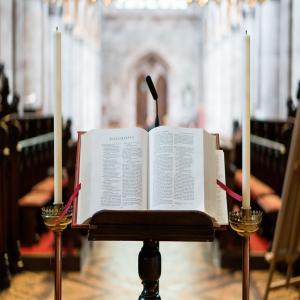
Image by BeyondJ from Pixabay
The Challenges to Solomonic Authorship
While the traditional view has considerable support, modern scholarship generally questions whether Solomon actually wrote Ecclesiastes.
One of the most significant challenges comes from Ecclesiastes 1:12:
“I the Preacher have been king over Israel in Jerusalem.”
The phrase “have been king” appears to place the author’s reign in the past. This presents a difficulty because Solomon remained king until his death. Many scholars argue that if Solomon were writing personally, he would likely speak of his reign in the present tense.
Other translations make the issue even more apparent. The New Revised Standard Version uses “when I was king,” while the New International Version similarly employs past-tense language. Such wording suggests that the author may be reflecting on Solomon’s life rather than speaking as Solomon himself.
Additionally, the strong emphasis on wisdom begins to shift in the latter portions of the book. While the opening chapters focus heavily on wisdom and royal accomplishments, later chapters broaden into philosophical reflections that seem less tied to Solomon’s personal experiences.
As a result, many scholars propose that an anonymous writer adopted a literary persona modeled after Solomon. By writing in the voice of Israel’s wisest king, the author could explore life’s deepest questions with greater authority and impact.
Linguistic Clues and a Later Date
Perhaps the strongest evidence against Solomonic authorship comes from the language of Ecclesiastes itself.
Scholars have identified several words and expressions that appear to reflect a post-exilic period, centuries after Solomon’s reign. Some terms may show Persian influence, particularly words associated with administration and royal parks. Examples often cited include references found in Ecclesiastes 2:5 and 8:11.
These linguistic features suggest that Ecclesiastes may have been written during the Persian period, after the Babylonian exile. If this dating is correct, Solomon could not have been the actual author.
The book also contains grammatical features that resemble later Hebrew and occasional Aramaic influences. Furthermore, the themes and language often echo earlier Old Testament traditions, including creation narratives, wisdom literature, and reflections on mortality that would have been familiar to later Jewish audiences.
For many scholars, these linguistic clues point toward a learned Jewish writer who lived centuries after Solomon and used the king’s voice as a literary framework.
Why Use Solomon’s Voice?
If Solomon did not write Ecclesiastes, why would an author present the book in a Solomonic style?
One reason may be theological. Solomon represented the pinnacle of human wisdom, wealth, power, and achievement. If even Solomon could not find ultimate fulfillment in earthly pursuits, then the message becomes universal.
The book repeatedly emphasizes that wealth, pleasure, knowledge, and accomplishment ultimately fail to satisfy the deepest longings of the human heart. By placing these reflections on the lips of Israel’s wisest king, the author drives home a powerful lesson: if Solomon found these pursuits insufficient, no one else will find lasting fulfillment in them either.
Rather than attacking wisdom, Ecclesiastes invites readers to recognize its limits. Wisdom is valuable, but it is not enough by itself to answer every mystery of life.
The Enduring Mystery of Qohelet
Despite centuries of study, the true identity of Qohelet remains unknown. The evidence for Solomon is compelling at first glance, yet linguistic and historical considerations point many scholars toward a later author.
What remains clear is that the book’s message does not depend entirely on knowing its author. Ecclesiastes continues to speak powerfully across generations because it addresses universal human experiences: joy and sorrow, success and failure, life and death.
Qohelet stands as a wise teacher who refuses to offer easy answers. Instead, he invites readers into a deeper reflection on life’s meaning and ultimately directs them toward reverence for God.
The book concludes with perhaps its most important lesson:
“Fear God and keep his commandments, for this is the whole duty of man” (Ecclesiastes 12:13).
Whether Solomon himself wrote those words or an anonymous sage speaking in his tradition, the message remains timeless. The mystery of Qohelet may never be solved, but his wisdom continues to challenge and inspire all who seek meaning under the sun.
General Christian
Education and Religion
Relationships and Religion
Previous Post
June 1, 2026
Newly Ordained Wisconsin Priest Seeks Air Force Chaplaincy
Next Post

June 9, 2026 Newly Ordained Deacon Has Hopes of Being Navy Chaplain
Recent Comments
"Excellent presentation. I have found that what matters most is the "posture" of the heart ..."
"I agree with you 100%. The bishops have instructed everyone to receive on the hand ..."
"After seeing exactly how screwed up Christian Conservatives are, worshipping a man that is immorral. ..."
You Are With Jesus Or With ..."
"Jesus or Beelzebul? I'll take curtain three, thank you. I don't DO Fear religions."
You Are With Jesus Or With ..."
Browse Our Archives
Select a Category Uncategorized
Select a Month October 2026 September 2026 August 2026 July 2026 June 2026 May 2026 April 2026 March 2026 February 2026 January 2026 December 2025 November 2025 October 2025 September 2025 August 2025 July 2025 June 2025 May 2025 April 2025 March 2025 February 2025 January 2025 December 2024 November 2024 October 2024 September 2024 August 2024 July 2024 June 2024 May 2024 April 2024 March 2024 February 2024 January 2024 December 2023 November 2023 October 2023 September 2023 August 2023 May 2023 April 2023 March 2023 February 2023 January 2023 December 2022 November 2022 October 2022 September 2022 August 2022 July 2022 June 2022 May 2022 April 2022 March 2022 February 2022 January 2022 December 2021 November 2021 October 2021 March 2021 February 2021 January 2021 December 2020 November 2020 October 2020 September 2020 August 2020 July 2020 June 2020 May 2020 April 2020 March 2020 February 2020 January 2020
Follow Us!
TAKE THE
Religious Wisdom Quiz
Which book records the walls of Jerusalem being rebuilt?
Select your answer to see how you score.
Haggai Malachi Nehemiah Ezra
Related posts from The Pursuit of Holiness

The First Eucharistic Controversy: Christ’s Real Presence

Archdiocese Hosts Military Marriage Retreat in Germany

Ascension Releases New Edition of Dr. Edward Sri...

Archbishop Broglio Issues Statement on Execution Livestream
TRENDING AT PATHEOS Catholic

The Problem with False Prophets
Miller’s Station UMC| 10/18/26| Anchor Verse: Jeremiah 23: 1, 9-23 I...

Emotion in Early Christianity by Andrew Crislip
Andrew Crislip’s Emotion in Early Christianity examines an often overlooked dimension of...

16 Spiritual Touchstones for a More Grounded Life
After decades of spiritual study, here are 16 principles I try...

Catholic Evangelization: Sharing Your Faith Every Day
Welcome back to the Graceful Awakening mini-series called, “From Faith to Mission.” ...

The Pillar of the Boatmen: the Ancient Monument...
The Pillar of the Boatmen is a Romano-Gaulish sculpture that dates from...

In one sense walking into Westminster Abbey is like walking down the...
view all Catholic blogs
What Are Your Thoughts?leave a comment
Ad-Free & Subscriber Log-In Subscription Support
- About Us
- 2026 Calendar
- Videos
- Podcasts
- Library of World Religions
- Faith In Media Tracker
- Advertise With Us
- Write for Us
- Privacy Policy
- Terms of Service
- Do Not Sell My Data
- Contact Us
- Radiant Digital
- Manage Newsletter Subscriptions
- Unsubscribe From Notifications
- Sitemap
Copyright 2008-2026, Patheos. All rights reserved.
Subscription Support Ad-Free & Subscriber Log-In
Follow Patheos