
BuddhistCatholicContemplativeEvangelicalGeneral ChristianHinduJewishLatter-day SaintMuslimNew VisionsProgressive Christian
Beliefs
- Buddhist
- Catholic
- Contemplative
- Evangelical
- General Christian
- Hindu
- Jewish
- Latter-day Saint
- More Voices
- Muslim
- New Visions
- Pagan
- Progressive Christian
Topics
- Religion News
- Food and Religion
- Sports and Religion
- Religious Art
- Religious Music and Entertainment
- Religious Events
- History and Religion
- Style and Religion
- Politics and Religion
- Women in Religion
- Recreation Outdoors and Religion
- Business Finance and Religion
- Careers Workplace and Religion
- Education and Religion
- Family Parenting and Religion
- Health Fitness and Religion
- Home and Religion
- Relationships and Religion
- Technology and Religion
- Travel and Religion
Columnists
- Buddhist Columnists
- Business Finance and Religion Columnists
- Careers Workplace and Religion Columnists
- Catholic Columnists
- Contemplative Columnists
- Education and Religion Columnists
- Evangelists Columnists
- Family Parenting and Religion Columnists
- General Christian Columnists
- Health Fitness and Religion Columnists
- Hindu Columnists
- History and Religion Columnists
- Home and Religion Columnists
- Jewish Columnists
- More Voices Columnists
- Latter Day Columnists
- Muslim Columnists
- New Visions Columnists
- Nonreligious Columnists
- Pagan Columnists
- Politics and Religion Columnists
- Progressive Columnists
- Recreation Outdoors and Religion Columnists
- Relationships and Religion Columnists
- Religion News Columnists
- Religious Art Columnists
- Religious Events Columnists
- Religious Music and Entertainment Columnists
- Sports and Religion Columnists
- Style and Religion Columnists
- Technology and Religion Columnists
- Travel and Religion Columnists
- Women in Religion Columnists
Resource Library
- 2026 Calendar
- Library of World Religions
- The 100 Most Holy Places on Earth
- Patheos Answers
- Podcasts
- Videos
- Faith Leaders Database
- Anglican Episcopalian
- Bahai
- Baptist
- Buddhism
- Christianity
- Confucianism
- Eastern Orthodoxy
- Hinduism
- Holiness and Pentecostal
- ISKCON
- Islam
- Judaism
- Lutheran
- Methodist
- The Church of Jesus Christ of Latter-day Saints
- New Age
- Paganism
- Presbytarian and Reformed
- Protestantism
- Religion Behind the Scenes
- Roman Catholic
- Scientology
- Shia Islam
- Sikhism
- Sufism
- Sunni Islam
- Taoism
- Zen
- See all religions
Research Tools
 Ad-Free & Subscriber Log-In Subscription Support
Ad-Free & Subscriber Log-In Subscription Support
Follow Patheos 

- Trending:
- Forgiveness
- |
- Marriage
- |
- Consciousness
- |
- Death Penalty
- |
- Election
- |
- Halloween

- Home
- Catholic
- Relationships and Religion
- Understanding Material Cooperation with Evil
Understanding Material Cooperation with Evil
Last updated on: July 1, 2026 at 10:12 am by William Hemsworth
Understanding Material Cooperation with Evil 2026-07-01T10:12:57-07:00 William Hemsworth
Patheos Explore the world's faith through different perspectives on religion and spirituality! Patheos has the views of the prevalent religions and spiritualities of the world.
One of the greatest strengths of Catholic moral theology is that it refuses to reduce moral decision-making to simple slogans. Life often presents difficult situations where every available option carries suffering or undesirable consequences. Rather than ignoring these realities, the Church has developed principles that help Christians discern how to act faithfully in a fallen world.
Among the most important of these principles are material cooperation with evil and the Principle of Double Effect (PDE). These concepts are frequently misunderstood, yet they are essential for evaluating complex moral situations in medicine, business, politics, and everyday life. They remind us that while evil should never be chosen, not every association with wrongdoing carries the same moral responsibility.
Material Cooperation with Evil
When someone assists another person in committing a wrongful act without sharing the person’s evil intention, Catholic theology refers to this as material cooperation. Unlike formal cooperation, where a person agrees with and wills the evil action, material cooperation involves assistance while disapproving of the act itself.
Even then, material cooperation is not treated as a single category. The Church distinguishes between different levels of cooperation because not every type of assistance carries the same degree of moral responsibility.
Immediate Material Cooperation
Immediate material cooperation occurs when a person contributes directly to the immoral act itself while rejecting the evil intention. Although the individual may not desire the wrongdoing, his or her actions are so closely connected to the evil act that such cooperation is ordinarily considered morally impermissible.
For example, a medical professional who directly assists in an elective abortion while personally believing abortion is wrong would still be immediately cooperating in the act. The lack of agreement with the abortion does not eliminate the objective participation in the wrongful action.
The closeness of the assistance makes this form of cooperation morally unacceptable.
Mediate Material Cooperation
Mediate material cooperation refers to assistance that is more indirect. The individual’s actions contribute in some way to circumstances surrounding the immoral act rather than constituting the act itself.
Catholic theology further distinguishes between proximate and remote mediate cooperation.
Proximate Mediate Cooperation
Proximate mediate cooperation remains closely connected to the immoral act and is generally considered morally wrong because the assistance substantially enables the wrongdoing.
One example might be helping manufacture Sarin gas. Since such a chemical weapon exists solely to inflict grave harm, participating in its production cannot ordinarily be justified. Even if one does not approve of its use, the cooperation is too closely connected to an intrinsically evil purpose.
This illustrates an important point: certain activities exist exclusively for evil ends. Participation in those activities cannot ordinarily be separated from the evil they are designed to accomplish.
Remote Mediate Cooperation
Remote mediate cooperation involves assistance that is more distant from the immoral act. In some circumstances, this type of cooperation may be morally permissible if there is a proportionately serious reason and no reasonable alternative exists.
Consider the example of a janitor employed at a factory that manufactures Sarin gas. The janitor neither designs nor produces the weapon and has no desire for its use. Suppose employment opportunities are virtually nonexistent, and losing the job would prevent the individual from feeding his or her family.
This is precisely why Catholic moral theology examines the entire situation rather than making quick judgments. Factors such as necessity, distance from the evil act, available alternatives, and the gravity of the reason all matter.
The Church does not excuse evil, but it recognizes that people sometimes find themselves in situations where avoiding every indirect connection to wrongdoing may be impossible.
As Pope St. John Paul II reminds us in Veritatis Splendor:
“In this view, deliberate consent to certain kinds of behavior declared illicit by traditional moral theology would not imply an objective moral evil.” (Veritatis Splendor, 75)
The Holy Father rejects this line of reasoning because objective moral truths cannot simply be redefined according to personal circumstances or intentions.

Image by OpenClipart-Vectors from Pixabay
The Principle of Double Effect
Another essential principle in Catholic ethics is the Principle of Double Effect. This principle addresses situations where one morally good action has both a good effect and an unintended harmful effect.
The Principle of Double Effect is often misunderstood as a loophole that allows people to justify almost anything. In reality, it imposes strict conditions.
For an action to satisfy the Principle of Double Effect:
- The action itself must be morally good or at least morally neutral.
- The good effect cannot be achieved through the evil effect.
- The evil effect must not be intended, even if it is foreseen.
- There must be a proportionately grave reason for permitting the unintended evil effect.
All four conditions must be satisfied.
A Difficult Medical Case
Perhaps the most well-known application of the Principle of Double Effect concerns certain medical emergencies during pregnancy.
Imagine a married couple with six children. While pregnant with their seventh child, the mother is diagnosed with aggressive uterine cancer. Physicians determine that unless the diseased uterus is removed immediately, the mother will die. Tragically, removing the uterus will also result in the death of the unborn child because the pregnancy cannot continue.
After much prayer, consultation, and anguish, the parents choose surgery.
From a Catholic perspective, this is not considered a direct abortion. The object of the act is the removal of a cancerous organ to save the mother’s life. The child’s death is foreseen but not intended. It is a tragic consequence rather than the means by which the mother’s life is saved.
The parents’ intention is not to end the pregnancy but to remove the cancer.
This differs fundamentally from an elective abortion in which the death of the unborn child is precisely the intended means of resolving the pregnancy.
The distinction may appear subtle, but morally it is profound. Catholic ethics evaluates not only consequences but also the nature of the act itself and the intention behind it.
Why Intent Alone Is Not Enough
Modern culture often suggests that good intentions automatically make actions morally acceptable.
Catholic moral theology disagrees.
A good intention cannot transform an intrinsically evil act into a good one. Likewise, a good outcome does not justify choosing an immoral means.
This understanding protects human dignity by insisting that some actions remain objectively wrong regardless of circumstances or expected benefits.
The Challenge of Proportionalism
Much of Pope St. John Paul II’s encyclical Veritatis Splendor responds to a moral theory known as proportionalism.
Proportionalists argue that actions should be judged primarily by weighing their anticipated consequences. The morally correct decision becomes the one that produces the greatest overall good or the least amount of evil.
While this approach may appear compassionate or practical, it introduces a dangerous problem.
If moral judgments depend entirely upon balancing outcomes, then acts traditionally considered intrinsically evil—such as murder, adultery, euthanasia, or abortion—could theoretically become acceptable whenever someone believes enough good will result.
This effectively removes objective moral norms and replaces them with individual calculations of utility.
Pope St. John Paul II strongly rejected proportionalism because it undermines the existence of intrinsically evil acts and weakens the moral law revealed by God and knowable through reason.
As Veritatis Splendor teaches, certain actions are always incompatible with authentic human flourishing because they violate the dignity of the human person.
Living with Moral Clarity
The Church recognizes that Christians will encounter extraordinarily difficult moral dilemmas. These situations require wisdom, prayer, and careful discernment rather than simplistic answers.
Material cooperation and the Principle of Double Effect demonstrate that Catholic moral theology is both intellectually rigorous and deeply compassionate. It recognizes the complexity of real life while refusing to abandon objective moral truth.
Ultimately, these principles remind us that morality is about far more than outcomes. It involves the object of our actions, our intentions, the circumstances we face, and above all our desire to remain faithful to Christ.
In a world that increasingly measures right and wrong by personal preference or perceived benefit, Catholic moral theology continues to proclaim that truth is not determined by consequences alone. Rather, authentic freedom is found in choosing what is truly good, even when that choice is difficult.
General Christian
Relationships and Religion
Family, Parenting and Religion
Previous Post

June 26, 2026
Nation’s 250th Birthday Brings Scouts Together in Prayer
Next Post

July 7, 2026 Daniel Wiseman Named Belmont Abbey VP
Recent Comments
"Excellent presentation. I have found that what matters most is the "posture" of the heart ..."
"I agree with you 100%. The bishops have instructed everyone to receive on the hand ..."
"After seeing exactly how screwed up Christian Conservatives are, worshipping a man that is immorral. ..."
You Are With Jesus Or With ..."
"Jesus or Beelzebul? I'll take curtain three, thank you. I don't DO Fear religions."
You Are With Jesus Or With ..."
Browse Our Archives
Select a Category Uncategorized
Select a Month October 2026 September 2026 August 2026 July 2026 June 2026 May 2026 April 2026 March 2026 February 2026 January 2026 December 2025 November 2025 October 2025 September 2025 August 2025 July 2025 June 2025 May 2025 April 2025 March 2025 February 2025 January 2025 December 2024 November 2024 October 2024 September 2024 August 2024 July 2024 June 2024 May 2024 April 2024 March 2024 February 2024 January 2024 December 2023 November 2023 October 2023 September 2023 August 2023 May 2023 April 2023 March 2023 February 2023 January 2023 December 2022 November 2022 October 2022 September 2022 August 2022 July 2022 June 2022 May 2022 April 2022 March 2022 February 2022 January 2022 December 2021 November 2021 October 2021 March 2021 February 2021 January 2021 December 2020 November 2020 October 2020 September 2020 August 2020 July 2020 June 2020 May 2020 April 2020 March 2020 February 2020 January 2020
Follow Us!
TAKE THE
Religious Wisdom Quiz
I prayed while serving wine to the king, and my sad face led to permission for my mission. Who am I?
Select your answer to see how you score.
Daniel Ezra Mordecai Nehemiah
Related posts from The Pursuit of Holiness

Ascension Releases New Edition of Dr. Edward Sri...

Archbishop Broglio Issues Statement on Execution Livestream
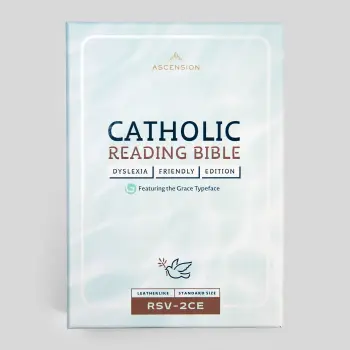
Ascension's New Catholic Bible for Readers with Dyslexia

TRENDING AT PATHEOS Catholic

The Sermon on the Mount, Part I: Matthew...
The Sermon on the Mount, Part I (Matthew 4:12-5:12) St. Matthew moves...

What's up from Crossway: Reviewing some of their latest A few weeks...

Janie Learns the Way of the Cross: A...
Teaching children about Jesus' Passion can be challenging. Many parents and educators...

Looking For Good Catholic Writing - October 2026
He alone extends the heavens, and he walks upon the waves of...

In "Irreplaceable," our book on vocation and technology, Trevor Sutton and I...

I was strolling through the top floor of the brand new Parthenon...
view all Catholic blogs
What Are Your Thoughts?leave a comment
Ad-Free & Subscriber Log-In Subscription Support
- About Us
- 2026 Calendar
- Videos
- Podcasts
- Library of World Religions
- Faith In Media Tracker
- Advertise With Us
- Write for Us
- Privacy Policy
- Terms of Service
- Do Not Sell My Data
- Contact Us
- Radiant Digital
- Manage Newsletter Subscriptions
- Unsubscribe From Notifications
- Sitemap
Copyright 2008-2026, Patheos. All rights reserved.
Subscription Support Ad-Free & Subscriber Log-In
Follow Patheos