
BuddhistCatholicContemplativeEvangelicalGeneral ChristianHinduJewishLatter-day SaintMuslimNew VisionsProgressive Christian
Beliefs
- Buddhist
- Catholic
- Contemplative
- Evangelical
- General Christian
- Hindu
- Jewish
- Latter-day Saint
- More Voices
- Muslim
- New Visions
- Pagan
- Progressive Christian
Topics
- Religion News
- Food and Religion
- Sports and Religion
- Religious Art
- Religious Music and Entertainment
- Religious Events
- History and Religion
- Style and Religion
- Politics and Religion
- Women in Religion
- Recreation Outdoors and Religion
- Business Finance and Religion
- Careers Workplace and Religion
- Education and Religion
- Family Parenting and Religion
- Health Fitness and Religion
- Home and Religion
- Relationships and Religion
- Technology and Religion
- Travel and Religion
Columnists
- Buddhist Columnists
- Business Finance and Religion Columnists
- Careers Workplace and Religion Columnists
- Catholic Columnists
- Contemplative Columnists
- Education and Religion Columnists
- Evangelists Columnists
- Family Parenting and Religion Columnists
- General Christian Columnists
- Health Fitness and Religion Columnists
- Hindu Columnists
- History and Religion Columnists
- Home and Religion Columnists
- Jewish Columnists
- More Voices Columnists
- Latter Day Columnists
- Muslim Columnists
- New Visions Columnists
- Nonreligious Columnists
- Pagan Columnists
- Politics and Religion Columnists
- Progressive Columnists
- Recreation Outdoors and Religion Columnists
- Relationships and Religion Columnists
- Religion News Columnists
- Religious Art Columnists
- Religious Events Columnists
- Religious Music and Entertainment Columnists
- Sports and Religion Columnists
- Style and Religion Columnists
- Technology and Religion Columnists
- Travel and Religion Columnists
- Women in Religion Columnists
Resource Library
- 2026 Calendar
- Library of World Religions
- The 100 Most Holy Places on Earth
- Patheos Answers
- Podcasts
- Videos
- Faith Leaders Database
- Anglican Episcopalian
- Bahai
- Baptist
- Buddhism
- Christianity
- Confucianism
- Eastern Orthodoxy
- Hinduism
- Holiness and Pentecostal
- ISKCON
- Islam
- Judaism
- Lutheran
- Methodist
- The Church of Jesus Christ of Latter-day Saints
- New Age
- Paganism
- Presbytarian and Reformed
- Protestantism
- Religion Behind the Scenes
- Roman Catholic
- Scientology
- Shia Islam
- Sikhism
- Sufism
- Sunni Islam
- Taoism
- Zen
- See all religions
Research Tools
 Ad-Free & Subscriber Log-In Subscription Support
Follow Patheos 

- Trending:
- Advent
- |
- Forgiveness
- |
- Thanksgiving
- |
- Election
- |
- Seasonal Holidays
- |
- Marriage

- Home
- Catholic
- History and Religion
- When Faith Becomes Routine: A Reflection on the Prophet Amos
When Faith Becomes Routine: A Reflection on the Prophet Amos
Last updated on: April 27, 2026 at 7:03 pm by William Hemsworth
When Faith Becomes Routine: A Reflection on the Prophet Amos 2026-04-27T19:03:49-07:00 William Hemsworth
Patheos Explore the world's faith through different perspectives on religion and spirituality! Patheos has the views of the prevalent religions and spiritualities of the world.
The book of the prophet Amos, written in the 8th century B.C., stands as one of the earliest voices among the Minor Prophets, and one of the most piercing. Unlike many prophetic figures, Amos did not emerge from a priestly or royal background. Instead, he was a sheepherder from Tekoa who also identified himself as a grower of figs (Amos 1:1; 7:14). This combination is striking. Shepherding suggests humility and simplicity, while fig cultivation in the ancient world implied land ownership and relative prosperity. Amos, then, may have lived between two worlds, and both were aware of the struggles of the poor and familiar with the stability of wealth.
That dual perspective gives weight to his message.
Prosperity Without Justice
Amos prophesied during a time of economic expansion and relative peace. Trade routes flourished, and major powers like Egypt and Assyria were weakened, allowing Israel to thrive. Yet beneath this outward success was a deep moral decay. The kingdom was divided, and although Amos came from the southern kingdom, his message was directed toward the north and toward a people who had grown comfortable, complacent, and spiritually numb.
The heart of Amos’ message is found in a series of eight prophecies. The first seven condemn the surrounding nations, but the final, and most severe, is reserved for Israel itself. This structure is intentional. It draws the listener in, only to reveal that the greatest guilt lies not with outsiders, but with God’s own people.
The Danger of Empty Religion
What makes Amos especially relevant today is his critique of religious life. The Israelites were not irreligious. In fact, they were actively practicing their faith as they were offering sacrifices, observing rituals, and maintaining outward signs of devotion. Yet their lives told a different story.
They neglected the poor.
They abused power.
They pursued luxury at the expense of justice.
Because of this, God rejects their worship:
“I hate, I despise your feasts… even though you offer me your burnt offerings… I will not accept them” (Amos 5:21–22).
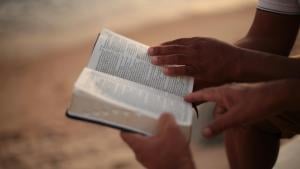
This is a sobering reality. The issue was not the rituals themselves, but the emptiness behind them. Their faith had become mechanical and something performed rather than lived. Their hearts, as Amos makes clear, were far from God.
A Higher Standard for a Chosen People
Amos reminds Israel that being chosen by God is not a privilege without responsibility, but a calling that demands more. Because they had received more, they were expected to live differently. Instead, those with wealth exploited the vulnerable, and society became marked by injustice.
This is where Amos cuts deepest: the very people entrusted with God’s covenant had reduced it to routine. Their external compliance masked an internal collapse.
Judgment and Hope
The message of Amos is undeniably heavy. Judgment is coming. The nation will fall. Yet this is not the end of the story.
God promises that a remnant will remain.
Even in the face of repeated failure, God does not abandon His covenant. His justice is real but so is His mercy. Out of destruction comes the promise of restoration, a future rooted not in empty ritual, but in authentic faith.
A Call to the Heart
At its core, Amos is not simply a book about ancient Israel, but it is a mirror. It forces us to ask difficult questions:
- Is my faith something I live, or something I perform?
- Do my actions reflect the God I claim to worship?
- Have comfort and routine replaced conviction and transformation?
Amos reminds us that God desires more than outward observance. He desires the heart.
This is captured powerfully in Amos 9:7, where God challenges Israel’s sense of superiority, reminding them that they are not above other nations simply by identity. What matters is not status, but fidelity.
Living Faith Today
It is tempting to reduce the message of Amos to a modern conversation about social justice alone. While the book certainly emphasizes care for the poor and the misuse of power, its deeper concern is spiritual integrity. True justice flows from a heart aligned with God.
The Israelites believed they were fulfilling their obligations. But their lives revealed otherwise. Their rituals had become barriers rather than bridges. They became empty gestures that masked a lack of true faith.
Amos calls us back to something deeper.
Not performance.
Not routine.
But transformation.
Final Thought
The warning of Amos is clear: faith without a changed heart leads to ruin. But the promise is just as powerful because God remains faithful, even when we are not.
The question is whether we are willing to let our faith move from ritual to reality.
Because in the end, God does not want part of us.
He wants all of us.
General Christian
History and Religion
Relationships and Religion
Previous Post

April 27, 2026
Sacred Heart Re-Releases Catholic Anxiety Guide
Next Post

April 28, 2026 32nd Blue Mass Honors First Responders in D.C.
Recent Comments
"Excellent presentation. I have found that what matters most is the "posture" of the heart ..."
"I agree with you 100%. The bishops have instructed everyone to receive on the hand ..."
"After seeing exactly how screwed up Christian Conservatives are, worshipping a man that is immorral. ..."
You Are With Jesus Or With ..."
"Jesus or Beelzebul? I'll take curtain three, thank you. I don't DO Fear religions."
You Are With Jesus Or With ..."
Browse Our Archives
Select a Category Uncategorized
Select a Month November 2026 October 2026 September 2026 August 2026 July 2026 June 2026 May 2026 April 2026 March 2026 February 2026 January 2026 December 2025 November 2025 October 2025 September 2025 August 2025 July 2025 June 2025 May 2025 April 2025 March 2025 February 2025 January 2025 December 2024 November 2024 October 2024 September 2024 August 2024 July 2024 June 2024 May 2024 April 2024 March 2024 February 2024 January 2024 December 2023 November 2023 October 2023 September 2023 August 2023 May 2023 April 2023 March 2023 February 2023 January 2023 December 2022 November 2022 October 2022 September 2022 August 2022 July 2022 June 2022 May 2022 April 2022 March 2022 February 2022 January 2022 December 2021 November 2021 October 2021 March 2021 February 2021 January 2021 December 2020 November 2020 October 2020 September 2020 August 2020 July 2020 June 2020 May 2020 April 2020 March 2020 February 2020 January 2020
Follow Us!
TAKE THE
Religious Wisdom Quiz
Which Christian principle is shown by the story of the widow's mite?
Select your answer to see how you score.
Never give Give only if rich Generosity from the heart Give to be seen
Related posts from The Pursuit of Holiness

CatholicTV Series: Six Black Catholics on Path to...
New Advent Journal Invites Catholics to Be Pilgrims
Inaugural Catholic Military Conference Opens in Virginia
The First Eucharistic Controversy: Christ’s Real Presence
TRENDING AT PATHEOS Catholic

John Piper's Definition of "Without Error"
For any of you who may not know, John Piper is a...

In 1943, as a young army recruit in Texas, George M....
How Do We Find Hope In A Crazy...
"Hope is the thing with feathers that perches in the soul, and...

The Adventurous Lectionary – Advent 2 - December...
The Adventurous Lectionary – The Second Sunday of Advent - December 6,...

Prioritizing Jesus This Advent
Miller’s Station UMC| 29 November 2026| Mathew 19:16-27 When we prioritize Jesus,...

A Subtle Indicator of Legalism
Legalism was invented by pastors who don’t want to be woken up...
view all Catholic blogs
What Are Your Thoughts?leave a comment
Ad-Free & Subscriber Log-In Subscription Support
- About Us
- 2026 Calendar
- Videos
- Podcasts
- Library of World Religions
- Faith In Media Tracker
- Advertise With Us
- Write for Us
- Privacy Policy
- Terms of Service
- Do Not Sell My Data
- Contact Us
- Radiant Digital
- Manage Newsletter Subscriptions
- Unsubscribe From Notifications
- Sitemap
Copyright 2008-2026, Patheos, part of the Radiant Digital network of media brands. All rights reserved.
Subscription Support Ad-Free & Subscriber Log-In
Follow Patheos