
BuddhistCatholicContemplativeEvangelicalGeneral ChristianHinduJewishLatter-day SaintMuslimNew VisionsProgressive Christian
Beliefs
- Buddhist
- Catholic
- Contemplative
- Evangelical
- General Christian
- Hindu
- Jewish
- Latter-day Saint
- More Voices
- Muslim
- New Visions
- Pagan
- Progressive Christian
Topics
- Religion News
- Food and Religion
- Sports and Religion
- Religious Art
- Religious Music and Entertainment
- Religious Events
- History and Religion
- Style and Religion
- Politics and Religion
- Women in Religion
- Recreation Outdoors and Religion
- Business Finance and Religion
- Careers Workplace and Religion
- Education and Religion
- Family Parenting and Religion
- Health Fitness and Religion
- Home and Religion
- Relationships and Religion
- Technology and Religion
- Travel and Religion
Columnists
- Buddhist Columnists
- Business Finance and Religion Columnists
- Careers Workplace and Religion Columnists
- Catholic Columnists
- Contemplative Columnists
- Education and Religion Columnists
- Evangelists Columnists
- Family Parenting and Religion Columnists
- General Christian Columnists
- Health Fitness and Religion Columnists
- Hindu Columnists
- History and Religion Columnists
- Home and Religion Columnists
- Jewish Columnists
- More Voices Columnists
- Latter Day Columnists
- Muslim Columnists
- New Visions Columnists
- Nonreligious Columnists
- Pagan Columnists
- Politics and Religion Columnists
- Progressive Columnists
- Recreation Outdoors and Religion Columnists
- Relationships and Religion Columnists
- Religion News Columnists
- Religious Art Columnists
- Religious Events Columnists
- Religious Music and Entertainment Columnists
- Sports and Religion Columnists
- Style and Religion Columnists
- Technology and Religion Columnists
- Travel and Religion Columnists
- Women in Religion Columnists
Resource Library
- 2026 Calendar
- Library of World Religions
- The 100 Most Holy Places on Earth
- Patheos Answers
- Podcasts
- Videos
- Faith Leaders Database
- Anglican Episcopalian
- Bahai
- Baptist
- Buddhism
- Christianity
- Confucianism
- Eastern Orthodoxy
- Hinduism
- Holiness and Pentecostal
- ISKCON
- Islam
- Judaism
- Lutheran
- Methodist
- The Church of Jesus Christ of Latter-day Saints
- New Age
- Paganism
- Presbytarian and Reformed
- Protestantism
- Religion Behind the Scenes
- Roman Catholic
- Scientology
- Shia Islam
- Sikhism
- Sufism
- Sunni Islam
- Taoism
- Zen
- See all religions
Research Tools
 Ad-Free & Subscriber Log-In Subscription Support
Ad-Free & Subscriber Log-In Subscription Support
Follow Patheos 

- Trending:
- Forgiveness
- |
- Marriage
- |
- Consciousness
- |
- Death Penalty
- |
- Election
- |
- Halloween

- Home
- Catholic
- Education and Religion
- Two Types of Merit in the Christian Life
Two Types of Merit in the Christian Life
Last updated on: April 11, 2026 at 1:03 pm by William Hemsworth
Two Types of Merit in the Christian Life 2026-04-11T13:03:28-07:00 William Hemsworth
Patheos Explore the world's faith through different perspectives on religion and spirituality! Patheos has the views of the prevalent religions and spiritualities of the world.
When we speak about the Christian life, we often focus on grace, faith, and salvation. Yet within the rich tradition of the Church lies another important concept that helps us understand how we cooperate with God: merit. At first glance, the idea of merit can seem transactional—as if we are “earning” heaven. But properly understood, merit reveals something far deeper: the mysterious and beautiful cooperation between God’s grace and human freedom.
Within this framework, theologians distinguish between two forms of merit: condign merit and congruous merit. Though distinct, they are inseparably connected and together form what John Hardon calls “the whole theology of supernatural reward” (Hardon, ch. 9).
What Is Merit in the Christian Sense?
Before diving into the distinctions, it is important to clarify what the Church means by merit. Merit is not about earning salvation apart from God. Rather, it is about participating in the life of grace that God freely gives.
God does not need us and yet He chooses to involve us.
He invites us into a relationship where our freely chosen actions, empowered by His grace, truly matter. In this sense, merit is less about “wages” and more about relationship and cooperation.
Condign Merit: What God Has Promised
Condign merit refers to a reward that is justly due, not because of our own power, but because God has freely promised it.
A helpful illustration can be found in the parable of the laborers in the vineyard (Matthew 20:1–16). The landowner hires workers throughout the day and ultimately gives them all the same wage. While this may seem unfair by human standards, the key lies in the agreement: the laborers received exactly what was promised.
In the same way, condign merit is rooted in God’s faithfulness. He has promised to reward those who live in His grace.
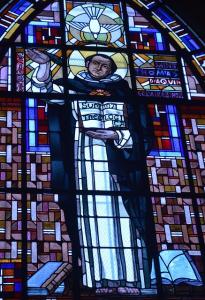
Image by Dorothée QUENNESSON from Pixabay
As St. Thomas Aquinas explains, condign merit requires two essential elements:
- The person must be in a state of grace
- The person must freely cooperate with that grace (ST I-II, q.114, a.3)
Grace always comes first. It moves the soul, inspires the good act, and sustains it. Yet God does not override our freedom—He invites our response. When we say “yes” to grace and act in charity, those actions carry condign merit because God has bound Himself, in His goodness, to reward them.
This is not a matter of strict equality between God and man, but it is a matter of divine generosity.
Congruous Merit: What Is Fitting in God’s Mercy
While condign merit is based on God’s promise, congruous merit is based on what is fitting or appropriate in light of His mercy.
Congruous merit does not create a strict claim to reward. Instead, it reflects the reality that God, in His love, responds generously to even imperfect acts that incline us toward Him.
We see this clearly in practices such as:
- Praying for others
- Offering sacrifices
- Fasting for the souls in purgatory
These acts do not obligate God in justice, but they are pleasing to Him. They are fitting responses to His goodness, and He responds in turn with grace.
Perhaps most importantly, congruous merit can exist even when a person is not in a state of grace. In such cases, it serves as a kind of spiritual preparation. A person may begin to pray, seek truth, or perform good works—not yet fully reconciled with God—but these actions open the door to grace.
As Hardon explains, such acts can dispose the soul to receive the graces necessary for repentance and conversion.
In other words, congruous merit helps bring us back to God.
The Relationship Between the Two
Condign and congruous merit are not competing ideas but they are part of a single movement of grace.
Congruous merit often comes first. It stirs the heart, awakens the conscience, and directs the soul toward God. Through this movement, a person may return to a state of grace.
Once in that state, the person is capable of performing actions that carry condign merit—actions that God has promised to reward.
We might think of it this way:
- Congruous merit prepares the soil
- Condign merit bears the fruit
Both are necessary. Both are gifts.
Together, they reveal a God who is not only just, but deeply merciful, and a God who meets us where we are and leads us to where we are meant to be.
A Path Toward the Beatific Vision
Ultimately, the theology of merit is not about accounting—it is about destiny.
God desires to bring each of us into the beatific vision, where we will see Him face to face. Along the way, He invites our cooperation. He dignifies our choices, strengthens our efforts, and rewards our fidelity.
Even our smallest acts when united with His grace take on eternal significance.
This should not lead to pride, but to humility.
Because in the end, every merit—whether condign or congruous—begins and ends with Him.
Final Reflection
Understanding condign and congruous merit helps us see the Christian life more clearly. We are not passive recipients of grace, nor are we independent earners of salvation. We are co-workers with God.
Every prayer, every sacrifice, every act of charity matters.
Not because we force God’s hand, but because He lovingly chooses to respond.
And in that response, He draws us ever closer to Himself.
References
Aquinas, Thomas. Summa Theologia. Trans. Thomas Gornall. Blackfriars, St. Joseph, IN: Ave Maria Press, 1981.
Hardon, John. History and Theology of Grace. Ann Arbor, MI: Sapientia Press, 2005.
Stevens, P.G. The Life of Grace. New York: Prentice Hall, 1963.
General Christian
Education and Religion
History and Religion
Previous Post

April 11, 2026
Word on Fire Launches Luminor with Kreeft Novel
Next Post
April 21, 2026 U.S. Military Chaplain Hopefuls Turn Out in Record Numbers
Recent Comments
"Excellent presentation. I have found that what matters most is the "posture" of the heart ..."
"I agree with you 100%. The bishops have instructed everyone to receive on the hand ..."
"After seeing exactly how screwed up Christian Conservatives are, worshipping a man that is immorral. ..."
You Are With Jesus Or With ..."
"Jesus or Beelzebul? I'll take curtain three, thank you. I don't DO Fear religions."
You Are With Jesus Or With ..."
Browse Our Archives
Select a Category Uncategorized
Select a Month October 2026 September 2026 August 2026 July 2026 June 2026 May 2026 April 2026 March 2026 February 2026 January 2026 December 2025 November 2025 October 2025 September 2025 August 2025 July 2025 June 2025 May 2025 April 2025 March 2025 February 2025 January 2025 December 2024 November 2024 October 2024 September 2024 August 2024 July 2024 June 2024 May 2024 April 2024 March 2024 February 2024 January 2024 December 2023 November 2023 October 2023 September 2023 August 2023 May 2023 April 2023 March 2023 February 2023 January 2023 December 2022 November 2022 October 2022 September 2022 August 2022 July 2022 June 2022 May 2022 April 2022 March 2022 February 2022 January 2022 December 2021 November 2021 October 2021 March 2021 February 2021 January 2021 December 2020 November 2020 October 2020 September 2020 August 2020 July 2020 June 2020 May 2020 April 2020 March 2020 February 2020 January 2020
Follow Us!
TAKE THE
Religious Wisdom Quiz
What was Jesus' profession before starting His ministry?
Select your answer to see how you score.
Carpenter Tentmaker Fisherman Shepherd
Related posts from The Pursuit of Holiness

Archdiocese Hosts Military Marriage Retreat in Germany

Ascension Releases New Edition of Dr. Edward Sri...

Archbishop Broglio Issues Statement on Execution Livestream
Ascension's New Catholic Bible for Readers with Dyslexia
TRENDING AT PATHEOS Catholic

Nearly every morning, I make the drive to Detroit with my high-school-age...

The Real AI Story Is Adoption Without Trust
Artificial intelligence has crossed a political threshold. It is no longer a...

A new article, written by Jeff Lindsay and Gale L. Pooley,...

Swimfan: Forgotten Aughts Pleasures
This is a recovery effort. In 2002, My Big Fat Greek Wedding...

Top Three Anti-Catholic Lies About Catholicism
This is my initial transcript for the video, "THE 3 WORST...

Pope Leo Celebrates Mass for Nurses & Docs...
I don't have any idea how he did it, but Pope Leo...
view all Catholic blogs
What Are Your Thoughts?leave a comment
Ad-Free & Subscriber Log-In Subscription Support
- About Us
- 2026 Calendar
- Videos
- Podcasts
- Library of World Religions
- Faith In Media Tracker
- Advertise With Us
- Write for Us
- Privacy Policy
- Terms of Service
- Do Not Sell My Data
- Contact Us
- Radiant Digital
- Manage Newsletter Subscriptions
- Unsubscribe From Notifications
- Sitemap
Copyright 2008-2026, Patheos. All rights reserved.
Subscription Support Ad-Free & Subscriber Log-In
Follow Patheos