
BuddhistCatholicContemplativeEvangelicalGeneral ChristianHinduJewishLatter-day SaintMuslimNew VisionsProgressive Christian
Beliefs
- Buddhist
- Catholic
- Contemplative
- Evangelical
- General Christian
- Hindu
- Jewish
- Latter-day Saint
- More Voices
- Muslim
- New Visions
- Pagan
- Progressive Christian
Topics
- Religion News
- Food and Religion
- Sports and Religion
- Religious Art
- Religious Music and Entertainment
- Religious Events
- History and Religion
- Style and Religion
- Politics and Religion
- Women in Religion
- Recreation Outdoors and Religion
- Business Finance and Religion
- Careers Workplace and Religion
- Education and Religion
- Family Parenting and Religion
- Health Fitness and Religion
- Home and Religion
- Relationships and Religion
- Technology and Religion
- Travel and Religion
Columnists
- Buddhist Columnists
- Business Finance and Religion Columnists
- Careers Workplace and Religion Columnists
- Catholic Columnists
- Contemplative Columnists
- Education and Religion Columnists
- Evangelists Columnists
- Family Parenting and Religion Columnists
- General Christian Columnists
- Health Fitness and Religion Columnists
- Hindu Columnists
- History and Religion Columnists
- Home and Religion Columnists
- Jewish Columnists
- More Voices Columnists
- Latter Day Columnists
- Muslim Columnists
- New Visions Columnists
- Nonreligious Columnists
- Pagan Columnists
- Politics and Religion Columnists
- Progressive Columnists
- Recreation Outdoors and Religion Columnists
- Relationships and Religion Columnists
- Religion News Columnists
- Religious Art Columnists
- Religious Events Columnists
- Religious Music and Entertainment Columnists
- Sports and Religion Columnists
- Style and Religion Columnists
- Technology and Religion Columnists
- Travel and Religion Columnists
- Women in Religion Columnists
Resource Library
- 2026 Calendar
- Library of World Religions
- The 100 Most Holy Places on Earth
- Patheos Answers
- Podcasts
- Videos
- Faith Leaders Database
- Anglican Episcopalian
- Bahai
- Baptist
- Buddhism
- Christianity
- Confucianism
- Eastern Orthodoxy
- Hinduism
- Holiness and Pentecostal
- ISKCON
- Islam
- Judaism
- Lutheran
- Methodist
- The Church of Jesus Christ of Latter-day Saints
- New Age
- Paganism
- Presbytarian and Reformed
- Protestantism
- Religion Behind the Scenes
- Roman Catholic
- Scientology
- Shia Islam
- Sikhism
- Sufism
- Sunni Islam
- Taoism
- Zen
- See all religions
Research Tools
 Ad-Free & Subscriber Log-In Subscription Support
Ad-Free & Subscriber Log-In Subscription Support
Follow Patheos 

- Trending:
- Forgiveness
- |
- Marriage
- |
- Consciousness
- |
- Death Penalty
- |
- Election
- |
- Halloween

- Home
- Catholic
- St. Augustine: On The Trinity
St. Augustine: On The Trinity
Last updated on: September 10, 2020 at 4:12 pm by William Hemsworth
St. Augustine: On The Trinity 2020-09-10T16:12:15-07:00 William Hemsworth
Patheos Explore the world's faith through different perspectives on religion and spirituality! Patheos has the views of the prevalent religions and spiritualities of the world.
The Trinity is a doctrine that some have had issue with since the earliest days of Christianity. The great church father St. Augustine was not immune to having to deal with Christological heresies. Though the heresies are Christological, they deal with the Trinity because Christ is the second person of the Trinity.
St. Augustine And Trinitarian Heresy
If a there is a false understanding of who Christ is, then there is a false understanding of what the Trinity is. In discussing these various heresies, St. Augustine wrote treatise titled On the Trinity.
This has become known as one of his most difficult works and it took him sixteen years to complete (Augnet 2135). His work is a gift to all of us and shows various arguments supporting the equality of divine persons against Christological heresies.

Misuse Of Reason
In chapter one, St. Augustine warns the reader of those who commit heresy through the misuse of reason. They fall into error by misinterpreting the sacred text through crude love of reason (Augustine Ch.1). By doing so they miss the point of the text and somehow twist scripture to mean something it does not intend.
In all fairness, this is still something that happens today regarding the Trinity. When we see this it is prudent to correct.
Unity Of Divine Persons
In chapter five, Augustine speaks of the unity of the divine persons. He does this specifically by describing how the three persons are one, how they have individua work, and yet work together. Augustine states in regard to their work, “The Father does some things, the Son other things, and the Holy Spirit yet others” (Augustine Ch.5.8).
The Holy Spirit is the spirit of both the Father and the Son and was not begotten. Just like the Father and the Son, the Holy Spirit has no beginning or end.
St. Augustine Against Modalism
In Chapter six Augustine seems to be teaching against a type of modalism that was going around. Some were saying that God was not immortal because he changed into the Son and Holy Spirit through time, or that somehow Christ was less that the Father. Augustine brilliantly answers with scripture. This is still a method that is effective today.
He quotes John 1:1 to show that Christ has always existed, and that the scriptures call Him God (Augustine Ch. 6.9). He then alludes to the baptism of Christ in Matthew chapter 3 to show the unity and equality of the three. Jesus is present, it was the Father’s voice that spoke, and it was the Holy Spirit that was present in the dove. This shows that they all exist at the same time, in unity, equality, and that it is not one form changing to another.
Divinity Of Christ Confirmed
In proving his case of equality among the Trinitarian persons, St. Augustine looks to 1 Corinthians 8:6 which states, “yet for us there is one God, the Father, from whom are all things and for whom we exist, and one Lord, Jesus Christ, through whom are all things and through whom we exist” (NRSV). This verse affirms the divinity of Christ by mentioning him in the same sentence as God.
Notice also how all things exist through the Father and the Son? Each person of the Trinity has a clause, or duty, assigned. One is not more important than the other, but they all work together for our redemption and salvation (Augustine 6.12).
Some may say that the verse mentioned above makes sense, but what of the Holy Spirit? In Chapter 6, St. Augustine goes to great lengths to show that the Holy Spirit is equal to the Father and the Son. The Holy Spirit is not something that had a point of origin.
In other words, he is not a creature that had a beginning and that will have an ultimate end. The Holy Spirit is equal, coeternal, and of the same essence. Regarding the Holy Spirit St. Paul writes in Philippians 3:3, “For it is we who are the circumcision, who worship in the Spirit of God and boast in Christ Jesus and have no confidence in the flesh” (NRSV). Also in 1 Corinthians 6:9, St. Paul specifically mentions that our bodies are temples of the Holy Spirit. We serve, worship, and ask the Holy Spirit for things just as we would the Father and the Son. That is because they are coequal and God.
Works Cited
Augustine. On the Trinity From Nicene and Post-Nicene Fathers, First Series, Vol. 3. Edited by Philip Schaff. (Buffalo, NY: Christian Literature Publishing Co., 1887.) Revised and edited for New Advent by Kevin Knight. <http://www.newadvent.org/fathers/130101.htm>, accessed September 8, 2020.
Augustinians Australia. http://www.augnet.org/en/works-of-augustine/writings-of-augustine/2135-on-the-trinity/, accessed September 10, 2020.
Previous Post

September 9, 2020
Woe, Woe, Woe...Seriously?
Next Post
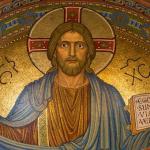
September 11, 2020 Apollinaris And The Nature Of Christ
Browse Our Archives
Select a Category Uncategorized
Select a Month October 2026 September 2026 August 2026 July 2026 June 2026 May 2026 April 2026 March 2026 February 2026 January 2026 December 2025 November 2025 October 2025 September 2025 August 2025 July 2025 June 2025 May 2025 April 2025 March 2025 February 2025 January 2025 December 2024 November 2024 October 2024 September 2024 August 2024 July 2024 June 2024 May 2024 April 2024 March 2024 February 2024 January 2024 December 2023 November 2023 October 2023 September 2023 August 2023 May 2023 April 2023 March 2023 February 2023 January 2023 December 2022 November 2022 October 2022 September 2022 August 2022 July 2022 June 2022 May 2022 April 2022 March 2022 February 2022 January 2022 December 2021 November 2021 October 2021 March 2021 February 2021 January 2021 December 2020 November 2020 October 2020 September 2020 August 2020 July 2020 June 2020 May 2020 April 2020 March 2020 February 2020 January 2020
Follow Us!
TAKE THE
Religious Wisdom Quiz
What did Elisha heal by throwing salt into it?
Select your answer to see how you score.
A pot of stew A spring of water A fig tree River Jordan
Related posts from The Pursuit of Holiness

The First Eucharistic Controversy: Christ’s Real Presence

Archdiocese Hosts Military Marriage Retreat in Germany

Ascension Releases New Edition of Dr. Edward Sri...

Archbishop Broglio Issues Statement on Execution Livestream
TRENDING AT PATHEOS Catholic

The Dangers of Gradual Accommodation (Winking at Sin)
Recently, the “law of gradualness” resurfaced during the opening of a weeklong,...

The Iron Gates and the Lion of the...
Yesterday, I didn't finish my report about, well, yesterday. So I'll...

Dolly Parton’s Last Song Wins Dove Award with...
Bluegrass band The Grascals, speaking on the red carpet at the 57th...

The Image: On the Horror of Capitalism and...
The Image Then went the Pharisees, and took counsel how they might...

We are approaching the date of our new American national holiday: October...

Letters on Living the Faith by C.S. Lewis
Most of us met C.S. Lewis as a public intellectual. Mere Christianity....
view all Catholic blogs
Ad-Free & Subscriber Log-In Subscription Support
- About Us
- 2026 Calendar
- Videos
- Podcasts
- Library of World Religions
- Faith In Media Tracker
- Advertise With Us
- Write for Us
- Privacy Policy
- Terms of Service
- Do Not Sell My Data
- Contact Us
- Radiant Digital
- Manage Newsletter Subscriptions
- Unsubscribe From Notifications
- Sitemap
Copyright 2008-2026, Patheos. All rights reserved.
Subscription Support Ad-Free & Subscriber Log-In
Follow Patheos