
BuddhistCatholicContemplativeEvangelicalGeneral ChristianHinduJewishLatter-day SaintMuslimNew VisionsProgressive Christian
Beliefs
- Buddhist
- Catholic
- Contemplative
- Evangelical
- General Christian
- Hindu
- Jewish
- Latter-day Saint
- More Voices
- Muslim
- New Visions
- Pagan
- Progressive Christian
Topics
- Religion News
- Food and Religion
- Sports and Religion
- Religious Art
- Religious Music and Entertainment
- Religious Events
- History and Religion
- Style and Religion
- Politics and Religion
- Women in Religion
- Recreation Outdoors and Religion
- Business Finance and Religion
- Careers Workplace and Religion
- Education and Religion
- Family Parenting and Religion
- Health Fitness and Religion
- Home and Religion
- Relationships and Religion
- Technology and Religion
- Travel and Religion
Columnists
- Buddhist Columnists
- Business Finance and Religion Columnists
- Careers Workplace and Religion Columnists
- Catholic Columnists
- Contemplative Columnists
- Education and Religion Columnists
- Evangelists Columnists
- Family Parenting and Religion Columnists
- General Christian Columnists
- Health Fitness and Religion Columnists
- Hindu Columnists
- History and Religion Columnists
- Home and Religion Columnists
- Jewish Columnists
- More Voices Columnists
- Latter Day Columnists
- Muslim Columnists
- New Visions Columnists
- Nonreligious Columnists
- Pagan Columnists
- Politics and Religion Columnists
- Progressive Columnists
- Recreation Outdoors and Religion Columnists
- Relationships and Religion Columnists
- Religion News Columnists
- Religious Art Columnists
- Religious Events Columnists
- Religious Music and Entertainment Columnists
- Sports and Religion Columnists
- Style and Religion Columnists
- Technology and Religion Columnists
- Travel and Religion Columnists
- Women in Religion Columnists
Resource Library
- 2026 Calendar
- Library of World Religions
- The 100 Most Holy Places on Earth
- Patheos Answers
- Podcasts
- Videos
- Faith Leaders Database
- Anglican Episcopalian
- Bahai
- Baptist
- Buddhism
- Christianity
- Confucianism
- Eastern Orthodoxy
- Hinduism
- Holiness and Pentecostal
- ISKCON
- Islam
- Judaism
- Lutheran
- Methodist
- The Church of Jesus Christ of Latter-day Saints
- New Age
- Paganism
- Presbytarian and Reformed
- Protestantism
- Religion Behind the Scenes
- Roman Catholic
- Scientology
- Shia Islam
- Sikhism
- Sufism
- Sunni Islam
- Taoism
- Zen
- See all religions
Research Tools
 Ad-Free & Subscriber Log-In Subscription Support
Ad-Free & Subscriber Log-In Subscription Support
Follow Patheos 

- Trending:
- Forgiveness
- |
- Marriage
- |
- Consciousness
- |
- Death Penalty
- |
- Election
- |
- Halloween

- Home
- Catholic
- Christ And Resurrection: It Really Happened And Was Not An Altered State
Christ And Resurrection: It Really Happened And Was Not An Altered State
Last updated on: June 11, 2020 at 7:42 pm by William Hemsworth
Christ And Resurrection: It Really Happened And Was Not An Altered State 2020-06-11T19:42:45-07:00 William Hemsworth
Patheos Explore the world's faith through different perspectives on religion and spirituality! Patheos has the views of the prevalent religions and spiritualities of the world.
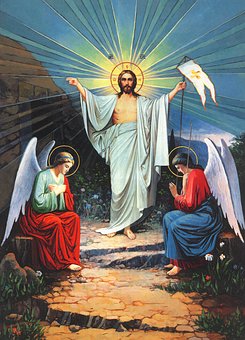
Every Easter we celebrate the resurrection of Christ. It is the foundation of our faith, and without the resurrection are faith is futile (1 Corinthians 15:14). Beyond proving that Jesus is the Christ, what does the resurrection prove? The resurrection is about much more than the eyewitness accounts of the Apostles seeing the risen Jesus. It is also about the new life that is present in every believer throughout time.
Resurrection Brings Transformation
We have finite minds, and it is hard for us to grasp the miracle that is the resurrection. Jesus is a divine being, and as a divine being he resurrected from the dead to prove who he was. Though theologically true, this view leads to a somewhat simplistic understanding of the event.
The resurrection can also be seen in the transformation of the believer. It is about the new life in Christ and not what the ocular vision of the disciples has perceived. Saint Paul also echo this sentiment in 2 Corinthians 5:17, “So if anyone is in Christ, there is a new creation: everything old has passed away; see, everything has become new” (NRSV).

As Believers We Share In It
The resurrection is a religious experience of one who has come to faith in Christ, and is much more than something that happened to those who physically encountered the risen Christ. According to Scholars such as Luke Johnson this is a common theme in the Pauline Corpus.
Regarding this Dr. Johnson writes, “The resurrection experience, in Paul’s letters, is not something that happens to Jesus alone” (Johnson 25). Every Christian with a genuine faith in Christ experiences the resurrection in a special way through baptism. Through the sacrament of baptism original sin is wiped away, and we are raised in the newness of life.
People Don’t Die For Something They Don’t Really Believe
Within the context of introducing the resurrection to Christian audience there are a couple of things to keep in mind. From an apologetics standpoint, it is important to know the reasoning as to why the resurrection is the foundation of the faith. One can go into the martyrdom of the early church because they were attesting to the resurrection. People do not die for a lie.
Along those lines it is important to understand that the resurrection actually happened. It has become popular in some circles, both Christians and skeptics, to say that the resurrection account was a times of altered state of consciousness.
It Really Happened And Was Not An Altered State
If this were one person then perhaps, but in a way Saint Paul challenges this. In 1 Corinthians 15 he challenges people to go and ask some of the 500 witnesses to the resurrection to whether it happened or not. The resurrection happened, it is real, and is the foundation of Christianity. No literal bodily resurrection means Christianity was founded on a lie, but there is no body. Regarding the literalness of the resurrection Fr. Kenneth Baker writes,
“This is indeed a shocking statement. It signifies something that we have never experienced but must accept solely on faith because of the testimony of the Apostles, for the Apostles were the chief witnesses of the Resurrection”.
This description of the resurrection is quite different from what an altered state describes. Merriam-Webster defines it as,
“any of various states of awareness (as dreaming sleep, a drug-induced hallucinogenic state, or a trance) that deviate from and are usually clearly demarcated from ordinary waking consciousness”.
Describing the resurrection as something the disciples experiences in an altered state is a slippery slope. St. Paul states that the reality of the resurrection is what our faith rests on. Without it we are still dead in sin.
The Resurrection Is Also Personal
Secondly, it is more important to assist the audience in learning to relate to the resurrection in a deeper way. A way that is more personal, and something that they can share. Everyone has something deep in the recesses of their mind that they are ashamed of. It may be an addiction, adultery, or a gambling problem. These things are destructive, but when one comes to faith those things are in the past. They still may struggle, but through Christ they are resurrected and forgiven for those things that they have done. Those types of experiences are the modern-day equivalent of the disciples physically seeing the resurrected Jesus. Our former selves are dead and gone, but we were resurrected spiritually into a new creation. The disciples’ experience of Jesus raised and exalted is the difference between their faith in the gospel.
Saint Quotes On The Resurrection
“[W]hoever perverts the sayings of the Lord for his own desires, and says that there is neither resurrection nor judgment, such a one is the firstborn of Satan. Let us, therefore, leave the foolishness and the false-teaching of the crowd and turn back to the word which was delivered to us in the beginning” (Letter to the Philippians 7:1–2 [A.D. 135]).-St. Polycarp
“But He who descended into the regions beneath the earth came up again; and Jesus, who was buried, truly rose again the third day. And if the Jews ever worry thee, meet them at once by asking thus: Did Jonah come forth from the whale on the third day, and hath not Christ then risen from the earth on the third day? Is a dead man raised to life on touching the bones of Elisha, and is it not much easier for the Maker of mankind to be raised by the power of the Father? Well then, He truly rose, and after He had risen was seen again of the disciples; and twelve disciples were witnesses of His Resurrection, who bare witness not in pleasing words, but contended even unto torture and death for the truth of the Resurrection. What then, shall every word be established at the mouth of two of three witnesses, according to the Scripture, and, though twelve bear witness to the Resurrection of Christ, art thou still incredulous in regard to His Resurrection?”-St. Cyril of Jerusalem
Works Cited
Holy Bible, New Revised Standard Version
Johnson, Luke Timothy. “How Jesus Became God” Commonweal. 2/3/2015. Web. 22 Feb. 2015.
Previous Post

June 8, 2020
Racism: Our Nation Is Hurting And We Need Jesus
Next Post
June 13, 2020 Paul And The Eucharist As Source Of Unity
Browse Our Archives
Select a Category Uncategorized
Select a Month October 2026 September 2026 August 2026 July 2026 June 2026 May 2026 April 2026 March 2026 February 2026 January 2026 December 2025 November 2025 October 2025 September 2025 August 2025 July 2025 June 2025 May 2025 April 2025 March 2025 February 2025 January 2025 December 2024 November 2024 October 2024 September 2024 August 2024 July 2024 June 2024 May 2024 April 2024 March 2024 February 2024 January 2024 December 2023 November 2023 October 2023 September 2023 August 2023 May 2023 April 2023 March 2023 February 2023 January 2023 December 2022 November 2022 October 2022 September 2022 August 2022 July 2022 June 2022 May 2022 April 2022 March 2022 February 2022 January 2022 December 2021 November 2021 October 2021 March 2021 February 2021 January 2021 December 2020 November 2020 October 2020 September 2020 August 2020 July 2020 June 2020 May 2020 April 2020 March 2020 February 2020 January 2020
Follow Us!
TAKE THE
Religious Wisdom Quiz
Who said, “Let there be light”?
Select your answer to see how you score.
God Paul Noah Moses
Related posts from The Pursuit of Holiness

The First Eucharistic Controversy: Christ’s Real Presence

Archdiocese Hosts Military Marriage Retreat in Germany

Ascension Releases New Edition of Dr. Edward Sri...

Archbishop Broglio Issues Statement on Execution Livestream
TRENDING AT PATHEOS Catholic

Looking at the Largest Orthodox Cathedral on Earth
There is often a considerable amount of anger and, shall we...

The Problem with False Prophets
Miller’s Station UMC| 10/18/26| Anchor Verse: Jeremiah 23: 1, 9-23 I...

Emotion in Early Christianity by Andrew Crislip
Andrew Crislip’s Emotion in Early Christianity examines an often overlooked dimension of...

16 Spiritual Touchstones for a More Grounded Life
After decades of spiritual study, here are 16 principles I try...

Catholic Evangelization: Sharing Your Faith Every Day
Welcome back to the Graceful Awakening mini-series called, “From Faith to Mission.” ...

The Pillar of the Boatmen: the Ancient Monument...
The Pillar of the Boatmen is a Romano-Gaulish sculpture that dates from...
view all Catholic blogs
Ad-Free & Subscriber Log-In Subscription Support
- About Us
- 2026 Calendar
- Videos
- Podcasts
- Library of World Religions
- Faith In Media Tracker
- Advertise With Us
- Write for Us
- Privacy Policy
- Terms of Service
- Do Not Sell My Data
- Contact Us
- Radiant Digital
- Manage Newsletter Subscriptions
- Unsubscribe From Notifications
- Sitemap
Copyright 2008-2026, Patheos. All rights reserved.
Subscription Support Ad-Free & Subscriber Log-In
Follow Patheos