
BuddhistCatholicContemplativeEvangelicalGeneral ChristianHinduJewishLatter-day SaintMuslimNew VisionsProgressive Christian
Beliefs
- Buddhist
- Catholic
- Contemplative
- Evangelical
- General Christian
- Hindu
- Jewish
- Latter-day Saint
- More Voices
- Muslim
- New Visions
- Pagan
- Progressive Christian
Topics
- Religion News
- Food and Religion
- Sports and Religion
- Religious Art
- Religious Music and Entertainment
- Religious Events
- History and Religion
- Style and Religion
- Politics and Religion
- Women in Religion
- Recreation Outdoors and Religion
- Business Finance and Religion
- Careers Workplace and Religion
- Education and Religion
- Family Parenting and Religion
- Health Fitness and Religion
- Home and Religion
- Relationships and Religion
- Technology and Religion
- Travel and Religion
Columnists
- Buddhist Columnists
- Business Finance and Religion Columnists
- Careers Workplace and Religion Columnists
- Catholic Columnists
- Contemplative Columnists
- Education and Religion Columnists
- Evangelists Columnists
- Family Parenting and Religion Columnists
- General Christian Columnists
- Health Fitness and Religion Columnists
- Hindu Columnists
- History and Religion Columnists
- Home and Religion Columnists
- Jewish Columnists
- More Voices Columnists
- Latter Day Columnists
- Muslim Columnists
- New Visions Columnists
- Nonreligious Columnists
- Pagan Columnists
- Politics and Religion Columnists
- Progressive Columnists
- Recreation Outdoors and Religion Columnists
- Relationships and Religion Columnists
- Religion News Columnists
- Religious Art Columnists
- Religious Events Columnists
- Religious Music and Entertainment Columnists
- Sports and Religion Columnists
- Style and Religion Columnists
- Technology and Religion Columnists
- Travel and Religion Columnists
- Women in Religion Columnists
Resource Library
- 2026 Calendar
- Library of World Religions
- The 100 Most Holy Places on Earth
- Patheos Answers
- Podcasts
- Videos
- Faith Leaders Database
- Anglican Episcopalian
- Bahai
- Baptist
- Buddhism
- Christianity
- Confucianism
- Eastern Orthodoxy
- Hinduism
- Holiness and Pentecostal
- ISKCON
- Islam
- Judaism
- Lutheran
- Methodist
- The Church of Jesus Christ of Latter-day Saints
- New Age
- Paganism
- Presbytarian and Reformed
- Protestantism
- Religion Behind the Scenes
- Roman Catholic
- Scientology
- Shia Islam
- Sikhism
- Sufism
- Sunni Islam
- Taoism
- Zen
- See all religions
Research Tools
 Ad-Free & Subscriber Log-In Subscription Support
Ad-Free & Subscriber Log-In Subscription Support
Follow Patheos 

- Trending:
- Forgiveness
- |
- Marriage
- |
- Consciousness
- |
- Death Penalty
- |
- Election
- |
- Halloween

- Home
- Catholic
- Adoptionism And Docetism: A Look At Two Early Church Heresies
Adoptionism And Docetism: A Look At Two Early Church Heresies
Last updated on: June 24, 2020 at 12:30 pm by William Hemsworth
Adoptionism And Docetism: A Look At Two Early Church Heresies 2020-06-24T12:30:35-07:00 William Hemsworth
Patheos Explore the world's faith through different perspectives on religion and spirituality! Patheos has the views of the prevalent religions and spiritualities of the world.
When we think of the early days of Christianity, there is a tendency to think about our ancestors in the faith in today’s terms. We may think they met in churches when they actually met in homes. That every doctrine that we hold to today was laid out the same back then. Unfortunately, this line of thinking could not be further from the truth. The early Church dealt with many issues, and one of those issues was over Christology. When it comes to Christology the early Church specifically had to deal with Adoptionism and Docetism.
These are two Christologies that were heretical in nature, but they were attractive to people because they answered some lingering questions that had not yet been answered. Before those answers are discussed it is prudent to define these two terms.
Adoptionism And Docestism Defined
Adoptionism is a Christological belief that Jesus was adopted as the son of God either after his baptism, resurrection, or ascension. This view was seen in many parts of early Christianity, but a writer by the name of Apollinaris wrote about it extensively.
Regarding this Richard Norris writes, “The divine Logos ‘became human’ in the sense that he became embodied and thus shared the structural constitution of a human being” (Norris 22). In the view of Adoptionism Christ only became Christ after he was adopted after spending his life doing God’s will. In other words, the He was not born with two natures.

The other Christological view to be discussed is known as Docetism. Docetism was an early form of Gnosticism which taught that all matter was evil. Since all matter was evil it stands to reason that Christ was not crucified. They saw no need for the Son to make himself involved in physical matters.
Many in the early church such as St. Irenaeus and Tertullian fought against the growth of this sect. The sect hated the flesh and taught that the divine spirit left the person of Christ before he died on the cross. They failed to realize that man was made in God’s image, and even with all its faults the flesh is an object of God’s love and grace.
Views Are Contrary To Scripture
These two theories became popular, and even thrived, because they answered two questions. Firstly, can a “whether a mediatorial Logos, when he becomes incarnate, can honestly be understood as God present in person” (Norris 8). Secondly, if the idea of the incarnation is a contradiction. There were several reasons why they were rejected. In the case of Adoptionism it simply contradicts scripture.
Scripture teaches in many places that the Son always was and was not something that came later. One such passage is John 1:1 which states, “In the beginning was the Word, and the Word was with God, and the Word was God” (NRSV). This shows that Christ always, and since the womb Christ was fully human and fully divine. For his sacrifice on the cross to be redemptive it had to be a sinless offering.
This could not have happened if it was a man who was adopted at thirty years of age. In the case of Docetism scripture also states that Christ willingly put on flesh. We see this in Hebrews 2:14, “Since, therefore, the children share flesh and blood, he himself likewise shared the same things, so that through death he might destroy the one who has the power of death, that is the devil” (NRSV). This shows again that if Christ was not also flesh then the cross meant nothing, and the Gospel is nullified.
Works Cited
Holy Bible, New Revised Standard Version
Norris, Richard. The Christological Controversy. Philadelphia, PA: Fortress Press. 1980. Print.
Pictures courtesy of pixabay.
Previous Post
June 22, 2020
Advocate: The Holy Spirit Is Here to Help Us
Next Post
June 28, 2020 Catholic Church: How The Church Is A Little Like Tetherball
Browse Our Archives
Select a Category Uncategorized
Select a Month October 2026 September 2026 August 2026 July 2026 June 2026 May 2026 April 2026 March 2026 February 2026 January 2026 December 2025 November 2025 October 2025 September 2025 August 2025 July 2025 June 2025 May 2025 April 2025 March 2025 February 2025 January 2025 December 2024 November 2024 October 2024 September 2024 August 2024 July 2024 June 2024 May 2024 April 2024 March 2024 February 2024 January 2024 December 2023 November 2023 October 2023 September 2023 August 2023 May 2023 April 2023 March 2023 February 2023 January 2023 December 2022 November 2022 October 2022 September 2022 August 2022 July 2022 June 2022 May 2022 April 2022 March 2022 February 2022 January 2022 December 2021 November 2021 October 2021 March 2021 February 2021 January 2021 December 2020 November 2020 October 2020 September 2020 August 2020 July 2020 June 2020 May 2020 April 2020 March 2020 February 2020 January 2020
Follow Us!
TAKE THE
Religious Wisdom Quiz
What does "Sabbath" mean?
Select your answer to see how you score.
Sacrifice Rest Holy Feast
Related posts from The Pursuit of Holiness

Ascension Releases New Edition of Dr. Edward Sri...

Archbishop Broglio Issues Statement on Execution Livestream
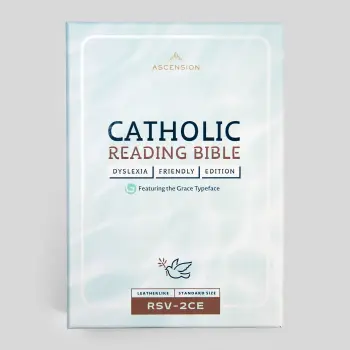
Ascension's New Catholic Bible for Readers with Dyslexia
TRENDING AT PATHEOS Catholic

The Sermon on the Mount, Part I: Matthew...
The Sermon on the Mount, Part I (Matthew 4:12-5:12) St. Matthew moves...

What's up from Crossway: Reviewing some of their latest A few weeks...

Janie Learns the Way of the Cross: A...
Teaching children about Jesus' Passion can be challenging. Many parents and educators...

Looking For Good Catholic Writing - October 2026
He alone extends the heavens, and he walks upon the waves of...

In "Irreplaceable," our book on vocation and technology, Trevor Sutton and I...

I was strolling through the top floor of the brand new Parthenon...
view all Catholic blogs
Ad-Free & Subscriber Log-In Subscription Support
- About Us
- 2026 Calendar
- Videos
- Podcasts
- Library of World Religions
- Faith In Media Tracker
- Advertise With Us
- Write for Us
- Privacy Policy
- Terms of Service
- Do Not Sell My Data
- Contact Us
- Radiant Digital
- Manage Newsletter Subscriptions
- Unsubscribe From Notifications
- Sitemap
Copyright 2008-2026, Patheos. All rights reserved.
Subscription Support Ad-Free & Subscriber Log-In
Follow Patheos