
BuddhistCatholicContemplativeEvangelicalGeneral ChristianHinduJewishLatter-day SaintMuslimNew VisionsProgressive Christian
Beliefs
- Buddhist
- Catholic
- Contemplative
- Evangelical
- General Christian
- Hindu
- Jewish
- Latter-day Saint
- More Voices
- Muslim
- New Visions
- Pagan
- Progressive Christian
Topics
- Religion News
- Food and Religion
- Sports and Religion
- Religious Art
- Religious Music and Entertainment
- Religious Events
- History and Religion
- Style and Religion
- Politics and Religion
- Women in Religion
- Recreation Outdoors and Religion
- Business Finance and Religion
- Careers Workplace and Religion
- Education and Religion
- Family Parenting and Religion
- Health Fitness and Religion
- Home and Religion
- Relationships and Religion
- Technology and Religion
- Travel and Religion
Columnists
- Buddhist Columnists
- Business Finance and Religion Columnists
- Careers Workplace and Religion Columnists
- Catholic Columnists
- Contemplative Columnists
- Education and Religion Columnists
- Evangelists Columnists
- Family Parenting and Religion Columnists
- General Christian Columnists
- Health Fitness and Religion Columnists
- Hindu Columnists
- History and Religion Columnists
- Home and Religion Columnists
- Jewish Columnists
- More Voices Columnists
- Latter Day Columnists
- Muslim Columnists
- New Visions Columnists
- Nonreligious Columnists
- Pagan Columnists
- Politics and Religion Columnists
- Progressive Columnists
- Recreation Outdoors and Religion Columnists
- Relationships and Religion Columnists
- Religion News Columnists
- Religious Art Columnists
- Religious Events Columnists
- Religious Music and Entertainment Columnists
- Sports and Religion Columnists
- Style and Religion Columnists
- Technology and Religion Columnists
- Travel and Religion Columnists
- Women in Religion Columnists
Resource Library
- 2026 Calendar
- Library of World Religions
- The 100 Most Holy Places on Earth
- Patheos Answers
- Podcasts
- Videos
- Faith Leaders Database
- Anglican Episcopalian
- Bahai
- Baptist
- Buddhism
- Christianity
- Confucianism
- Eastern Orthodoxy
- Hinduism
- Holiness and Pentecostal
- ISKCON
- Islam
- Judaism
- Lutheran
- Methodist
- The Church of Jesus Christ of Latter-day Saints
- New Age
- Paganism
- Presbytarian and Reformed
- Protestantism
- Religion Behind the Scenes
- Roman Catholic
- Scientology
- Shia Islam
- Sikhism
- Sufism
- Sunni Islam
- Taoism
- Zen
- See all religions
Research Tools
 Ad-Free & Subscriber Log-In Subscription Support
Ad-Free & Subscriber Log-In Subscription Support
Follow Patheos 

- Trending:
- Forgiveness
- |
- Marriage
- |
- Consciousness
- |
- Death Penalty
- |
- Election
- |
- Halloween

- Home
- General Christian
- History and Religion
- Indigenous Peoples’ Day and the Church
Indigenous Peoples’ Day and the Church
Last updated on: October 13, 2026 at 5:06 pm by Brad Thibodeaux
Indigenous Peoples’ Day and the Church 2026-10-13T17:06:57-04:00 Brad Thibodeaux
Patheos Explore the world's faith through different perspectives on religion and spirituality! Patheos has the views of the prevalent religions and spiritualities of the world.
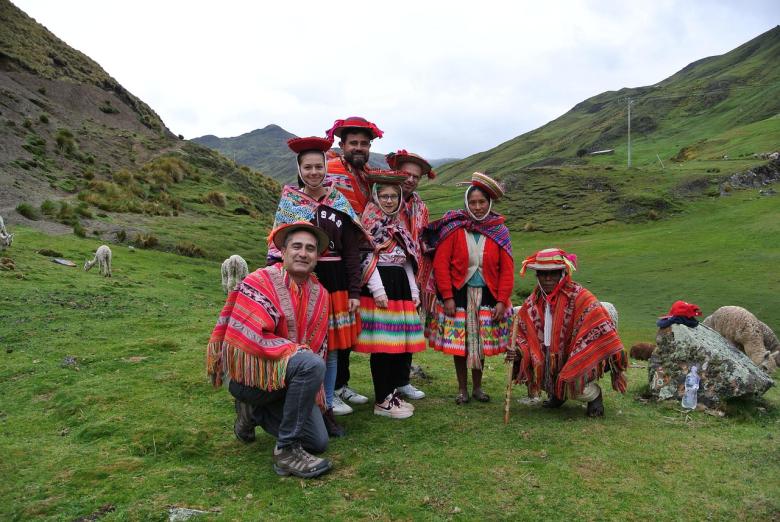
Yuri_Rodriguez | pixabay.com
Indigenous’ Peoples Day or Columbus Day?
Depending on where you live in the United States, you might be celebrating Indigenous’ Peoples Day or Columbus Day. About one third of the states here recognize Indigenous’ Peoples Day after President Biden officially recognized it as the same day as Columbus Day in 2021. While Columbus Day historically celebrated the “discovery of the New World”, changing the name of the holiday allows us to reframe the story. Columbus did not actually discover a new land. He stumbled across a continent that was already full of people with rich histories and traditions.
So why do we care about this name change? It depends on where you stand politically. President Trump signed a declaration on October 9, 2025 doubling down on Columbus Day. He said the name change was erasing our history and heroes. However, should Columbus be considered a hero? Again, this depends on your political stance. For what it’s worth, the holiday began with an anti-immigration stance in the late 1800’s. I choose to celebrate Indigenous’ Peoples Day because it focuses my attention on those who were here first.
The Church and Indigenous Tribes in Early America
I was born and raised in Rhode Island – one of the original British colonies. Rhode Island was founded in 1636 by Roger Williams who was banished from the Massachusetts Bay Colony. What made this colony so unique was that it was not a Christian colony. In fact, Williams spend a lot of time with the tribes that lived in this land. These tribes were the Wampanoags in the East, the Niantic in the south, and the majority of the land was that of the Narragansett tribe.
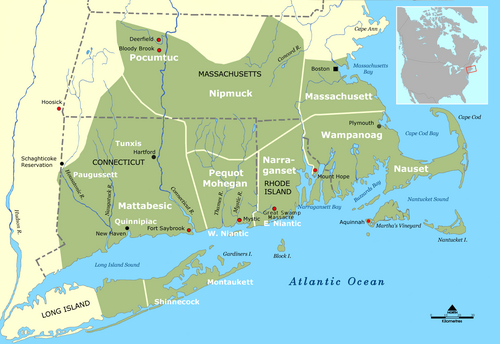
By Nikater; adapted to English by Hydrargyrum – Wikimedia Commons – Image:Wohngebiet_Südneuengland.png, as of 5 July 2006, CC BY-SA 3.0, https://commons.wikimedia.org/w/index.php?curid=5276243
Williams’ work with the Narragansett tribe helped to save their language. He published “A Key into the Language of America” in 1643 that outlined the Narragansett and Algonquian languages he learned while trading with the tribes. While this was unique – as many of the settler groups fully discredited indigenous language and religion as barbaric – it was not without self interest. The Massachusetts colony was trying to encroach on the land William’s had bought from the Narragansett tribe. This publication also served to assert the validity of the land to Rhode Island.
Even with William’s respect of the indigenous people in New England, Rhode Island was a major player in the slave trade. Since Southern Rhode Island was mostly farmland and Newport was a large port, both African and Indigenous people were enslaved to work. Historians estimate that up to 25% of Washington County were enslaved.
What the Church is doing today?
There are many churches that are working towards uplifting the Indigenous People that the Colonies suppressed. Historic New England has worked to research and highlight those who lived here before colonization. One way is through their Stopping Stones. These small markers remind us that our land we share has a story. This story is often not as rosy as we would like to think.
Many churches in the New England area have worked with local indigenous tribes to learn more about their history. Some churches have been able to look in their own archives to find the names of people disenfranchised. Colonial churches would often have records of enslaved people that was lost to history. By using what we have and facing our uncomfortable history together, we can hopefully find a better path forward as a united people.
I am a member of a United Church of Christ (UCC) church. My home church has a land acknowledgement that has proven to be more than words. In 2023, the church started researching with the Witness Stones Project that led them to feel the need for a church-approved land acknowledgement. The church spent 2 years of learning, listening, and deliberating. After workshops with Linda Coombs, an author and historian from the Wampanoag Tribe of Aquinnah, and Associate Director of the Tomaquag Museum Silvermoon LaRose, the church adopted this acknowledgement. In addition to the formal statement, the church has raised money for the upcoming Tomaquag museum. The Narragansett Tribe has a long history of preserving their history and John Brown is their Historic Preservation Officer. You can read more about the Narragansett Tribe here.
I believe this is how it should be – understand that we benefit from actions we cannot be responsible for. Only when we understand and make an effort to help lift up those who have been harmed do we begin the work of reconciliation.
So what is the Church to do today? On Indigenous Peoples Day, let us all take a moment to reflect on how we benefit from the dispossession of the native people who cultivated this land. Let us understand that, while we did not commit these harms, we still benefit from the land we live on. And finally, let us work together with our understanding and privileges to lift up those who are still struggling from centuries of dispossession, systemic oppression, and harm.
About Brad Thibodeaux
Brad Thibodeaux is a theologian and harm reductionist in New England. He earned his M.A. in Christian Theology and Social Engagement from Northwind Seminary and works to educate faith communities about the intersection of religion, harm reduction, and social advocacy throughout the history of the Church. You can read more about the author here.
Previous Post
January 25, 2026
Faithful Exchange Book Review
Recent Comments
Browse Our Archives
Select a Category American History Book Review Careers Church History Early Church Education and Religion Evangelical Gaza Home and Religion Israel Politics Reflections Spooky Theology and Philosophy Uncategorized Women in Religion Workplace and Religion
Select a Month October 2026 January 2026 November 2025 August 2025 March 2025 February 2025 November 2024 October 2024 August 2024 July 2024 June 2024 April 2024 March 2024 January 2024 December 2023 November 2023 October 2023 September 2023 August 2023 July 2023 June 2023 May 2023 April 2023 March 2023
TAKE THE
Religious Wisdom Quiz
Which New Testament book is written entirely as a letter to an individual?
Select your answer to see how you score.
1 Timothy Jude James Philemon
Related posts from The Prodigal Empire
Psychedelics and Christian Faith

White Christian Nationalism and the Threat to the...
Give Unto Caesar is the Lost Parable
TRENDING AT PATHEOS General Christian

Indigenous Peoples’ Day and the Church
Indigenous' Peoples Day or Columbus Day? Depending on where you live...

When Spiritual Growth Looks Like Losing Ground
Four Passive Spiritual Disciplines: An Introduction When I was a college freshman,...

Faith and Finding Your Current Season
“To everything there is a season,” Ecclesiastes tells us, “and a time...

Did Jesus Fear God's Wrath in Gethsemane?
That Time Jesus Was Terrified Before we begin, let me say at...

A Generation Searching for God in All the...
Revival Begins With God’s People! Holidays Are Upon Us! Welcome to October!...

Faith and End of Life Planning
The Psalmist's prayer to “teach us to number our days, that we...
view all General Christian blogs
What Are Your Thoughts?leave a comment
Ad-Free & Subscriber Log-In Subscription Support
- About Us
- 2026 Calendar
- Videos
- Podcasts
- Library of World Religions
- Faith In Media Tracker
- Advertise With Us
- Write for Us
- Privacy Policy
- Terms of Service
- Do Not Sell My Data
- Contact Us
- Radiant Digital
- Manage Newsletter Subscriptions
- Unsubscribe From Notifications
- Sitemap
Copyright 2008-2026, Patheos. All rights reserved.
Subscription Support Ad-Free & Subscriber Log-In
Follow Patheos