
BuddhistCatholicContemplativeEvangelicalGeneral ChristianHinduJewishLatter-day SaintMuslimNew VisionsProgressive Christian
Beliefs
- Buddhist
- Catholic
- Contemplative
- Evangelical
- General Christian
- Hindu
- Jewish
- Latter-day Saint
- More Voices
- Muslim
- New Visions
- Pagan
- Progressive Christian
Topics
- Religion News
- Food and Religion
- Sports and Religion
- Religious Art
- Religious Music and Entertainment
- Religious Events
- History and Religion
- Style and Religion
- Politics and Religion
- Women in Religion
- Recreation Outdoors and Religion
- Business Finance and Religion
- Careers Workplace and Religion
- Education and Religion
- Family Parenting and Religion
- Health Fitness and Religion
- Home and Religion
- Relationships and Religion
- Technology and Religion
- Travel and Religion
Columnists
- Buddhist Columnists
- Business Finance and Religion Columnists
- Careers Workplace and Religion Columnists
- Catholic Columnists
- Contemplative Columnists
- Education and Religion Columnists
- Evangelists Columnists
- Family Parenting and Religion Columnists
- General Christian Columnists
- Health Fitness and Religion Columnists
- Hindu Columnists
- History and Religion Columnists
- Home and Religion Columnists
- Jewish Columnists
- More Voices Columnists
- Latter Day Columnists
- Muslim Columnists
- New Visions Columnists
- Nonreligious Columnists
- Pagan Columnists
- Politics and Religion Columnists
- Progressive Columnists
- Recreation Outdoors and Religion Columnists
- Relationships and Religion Columnists
- Religion News Columnists
- Religious Art Columnists
- Religious Events Columnists
- Religious Music and Entertainment Columnists
- Sports and Religion Columnists
- Style and Religion Columnists
- Technology and Religion Columnists
- Travel and Religion Columnists
- Women in Religion Columnists
Resource Library
- 2026 Calendar
- Library of World Religions
- The 100 Most Holy Places on Earth
- Patheos Answers
- Podcasts
- Videos
- Faith Leaders Database
- Anglican Episcopalian
- Bahai
- Baptist
- Buddhism
- Christianity
- Confucianism
- Eastern Orthodoxy
- Hinduism
- Holiness and Pentecostal
- ISKCON
- Islam
- Judaism
- Lutheran
- Methodist
- The Church of Jesus Christ of Latter-day Saints
- New Age
- Paganism
- Presbytarian and Reformed
- Protestantism
- Religion Behind the Scenes
- Roman Catholic
- Scientology
- Shia Islam
- Sikhism
- Sufism
- Sunni Islam
- Taoism
- Zen
- See all religions
Research Tools
 Ad-Free & Subscriber Log-In Subscription Support
Ad-Free & Subscriber Log-In Subscription Support
Follow Patheos 

- Trending:
- Forgiveness
- |
- Marriage
- |
- Consciousness
- |
- Death Penalty
- |
- Election
- |
- Halloween

- Home
- General Christian
- History and Religion
- Faithful Exchange Book Review
Faithful Exchange Book Review
Last updated on: January 25, 2026 at 2:28 am by Brad Thibodeaux
Faithful Exchange Book Review 2026-01-24T16:05:26-05:00 Brad Thibodeaux
Patheos Explore the world's faith through different perspectives on religion and spirituality! Patheos has the views of the prevalent religions and spiritualities of the world.

This book instantly grabbed me, both by its title and its author. Faithful Exchange is written by David W. Opderbeck, a Law Professor and Co-Director of the Gibbons Institute of Law, Science & Technology at Seton Hall University Law School. The book has received high praise from theologians and law professors alike, including one of my favorite theologians Walter Bruggemann.
Opderbeck lays out the conundrum of Christians in modern society. “There is no escaping some form of economy, with requirements for human and material capital and abstract structures of exchange such as money and credit… It is easy to observe theological and moral problems with capitalism.” (xiv-xv). I really appreciated his take on this – it is unlikely that most Christians will completely disengaged in the system we have. However, there are things we can do to be more faithful in our practice.
At the end of the introduction, he lays out the goal of the book:
“As a theologian, I hope to be attentive to the nuances of the biblical witness and to the deep tradition of Christian reflection on wealth and poverty… I hope to draw out questions concerning how different economic theologies might lead to specific kinds of legal frameworks in ways that have thus been underexplored… The result, I will argue, is that there is no single, straightforward Christian theology of economics… any comprehensive system in the world we not inhabit – any -ism – interwines with powers to be transformed by the kingdom of God… The challenge for Christian theology of economics, and a related theological ethics, is to imagine what might be good and possible in this moment… It is a call to imagination, improvisation, and discernment.” (xix-xx)
So, before I jump in, check out more of David W. Opderbeck’s links here:
Faithful Exchange on Fortress Press
Faithful Exchange Layout
The book’s layout is maybe one of my favorite parts (besides the content). First, the chapters are organized chronologically, beginning in Genesis. Then, Opderbeck goes through the Patriarchs, the Exodus, the eras of Judges and Kings, and then the New Testament. He moves out from scripture into early Christian thought, Middle Ages and the Reformation. His attention focuses on more modern economic thinkers like Locke, Hobbes, Smith and Marx and into the 20th century. The Great Depression, world wars, and Globalization are also taken into consideration before Opderbeck turns his attention to how to move forward.
The chapters that focus on the biblical narrative have sections which with the label “Interpretive Pause”. These are some of the most informative sections of each of these chapters as it helps the reader contextualize the stories that were told. He pulls from other thinkers in these pauses to help bring clarity or introduce different ways of viewing the passages. While you should definitely read the whole book, these sections are well worth skimming before each chapter. This helped me read the stories with a little more context.
Fair Representation of Opposing Views
While Opderbeck seems to prioritize a capitalist perspective, he does not straw man socialist and communist perspectives of Christian economic models. It seems to me that Opderbeck’s primary focus and concern in economic models is private property. He notes in his introduction, “To unwind private property and capitalism is to threaten to unwind these [civil rights] hard-won rights and freedoms.” (xvi). Therefore, much of his praise towards capitalist thinkers like Locke, Smith, and Blackstone revolve around the issue of private property. Similarly, his critique of communism and socialism typically focuses around the idea that state control of property puts our rights at risk.
What Now?
David Opderbeck closes his book with suggestions on what a faithful exchange and economy might look like. I really appreciated this extended quote from his last chapter:
“[Philip] Turner reminds us that, at its best, Christian socialism is really about the basis for true sociability and human flourishing grounded in robust doctrines of creation and incarnation. But Turner also reminds us that, although we need not adopt a dourly pessimistic view of fallen human nature, we also cannot ignore the tendency of governments and class structures to perpetuate violence.” (248)
So what does the Church do about all of this? First, the Church should remember that it is a place where people learn goodness and justice. The Church can be involved in economics by showing the world how a rich and vibrant community can help each other. This starts be remembering that all things are gifts of God and that we are to steward those gifts and care for those in need. This can be done through genuine lament, repentance, and “tangible reconciliation for economic injustice.” (251) Also, the Church can advocate for a more traditional model of economics, one that “respects but relativizes private property rights, prioritizes the poor, emphasizes fairness, and suspects the power of wealth.”
Progressive Christian
Previous Post

November 6, 2025
Wesleyan Vile-Tality Book Review
Next Post

October 12, 2026 Indigenous Peoples’ Day and the Church
Recent Comments
Browse Our Archives
Select a Category American History Book Review Careers Church History Early Church Education and Religion Evangelical Gaza Home and Religion Israel Politics Reflections Spooky Theology and Philosophy Uncategorized Women in Religion Workplace and Religion
Select a Month October 2026 January 2026 November 2025 August 2025 March 2025 February 2025 November 2024 October 2024 August 2024 July 2024 June 2024 April 2024 March 2024 January 2024 December 2023 November 2023 October 2023 September 2023 August 2023 July 2023 June 2023 May 2023 April 2023 March 2023
TAKE THE
Religious Wisdom Quiz
True or False: Jude mentions that the archangel Michael disputed with Satan about the body of Elijah.
Select your answer to see how you score.
TRUE FALSE
Related posts from The Prodigal Empire
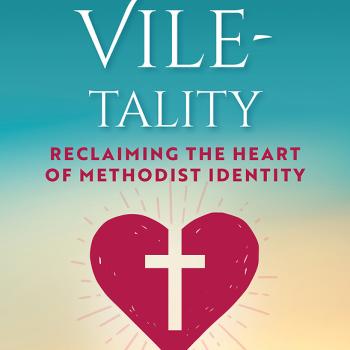
Wesleyan Vile-Tality Book Review

Psychedelics and Christian Faith


White Christian Nationalism and the Threat to the...
TRENDING AT PATHEOS General Christian
Indigenous Peoples’ Day and the Church
Indigenous' Peoples Day or Columbus Day? Depending on where you live...

When Spiritual Growth Looks Like Losing Ground
Four Passive Spiritual Disciplines: An Introduction When I was a college freshman,...

Faith and Finding Your Current Season
“To everything there is a season,” Ecclesiastes tells us, “and a time...

Did Jesus Fear God's Wrath in Gethsemane?
That Time Jesus Was Terrified Before we begin, let me say at...

A Generation Searching for God in All the...
Revival Begins With God’s People! Holidays Are Upon Us! Welcome to October!...

Faith and End of Life Planning
The Psalmist's prayer to “teach us to number our days, that we...
view all General Christian blogs
What Are Your Thoughts?leave a comment
Ad-Free & Subscriber Log-In Subscription Support
- About Us
- 2026 Calendar
- Videos
- Podcasts
- Library of World Religions
- Faith In Media Tracker
- Advertise With Us
- Write for Us
- Privacy Policy
- Terms of Service
- Do Not Sell My Data
- Contact Us
- Radiant Digital
- Manage Newsletter Subscriptions
- Unsubscribe From Notifications
- Sitemap
Copyright 2008-2026, Patheos. All rights reserved.
Subscription Support Ad-Free & Subscriber Log-In
Follow Patheos