
BuddhistCatholicContemplativeEvangelicalGeneral ChristianHinduJewishLatter-day SaintMuslimNew VisionsProgressive Christian
Beliefs
- Buddhist
- Catholic
- Contemplative
- Evangelical
- General Christian
- Hindu
- Jewish
- Latter-day Saint
- More Voices
- Muslim
- New Visions
- Pagan
- Progressive Christian
Topics
- Religion News
- Food and Religion
- Sports and Religion
- Religious Art
- Religious Music and Entertainment
- Religious Events
- History and Religion
- Style and Religion
- Politics and Religion
- Women in Religion
- Recreation Outdoors and Religion
- Business Finance and Religion
- Careers Workplace and Religion
- Education and Religion
- Family Parenting and Religion
- Health Fitness and Religion
- Home and Religion
- Relationships and Religion
- Technology and Religion
- Travel and Religion
Columnists
- Buddhist Columnists
- Business Finance and Religion Columnists
- Careers Workplace and Religion Columnists
- Catholic Columnists
- Contemplative Columnists
- Education and Religion Columnists
- Evangelists Columnists
- Family Parenting and Religion Columnists
- General Christian Columnists
- Health Fitness and Religion Columnists
- Hindu Columnists
- History and Religion Columnists
- Home and Religion Columnists
- Jewish Columnists
- More Voices Columnists
- Latter Day Columnists
- Muslim Columnists
- New Visions Columnists
- Nonreligious Columnists
- Pagan Columnists
- Politics and Religion Columnists
- Progressive Columnists
- Recreation Outdoors and Religion Columnists
- Relationships and Religion Columnists
- Religion News Columnists
- Religious Art Columnists
- Religious Events Columnists
- Religious Music and Entertainment Columnists
- Sports and Religion Columnists
- Style and Religion Columnists
- Technology and Religion Columnists
- Travel and Religion Columnists
- Women in Religion Columnists
Resource Library
- 2026 Calendar
- Library of World Religions
- The 100 Most Holy Places on Earth
- Patheos Answers
- Podcasts
- Videos
- Faith Leaders Database
- Anglican Episcopalian
- Bahai
- Baptist
- Buddhism
- Christianity
- Confucianism
- Eastern Orthodoxy
- Hinduism
- Holiness and Pentecostal
- ISKCON
- Islam
- Judaism
- Lutheran
- Methodist
- The Church of Jesus Christ of Latter-day Saints
- New Age
- Paganism
- Presbytarian and Reformed
- Protestantism
- Religion Behind the Scenes
- Roman Catholic
- Scientology
- Shia Islam
- Sikhism
- Sufism
- Sunni Islam
- Taoism
- Zen
- See all religions
Research Tools
 Ad-Free & Subscriber Log-In Subscription Support
Ad-Free & Subscriber Log-In Subscription Support
Follow Patheos 

- Trending:
- Forgiveness
- |
- Marriage
- |
- Consciousness
- |
- Death Penalty
- |
- Election
- |
- Halloween

- Home
- General Christian
- History and Religion
- What Does Jesus Have in Common with Socrates?
What Does Jesus Have in Common with Socrates?
Last updated on: August 19, 2024 at 2:14 am by Brad Thibodeaux
What Does Jesus Have in Common with Socrates? 2024-08-17T15:15:46-04:00 Brad Thibodeaux
Patheos Explore the world's faith through different perspectives on religion and spirituality! Patheos has the views of the prevalent religions and spiritualities of the world.
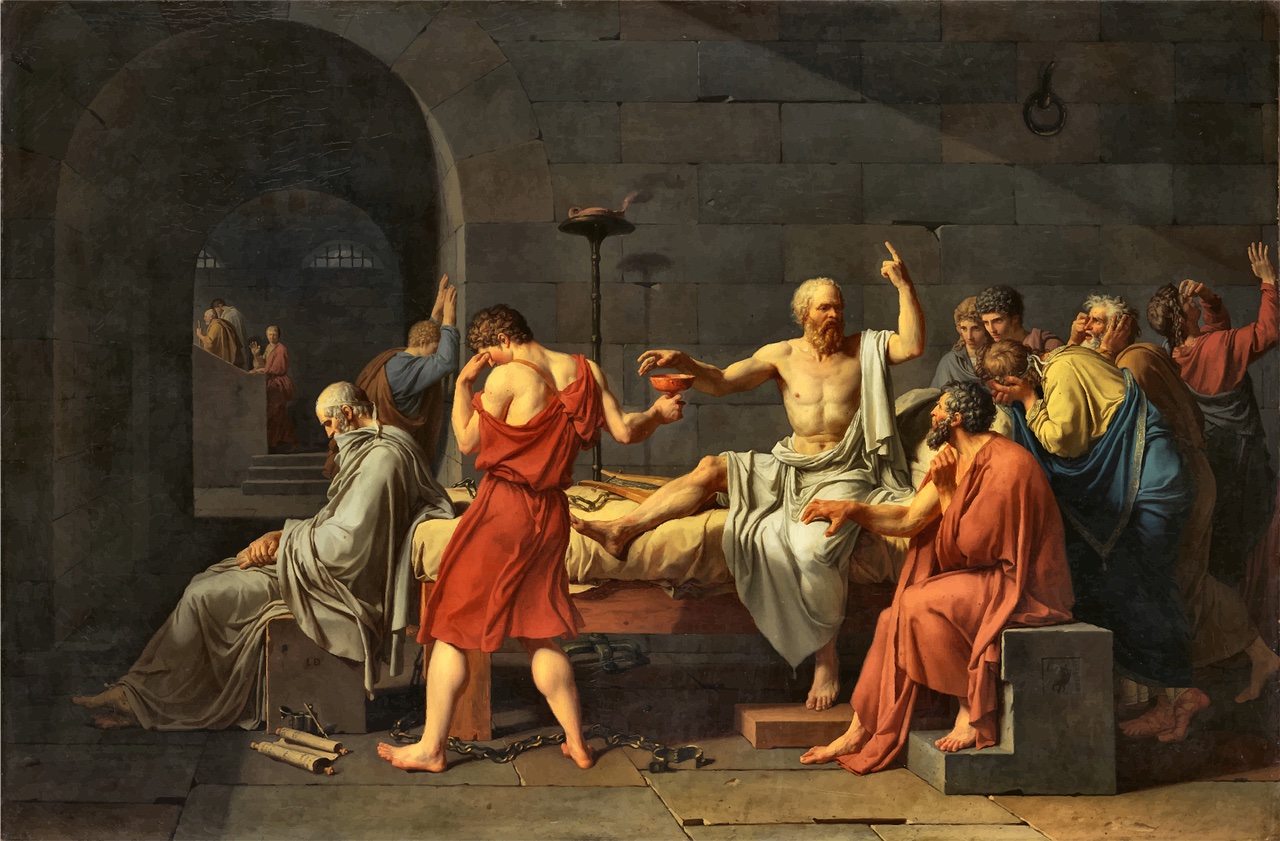
What Does Jesus Have in Common with Socrates? Image by Gordon Johnson / Pixabay
While each gospel has their own voice and audience, the gospel of John is unique for several reasons. Scholarly consensus has this gospel being written later than the Synoptics, and John chooses not to include many of the same stories found in Matthew, Mark, and Luke. Some earlier theologians believed this was because John was ‘filling in the gaps’ of the Synoptics. However, when we consider the departure from that narrative style towards a more apologetic voice, it seems unlikely. Rather, John is more interested in convincing his audience rather than completing someone else’s work.
John is written many years after the Synoptic Gospels and in the midst of the dispersion of the Jewish and Christian people after the First Jewish Revolt. Priorities shifted by the time John wrote his gospel. He wants to show that Jesus is the promised Christ, God incarnate. Jesus is superior to the good life of the Hellenistic philosophers (John 20:31).
Jesus and Socrates
In the Hellenized, Roman occupied Jerusalem, a wise man is a great speaker and debater. Socrates, one of the greatest ancient Greek philosophers, is known for the way he speaks with his opponents and the Sophists. We see Jesus using the Socratic Dialogues in a similar way, and getting similar responses.
In the first book of The Republic, Socrates is in dialogue with several Sophists about the meaning of justice. During the dialogue, he is met with multiple answers. Socrates continues the conversation, pulling out a deeper response that gets to the heart of justice. Cephalus’ answer is questioned, but no response is recorded. Polemarchus works through his answer and discovers an inconsistency. Thrasymachus pushes back against Socrates, but eventually does not give a sufficient alternative.
In a similar way, Jesus often responds to questions with more questions. In the Synoptic Gospels, Jesus may prefer a parable or miracle, but John’s Jesus is thoroughly Hellenized. And, similarly to Socrates, Jesus is met with multiple responses. Nicodemus comes to Jesus to ask him for the truth – who is he really? In John 3:1-21, Jesus answers Nicodemus with another question. Only when Nicodemus is clearly puzzled (not understanding the double entendre) does Jesus explain himself. Still, the answer is not as simple as it could be – Jesus employs high rhetoric to reply.
While Nicodemus could represent the Polemarchus character from The Republic, the Jews – as characterized by John as a whole – are clearly the professional intellectuals who cannot understand Jesus. They constantly try to trap Jesus in word puzzles and seemingly unsolvable riddles. When Jesus responds with his own questions (or talks about divinity), they become angry and try to stone him (John 8:58-59; 10:30-31).
What Now?
The Jesus in John is more than a retelling of the Synoptic Gospels or filling in the gaps. John is making serious theological moves based on what he sees as most important. Christianity was becoming increasingly less Jewish and spreading further throughout the Roman Empire. Jesus’ authority had to stretch beyond Jerusalem.
The high Christology, coupled with the Socratic discourses, ensured that Jesus would be viewed by Jew and Gentile as at least an authoritative messenger by God. John goes to great lengths to prove that Jesus was actually the Son of God – aggravating both the Jewish religious elites and the Roman emperor cult.
How then should we retell the story of Jesus in light of modernity?
 Brad is a graduate student at Northwind Theological Seminary studying theology and the changing religious landscape in America. He works as a co-investigator at the University of Rhode Island’s College of Pharmacy providing education and support for rural New Englanders impacted by the opioid epidemic. Brad spends nights and weekends playing in regional bands as a bassist, guitarist, and vocalist. When not at a computer, he loves to spend time with his wife and chasing his toddler around the house. You can go to his website to get updates on his writing and other events.
Progressive Christian
Previous Post

July 10, 2024
Is Jesus Just Another Greek Hero?
Next Post
August 22, 2024 Which Jesus Do We See?
Recent Comments
Browse Our Archives
Select a Category American History Book Review Careers Church History Early Church Education and Religion Evangelical Gaza Home and Religion Israel Politics Reflections Spooky Theology and Philosophy Uncategorized Women in Religion Workplace and Religion
Select a Month October 2026 January 2026 November 2025 August 2025 March 2025 February 2025 November 2024 October 2024 August 2024 July 2024 June 2024 April 2024 March 2024 January 2024 December 2023 November 2023 October 2023 September 2023 August 2023 July 2023 June 2023 May 2023 April 2023 March 2023
TAKE THE
Religious Wisdom Quiz
How many days and nights did it rain during the flood?
Select your answer to see how you score.
7 10 12 40
Related posts from The Prodigal Empire

Wesleyan Vile-Tality Book Review


White Christian Nationalism and the Threat to the...
TRENDING AT PATHEOS General Christian

A Biblical Vision of Success in Christian Life...
The Concern and Quest Recent trends and tendencies I note around me...

Indigenous Peoples’ Day and the Church
Indigenous' Peoples Day or Columbus Day? Depending on where you live...

When Spiritual Growth Looks Like Losing Ground
Four Passive Spiritual Disciplines: An Introduction When I was a college freshman,...

Faith and Finding Your Current Season
“To everything there is a season,” Ecclesiastes tells us, “and a time...

Did Jesus Fear God's Wrath in Gethsemane?
That Time Jesus Was Terrified Before we begin, let me say at...

A Generation Searching for God in All the...
Revival Begins With God’s People! Holidays Are Upon Us! Welcome to October!...
view all General Christian blogs
What Are Your Thoughts?leave a comment
Ad-Free & Subscriber Log-In Subscription Support
- About Us
- 2026 Calendar
- Videos
- Podcasts
- Library of World Religions
- Faith In Media Tracker
- Advertise With Us
- Write for Us
- Privacy Policy
- Terms of Service
- Do Not Sell My Data
- Contact Us
- Radiant Digital
- Manage Newsletter Subscriptions
- Unsubscribe From Notifications
- Sitemap
Copyright 2008-2026, Patheos. All rights reserved.
Subscription Support Ad-Free & Subscriber Log-In
Follow Patheos