
BuddhistCatholicContemplativeEvangelicalGeneral ChristianHinduJewishLatter-day SaintMuslimNew VisionsProgressive Christian
Beliefs
- Buddhist
- Catholic
- Contemplative
- Evangelical
- General Christian
- Hindu
- Jewish
- Latter-day Saint
- More Voices
- Muslim
- New Visions
- Pagan
- Progressive Christian
Topics
- Religion News
- Food and Religion
- Sports and Religion
- Religious Art
- Religious Music and Entertainment
- Religious Events
- History and Religion
- Style and Religion
- Politics and Religion
- Women in Religion
- Recreation Outdoors and Religion
- Business Finance and Religion
- Careers Workplace and Religion
- Education and Religion
- Family Parenting and Religion
- Health Fitness and Religion
- Home and Religion
- Relationships and Religion
- Technology and Religion
- Travel and Religion
Columnists
- Buddhist Columnists
- Business Finance and Religion Columnists
- Careers Workplace and Religion Columnists
- Catholic Columnists
- Contemplative Columnists
- Education and Religion Columnists
- Evangelists Columnists
- Family Parenting and Religion Columnists
- General Christian Columnists
- Health Fitness and Religion Columnists
- Hindu Columnists
- History and Religion Columnists
- Home and Religion Columnists
- Jewish Columnists
- More Voices Columnists
- Latter Day Columnists
- Muslim Columnists
- New Visions Columnists
- Nonreligious Columnists
- Pagan Columnists
- Politics and Religion Columnists
- Progressive Columnists
- Recreation Outdoors and Religion Columnists
- Relationships and Religion Columnists
- Religion News Columnists
- Religious Art Columnists
- Religious Events Columnists
- Religious Music and Entertainment Columnists
- Sports and Religion Columnists
- Style and Religion Columnists
- Technology and Religion Columnists
- Travel and Religion Columnists
- Women in Religion Columnists
Resource Library
- 2026 Calendar
- Library of World Religions
- The 100 Most Holy Places on Earth
- Patheos Answers
- Podcasts
- Videos
- Faith Leaders Database
- Anglican Episcopalian
- Bahai
- Baptist
- Buddhism
- Christianity
- Confucianism
- Eastern Orthodoxy
- Hinduism
- Holiness and Pentecostal
- ISKCON
- Islam
- Judaism
- Lutheran
- Methodist
- The Church of Jesus Christ of Latter-day Saints
- New Age
- Paganism
- Presbytarian and Reformed
- Protestantism
- Religion Behind the Scenes
- Roman Catholic
- Scientology
- Shia Islam
- Sikhism
- Sufism
- Sunni Islam
- Taoism
- Zen
- See all religions
Research Tools
 Ad-Free & Subscriber Log-In Subscription Support
Ad-Free & Subscriber Log-In Subscription Support
Follow Patheos 

- Trending:
- Forgiveness
- |
- Marriage
- |
- Consciousness
- |
- Death Penalty
- |
- Election
- |
- Halloween

- Home
- General Christian
- History and Religion
- Is There a God After Deconstruction?
Is There a God After Deconstruction?
Last updated on: April 3, 2024 at 2:46 am by Brad Thibodeaux
Is There a God After Deconstruction? 2024-04-02T13:46:53-04:00 Brad Thibodeaux
Patheos Explore the world's faith through different perspectives on religion and spirituality! Patheos has the views of the prevalent religions and spiritualities of the world.
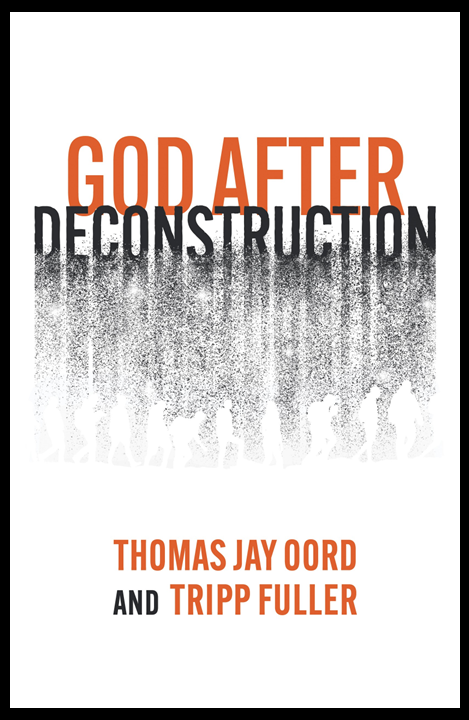
God After Deconstruction. Cover provided by Tom Oord
Deconstruction has become a buzzword in American Christianity. This single word can be a beacon of light or the boogeyman under the bed. American Conservative Christianity have demonized the movement, most notably in recent months with a book by Alisa Childers and Tim Barnett. Those who criticize the idea of deconstruction favor more conservative and traditional Christian expression in America.
However, this traditional American expression of Christianity is the exact thing that people are deconstructing. In Oord and Fuller’s book, God After Deconstruction, they note that people are calling into question and doubting ideas about God, the Bible, and Christianity that were once considered immovable. They’re careful to note that it is different from Derrida’s philosophical deconstruction, although I think the fluidity of meaning is actually a great example of what Derrida was arguing for.
In God After Deconstruction, Oord and Fuller have looked over formal and anecdotal evidence for the reason as to why Christians are leaving their old religion. The rise of those who do not identify with any organized religion – the ‘Nones’ – shows that something is changing. From their research, they invite the reader to explore nine common reasons why people leave the faith while offering their solution – Open and Relational Theology.
Common Problems in Christianity
Oord and Fuller identify nine main reasons people leave American Christianity, ranging from high philosophical concepts to our everyday realities. They include the loss of certainty around the reality of the Bible and other religions and modern science about the earth and the fluidity of gender. They note perennial problems of theodicy – unnecessary suffering inside and outside the Church – as well as the need for purpose. Their take on Christian Nationalism is especially potent in America today.
Their arguments are emboldened with the frequent quotes from people who have experienced their own deconstruction. While both Tom and Tripp share their own rethinking experience, the book begins with a story of incredible uncertainty. They take great care to center each person’s experience. There are quotes from thought leaders to ‘normal people’ that help the reader identify the reality of what is happening throughout American Christianity.
Their writing style is formulaic: They demonstrate the problem with a Conservative Christian belief through experience and reason. While they bring the topic to its conclusion under the traditional frame, they offer a solution in Open and Relational Theology. This helps the reader stay on track and task, allowing for more connection with their own propositions.
A Proposed Solution
In order to move past these problems described and encourage the flourishing of all things, Oord and Fuller ask the reader to consider an alternative. Open and Relational Theology (ORT) makes several shifts to traditional American Christianity. I’ll try not to write another book describing this book. Rather, let’s start at the end and platform the ORT pillars. The alternative position they propose hinge on these 5 concepts: openness, relationally, freedom, love, and Jesus.
ORT rejects any sort of determinism and starts with the notion that God is the nature of love. Coercion is not love, therefore there has to be openness, freedom, and relationality. It allows for us to validate and value our own experiences and reject the belief that God allows, permits, or even prescribes evil. ORT gives space for people to evaluate and reject ideas in the Bible that are contrary to what we know about Jesus, science, or the rise of religious nationalism. They also put forth a panentheistic view of syncretism and our need for existential completeness.
Who Should Read This?
Is there a God after deconstruction? They offer this book to those who have found themselves at this crossroads. To the people “who want a vision of the divine in harmony with what they know about themselves and the world of science, arts, and humanities” (19). However, they note that this might be uncomfortable for some. People don’t often choose to rearrange their entire worldview and this can lead to confusion, fear, and isolation. If you’re reconsidering the faith that has been passed on, either generally or in one of the specifics they touch on, this may help you. If you’re comfortable where you are, but are curious with what’s going on in the deep end of the pool, this is a great primer (with fantastic sources for further reading) to dip your toes into how Open and Relational Theology can refigure faith.
 Brad is a dual master’s student, studying history at the University of Rhode Island and a seminary student at Northwind Theological Seminary studying theology and the changing religious landscape in America. His master’s thesis looks at the role of the 20th century American Church in labor and social reforms. He works as a research assistant at the University of Rhode Island’s College of Pharmacy providing education and support for rural New Englanders impacted by the opioid epidemic. Brad spends nights and weekends playing in regional bands as a bassist, guitarist, and vocalist. When not at a computer, he loves to spend time with his wife and chasing his toddler around the house. You can go to his website to get updates on his writing, podcasting, and other events.
Progressive Christian
Politics and Religion
Previous Post
March 13, 2024
God's Commandments for Modern America
Next Post

June 18, 2024 Jesus as a Rural Preacher
Recent Comments
Browse Our Archives
Select a Category American History Book Review Careers Church History Early Church Education and Religion Evangelical Gaza Home and Religion Israel Politics Reflections Spooky Theology and Philosophy Uncategorized Women in Religion Workplace and Religion
Select a Month October 2026 January 2026 November 2025 August 2025 March 2025 February 2025 November 2024 October 2024 August 2024 July 2024 June 2024 April 2024 March 2024 January 2024 December 2023 November 2023 October 2023 September 2023 August 2023 July 2023 June 2023 May 2023 April 2023 March 2023
TAKE THE
Religious Wisdom Quiz
What does "Shema" mean in Hebrew?
Select your answer to see how you score.
Wait Pray Obey Hear
Related posts from The Prodigal Empire
Wesleyan Vile-Tality Book Review
Psychedelics and Christian Faith

TRENDING AT PATHEOS General Christian

Indigenous Peoples’ Day and the Church
Indigenous' Peoples Day or Columbus Day? Depending on where you live...

When Spiritual Growth Looks Like Losing Ground
Four Passive Spiritual Disciplines: An Introduction When I was a college freshman,...

Faith and Finding Your Current Season
“To everything there is a season,” Ecclesiastes tells us, “and a time...

Did Jesus Fear God's Wrath in Gethsemane?
That Time Jesus Was Terrified Before we begin, let me say at...

A Generation Searching for God in All the...
Revival Begins With God’s People! Holidays Are Upon Us! Welcome to October!...

Faith and End of Life Planning
The Psalmist's prayer to “teach us to number our days, that we...
view all General Christian blogs
What Are Your Thoughts?leave a comment
Ad-Free & Subscriber Log-In Subscription Support
- About Us
- 2026 Calendar
- Videos
- Podcasts
- Library of World Religions
- Faith In Media Tracker
- Advertise With Us
- Write for Us
- Privacy Policy
- Terms of Service
- Do Not Sell My Data
- Contact Us
- Radiant Digital
- Manage Newsletter Subscriptions
- Unsubscribe From Notifications
- Sitemap
Copyright 2008-2026, Patheos. All rights reserved.
Subscription Support Ad-Free & Subscriber Log-In
Follow Patheos