
BuddhistCatholicContemplativeEvangelicalGeneral ChristianHinduJewishLatter-day SaintMuslimNew VisionsProgressive Christian
Beliefs
- Buddhist
- Catholic
- Contemplative
- Evangelical
- General Christian
- Hindu
- Jewish
- Latter-day Saint
- More Voices
- Muslim
- New Visions
- Pagan
- Progressive Christian
Topics
- Religion News
- Food and Religion
- Sports and Religion
- Religious Art
- Religious Music and Entertainment
- Religious Events
- History and Religion
- Style and Religion
- Politics and Religion
- Women in Religion
- Recreation Outdoors and Religion
- Business Finance and Religion
- Careers Workplace and Religion
- Education and Religion
- Family Parenting and Religion
- Health Fitness and Religion
- Home and Religion
- Relationships and Religion
- Technology and Religion
- Travel and Religion
Columnists
- Buddhist Columnists
- Business Finance and Religion Columnists
- Careers Workplace and Religion Columnists
- Catholic Columnists
- Contemplative Columnists
- Education and Religion Columnists
- Evangelists Columnists
- Family Parenting and Religion Columnists
- General Christian Columnists
- Health Fitness and Religion Columnists
- Hindu Columnists
- History and Religion Columnists
- Home and Religion Columnists
- Jewish Columnists
- More Voices Columnists
- Latter Day Columnists
- Muslim Columnists
- New Visions Columnists
- Nonreligious Columnists
- Pagan Columnists
- Politics and Religion Columnists
- Progressive Columnists
- Recreation Outdoors and Religion Columnists
- Relationships and Religion Columnists
- Religion News Columnists
- Religious Art Columnists
- Religious Events Columnists
- Religious Music and Entertainment Columnists
- Sports and Religion Columnists
- Style and Religion Columnists
- Technology and Religion Columnists
- Travel and Religion Columnists
- Women in Religion Columnists
Resource Library
- 2026 Calendar
- Library of World Religions
- The 100 Most Holy Places on Earth
- Patheos Answers
- Podcasts
- Videos
- Faith Leaders Database
- Anglican Episcopalian
- Bahai
- Baptist
- Buddhism
- Christianity
- Confucianism
- Eastern Orthodoxy
- Hinduism
- Holiness and Pentecostal
- ISKCON
- Islam
- Judaism
- Lutheran
- Methodist
- The Church of Jesus Christ of Latter-day Saints
- New Age
- Paganism
- Presbytarian and Reformed
- Protestantism
- Religion Behind the Scenes
- Roman Catholic
- Scientology
- Shia Islam
- Sikhism
- Sufism
- Sunni Islam
- Taoism
- Zen
- See all religions
Research Tools
 Ad-Free & Subscriber Log-In Subscription Support
Ad-Free & Subscriber Log-In Subscription Support
Follow Patheos 

- Trending:
- Forgiveness
- |
- Marriage
- |
- Consciousness
- |
- Death Penalty
- |
- Election
- |
- Halloween

- Home
- General Christian
- History and Religion
- American Christianity Has Failed The Family
American Christianity Has Failed The Family
Last updated on: September 1, 2023 at 10:23 am by Brad Thibodeaux
American Christianity Has Failed The Family 2023-09-01T10:23:34-04:00 Brad Thibodeaux
Patheos Explore the world's faith through different perspectives on religion and spirituality! Patheos has the views of the prevalent religions and spiritualities of the world.

Image by Esther Merbt / Pixabay
I promise this isn’t clickbait. I really think the American Church has failed the family.
Even with the youth programs, small groups, and college outreach, the American Church has failed the family.
Forget the pro-life rhetoric and sanctity of marriage speeches. The Evangelical American Church has failed to produce strong families that can handle our 21st century. Why?
Post Structure?
The 1900’s was a dramatic time in world history. Two world wars, several international conflicts, and the wild advancement in technology was unprecedented. Before the 20th century, most Christians around the world would consider themselves amillennialists. They would have thought that the Church was ushering the reign of Jesus on earth by the gradual advancement and betterment of the human race. After all, things were getting better and better for Europeans around the world.
The destructive power of the atom bombs dropped on Japan changed the way the world saw everything. We were now capable of desolating large areas of land, not to mention people. This, and the horrors of World War II, altered our view of systems in our lives.
Philosophy in the mid-20th century called into question the structures we had been so comfortable with for so long. Not only nation states, but social norms as well as religious dogmas. If the Church in Germany could sponsor and support the Nazi agenda, how could we trust it to have the interest of the people at heart? Was it systemically rotten or was it just a branch to prune?
While Evangelicalism was rising in America, the Mainline Church was on the decline. It seemed that the promise of a future heaven was more probable. Throughout the 1960’s and 70’s, the Jesus movement found a new way for Christianity to blossom in America. This group incorporated modern music and focused more on the radical side of Jesus – feeding the poor and helping the needy.
The 1980’s and 90’s was the rise of the megachurch and televangelists. This hypercapitalistic Christianity measures success on attendance and tithes. Consumer Christianity continued into the 21st century and we see the fruits of this model.
The product of consumer Christianity and a skeptical public is a Christianity that has no roots.
Deep Roots
If we are becoming more skeptical, why would a deep rooted Christian tradition be better?
I can only speak for myself, but learning about the history of the Church and theology has brought me to an older tradition. What the Evangelical Church in America lacks is the deep tradition of thinking through challenges. Our problems are not fundamentally new, but they do wear new hats.
Mainline denominations (Episcopal/Anglican, Methodist, Lutheran, etc.) have a rich history of thinkers wrestling with new ideas. Philosophical arguments with Jesus in the center are part of their tradition. The stability of the teaching of these Churches is like the deep root structure of a tree. As generations of people go through these denominations, their interpretation of the Scripture is adapted for the time they are in. We can see the line that stretches, connecting dots along the way.
The modern skeptic may be able to find more authentic conversations in these denominations. Or at least I did. I found a history of Churches that was not afraid to talk about the issues of the day. More than talk about the issues, I found philosophers who took them seriously. The Church is a prism – each color is important to the whole. This prism is a small sampling of what Jesus is doing in the world today.
What Now?
I see a major flaw in the American Evangelical Church in its inability to critique itself. The Roman Catholic Church has a history of sects inside the Catholic faith – the Dominicans, Franciscans, Benedictines, etc. The Methodists started as a radical sect of the Church of England, but eventually found themselves separated in America. Still, the goal was to reform the Church from the inside.
Evangelicalism, and many of the American Protestant denominations, separate and silo themselves from the others. This is even more severe in fundamentalist churches. Rather than struggle with issues brought to light by science and society, they tend to double down and retreat.
What makes a strong family? This is subjective of course, but we need to be able to work through the changes in our time. We need to give our children tools to work through our modern ethical and moral discussions. Small groups of dogmatic beliefs can’t prepare a sheltered child from the world forever. We need to teach the next generation how to view the world through the loving lens of Jesus. That’s how we build a stronger family and society.
Previous Post

August 25, 2023
Can I Eliminate Suffering From My Life?
Next Post

September 1, 2023 Labor Day: The Lost Christian Holiday
Recent Comments
Browse Our Archives
Select a Category American History Book Review Careers Church History Early Church Education and Religion Evangelical Gaza Home and Religion Israel Politics Reflections Spooky Theology and Philosophy Uncategorized Women in Religion Workplace and Religion
Select a Month October 2026 January 2026 November 2025 August 2025 March 2025 February 2025 November 2024 October 2024 August 2024 July 2024 June 2024 April 2024 March 2024 January 2024 December 2023 November 2023 October 2023 September 2023 August 2023 July 2023 June 2023 May 2023 April 2023 March 2023
TAKE THE
Religious Wisdom Quiz
I am a book of sermons and laws, Moses' final words before entering the Promised Land. What book am I?
Select your answer to see how you score.
The second law Deuteronomy Moses' testimony The law
Related posts from The Prodigal Empire

Indigenous Peoples’ Day and the Church

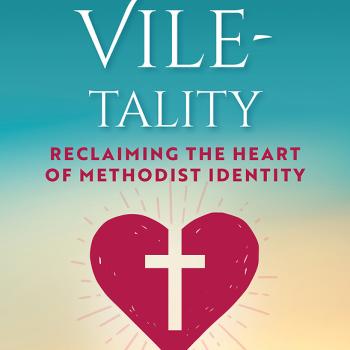
Wesleyan Vile-Tality Book Review

Psychedelics and Christian Faith
TRENDING AT PATHEOS General Christian

A Biblical Vision of Success in Christian Life...
The Concern and Quest Recent trends and tendencies I note around me...

Indigenous Peoples’ Day and the Church
Indigenous' Peoples Day or Columbus Day? Depending on where you live...

When Spiritual Growth Looks Like Losing Ground
Four Passive Spiritual Disciplines: An Introduction When I was a college freshman,...

Faith and Finding Your Current Season
“To everything there is a season,” Ecclesiastes tells us, “and a time...

Did Jesus Fear God's Wrath in Gethsemane?
That Time Jesus Was Terrified Before we begin, let me say at...

A Generation Searching for God in All the...
Revival Begins With God’s People! Holidays Are Upon Us! Welcome to October!...
view all General Christian blogs
What Are Your Thoughts?leave a comment
Ad-Free & Subscriber Log-In Subscription Support
- About Us
- 2026 Calendar
- Videos
- Podcasts
- Library of World Religions
- Faith In Media Tracker
- Advertise With Us
- Write for Us
- Privacy Policy
- Terms of Service
- Do Not Sell My Data
- Contact Us
- Radiant Digital
- Manage Newsletter Subscriptions
- Unsubscribe From Notifications
- Sitemap
Copyright 2008-2026, Patheos. All rights reserved.
Subscription Support Ad-Free & Subscriber Log-In
Follow Patheos