
BuddhistCatholicContemplativeEvangelicalGeneral ChristianHinduJewishLatter-day SaintMuslimNew VisionsProgressive Christian
Beliefs
- Buddhist
- Catholic
- Contemplative
- Evangelical
- General Christian
- Hindu
- Jewish
- Latter-day Saint
- More Voices
- Muslim
- New Visions
- Pagan
- Progressive Christian
Topics
- Religion News
- Food and Religion
- Sports and Religion
- Religious Art
- Religious Music and Entertainment
- Religious Events
- History and Religion
- Style and Religion
- Politics and Religion
- Women in Religion
- Recreation Outdoors and Religion
- Business Finance and Religion
- Careers Workplace and Religion
- Education and Religion
- Family Parenting and Religion
- Health Fitness and Religion
- Home and Religion
- Relationships and Religion
- Technology and Religion
- Travel and Religion
Columnists
- Buddhist Columnists
- Business Finance and Religion Columnists
- Careers Workplace and Religion Columnists
- Catholic Columnists
- Contemplative Columnists
- Education and Religion Columnists
- Evangelists Columnists
- Family Parenting and Religion Columnists
- General Christian Columnists
- Health Fitness and Religion Columnists
- Hindu Columnists
- History and Religion Columnists
- Home and Religion Columnists
- Jewish Columnists
- More Voices Columnists
- Latter Day Columnists
- Muslim Columnists
- New Visions Columnists
- Nonreligious Columnists
- Pagan Columnists
- Politics and Religion Columnists
- Progressive Columnists
- Recreation Outdoors and Religion Columnists
- Relationships and Religion Columnists
- Religion News Columnists
- Religious Art Columnists
- Religious Events Columnists
- Religious Music and Entertainment Columnists
- Sports and Religion Columnists
- Style and Religion Columnists
- Technology and Religion Columnists
- Travel and Religion Columnists
- Women in Religion Columnists
Resource Library
- 2026 Calendar
- Library of World Religions
- The 100 Most Holy Places on Earth
- Patheos Answers
- Podcasts
- Videos
- Faith Leaders Database
- Anglican Episcopalian
- Bahai
- Baptist
- Buddhism
- Christianity
- Confucianism
- Eastern Orthodoxy
- Hinduism
- Holiness and Pentecostal
- ISKCON
- Islam
- Judaism
- Lutheran
- Methodist
- The Church of Jesus Christ of Latter-day Saints
- New Age
- Paganism
- Presbytarian and Reformed
- Protestantism
- Religion Behind the Scenes
- Roman Catholic
- Scientology
- Shia Islam
- Sikhism
- Sufism
- Sunni Islam
- Taoism
- Zen
- See all religions
Research Tools
 Ad-Free & Subscriber Log-In Subscription Support
Ad-Free & Subscriber Log-In Subscription Support
Follow Patheos 

- Trending:
- Forgiveness
- |
- Marriage
- |
- Consciousness
- |
- Death Penalty
- |
- Election
- |
- Halloween

- Home
- General Christian
- History and Religion
- Finding the Devil in America: Collective Forces
Finding the Devil in America: Collective Forces
Last updated on: May 4, 2023 at 7:08 am by Brad Thibodeaux
Finding the Devil in America: Collective Forces 2023-05-01T14:05:46-04:00 Brad Thibodeaux
Patheos Explore the world's faith through different perspectives on religion and spirituality! Patheos has the views of the prevalent religions and spiritualities of the world.
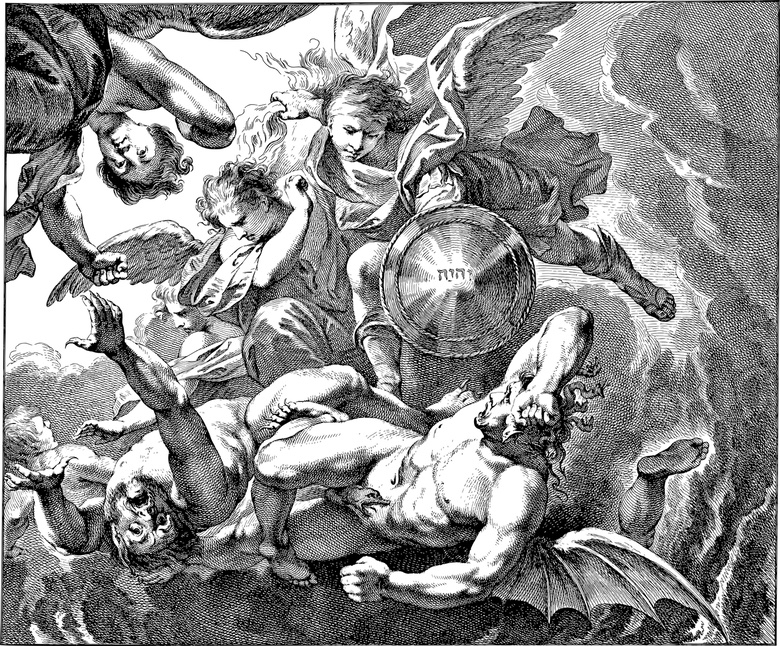
Image by Gordon Johnson / Pixabay
While the First Great Awakening was a natural byproduct of the English settlers in America, the Second Great Awakening could be seen as the consequence of the Revolutionary War. The Colonists saw Satan as a physical entity acting in the world. Early America saw the devil walking the earth as the ultimate temper. America had just gained its freedom from England and was figuring out who it was going to be. Now, as the issues of the nation change, so does the personification of evil.
The Second Great Awakening (1790’s – 1850’s) saw a massive change in American Christianity. While some things stayed the same – the need for personal piety and barn revivals – the need for the awakening had shifted. It was in this time that new Christian denominations arise. Ellen G. White helps start the Seventh-Day Adventist Church in Michigan. Joseph Smith and his Church of Latter Day Saints roam the country before disaster. It was this religious populism that changed America.
The Need For Social Reforms
One thing that sets the Second Great Awakening apart from the first is the concept of collective reform. America was in trouble and the only way to solve the problem was conversion. This is where the temperance movement finds its first foothold. While the country expanded, the saloons were full. Presbyterian minister Lymam Beecher published six sermons in 1826 on the evils of alcohol. This idea of temperance was adopted by both Seventh-Day Adventists and Mormons. The goal of the temperance movement was to strengthen the family unit and discourage the men of the house from spending their time and money at the bars.
This period was also the rise of the abolition of slavery. Many evangelical Christians saw slavery as a violation of Christian principles. They worked to promote abolitionism through publishing anti-slavery literature and organizing abolitionist societies. The Quaker denomination was a major force in the religious abolition stance. Quakerism talks about the inherent value of all humanity. They were the first American denomination to decry slavery and see the force of collective evil.
Collective Resistance
Quakers rejected the notion of Satan as a literal being, instead viewing evil as a product of human actions. This belief led them to take a more active role in the abolitionist movement and to work towards the eradication of slavery. This was also a shift away from the literal, physical Satan that we see in other denominations.
Both Latter Day Saints and Seventh-Day Adventists see Satan as a physical entity. Even still, the fight between good and evil is more cosmic than physical. The Puritan and first Great Awakening was led by Calvinist theology. Here, we see the importance of human agency. It is our job to read the bible, pray, and rely on the Holy Spirit to guide our lives.
Therefore, each person must live a life that helps the entire community stay away from evil. Satan and evil were a force that was present in the world but could be defeated through collective action. Each individual (who was praying and leading good lives on their own) could come together to create the world God wanted. This collective action would weaken and destroy evil altogether.
They saw themselves as soldiers in a spiritual battle against the forces of darkness. They believed that by working together they could ultimately triumph over evil. This view of Satan and evil helped to inspire a wide range of social and political movements in the United States throughout the 19th and early 20th centuries.
What Now?
By shifting the concept of Satan from a physical entity to a force in the world, evil was broadened to systemic proportions. When Satan is ‘the spirit of the age’ instead of a thing, we need to cooperate. Who and what we think Satan is will determine how we live our lives. By opening up Satan to be more than just an entity, we allow ourselves to see the powers and the systems of our day to be operating against what God wants. These satanic frameworks (ways of operating in the world that are not of God) can be limited and destroyed by cooperative action and collective resistance.
Previous Post
May 2, 2023
Finding the Devil in America: Hell Finds A Home
Next Post

May 16, 2023 Christ in Capital: What's Going On?
Recent Comments
Browse Our Archives
Select a Category American History Book Review Careers Church History Early Church Education and Religion Evangelical Gaza Home and Religion Israel Politics Reflections Spooky Theology and Philosophy Uncategorized Women in Religion Workplace and Religion
Select a Month October 2026 January 2026 November 2025 August 2025 March 2025 February 2025 November 2024 October 2024 August 2024 July 2024 June 2024 April 2024 March 2024 January 2024 December 2023 November 2023 October 2023 September 2023 August 2023 July 2023 June 2023 May 2023 April 2023 March 2023
TAKE THE
Religious Wisdom Quiz
Who denied knowing Jesus three times before the rooster crowed?
Select your answer to see how you score.
James Judas Peter Andrew
Related posts from The Prodigal Empire

Indigenous Peoples’ Day and the Church
Wesleyan Vile-Tality Book Review

Psychedelics and Christian Faith
TRENDING AT PATHEOS General Christian

A Biblical Vision of Success in Christian Life...
The Concern and Quest Recent trends and tendencies I note around me...

Indigenous Peoples’ Day and the Church
Indigenous' Peoples Day or Columbus Day? Depending on where you live...

When Spiritual Growth Looks Like Losing Ground
Four Passive Spiritual Disciplines: An Introduction When I was a college freshman,...

Faith and Finding Your Current Season
“To everything there is a season,” Ecclesiastes tells us, “and a time...

Did Jesus Fear God's Wrath in Gethsemane?
That Time Jesus Was Terrified Before we begin, let me say at...

A Generation Searching for God in All the...
Revival Begins With God’s People! Holidays Are Upon Us! Welcome to October!...
view all General Christian blogs
What Are Your Thoughts?leave a comment
Ad-Free & Subscriber Log-In Subscription Support
- About Us
- 2026 Calendar
- Videos
- Podcasts
- Library of World Religions
- Faith In Media Tracker
- Advertise With Us
- Write for Us
- Privacy Policy
- Terms of Service
- Do Not Sell My Data
- Contact Us
- Radiant Digital
- Manage Newsletter Subscriptions
- Unsubscribe From Notifications
- Sitemap
Copyright 2008-2026, Patheos. All rights reserved.
Subscription Support Ad-Free & Subscriber Log-In
Follow Patheos