
BuddhistCatholicContemplativeEvangelicalGeneral ChristianHinduJewishLatter-day SaintMuslimNew VisionsProgressive Christian
Beliefs
- Buddhist
- Catholic
- Contemplative
- Evangelical
- General Christian
- Hindu
- Jewish
- Latter-day Saint
- More Voices
- Muslim
- New Visions
- Pagan
- Progressive Christian
Topics
- Religion News
- Food and Religion
- Sports and Religion
- Religious Art
- Religious Music and Entertainment
- Religious Events
- History and Religion
- Style and Religion
- Politics and Religion
- Women in Religion
- Recreation Outdoors and Religion
- Business Finance and Religion
- Careers Workplace and Religion
- Education and Religion
- Family Parenting and Religion
- Health Fitness and Religion
- Home and Religion
- Relationships and Religion
- Technology and Religion
- Travel and Religion
Columnists
- Buddhist Columnists
- Business Finance and Religion Columnists
- Careers Workplace and Religion Columnists
- Catholic Columnists
- Contemplative Columnists
- Education and Religion Columnists
- Evangelists Columnists
- Family Parenting and Religion Columnists
- General Christian Columnists
- Health Fitness and Religion Columnists
- Hindu Columnists
- History and Religion Columnists
- Home and Religion Columnists
- Jewish Columnists
- More Voices Columnists
- Latter Day Columnists
- Muslim Columnists
- New Visions Columnists
- Nonreligious Columnists
- Pagan Columnists
- Politics and Religion Columnists
- Progressive Columnists
- Recreation Outdoors and Religion Columnists
- Relationships and Religion Columnists
- Religion News Columnists
- Religious Art Columnists
- Religious Events Columnists
- Religious Music and Entertainment Columnists
- Sports and Religion Columnists
- Style and Religion Columnists
- Technology and Religion Columnists
- Travel and Religion Columnists
- Women in Religion Columnists
Resource Library
- 2026 Calendar
- Library of World Religions
- The 100 Most Holy Places on Earth
- Patheos Answers
- Podcasts
- Videos
- Faith Leaders Database
- Anglican Episcopalian
- Bahai
- Baptist
- Buddhism
- Christianity
- Confucianism
- Eastern Orthodoxy
- Hinduism
- Holiness and Pentecostal
- ISKCON
- Islam
- Judaism
- Lutheran
- Methodist
- The Church of Jesus Christ of Latter-day Saints
- New Age
- Paganism
- Presbytarian and Reformed
- Protestantism
- Religion Behind the Scenes
- Roman Catholic
- Scientology
- Shia Islam
- Sikhism
- Sufism
- Sunni Islam
- Taoism
- Zen
- See all religions
Research Tools
 Ad-Free & Subscriber Log-In Subscription Support
Ad-Free & Subscriber Log-In Subscription Support
Follow Patheos 

- Trending:
- Forgiveness
- |
- Marriage
- |
- Consciousness
- |
- Death Penalty
- |
- Election
- |
- Halloween

- Home
- General Christian
- History and Religion
- What is the Protestant Work Ethic?
What is the Protestant Work Ethic?
Last updated on: July 17, 2023 at 1:24 pm by Brad Thibodeaux
What is the Protestant Work Ethic? 2023-07-17T13:24:01-04:00 Brad Thibodeaux
Patheos Explore the world's faith through different perspectives on religion and spirituality! Patheos has the views of the prevalent religions and spiritualities of the world.
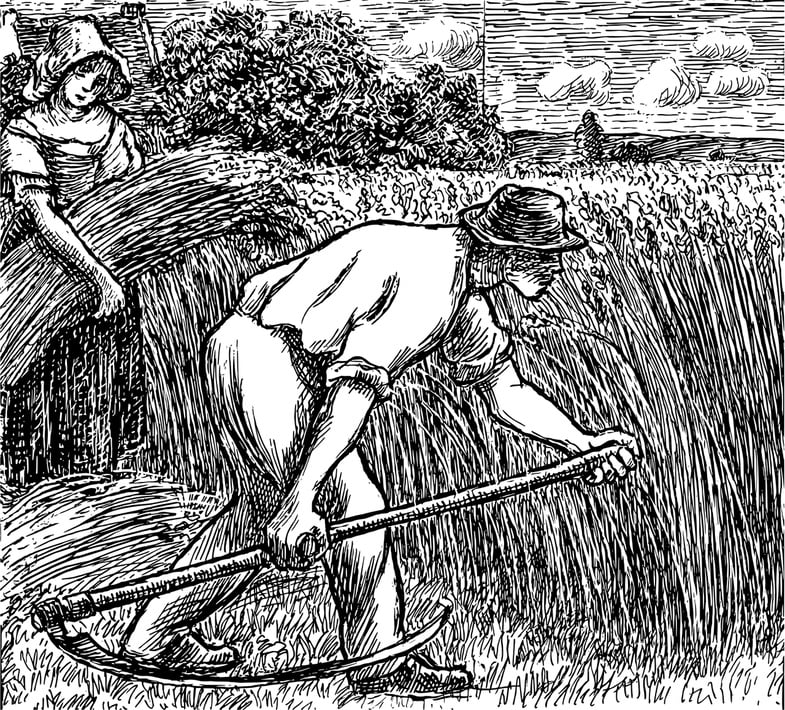
Image by Gordon Johnson / Pixabay
American Christianity has a long history of entangling religion and work. The Puritans began settling the New World in the 17th century and brought Protestantism and Calvinism with them. If you’re unfamiliar with the Puritans, you can read a little about their story here.
The Protestant work ethic is the idea that hard work is proof of one’s salvation. This might sound odd (especially if you grew up with this idea) but this is the core of the message. Puritan theology was Calvinistic, and hard work and piety was the best way to prove that you were elect. Protestant work ethic is not necessarily bad – it has roots in personal restraint and diligence. These virtues are valuable even outside of the Christian tradition.
Three Principles Of Work
The Protestant work ethic is based on a few important principles that can help guide us in our daily lives. First and foremost, it emphasizes the idea that work is a calling and a duty that has been given to us by God. While many people may think that work is what we have to do, here it is our duty to work. We have a responsibility to work – and if not, we shouldn’t eat (II Thes. 3:10).
Another key principle is frugality and thrift. People are encouraged to manage their resources responsibly, just like the biblical concept of stewardship. Stewardship influenced the way individuals approached their finances and possessions. The belief that wealth was a sign of God’s favor led to a culture of saving, investment, and entrepreneurship, as individuals sought to increase their material prosperity while avoiding extravagance and wastefulness.
Finally, the Protestant work ethic encourages a strong sense of individual responsibility and self-discipline. It rejects idleness and promotes a disciplined and focused approach to work. The ethic values self-reliance, initiative, and perseverance in the pursuit of success. This emphasis on individual agency and effort contributed to the development of a competitive and ambitious society, where hard work and achievement were highly regarded.
How is this Bad?
While I’ve thrown out the Protestant work ethic, I don’t think it’s worthless. There are many qualities that I’ve listed that I appreciate and strive for. These qualities help drive entrepreneurship and innovation. However, the way the Protestant work ethic has developed and mutated over the years in America has been far less charitable.
Fierce individualism has been engrained in the American culture – socially and economically. It reinforced the idea that success and social status were attainable through one’s own efforts, leading to a meritocratic mindset. Individuals are solely responsible for every outcome – even if they’re unavoidable. A farmer’s crops are desolated by drought, yet they should have been prepared for the worst.
Similarly, the Protestant work ethic’s idea of wealth as a blessing reminds me of modern televangelists. The idea that God gives the faithful money and power is prevalent in modern society. This claim also affirms that if you are not wealthy then God is not blessing you.
Finally – and maybe most importantly – capitalism has removed the need to work to eat. I often heard that verse above quoted to me in church as a defense against EBT, food stamps, etc. ‘The poor need to get a job’ and ‘They’re just lazy’. While a Christian may say that about the man sleeping on the bus bench, I haven’t heard many Christians talk about the CEO or trust fund recipient with the same language.
What Now?
I don’t want to eliminate the ideas of the Protestant work ethic. In fact, I am a small business owner who works hard and tries to save for the future. I think there is a way to take the best parts of this hard working construct while leaving what doesn’t work behind. The expansion, corruption, and decline of American Capitalism over the last century has made the virtues of the Protestant work ethic almost impossible. We need to view our country as a whole – as a group working together instead of individuals alone together. How do we work when we see ourselves and our success directly tied to our neighbor?
Previous Post

May 16, 2023
Christ in Capital: What's Going On?
Next Post

June 6, 2023 An Explosion of Exploitation in America
Recent Comments
Browse Our Archives
Select a Category American History Book Review Careers Church History Early Church Education and Religion Evangelical Gaza Home and Religion Israel Politics Reflections Spooky Theology and Philosophy Uncategorized Women in Religion Workplace and Religion
Select a Month October 2026 January 2026 November 2025 August 2025 March 2025 February 2025 November 2024 October 2024 August 2024 July 2024 June 2024 April 2024 March 2024 January 2024 December 2023 November 2023 October 2023 September 2023 August 2023 July 2023 June 2023 May 2023 April 2023 March 2023
TAKE THE
Religious Wisdom Quiz
Which Christian principle is in "Do unto others as you would have them do unto you"?
Select your answer to see how you score.
Always judge Never forgive The Golden Rule Keep to yourself
Related posts from The Prodigal Empire

Indigenous Peoples’ Day and the Church
Wesleyan Vile-Tality Book Review

Psychedelics and Christian Faith
TRENDING AT PATHEOS General Christian

A Biblical Vision of Success in Christian Life...
The Concern and Quest Recent trends and tendencies I note around me...

Indigenous Peoples’ Day and the Church
Indigenous' Peoples Day or Columbus Day? Depending on where you live...

When Spiritual Growth Looks Like Losing Ground
Four Passive Spiritual Disciplines: An Introduction When I was a college freshman,...

Faith and Finding Your Current Season
“To everything there is a season,” Ecclesiastes tells us, “and a time...

Did Jesus Fear God's Wrath in Gethsemane?
That Time Jesus Was Terrified Before we begin, let me say at...

A Generation Searching for God in All the...
Revival Begins With God’s People! Holidays Are Upon Us! Welcome to October!...
view all General Christian blogs
What Are Your Thoughts?leave a comment
Ad-Free & Subscriber Log-In Subscription Support
- About Us
- 2026 Calendar
- Videos
- Podcasts
- Library of World Religions
- Faith In Media Tracker
- Advertise With Us
- Write for Us
- Privacy Policy
- Terms of Service
- Do Not Sell My Data
- Contact Us
- Radiant Digital
- Manage Newsletter Subscriptions
- Unsubscribe From Notifications
- Sitemap
Copyright 2008-2026, Patheos. All rights reserved.
Subscription Support Ad-Free & Subscriber Log-In
Follow Patheos