
BuddhistCatholicContemplativeEvangelicalGeneral ChristianHinduJewishLatter-day SaintMuslimNew VisionsProgressive Christian
Beliefs
- Buddhist
- Catholic
- Contemplative
- Evangelical
- General Christian
- Hindu
- Jewish
- Latter-day Saint
- More Voices
- Muslim
- New Visions
- Pagan
- Progressive Christian
Topics
- Religion News
- Food and Religion
- Sports and Religion
- Religious Art
- Religious Music and Entertainment
- Religious Events
- History and Religion
- Style and Religion
- Politics and Religion
- Women in Religion
- Recreation Outdoors and Religion
- Business Finance and Religion
- Careers Workplace and Religion
- Education and Religion
- Family Parenting and Religion
- Health Fitness and Religion
- Home and Religion
- Relationships and Religion
- Technology and Religion
- Travel and Religion
Columnists
- Buddhist Columnists
- Business Finance and Religion Columnists
- Careers Workplace and Religion Columnists
- Catholic Columnists
- Contemplative Columnists
- Education and Religion Columnists
- Evangelists Columnists
- Family Parenting and Religion Columnists
- General Christian Columnists
- Health Fitness and Religion Columnists
- Hindu Columnists
- History and Religion Columnists
- Home and Religion Columnists
- Jewish Columnists
- More Voices Columnists
- Latter Day Columnists
- Muslim Columnists
- New Visions Columnists
- Nonreligious Columnists
- Pagan Columnists
- Politics and Religion Columnists
- Progressive Columnists
- Recreation Outdoors and Religion Columnists
- Relationships and Religion Columnists
- Religion News Columnists
- Religious Art Columnists
- Religious Events Columnists
- Religious Music and Entertainment Columnists
- Sports and Religion Columnists
- Style and Religion Columnists
- Technology and Religion Columnists
- Travel and Religion Columnists
- Women in Religion Columnists
Resource Library
- 2026 Calendar
- Library of World Religions
- The 100 Most Holy Places on Earth
- Patheos Answers
- Podcasts
- Videos
- Faith Leaders Database
- Anglican Episcopalian
- Bahai
- Baptist
- Buddhism
- Christianity
- Confucianism
- Eastern Orthodoxy
- Hinduism
- Holiness and Pentecostal
- ISKCON
- Islam
- Judaism
- Lutheran
- Methodist
- The Church of Jesus Christ of Latter-day Saints
- New Age
- Paganism
- Presbytarian and Reformed
- Protestantism
- Religion Behind the Scenes
- Roman Catholic
- Scientology
- Shia Islam
- Sikhism
- Sufism
- Sunni Islam
- Taoism
- Zen
- See all religions
Research Tools
 Ad-Free & Subscriber Log-In Subscription Support
Ad-Free & Subscriber Log-In Subscription Support
Follow Patheos 

- Trending:
- Forgiveness
- |
- Marriage
- |
- Consciousness
- |
- Death Penalty
- |
- Election
- |
- Halloween
 The Peripatetic Preacher
- Home
- Progressive Christian
- The Peripatetic Preacher. Ordinary, Extraordinary Love
The Peripatetic Preacher. Ordinary, Extraordinary Love
Last updated on: July 21, 2021 at 2:32 pm by John C Holbert
The Peripatetic Preacher. Ordinary, Extraordinary Love 2021-07-21T14:32:26-05:00 John C Holbert
Patheos Explore the world's faith through different perspectives on religion and spirituality! Patheos has the views of the prevalent religions and spiritualities of the world.
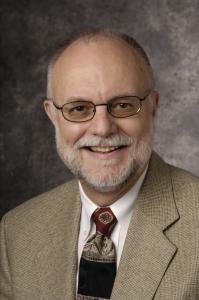 My barber’s name is Steve. Looking at my picture (see left), you could imagine that my need for a barber is quite minimal. I have been follically challenged for well over a decade, getting my hair look from my mother, who wore a wig for the final years of her long life. Thus, my hair-growth days are past, at least on the top of my head. I have suggested to several barbers that I will gladly pay them for their services with a penny per hair; they soon realized if they take me up on my offer, they will lose money. However, I do have a beard, which does at least become bushier, albeit little longer, each passing day. Hence, I do need that trimmed as well. And so barbers over the years have done, helping me to look cleaner at least, if no more hirsute.
When I lived in Dallas from 1968-74, and again from 1979-2016, my wife Diana first regularly cut my hair, watching with me as it made its inevitable retreat up my widening scalp, like a losing army quitting the field of struggle. Finally, she decided that she could no longer do that job, and urged me to find a barber. I went to a shop directly across from my place of work, Southern Methodist University, one day and was randomly assigned an available barber. Gerard, a man born in the Netherlands, who had seven brothers, six of whom were barbers, and all of whom lived now in Memphis, TN, became my barber for the next decade. His shop catered to the wealthier and well-connected clientele of Highland Park, a rich enclave in Dallas; Roger Staubach, Dallas Cowboy quarterback and successful real estate mogul, was a regular customer, as was Tom Landry, the famous Cowboy coach, the president of SMU, and other celebrities of the city. Politics in general tended to be conservative in the shop, but Gerard was not; he soon discovered that neither was I. Hence, we would discuss the times, often in rather low voices, sharing our decidedly liberal views with one another. Gerard was hardly loquacious and rarely started our conversations, but he did become an American citizen while I was his customer, primarily, he said, to be able to vote for Barak Obama for president.
When I moved to Los Angeles in 2017, I needed a new barber. The first shop I went two once or twice did not seem like my scene; the barber was a former boxer and many of his clients were boxers or ex-pugilists. I am definitely not a boxer nor a fan of the bloody sport, so I had to look elsewhere. It was then I found Steve. I could walk to his small shop, which was a great plus. But I soon learned just how remarkable a man Steve is.
His father had been a barber, and when Steve finished High School, he went to work in his father’s shop, cleaning up at first, and finally taking up the scissors himself. That was over 50 years ago! In fact, his father’s shop and now Steve’s has been on the corner of Beethoven and Venice Blvd for about 70 years. He is now in his early 70’s, and only working three days a week, but he plans to work until 80, he says, and must conserve energy for that reality. He has had a cancer scare recently, but appears to be in remission. His recent cataract surgery was successful, so he sees well. He has been married twice (you can learn a lot from a talkative barber), and still has a very good relationship with his first wife and his kids from that marriage; all of them still love him, he says, and they all regularly connect in one way or another. But I am most intrigued and deeply moved by Steve’s relationship to his mother.
She is well into her 90’s now, and is suffering from increasing dementia. I have been going to Steve for a haircut and beard trim for about three years, and during those years, he has often shared with me about his mother’s struggles and his concern to maintain a close relationship with her. He and his second wife live in a small trailer home near a Pacific ocean beach, a place he treasures, and he has his mother stay with them every weekend, and regularly during the week. As her condition has regressed, she is no longer continent, so Steve changes her diapers. She also cannot remember her medications, so Steve makes sure she takes them. She also has a hard time eating regularly, so Steve ensures that she receives a good diet with proper food to keep up her failing strength. Steve, and his wife, have given up much of their own freedom to care for this woman, and he has never a single time said anything to me about her that suggests even a hint of resentment. Quite the opposite.
This week on Tuesday, I went for my appointment with Steve, and before I had settled in the chair, he said, “Well, John, my Mom is now in hospice.” He said this with obvious sadness, since that of course means that his Mom is nearing the end of her earthly course, but there was also in his voice a sense of joy and blessing. “You know,” he continued, “I have really gotten to know Mom over these past 20 years (he has cared for her all that time), having her near me so often. Many people really never get to know their Moms. When they leave home after High School, they may visit on occasion at holidays, or send cards on birthdays, but they simply do not know who their Moms are. I know my Mom, and that has been for me a great blessing.” I found this statement profoundly moving. Steve demonstrated to me a kind of love that exists among us, but is too seldom so beautifully expressed.
My mind went right to that wonderful expression of deep love and devotion found in the book of Ruth in the Hebrew Bible. Ruth, a foreign widow, leaves her Moabite home to follow her widowed mother-in-law, Naomi, back to her Israelite home, with few if any prospects for her future. After all, she is a woman, a widow, and a foreigner, three strikes in a patriarchal world. But she follows Naomi anyway. Upon arrival in Bethlehem, Naomi’s village, Naomi loudly proclaims to all who would listen that she “went away full” with husband and two sons, but she has now come back “empty,” completely rejecting and avoiding the presence of Ruth standing nearby. But still Ruth is not deterred and stays with her. The despondent Naomi seems ready to starve herself to death, but Ruth tells her that she is ready to go out into a field with strangers and “glean,” that is to pick up the leavings of a field set aside for strangers, orphans, widows, and foreigners. She “happens to come” to a field belonging to the redoubtable Boaz, a man revered by the community. He is immediately struck by Ruth, and on her first day in his field, he invites her to share lunch with him. Ruth is rightly astounded that the field’s owner would recognize her in any way, but Boaz has heard about her enormous gift of her aid and comfort for her mother-in-law, and sees that she is a woman to be reckoned with.
However, some time passes, and Boaz does not press his interest in Ruth, so Ruth is forced to act in a way that is dangerous and scandalous in Israel. She dresses up in her finest clothes, goes down to the threshing floor where the harvest is made ready for use, where she lies down next to a sleeping Boaz and invites him to a marriage! He accepts readily but warns Ruth of another man who in the custom of the time has a nearer right to Ruth’s hand. However, that man declines to marry Ruth, once it is pointed out to him by Boaz that Ruth may not at the moment have children, but if she and this other man have a family, it is the child of the marriage, and not the man himself, who will inherit Ruth’s property. The other man declines Ruth. Hence, Boaz is now free to marry Ruth, which he does, and the marriage is very soon blessed with a son, whose direct descendant, we are told, will be David, Israel’s greatest king. But the story is in the end not about that, nor is it about a love affair between Ruth and Boaz. No, the women of the community on the day of the child’s birth proclaim the central point of the tale. They turn to Naomi and say, “Your daughter-in-law who loves you, who is more to you than seven Israelite sons, has borne him.” Ruth is indeed more than seven sons of Israel, a clear patriarchal mouthful! And that is so because the entire story has been driven by Ruth’s unstinting and unchanging love for her mother-in-law. In this story, God appears in the form of a Moabite widow. And I would say, too, that in my story with Steve, God has appeared in the form of a 72-year-old barber, who has loved his own mother with a love that is both ordinary and extraordinary, and it has been my privilege to witness that love expressed to me from my seat in his barber chair.
(Images from Wikimedia Commons and Google Images)
Previous Post

July 20, 2021
The Peripatetic Preacher Is There History in the Bible?
Browse Our Archives
Select a Category Uncategorized
Select a Month July 2021 June 2021 May 2021 April 2021 March 2021 February 2021 January 2021 December 2020 November 2020 October 2020 September 2020 August 2020 July 2020 June 2020 May 2020 April 2020 March 2020 February 2020 January 2020 December 2019 November 2019 October 2019 September 2019 August 2019 July 2019 June 2019 May 2019 April 2019 March 2019 February 2019 January 2019 December 2018 November 2018 October 2018 September 2018 August 2018 July 2018 June 2018 May 2018 April 2018 March 2018 February 2018 January 2018 December 2017 November 2017 October 2017 September 2017 August 2017 July 2017 June 2017 May 2017 April 2017 March 2017 February 2017 January 2017 December 2016 November 2016 October 2016 September 2016 August 2016 July 2016 June 2016 May 2016 April 2016
Follow Us!
TAKE THE
Religious Wisdom Quiz
What did Solomon ask God for when he became king?
Select your answer to see how you score.
Riches Long life Victory Wisdom
Related posts from The Peripatetic Preacher

The Peripatetic Preacher Is There History in the...

The Peripatetic Preacher. Get the Shots Already!
The Peripatetic Preacher. In Solidarity with Creation

The Peripatetic Preacher. Nahum: An Unfortunate Prophet for...
TRENDING AT PATHEOS Progressive Christian

Why Christians Have a Sacred Duty to Vote:...
The Bible offers strong support for the sacred duty to vote. Here...

What Being a Modern-Day Apostle Means to Me
In my last column, I discussed the ins and outs of modern-day...

Did Ancient China Once Worship the God of...
Across human history, a common thread weaves through the origins of the...

Love Your Neighbor – Including Earth-Kin: Lev. 19,...
God’s command to love your neighbor means acting in an ethical and...

Lead a Church Study of “Jesus and Lao...
Guest writer Jack Thomas (The Irreverent Reverend) reflects on leading his church...

Principles for Understanding the Apostolic Ministry Today
Whenever people discover that my formal ministry title is "apostle," as in...
view all Progressive Christian blogs
Ad-Free & Subscriber Log-In Subscription Support
- About Us
- 2026 Calendar
- Videos
- Podcasts
- Library of World Religions
- Faith In Media Tracker
- Advertise With Us
- Write for Us
- Privacy Policy
- Terms of Service
- Do Not Sell My Data
- Contact Us
- Radiant Digital
- Manage Newsletter Subscriptions
- Unsubscribe From Notifications
- Sitemap
Copyright 2008-2026, Patheos. All rights reserved.
Subscription Support Ad-Free & Subscriber Log-In
Follow Patheos