
BuddhistCatholicContemplativeEvangelicalGeneral ChristianHinduJewishLatter-day SaintMuslimNew VisionsProgressive Christian
Beliefs
- Buddhist
- Catholic
- Contemplative
- Evangelical
- General Christian
- Hindu
- Jewish
- Latter-day Saint
- More Voices
- Muslim
- New Visions
- Pagan
- Progressive Christian
Topics
- Religion News
- Food and Religion
- Sports and Religion
- Religious Art
- Religious Music and Entertainment
- Religious Events
- History and Religion
- Style and Religion
- Politics and Religion
- Women in Religion
- Recreation Outdoors and Religion
- Business Finance and Religion
- Careers Workplace and Religion
- Education and Religion
- Family Parenting and Religion
- Health Fitness and Religion
- Home and Religion
- Relationships and Religion
- Technology and Religion
- Travel and Religion
Columnists
- Buddhist Columnists
- Business Finance and Religion Columnists
- Careers Workplace and Religion Columnists
- Catholic Columnists
- Contemplative Columnists
- Education and Religion Columnists
- Evangelists Columnists
- Family Parenting and Religion Columnists
- General Christian Columnists
- Health Fitness and Religion Columnists
- Hindu Columnists
- History and Religion Columnists
- Home and Religion Columnists
- Jewish Columnists
- More Voices Columnists
- Latter Day Columnists
- Muslim Columnists
- New Visions Columnists
- Nonreligious Columnists
- Pagan Columnists
- Politics and Religion Columnists
- Progressive Columnists
- Recreation Outdoors and Religion Columnists
- Relationships and Religion Columnists
- Religion News Columnists
- Religious Art Columnists
- Religious Events Columnists
- Religious Music and Entertainment Columnists
- Sports and Religion Columnists
- Style and Religion Columnists
- Technology and Religion Columnists
- Travel and Religion Columnists
- Women in Religion Columnists
Resource Library
- 2026 Calendar
- Library of World Religions
- The 100 Most Holy Places on Earth
- Patheos Answers
- Podcasts
- Videos
- Faith Leaders Database
- Anglican Episcopalian
- Bahai
- Baptist
- Buddhism
- Christianity
- Confucianism
- Eastern Orthodoxy
- Hinduism
- Holiness and Pentecostal
- ISKCON
- Islam
- Judaism
- Lutheran
- Methodist
- The Church of Jesus Christ of Latter-day Saints
- New Age
- Paganism
- Presbytarian and Reformed
- Protestantism
- Religion Behind the Scenes
- Roman Catholic
- Scientology
- Shia Islam
- Sikhism
- Sufism
- Sunni Islam
- Taoism
- Zen
- See all religions
Research Tools
 Ad-Free & Subscriber Log-In Subscription Support
Ad-Free & Subscriber Log-In Subscription Support
Follow Patheos 

- Trending:
- Forgiveness
- |
- Marriage
- |
- Consciousness
- |
- Death Penalty
- |
- Election
- |
- Halloween
 The Peripatetic Preacher
- Home
- Progressive Christian
- Beginning Again in 2021 The Peripatetic Preacher
Beginning Again in 2021 The Peripatetic Preacher
Last updated on: December 23, 2020 at 3:15 pm by John C Holbert
Beginning Again in 2021 The Peripatetic Preacher 2020-12-23T15:15:11-05:00 John C Holbert
Patheos Explore the world's faith through different perspectives on religion and spirituality! Patheos has the views of the prevalent religions and spiritualities of the world.
 I need not add to the assaults against poor 2020 that have been leveled by nearly everyone; it has been a grim year indeed with pandemic and racial reckoning and a strangely-haired president who just cannot find reality long enough to recognize and accept defeat. Fortunately, we are on the cusp of 2021, a year most of us imagine will be significantly more hopeful, given vaccines in arms and a rational team in the White House. I sense that 2021 will be a year to begin again that yearly search for equity in our fractured society, freedom to move about the country once again, and finally, and not a moment too soon, a serious engagement with our many issues: climate change, racism, rebuilding our collapsing infrastructure, reshaping the shattered economy in ways to include those millions traditionally and painfully excluded from its benefits. Tall orders all, but new beginnings announce all of these and more. No more talk of Mexican- supported border walls (absurd!), coddling of dictators (dangerous!), flaunting of science and reason, please! Let us move forward to tackle truly important and pressing issues that affect the entire planet.
As always, when I consider problems that present themselves to me, my mind heads off to the Bible. For many of my fellow US Americans, that is hardly the first place they go when they think of crucial issues for their lives, but for me the ancient biblical text has long been the surprising locus of fresh insights and new ways of thinking, even concerning the most contemporary of questions. I am far from a fundamentalist, or even very conservative, when I read the Bible, as any who have read me in the past will surely see. Yet, the Bible remains for me an anchor for my reflection on the difficulties or disputes that continually rear up in my life. As I think about this new year upcoming and its myriad challenges, I think first of the people of Israel as they left Egypt, as they wandered in the wilderness of Sinai, and as they were poised on the banks of the Jordan River, preparing to enter the land that YHWH had promised.
The book of Deuteronomy is structured as a series of sermons offered by Moses to the people, warning them and helping them imagine themselves as the people of YHWH facing new and potentially terrifying situations in a place they knew very little about. Just listen to the way the lawgiver speaks to them about this new land and how it differs from what they know in crucial ways. “For the land you are about to enter to occupy is not like the land of Egypt, from which you have come, where you sow your seed and irrigate by foot like a vegetable garden. The land you are crossing over to occupy is a land of hills and valleys, watered by rain from the sky, a land that YHWH your God looks after. The eyes of YHWH your God are always on it, from the beginning to the end of the year” (Deut.11:10-12). It has long been known in the ancient world that Egypt was “the gift of Nile,” meaning that all agriculture was based on irrigation from that central and rarely failing river. Great channels were cut into the land from the Nile, leading to the fertile fields of vegetables and fruits. It rarely rains in Egypt, but the Nile assures the people of water year round.
Not so in Israel. There is some more rain there than in Egypt, but the Jordan River is hardly the Nile, source of water for the land. To live in Israel’s hills and valleys, one had to rely on rain from the sky, rain that was sporadic, not certain, not always enough. In this new place, reliance on YHWH’s gifts is crucial if the people are to survive. Hence, the author of Deuteronomy reiterates the central demand of that survival: “If you will only heed God’s every commandment that I am commanding you today—loving YHWH your God, and serving God with all your heart (that is, your mind and will) and with all your life—then I will give the rain for your land in its season, the early rain and the later rain, and you will gather in your grain, your wine, and your oil…” (Deut.11:13-14). Do not be fooled by this seeming tit-for-tat gift for proper obedience; if you obey, you will get rain. The Israelites knew all too well that there was no automatic rainy reply to their strict obedience to their God. Too often, their fervent prayers and heartfelt sacrifices were met with silence and drought. But unlike Egypt’s constant gift of the waters of the Nile, Israel offered only the unpredictable and often insufficient rains from the skies. They simply had to turn to YHWH, and to YHWH’s commands and ordinances, if they were to hope for survival in this often harsh land that YHWH had given to them.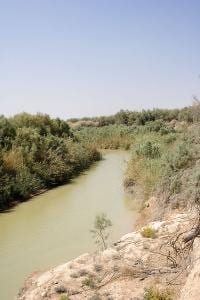
Why then did they bother to attempt to follow God’s commands if the result of their following was never assured? It is that they soon discovered that the call of YHWH to live in community, to care for all members of the community, to open their hearts and lives to that community, as well as to those who came continually to join them in that community, proved to be the way they could thrive as a people, could withstand together the difficult challenges that the new land threw up to them. Deuteronomy is a rich summation of communal ethics that made possible the ongoing life of Israel, a series of statutes and commandments that could be learned and passed down through the generations, binding the community together. When first the people entered the new land, this Torah, the laws and stories that glued them together, was repeated and shared among them, from age to age. And it was this Torah that sustained them even when at the apparent end of their nation, as they were carted off to Babylonian exile, in the 6thcentury BCE, it looked like the people of Israel would disappear, would dissolve into the sands of history. Yet, even there in the pagan Babylon, they survived anew, no longer as national Israelites, but as Jews, thinking and writing and thriving in Babylon, living out the promise of Torah once again.
And so today in 2021, the community of Judaism, as diverse and different as it is among its many factions and sects, still maintains a reliance on Torah, those laws and stories that sustained the people of Israel as the entered that new land some 3000 years ago. I find this grand story little less than astonishing. The company of Judaism still survives and thrives, based as it is, albeit understood in radically different ways, on Torah, read and pondered through the millennia, still acting as cement that holds them together. As we begin again in 2021 in a new and challenging US America, we too face a terrifying newness, a frightening place of potential pitfalls, of hills and valleys of snares and shocks, I suggest we return to that God who has called and nurtured us, who offers the gift of Torah, the demand to love God with all of who we are and to love all of our neighbors as fully and completely as we try to love ourselves. That means to seek unity in community, to attempt to help rather than confront, to aid rather than deride our fellow citizens. 2021 can become a year of hope and possibility. May God lead us to a full measure of both.
(Images from Wikimedia Commons)

Previous Post

December 21, 2020
The Gift and Challenge of Diversity The Peripatetic Preacher
Next Post
December 28, 2020 A Genuinely New Thing The Peripatetic Preacher
Browse Our Archives
Select a Category Uncategorized
Select a Month July 2021 June 2021 May 2021 April 2021 March 2021 February 2021 January 2021 December 2020 November 2020 October 2020 September 2020 August 2020 July 2020 June 2020 May 2020 April 2020 March 2020 February 2020 January 2020 December 2019 November 2019 October 2019 September 2019 August 2019 July 2019 June 2019 May 2019 April 2019 March 2019 February 2019 January 2019 December 2018 November 2018 October 2018 September 2018 August 2018 July 2018 June 2018 May 2018 April 2018 March 2018 February 2018 January 2018 December 2017 November 2017 October 2017 September 2017 August 2017 July 2017 June 2017 May 2017 April 2017 March 2017 February 2017 January 2017 December 2016 November 2016 October 2016 September 2016 August 2016 July 2016 June 2016 May 2016 April 2016
Follow Us!
TAKE THE
Religious Wisdom Quiz
What is the main Christian group in Ethiopia called?
Select your answer to see how you score.
Baptist Ethiopian Orthodox Tewahedo Church Assemblies of God Pentecostal
Related posts from The Peripatetic Preacher

The Peripatetic Preacher. Ordinary, Extraordinary Love
The Peripatetic Preacher Is There History in the...

The Peripatetic Preacher. Get the Shots Already!
The Peripatetic Preacher. In Solidarity with Creation
TRENDING AT PATHEOS Progressive Christian

Why Christians Have a Sacred Duty to Vote:...
The Bible offers strong support for the sacred duty to vote. Here...

What Being a Modern-Day Apostle Means to Me
In my last column, I discussed the ins and outs of modern-day...

Did Ancient China Once Worship the God of...
Across human history, a common thread weaves through the origins of the...

Love Your Neighbor – Including Earth-Kin: Lev. 19,...
God’s command to love your neighbor means acting in an ethical and...

Lead a Church Study of “Jesus and Lao...
Guest writer Jack Thomas (The Irreverent Reverend) reflects on leading his church...

Principles for Understanding the Apostolic Ministry Today
Whenever people discover that my formal ministry title is "apostle," as in...
view all Progressive Christian blogs
Ad-Free & Subscriber Log-In Subscription Support
- About Us
- 2026 Calendar
- Videos
- Podcasts
- Library of World Religions
- Faith In Media Tracker
- Advertise With Us
- Write for Us
- Privacy Policy
- Terms of Service
- Do Not Sell My Data
- Contact Us
- Radiant Digital
- Manage Newsletter Subscriptions
- Unsubscribe From Notifications
- Sitemap
Copyright 2008-2026, Patheos. All rights reserved.
Subscription Support Ad-Free & Subscriber Log-In
Follow Patheos