
BuddhistCatholicContemplativeEvangelicalGeneral ChristianHinduJewishLatter-day SaintMuslimNew VisionsProgressive Christian
Beliefs
- Buddhist
- Catholic
- Contemplative
- Evangelical
- General Christian
- Hindu
- Jewish
- Latter-day Saint
- More Voices
- Muslim
- New Visions
- Pagan
- Progressive Christian
Topics
- Religion News
- Food and Religion
- Sports and Religion
- Religious Art
- Religious Music and Entertainment
- Religious Events
- History and Religion
- Style and Religion
- Politics and Religion
- Women in Religion
- Recreation Outdoors and Religion
- Business Finance and Religion
- Careers Workplace and Religion
- Education and Religion
- Family Parenting and Religion
- Health Fitness and Religion
- Home and Religion
- Relationships and Religion
- Technology and Religion
- Travel and Religion
Columnists
- Buddhist Columnists
- Business Finance and Religion Columnists
- Careers Workplace and Religion Columnists
- Catholic Columnists
- Contemplative Columnists
- Education and Religion Columnists
- Evangelists Columnists
- Family Parenting and Religion Columnists
- General Christian Columnists
- Health Fitness and Religion Columnists
- Hindu Columnists
- History and Religion Columnists
- Home and Religion Columnists
- Jewish Columnists
- More Voices Columnists
- Latter Day Columnists
- Muslim Columnists
- New Visions Columnists
- Nonreligious Columnists
- Pagan Columnists
- Politics and Religion Columnists
- Progressive Columnists
- Recreation Outdoors and Religion Columnists
- Relationships and Religion Columnists
- Religion News Columnists
- Religious Art Columnists
- Religious Events Columnists
- Religious Music and Entertainment Columnists
- Sports and Religion Columnists
- Style and Religion Columnists
- Technology and Religion Columnists
- Travel and Religion Columnists
- Women in Religion Columnists
Resource Library
- 2026 Calendar
- Library of World Religions
- The 100 Most Holy Places on Earth
- Patheos Answers
- Podcasts
- Videos
- Faith Leaders Database
- Anglican Episcopalian
- Bahai
- Baptist
- Buddhism
- Christianity
- Confucianism
- Eastern Orthodoxy
- Hinduism
- Holiness and Pentecostal
- ISKCON
- Islam
- Judaism
- Lutheran
- Methodist
- The Church of Jesus Christ of Latter-day Saints
- New Age
- Paganism
- Presbytarian and Reformed
- Protestantism
- Religion Behind the Scenes
- Roman Catholic
- Scientology
- Shia Islam
- Sikhism
- Sufism
- Sunni Islam
- Taoism
- Zen
- See all religions
Research Tools
 Ad-Free & Subscriber Log-In Subscription Support
Ad-Free & Subscriber Log-In Subscription Support
Follow Patheos 

- Trending:
- Forgiveness
- |
- Marriage
- |
- Consciousness
- |
- Death Penalty
- |
- Election
- |
- Halloween
 The Peripatetic Preacher
- Home
- Progressive Christian
- A Genuinely New Thing The Peripatetic Preacher
A Genuinely New Thing The Peripatetic Preacher
Last updated on: December 28, 2020 at 2:05 pm by John C Holbert
A Genuinely New Thing The Peripatetic Preacher 2020-12-28T14:05:01-05:00 John C Holbert
Patheos Explore the world's faith through different perspectives on religion and spirituality! Patheos has the views of the prevalent religions and spiritualities of the world.
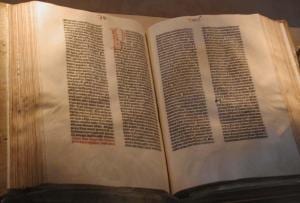
I have always been completely confused about the Revised Common Lectionary’s committee choice year after year for a Hebrew Bible text for Jan.1. It is inevitably Ecclesiastes (Koheleth) 3:1-13. In earlier essays in my now rather lengthy series as “The Peripatetic Preacher,” I have commented about that odd choice of texts, trying unsuccessfully to determine just why it has been made over and again. Today, I admit my inability to solve that conundrum, but I will say rather briefly why I find the choice so inapt.
Ko.3:1-13 derives from the “pen” of an unknown teacher/preacher of the 5th/4thcentury BCE whose words are steeped in a morose, essentially hopeless, mood. The opening lines of his choppy ode to emptiness begin: “Mist of mist, all is mist.” The word traditionally translated as “vanity” is in reality Hebrew hebel, most famously the name of the second son of ‘adam and chavah, tragically murdered by his jealous brother. Its basic meaning is “emptiness” or “mist/dew.” The central import of the term appears to be insubstantial or diaphanous, something hardly in existence at all. So it is with everything, opines Koheleth; all is hebel. With that gloomy beginning, the author proceeds through twelve chapters that only on rare occasions depart from that shadowed temperament.
That mood is directly evident in Ko.3, despite the popular notion that the famous poem that opens the chapter is a wonderfully positive portrayal of the possibilities of life. This positive view of the poem almost surely arises from the additions that the folk singer and political activist, Pete Seeger, made to the poem. He added the lines, “I swear it is not too late,” lines not in the biblical poem, to suggest that while choosing one or the other of the dichotomies the poem includes—sewing/reaping, laughing/crying, etc—we humans always have the chance to make the right choice. For Seeger, the right choice during the war in Vietnam was “peace, not war.” All well and good! I heartily agree with Mr. Seeger, and with the band “The Bryds” who made the song widely known sometime later; we should choose peace over war. Yet, that is plainly not at all what Koheleth had in mind.
After the poem ends, Koheleth returns to his shadowy theme. “What gain have workers from their work,” he laments (Ko.3:9). The implied answer is “none.” Later in the chapter he writes, “Moreover I saw under the sun that in the place of justice, wickedness was there, and in the place of righteousness, more wickedness” (Ko.3:16). He then concludes his lament with this exhausted wail: “I said to myself with regard to human beings that God is testing them to show that they are only animals” (Ko.3:18). And he caps it off with, “I saw that there was nothing better than that all should enjoy their work, for that is their lot; who can show them what will come after them” (Ko.3:22)? But since he has already told us that our work provides no “gain/profit” for us, exactly how are we to “enjoy” it? In short, Koheleth may be the very last piece of the Bible we ought be reading as we approach another year of life.
Especially after the fateful year of 2020; if Sept.7, 1941 was a “day of infamy,” never to be forgotten, so surely 2020 will be an entire year of infamy. It has been scarred by three enormous plagues: the quite literal plague of the COVID-19 pandemic, the cultural plague of systemic racism, brought brutally into the nation’s conscience by too many public killings of Black people by supposed societal guardians, and finally a plague-like presidential election that displays the loser of the election, even after nearly two months of certainty concerning the winner, still refusing to concede, imagining in some alternative reality that he really won, if only everyone else could see the truth of his victory. In the face of all that, we certainly do not need Koheleth to try to convince us that the world is in fact empty of meaning! Given that litany of 2020, too many may agree with the ancient sage all too readily.
Let me suggest another Hebrew Bible text to explore at the turn of the year. Turn in your Bible to Isaiah 43, one the Scripture’s finest expressions of hope and possibility in the face of pain and turmoil. Many years ago, my wife Diana underwent a significant back surgery in the attempt to alleviate the massive pain she had felt for years. The surgery was largely successful, but the recovery was long and arduous: three long days in the hospital, several months of bed rest, several more months of a slow and painful recovery. While in the hospital Diana asked me to read again and again Is.43; it became her way to envision a brighter future when all she could see and experience was a grey cloud of agony.
Isaiah spoke directly to her struggle, because the book was composed during the most difficult time in the history of Israel—the exile in Babylon. For 50 years, members of the people of Judah, after witnessing the destruction of their capital city, Jerusalem, the humiliation of their king and his court, the desecration of the temple and the land itself, were forced to live in the pagan city of Babylon, being daily reminded of their losses of the life they knew and the reality that that life seemed gone forever. In Babylon, the Judeans began to construct a new way of doing their religion with the help of the wisdom of this unknown prophet we name 2-Isaiah. Isaiah attempts to change their sense of hopeless loss into the possibility for a fresh future. Surely, that is what we need now more than anything, the idea that there is still a significant future for us.
Listen to how Isaiah frames his argument in rich poetic couplets:
“I am YHWH, your Holy One, the creator of Israel, your king.
Thus says YHWH, who makes a way in the sea, a path in the mighty waters, Who brings out chariot and horse, army and warrior;
They lie down, they cannot rise; they are extinguished, quenched like a wick. Do not remember the former things, or consider the things of old!
I am about to do a new thing; now it springs forth, do you not see it?
I will make a way in the wilderness and rivers in the desert” (Is.43:15-19).
The poet first reminds Judah of the central claim of their faith; God rescued their ancestors from Egypt, defeating the mighty pharonic armies in the process. Never forget the Exodus, says Isaiah! But immediately he enjoins them, “Do not remember the former things.” This at first seems to be a direct contradiction: remember the power of YHWH in the Exodus from Egypt, but do not remember the former things! What can he mean? He suggests that we know God by the actions of God in the past, but if we dwell only on that past we may miss the things that God is about to do. “I am about to do a new thing; now it springs forth, do you not see it?” Too much attention to the past can lead us to miss the fresh possibilities of God’s amazing future.
2020 has been the year from Hell, as most would agree. But allowing ourselves to be stuck there, spending all day deriding the ridiculous escapades of a defeated candidate, or believing that our racial divides are finally unsolvable, or fearing that not enough people will be vaccinated to defeat the virus, will not allow us to open ourselves up to God’s new actions in the world. Even to linger on the old ways, “that old time religion,” some of which was both good and useful, may not help us to open our eyes wider to the new things of God. I recommend a good dose of Is.43 for what ails us at the dawn of a new year. Leave Koheleth as the curmudgeon he certainly is, and turn to Isaiah for hope and possibility for a better future with God.
(Images from Wikimedia Commons)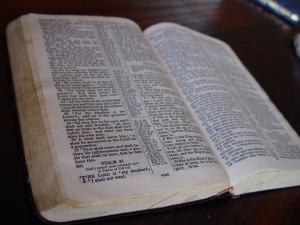
Previous Post

December 23, 2020
Beginning Again in 2021 The Peripatetic Preacher
Next Post
December 29, 2020 COVID Silver Linings? The Peripatetic Preacher
Browse Our Archives
Select a Category Uncategorized
Select a Month July 2021 June 2021 May 2021 April 2021 March 2021 February 2021 January 2021 December 2020 November 2020 October 2020 September 2020 August 2020 July 2020 June 2020 May 2020 April 2020 March 2020 February 2020 January 2020 December 2019 November 2019 October 2019 September 2019 August 2019 July 2019 June 2019 May 2019 April 2019 March 2019 February 2019 January 2019 December 2018 November 2018 October 2018 September 2018 August 2018 July 2018 June 2018 May 2018 April 2018 March 2018 February 2018 January 2018 December 2017 November 2017 October 2017 September 2017 August 2017 July 2017 June 2017 May 2017 April 2017 March 2017 February 2017 January 2017 December 2016 November 2016 October 2016 September 2016 August 2016 July 2016 June 2016 May 2016 April 2016
Follow Us!
TAKE THE
Religious Wisdom Quiz
Which book of the Bible speaks of a valley of decision?
Select your answer to see how you score.
Joel Habakkuk Hosea Zechariah
Related posts from The Peripatetic Preacher
The Peripatetic Preacher. Ordinary, Extraordinary Love
The Peripatetic Preacher Is There History in the...

The Peripatetic Preacher. Get the Shots Already!
The Peripatetic Preacher. In Solidarity with Creation
TRENDING AT PATHEOS Progressive Christian

Why Christians Have a Sacred Duty to Vote:...
The Bible offers strong support for the sacred duty to vote. Here...

What Being a Modern-Day Apostle Means to Me
In my last column, I discussed the ins and outs of modern-day...

Did Ancient China Once Worship the God of...
Across human history, a common thread weaves through the origins of the...

Love Your Neighbor – Including Earth-Kin: Lev. 19,...
God’s command to love your neighbor means acting in an ethical and...

Lead a Church Study of “Jesus and Lao...
Guest writer Jack Thomas (The Irreverent Reverend) reflects on leading his church...

Principles for Understanding the Apostolic Ministry Today
Whenever people discover that my formal ministry title is "apostle," as in...
view all Progressive Christian blogs
Ad-Free & Subscriber Log-In Subscription Support
- About Us
- 2026 Calendar
- Videos
- Podcasts
- Library of World Religions
- Faith In Media Tracker
- Advertise With Us
- Write for Us
- Privacy Policy
- Terms of Service
- Do Not Sell My Data
- Contact Us
- Radiant Digital
- Manage Newsletter Subscriptions
- Unsubscribe From Notifications
- Sitemap
Copyright 2008-2026, Patheos. All rights reserved.
Subscription Support Ad-Free & Subscriber Log-In
Follow Patheos