
BuddhistCatholicContemplativeEvangelicalGeneral ChristianHinduJewishLatter-day SaintMuslimNew VisionsProgressive Christian
Beliefs
- Buddhist
- Catholic
- Contemplative
- Evangelical
- General Christian
- Hindu
- Jewish
- Latter-day Saint
- More Voices
- Muslim
- New Visions
- Pagan
- Progressive Christian
Topics
- Religion News
- Food and Religion
- Sports and Religion
- Religious Art
- Religious Music and Entertainment
- Religious Events
- History and Religion
- Style and Religion
- Politics and Religion
- Women in Religion
- Recreation Outdoors and Religion
- Business Finance and Religion
- Careers Workplace and Religion
- Education and Religion
- Family Parenting and Religion
- Health Fitness and Religion
- Home and Religion
- Relationships and Religion
- Technology and Religion
- Travel and Religion
Columnists
- Buddhist Columnists
- Business Finance and Religion Columnists
- Careers Workplace and Religion Columnists
- Catholic Columnists
- Contemplative Columnists
- Education and Religion Columnists
- Evangelists Columnists
- Family Parenting and Religion Columnists
- General Christian Columnists
- Health Fitness and Religion Columnists
- Hindu Columnists
- History and Religion Columnists
- Home and Religion Columnists
- Jewish Columnists
- More Voices Columnists
- Latter Day Columnists
- Muslim Columnists
- New Visions Columnists
- Nonreligious Columnists
- Pagan Columnists
- Politics and Religion Columnists
- Progressive Columnists
- Recreation Outdoors and Religion Columnists
- Relationships and Religion Columnists
- Religion News Columnists
- Religious Art Columnists
- Religious Events Columnists
- Religious Music and Entertainment Columnists
- Sports and Religion Columnists
- Style and Religion Columnists
- Technology and Religion Columnists
- Travel and Religion Columnists
- Women in Religion Columnists
Resource Library
- 2026 Calendar
- Library of World Religions
- The 100 Most Holy Places on Earth
- Patheos Answers
- Podcasts
- Videos
- Faith Leaders Database
- Anglican Episcopalian
- Bahai
- Baptist
- Buddhism
- Christianity
- Confucianism
- Eastern Orthodoxy
- Hinduism
- Holiness and Pentecostal
- ISKCON
- Islam
- Judaism
- Lutheran
- Methodist
- The Church of Jesus Christ of Latter-day Saints
- New Age
- Paganism
- Presbytarian and Reformed
- Protestantism
- Religion Behind the Scenes
- Roman Catholic
- Scientology
- Shia Islam
- Sikhism
- Sufism
- Sunni Islam
- Taoism
- Zen
- See all religions
Research Tools
 Ad-Free & Subscriber Log-In Subscription Support
Ad-Free & Subscriber Log-In Subscription Support
Follow Patheos 

- Trending:
- Forgiveness
- |
- Marriage
- |
- Consciousness
- |
- Death Penalty
- |
- Election
- |
- Halloween
 The Peripatetic Preacher
- Home
- Progressive Christian
- The Peripatetic Preacher What’s in a Name?
The Peripatetic Preacher What’s in a Name?
Last updated on: August 14, 2020 at 3:11 pm by John C Holbert
The Peripatetic Preacher What’s in a Name? 2020-08-14T15:11:10-05:00 John C Holbert
Patheos Explore the world's faith through different perspectives on religion and spirituality! Patheos has the views of the prevalent religions and spiritualities of the world.
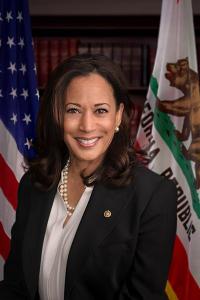 This week, the presumptive presidential candidate for the Democratic Party, Joe Biden, chose as his vice-presidential running mate, Kamala Harris, the Junior Senator from California. This is an historic choice in several ways. Senator Harris is bi-racial, though she does identify as Black. In addition, she is the daughter of an Indian mother and Jamaican father, so not only is she the first Black person to run for the Vice- Presidency, she is also the first Indian person as well. She was born in Oakland, CA, was bused to schools in Berkeley, moved at age 12 with her mother to Montreal, Canada, attending a French-speaking school there, and finally went to college at Howard University, an historically Black college, and Harris Law School in California, becoming the first Black woman in every position she has held, from a City Attorney, to State’s Attorney General, to one of California’s national Senators. To add to her diverse profile, she has been married to a white Jewish man, who is also a lawyer, Douglas Emhoff, since 2014, and is the step- mother to his two sons from a previous marriage. Oh, and she is a member of an American Baptist church in San Francisco, but growing up she also attended a local Hindu Temple. To see Kamala Harris is in some ways to see the America of 2020, a very successful woman, a child of immigration, a person of great diversity who has worked hard to achieve a large portion of what we have long called the American dream.
It did not take long for the Republican and conservative parts of the country to begin attacks on her, her character, her public record, and even, quite absurdly but familiarly, her birth status as a citizen of the country. She really was born in Oakland, and because that is true, a Supreme Court ruling of 1898 makes her a citizen of the USA, despite the status of her parents’ citizenship, though there is little doubt on that score either. On the Tucker Carlson show on the FOX News network this week, he repeatedly mispronounced her first name, at first out of ignorance, but then repeatedly out of some sort of spite, though he was given a pronunciation lesson from the guest he had asked to be on his show. After several attempts to say her name, and after several corrections, Carlson finally said, “So what? Are we not allowed to criticize her because we cannot say her name?” Now Mr. Carlson has long been known as an attack dog journalist, little more than a shill for President Trump, so it was not surprising to hear him act as he usually does when confronting those he cannot abide, namely like a third grader on the playground. Allow me to answer his question about criticizing Senator Harris without pronouncing her name correctly. The answer is a flat No, Mr. Carlson. If you claim to be a serious journalist, in spite of all evidence to the contrary, you are duty bound, yea required, to name those in the news correctly. Imagine, if you can, if someone called you Tooker Carlstadt, or some other bastardization of your given name; would you not immediately demand a restart on your conversation with the fool that could not get your vowels and consonants around her teeth and tongue?
A person’s name is beyond doubt a very important matter. A name is the initial defining thing we know and learn about one another, and when we call up a person’s name, we in effect call up the bearer of the name, no matter how common or unusual that name may be. Kamala is a Sanskrit name, taken from the language of the sacred Hindu texts. One of its central meanings is “Lotus” or Lotus Flower,” and in certain texts it is the name of a divine figure. It is a name of supreme beauty, and is well known in India. Its pronunciation is “comma-la,” and anyone, even Mr. Carlson, could learn to say it correctly, if his goal in mangling her name was not an obvious attempt at disrespect.
Senator Harris’s middle name is Devi, another borrowing from Hindu culture. Devi is a name given to a married woman, placed after her given name, hence Kamala Devi Harris. Another representation of Devi in Hindu mythology is Annapurna, a divine consort of Shiva; Annapurna is also the name of one of the tallest mountains in the Himalayas, a formidable 29,000’+ peak, shorter in height only to the far more famous Mt. Everest. Thus, it could be said that Senator Harris’s names present a delightful contrast between a lovely flower and a massive mountain, a combination to be reckoned with. Mr. Carlson should learn of this combination before next disrespecting her name.
My wife’s name is Diana. It is a name that is apparently not quite as ubiquitous as the name Diane (or Dianne). She loves her name and wears it with great pride. When she was growing up in a small Kansas town, her doctor father, when answering the phone and being asked if the caller could speak with Diane, would reply brusquely, “No one by that name lives here,” and hang up. Diane is plainly not Diana, however close the names’ sounds may be. We named our first child Darius now 46 years ago, which in 1974 was not a common name at all. When we told my parents that if the child were male, we planned to give him that unusual name; my mother began to pray mightily for a girl! This was well before the days when a child’s sex could be easily identified by technology well before the birth, so when we finally discovered that he was a boy on his birth day, my call to my mother led to several long silences as the name Darius was allowed to sink in. After all, my name is John, and my three brothers are Bob, Larry, and Gary, hardly strange names at all. But after all these years of our son’s life, he is without doubt Darius, and no other, a name he also prizes, despite some early mangling of its pronunciation. Names are more than simple designations; they identify and call up the person who bears the name.
The Bible may well be the source of the significance of names, at least in the western world, as influenced by it. In the book of Genesis, names are extremely important, designating not only certain people, but also certain attributes of those people.‘adam is the Hebrew generic name for “humanity,” while Eve (Chawah) relates to the word for “life” or “living.” Cain means “spear,” while Abel means “breath” or “wind,” names that suggest just who will be murderer and victim in that terrible tale. Noah means “rest” or “consolation,” though it is a name filled with irony as the world’s first sailor is in the end neither rest nor consolation for the world or his family. Abram, and its dialectical equivalent Abraham, means “mighty father” or “father of many,” while his wife, Sarai or Sarah means “princess.” Isaac is Hebrew for “laughter,” a delightful designation for one born to a 90-year-old mother. Jacob means “to grab or take,” and no boy was better named, since he spends his life grabbing and taking as much as he can. Joseph means “increase,” something his wily ways ultimately does for his family and his Egyptian colleagues, though the increase is as much for his arrogant self as it is for others.
Surely, the most famous Christian biblical name is Jesus, which is based on the Hebrew for “salvation” or “rescue,” as are the names Joshua, Hosea, and Isaiah. Solomon means “his peace,” but his life ends with little peace as his poor economic and social policies in the 10th century BCE lead to a division of the kingdom of Israel north and south. Jonah means “dove,” but though that bird is regularly lauded in the ancient tradition, the prophet Jonah is anything but a laudable figure. In the New Testament Peter may be Greek for “rock,” but a rock he plainly does not prove to be at the end of his life with Jesus. In the Bible names are significant, nearly always, so the answer to the question, “What’s in a name?” is a great deal indeed.
So, Mr. Carlson, you would do well to learn to pronounce Senator Harris’s first name correctly, not only because it deserves correct pronunciation as do all names of America’s citizens and leaders, along with the names of all the world’s inhabitants, but also because she may well become the next Vice-President of our country, and her name will necessarily fall often from your lips, as little as that prospect may delight you.
(Images from Wikimedia Commons)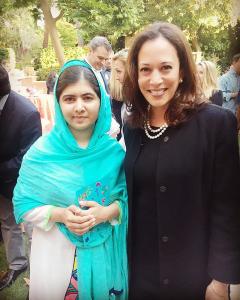

Browse Our Archives
Select a Category Uncategorized
Select a Month July 2021 June 2021 May 2021 April 2021 March 2021 February 2021 January 2021 December 2020 November 2020 October 2020 September 2020 August 2020 July 2020 June 2020 May 2020 April 2020 March 2020 February 2020 January 2020 December 2019 November 2019 October 2019 September 2019 August 2019 July 2019 June 2019 May 2019 April 2019 March 2019 February 2019 January 2019 December 2018 November 2018 October 2018 September 2018 August 2018 July 2018 June 2018 May 2018 April 2018 March 2018 February 2018 January 2018 December 2017 November 2017 October 2017 September 2017 August 2017 July 2017 June 2017 May 2017 April 2017 March 2017 February 2017 January 2017 December 2016 November 2016 October 2016 September 2016 August 2016 July 2016 June 2016 May 2016 April 2016
Follow Us!
TAKE THE
Religious Wisdom Quiz
Which book of the Bible contains the Ten Plagues of Egypt?
Select your answer to see how you score.
Deuteronomy Leviticus Genesis Exodus
Related posts from The Peripatetic Preacher

The Peripatetic Preacher. Ordinary, Extraordinary Love
The Peripatetic Preacher Is There History in the...

The Peripatetic Preacher. Get the Shots Already!

The Peripatetic Preacher. In Solidarity with Creation
TRENDING AT PATHEOS Progressive Christian

Why Christians Have a Sacred Duty to Vote:...
The Bible offers strong support for the sacred duty to vote. Here...

What Being a Modern-Day Apostle Means to Me
In my last column, I discussed the ins and outs of modern-day...

Did Ancient China Once Worship the God of...
Across human history, a common thread weaves through the origins of the...

Love Your Neighbor – Including Earth-Kin: Lev. 19,...
God’s command to love your neighbor means acting in an ethical and...

Lead a Church Study of “Jesus and Lao...
Guest writer Jack Thomas (The Irreverent Reverend) reflects on leading his church...

Principles for Understanding the Apostolic Ministry Today
Whenever people discover that my formal ministry title is "apostle," as in...
view all Progressive Christian blogs
Ad-Free & Subscriber Log-In Subscription Support
- About Us
- 2026 Calendar
- Videos
- Podcasts
- Library of World Religions
- Faith In Media Tracker
- Advertise With Us
- Write for Us
- Privacy Policy
- Terms of Service
- Do Not Sell My Data
- Contact Us
- Radiant Digital
- Manage Newsletter Subscriptions
- Unsubscribe From Notifications
- Sitemap
Copyright 2008-2026, Patheos. All rights reserved.
Subscription Support Ad-Free & Subscriber Log-In
Follow Patheos