
BuddhistCatholicContemplativeEvangelicalGeneral ChristianHinduJewishLatter-day SaintMuslimNew VisionsProgressive Christian
Beliefs
- Buddhist
- Catholic
- Contemplative
- Evangelical
- General Christian
- Hindu
- Jewish
- Latter-day Saint
- More Voices
- Muslim
- New Visions
- Pagan
- Progressive Christian
Topics
- Religion News
- Food and Religion
- Sports and Religion
- Religious Art
- Religious Music and Entertainment
- Religious Events
- History and Religion
- Style and Religion
- Politics and Religion
- Women in Religion
- Recreation Outdoors and Religion
- Business Finance and Religion
- Careers Workplace and Religion
- Education and Religion
- Family Parenting and Religion
- Health Fitness and Religion
- Home and Religion
- Relationships and Religion
- Technology and Religion
- Travel and Religion
Columnists
- Buddhist Columnists
- Business Finance and Religion Columnists
- Careers Workplace and Religion Columnists
- Catholic Columnists
- Contemplative Columnists
- Education and Religion Columnists
- Evangelists Columnists
- Family Parenting and Religion Columnists
- General Christian Columnists
- Health Fitness and Religion Columnists
- Hindu Columnists
- History and Religion Columnists
- Home and Religion Columnists
- Jewish Columnists
- More Voices Columnists
- Latter Day Columnists
- Muslim Columnists
- New Visions Columnists
- Nonreligious Columnists
- Pagan Columnists
- Politics and Religion Columnists
- Progressive Columnists
- Recreation Outdoors and Religion Columnists
- Relationships and Religion Columnists
- Religion News Columnists
- Religious Art Columnists
- Religious Events Columnists
- Religious Music and Entertainment Columnists
- Sports and Religion Columnists
- Style and Religion Columnists
- Technology and Religion Columnists
- Travel and Religion Columnists
- Women in Religion Columnists
Resource Library
- 2026 Calendar
- Library of World Religions
- The 100 Most Holy Places on Earth
- Patheos Answers
- Podcasts
- Videos
- Faith Leaders Database
- Anglican Episcopalian
- Bahai
- Baptist
- Buddhism
- Christianity
- Confucianism
- Eastern Orthodoxy
- Hinduism
- Holiness and Pentecostal
- ISKCON
- Islam
- Judaism
- Lutheran
- Methodist
- The Church of Jesus Christ of Latter-day Saints
- New Age
- Paganism
- Presbytarian and Reformed
- Protestantism
- Religion Behind the Scenes
- Roman Catholic
- Scientology
- Shia Islam
- Sikhism
- Sufism
- Sunni Islam
- Taoism
- Zen
- See all religions
Research Tools
 Ad-Free & Subscriber Log-In Subscription Support
Ad-Free & Subscriber Log-In Subscription Support
Follow Patheos 

- Trending:
- Forgiveness
- |
- Marriage
- |
- Consciousness
- |
- Death Penalty
- |
- Election
- |
- Halloween
 The Perennialist Perspective
- Home
- More Voices
- The Sanmitsu: Three Secrets of Enlightenment
The Sanmitsu: Three Secrets of Enlightenment
Last updated on: July 22, 2022 at 2:23 pm by Jake Davila
The Sanmitsu: Three Secrets of Enlightenment 2022-07-22T14:23:35-04:00 Jake Davila
Patheos Explore the world's faith through different perspectives on religion and spirituality! Patheos has the views of the prevalent religions and spiritualities of the world.
 There are Three Secrets to the attainment of enlightenment. Once understood, to think that these three are really secret at all seems absurd, yet most don’t recognize or understand them. When it comes to spirituality and Mind Science, we seem to want to make things more difficult than they need be. That isn’t to say that spiritual life is easy. It often isn’t. However, it also isn’t as hard as our misguided notions of what should be make it. We seek enlightenment, but on many levels think it is unattainable in this life, or by ourselves, since we still find ourselves dealing with the common everyday issues of working, eating, sleeping, relationships and death. All of these common experiences of human life are part of the fabric of reality in the Material world, and to view them as limiting is itself an illusion. They’re only as limiting as our vision of them. The San-Mitsu can help us begin to unlock the doors to enlightened perception. These are:
- Think the way an enlightened person would think.
- Speak the way an enlightened person would speak.
- Do the things an enlightened person would do.
The potential for enlightenment is present in everyone. All bodies are the bodies of the Enlightened. All voices are the voices of the Enlightened. All thoughts are the thoughts of the Enlightened. The mind, voice and body of the spiritual adept aren’t any different from that of the Buddha, the Christ, Krishna, or any other enlightened being. When you begin to strip away the illusions you’re attached to, what is revealed underneath is enlightenment. Enlightenment then is the process of thinking, speaking and acting like an enlightened being. An enlightened being doesn’t live their life constantly reacting to things that occur in his or her little sphere of the universe. Those who are always reacting are always unstable, and never have any real power over their own lives. Conversely, those who act with the proper perspective are well ordered, effective and powerful people in their own sphere of life. Of course, this takes practice.
The great Buddhist teacher Kobo Daishi said, “Form mudras with your hands, recite mantras with your mouths, and dwell in meditation with your minds.” The serious spiritual student will discover these three tools will unleash the Buddha nature within, impacting their environment. Such training isn’t for the dabbler. It requires serious commitment.
Mudras express the intention of the mind by consciously identifying the spiritual student with the universe in which he or she lives, becoming the living symbol of that universe. In other words, if the enlightened are one with the universe, you exist within them. If you’re one with the universe, then the enlightened are also within you. There is no separation in fact, only in illusion. This is the esoteric form of the body level of spiritual training; doing what an enlightened person does.
Mantras invoke sacred ideas and impact the consciousness. They work on three levels: sound, visual written characters, and their symbolic meaning. By focusing on a mantra, we are speaking into existence certain esoteric truths that are normally hidden from the senses. This has the effect of awakening us to truths on a deeper level than just the intellectual. This is the esoteric form of the speech level of spiritual training, speaking as an enlightened person does.
Meditation, on the exoteric platform, works to calm the mind. Usually this is where the neophyte stops, thinking they’ve achieved a significant level of spiritual advancement. In truth, this is only a basic foundation for the esoteric form of meditation, which is far more advanced. The power of the mind permeates all things in the universe, beginning with the mind of the Divine Being, down to the mind of every single human being alive. All have had an influence on the fabric of reality. Understanding how our mind does this and harnessing it for the highest good is the thinking level of spiritual training; we think as an enlightened person thinks.
What we’re talking about practicing here is the depths of what Siddhartha Gautama and all of the great spiritual teachers taught. It is the alignment of mind, body and soul with divine truth and divine purpose. When we do gassho, whether it be in front of a Kamidana, Butsudan, altar, or another person, or serve someone selflessly, we’re embodying Shin-mitsu (the secret of action). Whether we recite mantras or teach spiritual discourses, or simply speak words of comfort and compassion to those in need, we’re embodying Ku-mitsu (the secret of speech). And when we meditate, contemplate God, Jesus, the Buddha, pray to the Divine Being, or simply share spiritual truths with others, we embody I-mitsu (the secret of the mind). By living these San-mitsu, we literally become the embodiment of the Buddha, the Christ, etc. This is referred to as Sokushin Jobutsu (becoming an Enlightened One in this life).
Previous Post

July 19, 2022
Is Faith Rational?
Next Post
August 28, 2022 A True Story of a Mystical Vision?
Browse Our Archives
Select a Category Uncategorized
Select a Month September 2022 August 2022 July 2022 June 2022 May 2022
Follow Us!
TAKE THE
Religious Wisdom Quiz
Who built the Tower of Babel?
Select your answer to see how you score.
The people of Shinar The Canaanites The Philistines The Babylonians
Related posts from The Perennialist Perspective
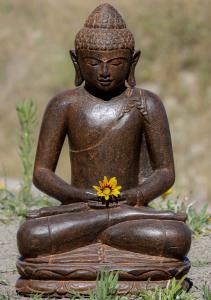
Jihi no Kokoro: The Benevolent Heart



TRENDING AT PATHEOS More Voices

Reading America at 250: A Nation Wrestles With...
As part of my own reflection on the 250th anniversary of the...

Whenever I am reading a book or listening to an argument, I...

President Trump Ban Animal Torture Videos on Facebook
Call for Stricter Regulations of Animal Abuse Content on Facebook Although President...

Draft Amendments to Address Ritual Abuse in New...
The proposed changes would make it illegal for individuals in domestic partnerships...

How Bans on LGBTQ+ Student Clubs Threaten Religious...
On June 20, 2025, the State of Texas passed Senate Bill 12....

The Truth About the Gen Z Revival
This past year, there has been a lot of media buzz surrounding...
view all More Voices blogs
Ad-Free & Subscriber Log-In Subscription Support
- About Us
- 2026 Calendar
- Videos
- Podcasts
- Library of World Religions
- Faith In Media Tracker
- Advertise With Us
- Write for Us
- Privacy Policy
- Terms of Service
- Do Not Sell My Data
- Contact Us
- Radiant Digital
- Manage Newsletter Subscriptions
- Unsubscribe From Notifications
- Sitemap
Copyright 2008-2026, Patheos. All rights reserved.
Subscription Support Ad-Free & Subscriber Log-In
Follow Patheos