
BuddhistCatholicContemplativeEvangelicalGeneral ChristianHinduJewishLatter-day SaintMuslimNew VisionsProgressive Christian
Beliefs
- Buddhist
- Catholic
- Contemplative
- Evangelical
- General Christian
- Hindu
- Jewish
- Latter-day Saint
- More Voices
- Muslim
- New Visions
- Pagan
- Progressive Christian
Topics
- Religion News
- Food and Religion
- Sports and Religion
- Religious Art
- Religious Music and Entertainment
- Religious Events
- History and Religion
- Style and Religion
- Politics and Religion
- Women in Religion
- Recreation Outdoors and Religion
- Business Finance and Religion
- Careers Workplace and Religion
- Education and Religion
- Family Parenting and Religion
- Health Fitness and Religion
- Home and Religion
- Relationships and Religion
- Technology and Religion
- Travel and Religion
Columnists
- Buddhist Columnists
- Business Finance and Religion Columnists
- Careers Workplace and Religion Columnists
- Catholic Columnists
- Contemplative Columnists
- Education and Religion Columnists
- Evangelists Columnists
- Family Parenting and Religion Columnists
- General Christian Columnists
- Health Fitness and Religion Columnists
- Hindu Columnists
- History and Religion Columnists
- Home and Religion Columnists
- Jewish Columnists
- More Voices Columnists
- Latter Day Columnists
- Muslim Columnists
- New Visions Columnists
- Nonreligious Columnists
- Pagan Columnists
- Politics and Religion Columnists
- Progressive Columnists
- Recreation Outdoors and Religion Columnists
- Relationships and Religion Columnists
- Religion News Columnists
- Religious Art Columnists
- Religious Events Columnists
- Religious Music and Entertainment Columnists
- Sports and Religion Columnists
- Style and Religion Columnists
- Technology and Religion Columnists
- Travel and Religion Columnists
- Women in Religion Columnists
Resource Library
- 2026 Calendar
- Library of World Religions
- The 100 Most Holy Places on Earth
- Patheos Answers
- Podcasts
- Videos
- Faith Leaders Database
- Anglican Episcopalian
- Bahai
- Baptist
- Buddhism
- Christianity
- Confucianism
- Eastern Orthodoxy
- Hinduism
- Holiness and Pentecostal
- ISKCON
- Islam
- Judaism
- Lutheran
- Methodist
- The Church of Jesus Christ of Latter-day Saints
- New Age
- Paganism
- Presbytarian and Reformed
- Protestantism
- Religion Behind the Scenes
- Roman Catholic
- Scientology
- Shia Islam
- Sikhism
- Sufism
- Sunni Islam
- Taoism
- Zen
- See all religions
Research Tools
 Ad-Free & Subscriber Log-In Subscription Support
Ad-Free & Subscriber Log-In Subscription Support
Follow Patheos 

- Trending:
- Forgiveness
- |
- Marriage
- |
- Consciousness
- |
- Death Penalty
- |
- Election
- |
- Halloween
 The Perennialist Perspective
- Home
- More Voices
- The Power of the Godai
The Power of the Godai
Last updated on: June 20, 2022 at 5:28 pm by Jake Davila
The Power of the Godai 2022-06-20T17:28:34-04:00 Jake Davila
Patheos Explore the world's faith through different perspectives on religion and spirituality! Patheos has the views of the prevalent religions and spiritualities of the world.
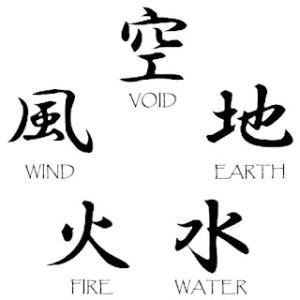
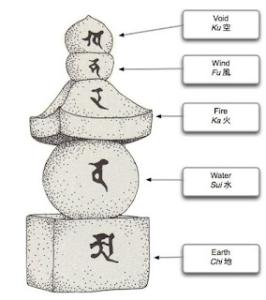 Each of us is a being of temporal and spiritual components. That is, we exist as both a body and a soul. In this brief teaching I want to focus on the body and the elements of which it is comprised. Why? Because these elements connect us to the universe and each other, and each of them holds important spiritual lessons for us. In the spiritual traditions of Japan there exists an important concept known as the Godai, a Japanese word signifying Five Elements.
These elements are:
EARTH
AIR
WATER
FIRE
VOID/EMPTINESS
Everything in the universe is comprised of the first four of these elements. Your body is a composite of each of them, and when your Soul leaves it, the body will decay and return to the soil. Your body relies on these elements, requiring air and water to live, both of which exist within your body. Likewise, your body produces heat, which is an effect of fire. ‘But what of emptiness?’, you might ask. The Western mind doesn’t readily grasp the meaning of emptiness as it is understood in the spiritual traditions of the East. We tend to think of an absence of matter or anything substantive. However, what is actually meant by emptiness is creative potential. Creativity is one of the energies of the Soul, and as such, when we speak of emptiness, we are speaking of the Soul. As already noted, when the Soul is no longer present in the body, there is no creative potential. The life-giving energy is no longer present, and so the material body begins to break down, returning to the earth from which it sprang.
It is also important to immerse oneself in each of the first four elements, as doing so leads to healthy mind and body, and helps alleviate stress while giving us the space to bring our priorities back in harmony with our spiritual lives. Getting enough sunshine can help alleviate depression, for example. Drinking enough water helps us avoid dehydration and taking a swim or just dipping our feet in a lake are healthy and meditative. Eating natural foods, you’ve grown from the earth yourself, or taking a walk through a forest or quiet garden are, again, healthy and relieve stress. And sitting around a campfire, smelling that familiar scent of logs burning as you roast marshmallows with the children is meditative and gives you wonderful memories to share with friends and family. You are intimately connected to nature as your body is a product of these elements. The constant existence in the “concrete jungle” of cities is often bad for body, mind and spirit, so get out there and immerse yourself in your natural home.
Spiritual Psychology
There are still deeper considerations with regard to these Godai. They can help the spiritual adept in building strengths and overcoming weaknesses, since each of these elements is connected to personality traits and psychological states. This is where spirituality meets psychology. These elemental characteristics are both of a positive and negative nature, reflecting the Dualistic nature of the entirety of existence. Study the Godai carefully and be honest with yourself as you do so, recognizing both the positive and negative aspects of your own personality and behavior, and then begin the work of adjusting to more accurately reflect the positive, spiritually beneficial traits. Let’s take a look.
- Earth-The positive earth personality traits are stability, confidence, and reliability. The negative traits are stubbornness, narcissism, cockiness and pushiness.
- **Air-**The positive wind personality traits are benevolence, compassion and wisdom. The negative personality traits are lack of will, easily manipulated and evasiveness.
- **Fire-**The positive fire personality traits are passion, drive and joy. The negative traits are excessive aggression, anger, violence, and lack of self-control.
- **Water-**The positive water personality traits are flexibility, give and take and careful consideration. The negative personality traits are defensiveness, lack of decisive action, and lack of balance in give and take.
Undoubtedly, if you are like most people, you will see a bit of yourself in each of the elements, which is to be expected. You can clearly see how the positive traits are balanced, while the negative traits lack balance and lead to suffering.
The fifth element is the ultimate key to a healthy psychology and personality. If we are consistent in keeping our focus on the care of the Soul (Void/Emptiness/Creative Potential), this will lead to the other four elements aligning in the positive much more easily. The element of Creative Potential, guided by spiritual principles always helps to bring balance to our lives. As Meishu-sama taught:
“Creation results from acting in accord with the Way (Tao), and destructions results from deviating from it.”
The Tao is balance and harmony in nature and humanity. Therefore, pursue the Way in mind, body and spirit. Namaste.
Previous Post

June 16, 2022
When the Teacher Makes You Angry
Next Post
June 21, 2022 Cultivating the Eye of the Heart
Browse Our Archives
Select a Category Uncategorized
Select a Month September 2022 August 2022 July 2022 June 2022 May 2022
Follow Us!
TAKE THE
Religious Wisdom Quiz
What did the Israelites worship while Moses was on Mount Sinai?
Select your answer to see how you score.
A bronze snake The ark A golden calf A statue of Moses
Related posts from The Perennialist Perspective
Cultivating the Eye of the Heart
TRENDING AT PATHEOS More Voices

Reading America at 250: A Nation Wrestles With...
As part of my own reflection on the 250th anniversary of the...

Whenever I am reading a book or listening to an argument, I...

President Trump Ban Animal Torture Videos on Facebook
Call for Stricter Regulations of Animal Abuse Content on Facebook Although President...

Draft Amendments to Address Ritual Abuse in New...
The proposed changes would make it illegal for individuals in domestic partnerships...

How Bans on LGBTQ+ Student Clubs Threaten Religious...
On June 20, 2025, the State of Texas passed Senate Bill 12....

The Truth About the Gen Z Revival
This past year, there has been a lot of media buzz surrounding...
view all More Voices blogs
Ad-Free & Subscriber Log-In Subscription Support
- About Us
- 2026 Calendar
- Videos
- Podcasts
- Library of World Religions
- Faith In Media Tracker
- Advertise With Us
- Write for Us
- Privacy Policy
- Terms of Service
- Do Not Sell My Data
- Contact Us
- Radiant Digital
- Manage Newsletter Subscriptions
- Unsubscribe From Notifications
- Sitemap
Copyright 2008-2026, Patheos. All rights reserved.
Subscription Support Ad-Free & Subscriber Log-In
Follow Patheos