
BuddhistCatholicContemplativeEvangelicalGeneral ChristianHinduJewishLatter-day SaintMuslimNew VisionsProgressive Christian
Beliefs
- Buddhist
- Catholic
- Contemplative
- Evangelical
- General Christian
- Hindu
- Jewish
- Latter-day Saint
- More Voices
- Muslim
- New Visions
- Pagan
- Progressive Christian
Topics
- Religion News
- Food and Religion
- Sports and Religion
- Religious Art
- Religious Music and Entertainment
- Religious Events
- History and Religion
- Style and Religion
- Politics and Religion
- Women in Religion
- Recreation Outdoors and Religion
- Business Finance and Religion
- Careers Workplace and Religion
- Education and Religion
- Family Parenting and Religion
- Health Fitness and Religion
- Home and Religion
- Relationships and Religion
- Technology and Religion
- Travel and Religion
Columnists
- Buddhist Columnists
- Business Finance and Religion Columnists
- Careers Workplace and Religion Columnists
- Catholic Columnists
- Contemplative Columnists
- Education and Religion Columnists
- Evangelists Columnists
- Family Parenting and Religion Columnists
- General Christian Columnists
- Health Fitness and Religion Columnists
- Hindu Columnists
- History and Religion Columnists
- Home and Religion Columnists
- Jewish Columnists
- More Voices Columnists
- Latter Day Columnists
- Muslim Columnists
- New Visions Columnists
- Nonreligious Columnists
- Pagan Columnists
- Politics and Religion Columnists
- Progressive Columnists
- Recreation Outdoors and Religion Columnists
- Relationships and Religion Columnists
- Religion News Columnists
- Religious Art Columnists
- Religious Events Columnists
- Religious Music and Entertainment Columnists
- Sports and Religion Columnists
- Style and Religion Columnists
- Technology and Religion Columnists
- Travel and Religion Columnists
- Women in Religion Columnists
Resource Library
- 2026 Calendar
- Library of World Religions
- The 100 Most Holy Places on Earth
- Patheos Answers
- Podcasts
- Videos
- Faith Leaders Database
- Anglican Episcopalian
- Bahai
- Baptist
- Buddhism
- Christianity
- Confucianism
- Eastern Orthodoxy
- Hinduism
- Holiness and Pentecostal
- ISKCON
- Islam
- Judaism
- Lutheran
- Methodist
- The Church of Jesus Christ of Latter-day Saints
- New Age
- Paganism
- Presbytarian and Reformed
- Protestantism
- Religion Behind the Scenes
- Roman Catholic
- Scientology
- Shia Islam
- Sikhism
- Sufism
- Sunni Islam
- Taoism
- Zen
- See all religions
Research Tools
 Ad-Free & Subscriber Log-In Subscription Support
Ad-Free & Subscriber Log-In Subscription Support
Follow Patheos 

- Trending:
- Forgiveness
- |
- Marriage
- |
- Consciousness
- |
- Death Penalty
- |
- Election
- |
- Halloween
 The Pangea Blog
- Home
- Progressive Christian
- Evil is Random, Even for God: The Uncontrolling Love of God
Evil is Random, Even for God: The Uncontrolling Love of God
Last updated on: November 4, 2015 at 5:30 am by Kurt Willems
Evil is Random, Even for God: The Uncontrolling Love of God 2015-11-03T12:28:02-08:00 Kurt Willems
Patheos Explore the world's faith through different perspectives on religion and spirituality! Patheos has the views of the prevalent religions and spiritualities of the world.
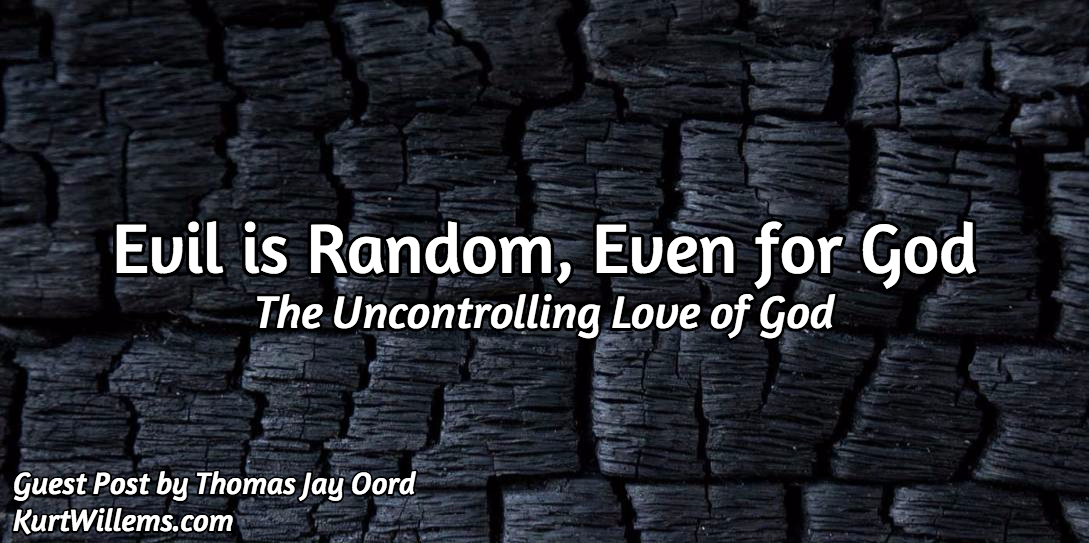
Kurt Note: Thomas Jay Oord is a theologian I respect. His work in open and relational theology is so helpful for understanding the nature of God in relation to space and time. In this short article, Tom gives us a bit of a peak at a new way of understanding why evil and suffering exist. He also looks at why God doesn’t always intervene as we’d like. Thought provoking, to be sure! This particular post is inspired by his new book, The Uncontrolling Love of God: An Open and Relational Account of Providence which is available for pre-order now!
—————————————-
We all want to make sense of life. I think the stakes for Christians in the endeavor to make sense of life are as high as any stakes can be.
I’ve been thinking for some time about two major questions in my quest to make sense of life. The first is familiar to just about everyone, at least in some form. Here’s the form of the question I find most perplexing:
“If a loving and powerful God exists, why doesn’t this God prevent genuine evil?”
The vast majority of answers given to this question are unsatisfying. Most Christians I know ultimately appeal to mystery when proposing an answer. This question perplexes billions of people.
The second question is less common but I think equally perplexing:
“How can a loving and powerful God be providential if random and chance events occur?”
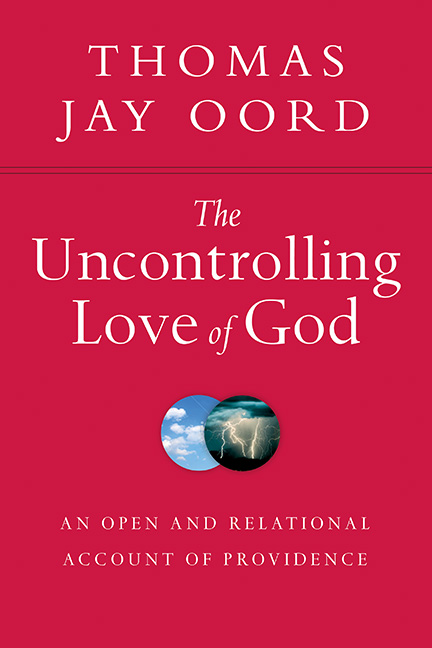
In my new book, The Uncontrolling Love of God: An Open and Relational Account of Providence (Intervarsity Press Academic), I propose answers to these questions. Theology, science, Scripture, and philosophy inform my answers.
Unlike most Christians, I don’t appeal to mystery!
To get at my answers, I address a wide swath of issues Christians normally consider aspects of God’s providence. I address the randomness and chance we encounter in the world. I claim that it is real, even for God.
But I also acknowledge the rampant regularities of life, some of which have been called “the laws of nature.” Thinking carefully about God’s relationship to these law-like regularities is important for solving both the problem of evil and the problem of randomness in relation to providence.
In my view, too few Christians take free will seriously when thinking about providence. I believe the freedom we experience in life is real but limited. I’m a freewill theist.
I also think values are real. Some events are better than others. Good and evil are not simply a matter personal taste or individual perspective. A portion of my book addresses how we should define evil and why belief in God makes better sense than atheism for understanding good and evil. In this section, I also address the problem of good, which I think is an issue for atheists.
Of course, I’m not the first person to recommend a particular view of God’s action in relation to creation. A number of models of providence exist. It helps to get clear on these models if we can make progress in answering well the problem of evil and the problem of randomness. I identify seven major models in my book, pointing out strengths and weaknesses of each.
I’m an open and relational theologian. This form of theology comes in many varieties, but there are some common characteristics. People have come to embrace open and relational theologies from various paths. Some come primarily through their study of Scripture. Others by working out issues in the discipline of theology. Some come to open and relational theology through philosophical reflection. And others come as a consequences of their study of science.
The most common answer to the problem of evil and the problem of randomness, even among many open and relational theologians, is that God allows evil and randomness. God could control it but chooses not to do so.
I don’t find the “God allows it” answer satisfying. God cannot be perfectly loving if God allows evil and permits random events that God would anticipate having negative consequences. We don’t think people are perfectly loving when they allow horrific evils they could have stopped. Why think that God is loving for doing the same?
The common view of those who say God allows evil and permits randomness is that God is voluntarily self-limited. God could intervene to prevent evil. God could stop a random event that will likely have negative consequences. But for some mysterious reason, this voluntarily self-limited God doesn’t momentarily become un-self-limited to prevent genuine evil. The problem of evil is a problem for many open and relational theologies.
I offer a new open and relational model of providence I call “essential kenosis.” It says God’s love is always self-giving, others-empowering. God must love because God’s nature is love.
Unlike many open and relational theologians, I believe God’s nature of self-giving, others-empowering love conditions and shapes God’s sovereignty. To put it in philosophical language, divine love is logically prior to divine power. This means that God’s self-limitation is involuntary, because God’s nature of love limits what God can do.
In short: God can’t prevent genuine evil by acting alone and God can’t stop random events that produce evil.
To put in biblical terms, I think the Apostle Paul was right when he said that God “cannot deny himself” (2 Tim. 2:13). In other words, God’s nature comes before God’s choice, and God cannot do that which is ungodly. Teasing out the implications of this can make all the difference for answering well the perplexing questions of our time.
Of course, there are much more to this book than what I’m offering here. I haven’t even mentioned my explanation of miracles, which gets a whole chapter in the book. I’m grateful to Kurt for allowing me to post this teaser.
I hope you consider ordering The Uncontrolling Love of God and pondering my arguments!
Thomas Jay Oord
———————————————————-
Thomas Jay Oord (PhD, Claremont Graduate University) is professor of theology and philosophy at Northwest Nazarene University in Nampa, Idaho. He serves as adviser or on the councils of several scholarly groups, including the Open and Relational Theologies group (AAR), Biologos, Institute for Research on Unlimited Love, Research Theological Fellowship, Wesleyan Theological Society and the Wesleyan Philosophical Society. Oord has written or edited more than twenty books, including Defining Love: A Philosophical, Scientific, and Theological Engagement, The Nature of Love: A Theology and Theologies of Creation: Creatio Ex Nihilo and Its New Rivals. He is known for his contributions to research on love, open and relational theologies, postmodernism, issues in religion and science, and Wesleyan, holiness and evangelical theologies. Oord serves as an ordained minister in the Church of the Nazarene and in various consulting and administrative roles for academic institutions, scholarly projects and research teams. He and his wife Cheryl have three daughters.
Previous Post

October 28, 2015
Presidents Can't Follow Jesus, So Christians Quit Fighting About It!
Next Post
November 6, 2015 Greg Boyd Gives 5 Bullet Points about Open Theism in the Bible
Browse Our Archives
Select a Category (Series) All Out War-Spiritual Warfare (Series) Church Plant Journal (Series) Dear Reader... (Series) Earthquakes...Signs of the Times? (Series) Entering the... Conversation (Series) Evangelical Culture Myths (Series) Everything is Meaningless [Pete Enns] (Series) Evolving Evangelicalism (Series) Hell Yes. Hell No! Who Cares? (Series) Hidden Worldviews (Series) If Evolution is Right, what about Adam? (Series) in less than 300 words (Series) Jesus and Nationalism (Series) Liberating Women for Ministry? (Series) Life-Changing Books (Series) Markers of Church Plant Movement (Series) Nonviolence 101 (Series) Philemon - Reconciliation (Series) Quote to Ponder (Series) Red Letter Dialogues (Series) Resource of the Week (SERIES) Revelation Sermons (Series) Share Something Sundays (Series) Simplicity in the Burbs: $2 a day (Series) The Binding of God [Open Theism] (Series) The Creed: Anabaptist Reflections (Series) Values for Church Leadership (Series) Video to Ponder Anabaptism Animal Advocacy Books Church Ministry Church Planting Community Culture Eschatology Eucharist Evangelical Reject Evolution Fundamentalism Greek Greg Boyd Guest Contributors Hell Holy Spirit Israel/Palestine Kingdom of God Lent Missional N. T. Wright Nationalism New Creation Nonviolence Open Mic Open Theism Parenting Passover Paul Philemon Podcast Politics Restorative Justice Revelation (the book of) Rob Bell Ron Martoia Sermon Shane Claiborne Social Justice Speaking Engagement Spiritual Warfare Spirituality Temple Theology Tim Geddert Tribulation Uncategorized universalism Video Blog Women in Ministry Worship Music Youth Ministry
Select a Month August 2018 July 2018 June 2018 May 2018 April 2018 March 2018 February 2018 January 2018 December 2017 October 2017 July 2017 June 2017 May 2017 April 2017 December 2016 October 2016 August 2016 June 2016 May 2016 April 2016 March 2016 December 2015 November 2015 October 2015 September 2015 August 2015 June 2015 May 2015 April 2015 March 2015 February 2015 January 2015 December 2014 November 2014 October 2014 September 2014 August 2014 July 2014 June 2014 May 2014 April 2014 March 2014 February 2014 January 2014 December 2013 November 2013 October 2013 September 2013 August 2013 June 2013 May 2013 April 2013 March 2013 February 2013 January 2013 December 2012 November 2012 October 2012 September 2012 August 2012 July 2012 June 2012 May 2012 April 2012 March 2012 February 2012 January 2012 December 2011 November 2011 October 2011 September 2011 August 2011 July 2011 June 2011 May 2011 April 2011 March 2011 February 2011 January 2011 December 2010 November 2010 September 2010 August 2010 July 2010 June 2010 May 2010 April 2010 March 2010 February 2010 January 2010 October 2009 September 2009 August 2009 July 2009 June 2009 May 2009 April 2009 March 2009 February 2009 January 2009 December 2008 November 2008 October 2008 September 2008 August 2008 June 2008 May 2008 April 2008
Follow Us!
TAKE THE
Religious Wisdom Quiz
How many times does the Bible mention the word "love"?
Select your answer to see how you score.
500 700 100 Over 300
Support this
Column


Related posts from The Pangea Blog

What is the Kingdom of God? (with Frank...

10 Years Ago, I Embraced Nonviolence & Anabaptism

Romans 13 Doesn't Give Government an Ethical Blank...

Does God plan everything that happens? (4 Views)
TRENDING AT PATHEOS Progressive Christian

What Being a Modern-Day Apostle Means to Me
In my last column, I discussed the ins and outs of modern-day...

Did Ancient China Once Worship the God of...
Across human history, a common thread weaves through the origins of the...

Love Your Neighbor – Including Earth-Kin: Lev. 19,...
God’s command to love your neighbor means acting in an ethical and...

Lead a Church Study of “Jesus and Lao...
Guest writer Jack Thomas (The Irreverent Reverend) reflects on leading his church...

Pastoral Wisdom for Responding to Sermon Pushback
Getting sermon pushback on your social justice sermon? Learn practical, Proverbs-based strategies...

Principles for Understanding the Apostolic Ministry Today
Whenever people discover that my formal ministry title is "apostle," as in...
view all Progressive Christian blogs
Ad-Free & Subscriber Log-In Subscription Support
- About Us
- 2026 Calendar
- Videos
- Podcasts
- Library of World Religions
- Faith In Media Tracker
- Advertise With Us
- Write for Us
- Privacy Policy
- Terms of Service
- Do Not Sell My Data
- Contact Us
- Radiant Digital
- Manage Newsletter Subscriptions
- Unsubscribe From Notifications
- Sitemap
Copyright 2008-2026, Patheos. All rights reserved.
Subscription Support Ad-Free & Subscriber Log-In
Follow Patheos