
BuddhistCatholicContemplativeEvangelicalGeneral ChristianHinduJewishLatter-day SaintMuslimNew VisionsProgressive Christian
Beliefs
- Buddhist
- Catholic
- Contemplative
- Evangelical
- General Christian
- Hindu
- Jewish
- Latter-day Saint
- More Voices
- Muslim
- New Visions
- Pagan
- Progressive Christian
Topics
- Religion News
- Food and Religion
- Sports and Religion
- Religious Art
- Religious Music and Entertainment
- Religious Events
- History and Religion
- Style and Religion
- Politics and Religion
- Women in Religion
- Recreation Outdoors and Religion
- Business Finance and Religion
- Careers Workplace and Religion
- Education and Religion
- Family Parenting and Religion
- Health Fitness and Religion
- Home and Religion
- Relationships and Religion
- Technology and Religion
- Travel and Religion
Columnists
- Buddhist Columnists
- Business Finance and Religion Columnists
- Careers Workplace and Religion Columnists
- Catholic Columnists
- Contemplative Columnists
- Education and Religion Columnists
- Evangelists Columnists
- Family Parenting and Religion Columnists
- General Christian Columnists
- Health Fitness and Religion Columnists
- Hindu Columnists
- History and Religion Columnists
- Home and Religion Columnists
- Jewish Columnists
- More Voices Columnists
- Latter Day Columnists
- Muslim Columnists
- New Visions Columnists
- Nonreligious Columnists
- Pagan Columnists
- Politics and Religion Columnists
- Progressive Columnists
- Recreation Outdoors and Religion Columnists
- Relationships and Religion Columnists
- Religion News Columnists
- Religious Art Columnists
- Religious Events Columnists
- Religious Music and Entertainment Columnists
- Sports and Religion Columnists
- Style and Religion Columnists
- Technology and Religion Columnists
- Travel and Religion Columnists
- Women in Religion Columnists
Resource Library
- 2026 Calendar
- Library of World Religions
- The 100 Most Holy Places on Earth
- Patheos Answers
- Podcasts
- Videos
- Faith Leaders Database
- Anglican Episcopalian
- Bahai
- Baptist
- Buddhism
- Christianity
- Confucianism
- Eastern Orthodoxy
- Hinduism
- Holiness and Pentecostal
- ISKCON
- Islam
- Judaism
- Lutheran
- Methodist
- The Church of Jesus Christ of Latter-day Saints
- New Age
- Paganism
- Presbytarian and Reformed
- Protestantism
- Religion Behind the Scenes
- Roman Catholic
- Scientology
- Shia Islam
- Sikhism
- Sufism
- Sunni Islam
- Taoism
- Zen
- See all religions
Research Tools
 Ad-Free & Subscriber Log-In Subscription Support
Ad-Free & Subscriber Log-In Subscription Support
Follow Patheos 

- Trending:
- Forgiveness
- |
- Marriage
- |
- Consciousness
- |
- Death Penalty
- |
- Election
- |
- Halloween
 The Pangea Blog
- Home
- Progressive Christian
- Motherhood as a Source for Resistance in the African American Struggle: From Slavery to Rosa Parks
Motherhood as a Source for Resistance in the African American Struggle: From Slavery to Rosa Parks
Last updated on: November 12, 2014 at 12:27 pm by Kurt Willems
Motherhood as a Source for Resistance in the African American Struggle: From Slavery to Rosa Parks 2014-11-12T12:27:08-08:00 Kurt Willems
Patheos Explore the world's faith through different perspectives on religion and spirituality! Patheos has the views of the prevalent religions and spiritualities of the world.
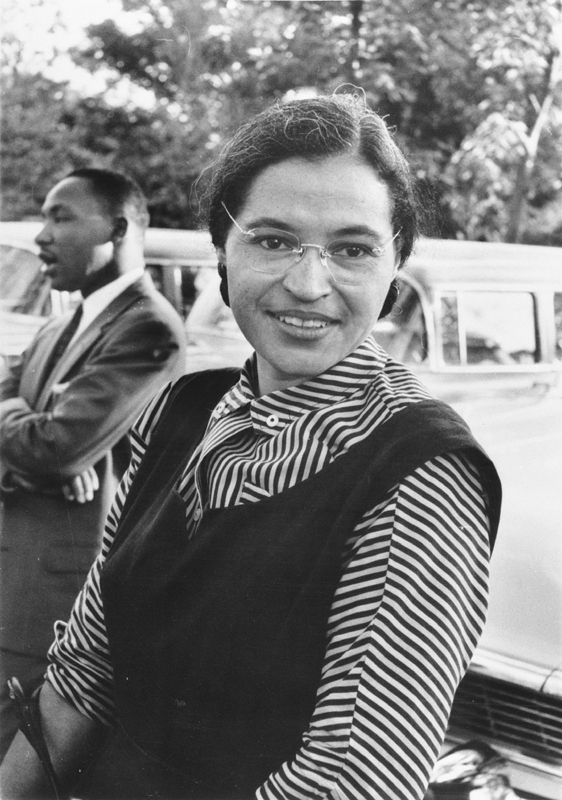 I post this analysis at the risk of being completely ignorant. I mean that in a humble sense–as I seek to learn to care about the welfare of all people. Speaking of an oppressed culture, as one who lacks the ability to fully understand, is a risk. I post this reflection as part of my journey of understanding the African American struggle. This reflection focuses on an essay by African-American feminist scholar Delores Williams. Her essay moved me. I welcome insights. Please know that I’m aware of the fact that my blindspots are broad.
Anyone who grew up in the years following the Civil Rights Movement knows the story of Rosa Parks. This woman embodied a posture of dignity and resistance. Her iconic refusal to give up her seat on a bus for a white person gave inspirational fuel to the movement. As a woman—a black woman—she took up a call for justice by asserting both her female and black identity.
In Sisters in the Wilderness: The Challenge of Womanist God-Talk, Delores Williams states that “the modern phenomenon of black mothers like Rosa Parks acting as catalysts for social change stems from a long tradition of black mothers and nurturers who were catalysts for social change in and beyond the African-American community—even though some social processes in the community restricted black women’s opportunities while expanding black men’s opportunities” (543). In other words, according to Williams, a long tradition of black women asserting themselves—even when socially powerless—created the conditions from whence resistance was made possible. It is to this tradition that I will to focus in this response essay.
Delores Williams begins by anecdotally helping readers understand why a womanist approach to the African American narrative intrigues her. After being frustrated by the lack of female voices in the African American theological tradition, she began excavating various historical and literary sources, from a womanist perspective, to uncover the centrality of the black woman in the tradition. Before I go on to explore some of her findings, the lack of female resources for inquiry into the past raises an important issue. I’ve heard it said that history is not the study of the past, but rather it is the study of how things were remembered and why.[1]
One thing to note is how patriarchy controls the way we remember the past, in virtually every culture in human history. Much of our so-called histories come from the perspectives of the victors, the ones in power, and not from the social class who experienced “life on the ground.” This tendency exists even in the African American tradition, but fortunately not to the point that we cannot salvage resources for seeing the ways in which oppressed women maintained their dignity.
Williams’ discussion helps us to see how the African American community appropriated the Scriptures to make meaning out of their experience of slavery and oppression. Surprisingly the Exodus is scarcely mentioned, mostly as this is not her area of focus. She notes that in liberation theology that the “validating biblical paradigm in the Hebrew testament was the exodus event…. [and in the] Christian testament [their] paradigm was Luke 4, when Jesus described his mission and ministry in terms of liberation… [with] their normative claim for biblical interpretation… [of] ‘God the liberator of the poor and oppressed” (531).
I was a bit surprised by her choice to nearly disregard this theme as a resource. It seemed, at first, that even the womanist can find helpful resources in the experiences of post-Egypt women who play a role (albeit minor) in their journey to the Promised Land. Liberation from a God who “hears the cry” of the oppressed certainly offers hope to both the oppressed woman and man alike. What becomes apparent is that Williams’ interest is not in liberation per se (at least not in the essay I read), but in the “mammies” who asserted themselves and maintained their dignity through their faith in a God who valued them as human image-bearers. As Williams makes clear: “[T]he African-American mother’s God-consciousness and absolute dependence upon God provided hope… where hope seemed absurd.” This view of God provided resources for their own self-image and empowerment to at times defy “laws and custom in order to nurture black people with care and compassion” (542). “Mammies” were empowered through their own self-worth, even when the hope of liberation was distant. They were strong right where they were planted. That fact should inspire us all.
Williams chooses to focus on a different theme that still helps build her case: that of Hagar, the slave cast out as a single mother of Ishmael. This story does not, in the author’s opinion, belong “to the liberation tradition of African-American biblical appropriation” (532). In many ways, Hagar’s story is not one of liberation by God, but of her taking up her own cause of freedom from her oppressive masters with God being a resource for her own efforts of survival. Her approach, then, is a “survival/quality-of-life tradition of the African-American biblical appropriation” (534). She credits, for instance, the “mammy” within slavocracy as the strong mothers of the community who utilized the Christian tradition as a source for maintaining dignity even as she was systematically raped and bred by slave owners.
At one moment as I read this essay, I was nearly moved to tears in the middle of Starbucks. As a white male I have no idea what it is like to struggle with dignity in this way. About “mammy,” Williams states: “But it must be emphasized that strength is not necessarily synonymous with power, nor does it here imply an idea of black matriarchy…. The antebellum black mother had no real power… many… had the helpmate not of the black man but black religion” (536-537). I have no real experience of lacking power in this way. Therefore, I may never know this sort of “strength.” This is a similar strength, I assume, that Rosa Parks utilized generations after slavery as she asserted the dignity of black women in the modern world. Thank God for the strong “Mammies” of the African-American story.
————————-
[1] This insight comes from, Historical Jesus: What Can We Know and How Can We Know It? by Anthony LeDonne (Grand Rapids: Eerdmans, 2011).
****Page Numbers Correlate to this book: Theory and Method in the Study of Religion: A Selection of Critical Readings
Previous Post

November 7, 2014
Logos 6: Why I'm a Big Fan
Next Post

November 18, 2014 10 Podcasts on the Book of Revelation and Empire
Browse Our Archives
Select a Category (Series) All Out War-Spiritual Warfare (Series) Church Plant Journal (Series) Dear Reader... (Series) Earthquakes...Signs of the Times? (Series) Entering the... Conversation (Series) Evangelical Culture Myths (Series) Everything is Meaningless [Pete Enns] (Series) Evolving Evangelicalism (Series) Hell Yes. Hell No! Who Cares? (Series) Hidden Worldviews (Series) If Evolution is Right, what about Adam? (Series) in less than 300 words (Series) Jesus and Nationalism (Series) Liberating Women for Ministry? (Series) Life-Changing Books (Series) Markers of Church Plant Movement (Series) Nonviolence 101 (Series) Philemon - Reconciliation (Series) Quote to Ponder (Series) Red Letter Dialogues (Series) Resource of the Week (SERIES) Revelation Sermons (Series) Share Something Sundays (Series) Simplicity in the Burbs: $2 a day (Series) The Binding of God [Open Theism] (Series) The Creed: Anabaptist Reflections (Series) Values for Church Leadership (Series) Video to Ponder Anabaptism Animal Advocacy Books Church Ministry Church Planting Community Culture Eschatology Eucharist Evangelical Reject Evolution Fundamentalism Greek Greg Boyd Guest Contributors Hell Holy Spirit Israel/Palestine Kingdom of God Lent Missional N. T. Wright Nationalism New Creation Nonviolence Open Mic Open Theism Parenting Passover Paul Philemon Podcast Politics Restorative Justice Revelation (the book of) Rob Bell Ron Martoia Sermon Shane Claiborne Social Justice Speaking Engagement Spiritual Warfare Spirituality Temple Theology Tim Geddert Tribulation Uncategorized universalism Video Blog Women in Ministry Worship Music Youth Ministry
Select a Month August 2018 July 2018 June 2018 May 2018 April 2018 March 2018 February 2018 January 2018 December 2017 October 2017 July 2017 June 2017 May 2017 April 2017 December 2016 October 2016 August 2016 June 2016 May 2016 April 2016 March 2016 December 2015 November 2015 October 2015 September 2015 August 2015 June 2015 May 2015 April 2015 March 2015 February 2015 January 2015 December 2014 November 2014 October 2014 September 2014 August 2014 July 2014 June 2014 May 2014 April 2014 March 2014 February 2014 January 2014 December 2013 November 2013 October 2013 September 2013 August 2013 June 2013 May 2013 April 2013 March 2013 February 2013 January 2013 December 2012 November 2012 October 2012 September 2012 August 2012 July 2012 June 2012 May 2012 April 2012 March 2012 February 2012 January 2012 December 2011 November 2011 October 2011 September 2011 August 2011 July 2011 June 2011 May 2011 April 2011 March 2011 February 2011 January 2011 December 2010 November 2010 September 2010 August 2010 July 2010 June 2010 May 2010 April 2010 March 2010 February 2010 January 2010 October 2009 September 2009 August 2009 July 2009 June 2009 May 2009 April 2009 March 2009 February 2009 January 2009 December 2008 November 2008 October 2008 September 2008 August 2008 June 2008 May 2008 April 2008
Follow Us!
TAKE THE
Religious Wisdom Quiz
What did Jesus turn water into at a wedding?
Select your answer to see how you score.
Milk Wine Bread Fish
Support this
Column


Related posts from The Pangea Blog

What is the Kingdom of God? (with Frank...

10 Years Ago, I Embraced Nonviolence & Anabaptism

Romans 13 Doesn't Give Government an Ethical Blank...

Does God plan everything that happens? (4 Views)
TRENDING AT PATHEOS Progressive Christian

What Being a Modern-Day Apostle Means to Me
In my last column, I discussed the ins and outs of modern-day...

Did Ancient China Once Worship the God of...
Across human history, a common thread weaves through the origins of the...

Love Your Neighbor – Including Earth-Kin: Lev. 19,...
God’s command to love your neighbor means acting in an ethical and...

Lead a Church Study of “Jesus and Lao...
Guest writer Jack Thomas (The Irreverent Reverend) reflects on leading his church...

Pastoral Wisdom for Responding to Sermon Pushback
Getting sermon pushback on your social justice sermon? Learn practical, Proverbs-based strategies...

Principles for Understanding the Apostolic Ministry Today
Whenever people discover that my formal ministry title is "apostle," as in...
view all Progressive Christian blogs
Ad-Free & Subscriber Log-In Subscription Support
- About Us
- 2026 Calendar
- Videos
- Podcasts
- Library of World Religions
- Faith In Media Tracker
- Advertise With Us
- Write for Us
- Privacy Policy
- Terms of Service
- Do Not Sell My Data
- Contact Us
- Radiant Digital
- Manage Newsletter Subscriptions
- Unsubscribe From Notifications
- Sitemap
Copyright 2008-2026, Patheos. All rights reserved.
Subscription Support Ad-Free & Subscriber Log-In
Follow Patheos