
BuddhistCatholicContemplativeEvangelicalGeneral ChristianHinduJewishLatter-day SaintMuslimNew VisionsProgressive Christian
Beliefs
- Buddhist
- Catholic
- Contemplative
- Evangelical
- General Christian
- Hindu
- Jewish
- Latter-day Saint
- More Voices
- Muslim
- New Visions
- Pagan
- Progressive Christian
Topics
- Religion News
- Food and Religion
- Sports and Religion
- Religious Art
- Religious Music and Entertainment
- Religious Events
- History and Religion
- Style and Religion
- Politics and Religion
- Women in Religion
- Recreation Outdoors and Religion
- Business Finance and Religion
- Careers Workplace and Religion
- Education and Religion
- Family Parenting and Religion
- Health Fitness and Religion
- Home and Religion
- Relationships and Religion
- Technology and Religion
- Travel and Religion
Columnists
- Buddhist Columnists
- Business Finance and Religion Columnists
- Careers Workplace and Religion Columnists
- Catholic Columnists
- Contemplative Columnists
- Education and Religion Columnists
- Evangelists Columnists
- Family Parenting and Religion Columnists
- General Christian Columnists
- Health Fitness and Religion Columnists
- Hindu Columnists
- History and Religion Columnists
- Home and Religion Columnists
- Jewish Columnists
- More Voices Columnists
- Latter Day Columnists
- Muslim Columnists
- New Visions Columnists
- Nonreligious Columnists
- Pagan Columnists
- Politics and Religion Columnists
- Progressive Columnists
- Recreation Outdoors and Religion Columnists
- Relationships and Religion Columnists
- Religion News Columnists
- Religious Art Columnists
- Religious Events Columnists
- Religious Music and Entertainment Columnists
- Sports and Religion Columnists
- Style and Religion Columnists
- Technology and Religion Columnists
- Travel and Religion Columnists
- Women in Religion Columnists
Resource Library
- 2026 Calendar
- Library of World Religions
- The 100 Most Holy Places on Earth
- Patheos Answers
- Podcasts
- Videos
- Faith Leaders Database
- Anglican Episcopalian
- Bahai
- Baptist
- Buddhism
- Christianity
- Confucianism
- Eastern Orthodoxy
- Hinduism
- Holiness and Pentecostal
- ISKCON
- Islam
- Judaism
- Lutheran
- Methodist
- The Church of Jesus Christ of Latter-day Saints
- New Age
- Paganism
- Presbytarian and Reformed
- Protestantism
- Religion Behind the Scenes
- Roman Catholic
- Scientology
- Shia Islam
- Sikhism
- Sufism
- Sunni Islam
- Taoism
- Zen
- See all religions
Research Tools
 Ad-Free & Subscriber Log-In Subscription Support
Ad-Free & Subscriber Log-In Subscription Support
Follow Patheos 

- Trending:
- Forgiveness
- |
- Marriage
- |
- Consciousness
- |
- Death Penalty
- |
- Election
- |
- Halloween
 The Pangea Blog
- Home
- Progressive Christian
- A Land without a People for a People without a Land? – Zionism, Jesus, & Israel/Palestine
A Land without a People for a People without a Land? – Zionism, Jesus, & Israel/Palestine
Last updated on: March 4, 2014 at 11:50 am by Kurt Willems
A Land without a People for a People without a Land? – Zionism, Jesus, & Israel/Palestine 2014-03-04T11:50:37-08:00 Kurt Willems
Patheos Explore the world's faith through different perspectives on religion and spirituality! Patheos has the views of the prevalent religions and spiritualities of the world.
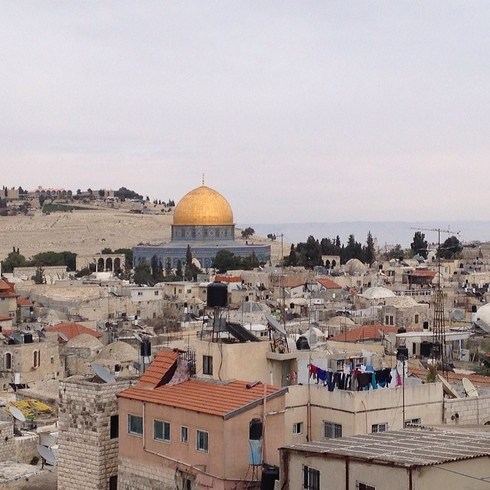
I’m writing this article from Israel/Palestine. I’ve partnered with The Global Immersion Project to learn from peacemakers in the region in order to apply their vision of peace both at home and abroad. As you can imagine, visiting this place is life-changing. Even prior to this trip, my heart broke for the people of this land. Before I get into my broken heart, let me rewind about 10 years or so.
In some ways the old me and the new me are the same. Still in love with Jesus. Still committed to historical, orthodox Christianity. Still loving people with a deep desire to see everyone that I come into contact with flourish with God.
My framework for understand the answer to “why” all of that stuff matters shifted drastically. Part of my story involves how a highly “conservative” Bible teacher actually influenced me to embrace elements of theology that might actually be labeled “progressive” by some.
For a couple of years, every time that I would drive in the afternoon around 3pm, my radio would be tuned into “The Bible Answer Man with Hank Hanegraaff.” This show’s host takes callers questions about the Scriptures and attempt to solve their mysteries. Common themes such include: charismatic gifts, free will/predestination, creation/evolution, religions/cults, and many more. All of these issues peaked my interest, but one theme that caused me to return to the show was that of the “end times.” Mr. Hanegraaff had embraced a perspective called “partial preterism” which called into question everything that I understood about the book of Revelation and related passages.
Although I disagree with Hank in some nuanced ways now (i.e. dating Revelation [he holds to an early date in the 60s whereas I now hold to a late-date in the 90s], influence of empire, etc.), one of the most important things that he offered was a critique of Dispensationalism and its cousin Zionism. In such a system of theology, God is said to have two distinct peoples – modern Israel and Christians. What Hank pointed out is how often this sort of theology fuels a uniquely American (and Israeli) political agenda that nearly unconditionally supports the modern State of Israel – even to the harm of Palestinian Christians. By believing that God has two “peoples” in the impending “end times” future, evangelical Christianity often blindly supports oppression.
Two Peoples or One?
By answering the question of peoplehood, we can then take the next step and ask: Who has the rightful ownership of the Land from biblical perspective?
Although we won’t take the time to make a thorough argument about whether or not God’s people are divided into two groups or not, I want to highlight a few passages that give some of the basics. Paul states: “If you belong to Christ, then you are Abraham’s seed, and heirs according to the promise” (Galatians 3.29). The same kind of logic is put forward in Ephesians chapter 2 as well, where the division between the Jews and Gentiles has been done away with by the peace of the cross. Out of the two groups God through Christ is forming a “new humanity.”
These two texts make clear that it is not nationality that determines Abraham’s family any longer, but all who “belong to Christ” are “Abraham’s seed.” The church is in direct continuity with all of the faithful Israelites throughout history, and all the promises in the Hebrew Scriptures, are now the Church’s (for Christians). Except, since Jesus’ resurrection the land is expanded to the whole earth! Therefore, to blindly support Israel because they are “God’s people” who have ownership to “God’s land” actually can harm the cause of Christ and is based on a theological system (contrived in the 1800’s) that has been consistently demonstrated to have little support in Christian theology. We should be pro-Israeli and pro-Palestinian and ultimately pro-human flourishing.
A Land without a People for a People without a Land?
After the Holocaust, which is arguably the worst example of human evil in history, Jewish survivors were refugees. With energy for a Zionist (Christian and non-Christian alike) cause having emerged alongside secularist ideologies and Dispensationalism, the U.N. invited the Jewish survivors to inhabit the ancient land of Palestine. Arguably, this was in part due to the lack of hospitality from other nations who didn’t want a “refugee problem.” By 1948 (shortly after the end of WWII) the U.N. formally recognized the State of Israel – which many Christians still believe to be the fulfillment of prophecy. My view, is that it was a pragmatic solution that didn’t take into consideration that other peoples, specifically Arab peoples (Christian and Muslim), already had cared for Palestine for over 1500 years (and even earlier).
When this happened, villages were pillaged and Zionist soldiers murdered many Palestinians. Yesterday I was told that hundreds of Palestinian villages were destroyed. Just as the Jews found themselves refugees just a few years prior, now Zionists were causing a similar situation for the inhabitants of Palestine in 1948. Many fled to other Arab countries with the sincere belief that it would only be temporary. Others eventually found ways to remain in the land, but would never see their homes again. In fact, many families still have their keys to their homes which are passed down generationally as a reminder – as hope.
In the years that followed, the constant subjugation and marginalization of these folks created conditions that one can only compare to the Jews under the oppressive arm of the Roman Empire during the days of Jesus. A great personal account of the history of the early and emerging occupation can be read in Blood Brothers: The Dramatic Story of a Palestinian Christian Working for Peace in Israel (Elias Chacour). Every Christian should read this book. To this day, occupation continues.
An American Christian Reflecting in Context

Sitting in a village that was taken over by Zionists (and ultimately the Nation State of Israel) broke my heart yesterday. One of the people on my trip said that he sensed that the village of Lufta (see image) was more spiritual than where we had just been at the Wailing Wall. I couldn’t agree more.
To be clear: this isn’t about “taking sides” or saying Palestine is good and Israel is bad. Rather, as followers of Jesus, we are invited to humanize both sides and partner together to create a shared future of forgiveness, equality, and human flourishing.
How we see this issue reflects our theology and ultimately how we see Jesus. Jesus is in the business of humanizing people – all people. In Jesus, the “land” is holy in Jerusalem, but also in the whole world. Every square inch of the cosmos is holy and it takes God’s holy people to join in God’s mission to reconcile all of it to God’s way of shalom or salaam.
I don’t yet know what this experience (which is still taking place) will mean for my own future. I know that I will never be the same. I also realize that I’m invited to never forget the struggle for justice and peace. This, I suspect, will have profound implications for my home church’s call to just-peacemaking both in our neighborhoods and in Israel/Palestine.
Resources
Follow our trip on Storify!
Check out The Global Immersion Project


Browse Our Archives
Select a Category (Series) All Out War-Spiritual Warfare (Series) Church Plant Journal (Series) Dear Reader... (Series) Earthquakes...Signs of the Times? (Series) Entering the... Conversation (Series) Evangelical Culture Myths (Series) Everything is Meaningless [Pete Enns] (Series) Evolving Evangelicalism (Series) Hell Yes. Hell No! Who Cares? (Series) Hidden Worldviews (Series) If Evolution is Right, what about Adam? (Series) in less than 300 words (Series) Jesus and Nationalism (Series) Liberating Women for Ministry? (Series) Life-Changing Books (Series) Markers of Church Plant Movement (Series) Nonviolence 101 (Series) Philemon - Reconciliation (Series) Quote to Ponder (Series) Red Letter Dialogues (Series) Resource of the Week (SERIES) Revelation Sermons (Series) Share Something Sundays (Series) Simplicity in the Burbs: $2 a day (Series) The Binding of God [Open Theism] (Series) The Creed: Anabaptist Reflections (Series) Values for Church Leadership (Series) Video to Ponder Anabaptism Animal Advocacy Books Church Ministry Church Planting Community Culture Eschatology Eucharist Evangelical Reject Evolution Fundamentalism Greek Greg Boyd Guest Contributors Hell Holy Spirit Israel/Palestine Kingdom of God Lent Missional N. T. Wright Nationalism New Creation Nonviolence Open Mic Open Theism Parenting Passover Paul Philemon Podcast Politics Restorative Justice Revelation (the book of) Rob Bell Ron Martoia Sermon Shane Claiborne Social Justice Speaking Engagement Spiritual Warfare Spirituality Temple Theology Tim Geddert Tribulation Uncategorized universalism Video Blog Women in Ministry Worship Music Youth Ministry
Select a Month August 2018 July 2018 June 2018 May 2018 April 2018 March 2018 February 2018 January 2018 December 2017 October 2017 July 2017 June 2017 May 2017 April 2017 December 2016 October 2016 August 2016 June 2016 May 2016 April 2016 March 2016 December 2015 November 2015 October 2015 September 2015 August 2015 June 2015 May 2015 April 2015 March 2015 February 2015 January 2015 December 2014 November 2014 October 2014 September 2014 August 2014 July 2014 June 2014 May 2014 April 2014 March 2014 February 2014 January 2014 December 2013 November 2013 October 2013 September 2013 August 2013 June 2013 May 2013 April 2013 March 2013 February 2013 January 2013 December 2012 November 2012 October 2012 September 2012 August 2012 July 2012 June 2012 May 2012 April 2012 March 2012 February 2012 January 2012 December 2011 November 2011 October 2011 September 2011 August 2011 July 2011 June 2011 May 2011 April 2011 March 2011 February 2011 January 2011 December 2010 November 2010 September 2010 August 2010 July 2010 June 2010 May 2010 April 2010 March 2010 February 2010 January 2010 October 2009 September 2009 August 2009 July 2009 June 2009 May 2009 April 2009 March 2009 February 2009 January 2009 December 2008 November 2008 October 2008 September 2008 August 2008 June 2008 May 2008 April 2008
Follow Us!
TAKE THE
Religious Wisdom Quiz
In Revelation, what is the name of the city that comes down out of heaven?
Select your answer to see how you score.
Zion The City of God The Holy City New Jerusalem
Support this
Column


Related posts from The Pangea Blog

Giving Up on Nonviolence: For Those Who Want...

Why Christians Should Care About Hebron in the...

The Israel-Gaza Conflict has Names and Faces: Hearing...
Resources for Understanding the Israeli-Palestinian Conflict - Today...
TRENDING AT PATHEOS Progressive Christian

Why Christians Have a Sacred Duty to Vote:...
The Bible offers strong support for the sacred duty to vote. Here...

What Being a Modern-Day Apostle Means to Me
In my last column, I discussed the ins and outs of modern-day...

Did Ancient China Once Worship the God of...
Across human history, a common thread weaves through the origins of the...

Love Your Neighbor – Including Earth-Kin: Lev. 19,...
God’s command to love your neighbor means acting in an ethical and...

Lead a Church Study of “Jesus and Lao...
Guest writer Jack Thomas (The Irreverent Reverend) reflects on leading his church...

Principles for Understanding the Apostolic Ministry Today
Whenever people discover that my formal ministry title is "apostle," as in...
view all Progressive Christian blogs
Ad-Free & Subscriber Log-In Subscription Support
- About Us
- 2026 Calendar
- Videos
- Podcasts
- Library of World Religions
- Faith In Media Tracker
- Advertise With Us
- Write for Us
- Privacy Policy
- Terms of Service
- Do Not Sell My Data
- Contact Us
- Radiant Digital
- Manage Newsletter Subscriptions
- Unsubscribe From Notifications
- Sitemap
Copyright 2008-2026, Patheos. All rights reserved.
Subscription Support Ad-Free & Subscriber Log-In
Follow Patheos