
BuddhistCatholicContemplativeEvangelicalGeneral ChristianHinduJewishLatter-day SaintMuslimNew VisionsProgressive Christian
Beliefs
- Buddhist
- Catholic
- Contemplative
- Evangelical
- General Christian
- Hindu
- Jewish
- Latter-day Saint
- More Voices
- Muslim
- New Visions
- Pagan
- Progressive Christian
Topics
- Religion News
- Food and Religion
- Sports and Religion
- Religious Art
- Religious Music and Entertainment
- Religious Events
- History and Religion
- Style and Religion
- Politics and Religion
- Women in Religion
- Recreation Outdoors and Religion
- Business Finance and Religion
- Careers Workplace and Religion
- Education and Religion
- Family Parenting and Religion
- Health Fitness and Religion
- Home and Religion
- Relationships and Religion
- Technology and Religion
- Travel and Religion
Columnists
- Buddhist Columnists
- Business Finance and Religion Columnists
- Careers Workplace and Religion Columnists
- Catholic Columnists
- Contemplative Columnists
- Education and Religion Columnists
- Evangelists Columnists
- Family Parenting and Religion Columnists
- General Christian Columnists
- Health Fitness and Religion Columnists
- Hindu Columnists
- History and Religion Columnists
- Home and Religion Columnists
- Jewish Columnists
- More Voices Columnists
- Latter Day Columnists
- Muslim Columnists
- New Visions Columnists
- Nonreligious Columnists
- Pagan Columnists
- Politics and Religion Columnists
- Progressive Columnists
- Recreation Outdoors and Religion Columnists
- Relationships and Religion Columnists
- Religion News Columnists
- Religious Art Columnists
- Religious Events Columnists
- Religious Music and Entertainment Columnists
- Sports and Religion Columnists
- Style and Religion Columnists
- Technology and Religion Columnists
- Travel and Religion Columnists
- Women in Religion Columnists
Resource Library
- 2026 Calendar
- Library of World Religions
- The 100 Most Holy Places on Earth
- Patheos Answers
- Podcasts
- Videos
- Faith Leaders Database
- Anglican Episcopalian
- Bahai
- Baptist
- Buddhism
- Christianity
- Confucianism
- Eastern Orthodoxy
- Hinduism
- Holiness and Pentecostal
- ISKCON
- Islam
- Judaism
- Lutheran
- Methodist
- The Church of Jesus Christ of Latter-day Saints
- New Age
- Paganism
- Presbytarian and Reformed
- Protestantism
- Religion Behind the Scenes
- Roman Catholic
- Scientology
- Shia Islam
- Sikhism
- Sufism
- Sunni Islam
- Taoism
- Zen
- See all religions
Research Tools
 Ad-Free & Subscriber Log-In Subscription Support
Ad-Free & Subscriber Log-In Subscription Support
Follow Patheos 

- Trending:
- Forgiveness
- |
- Marriage
- |
- Consciousness
- |
- Death Penalty
- |
- Election
- |
- Halloween
 The Pangea Blog
- Home
- Progressive Christian
- 5 Essential Ways to Prepare for a Trip to Israel – especially if you’re a Christian #IsraelPalestine
5 Essential Ways to Prepare for a Trip to Israel – especially if you’re a Christian #IsraelPalestine
Last updated on: February 26, 2014 at 6:37 pm by Kurt Willems
5 Essential Ways to Prepare for a Trip to Israel – especially if you’re a Christian #IsraelPalestine 2014-02-26T18:37:27-08:00 Kurt Willems
Patheos Explore the world's faith through different perspectives on religion and spirituality! Patheos has the views of the prevalent religions and spiritualities of the world.
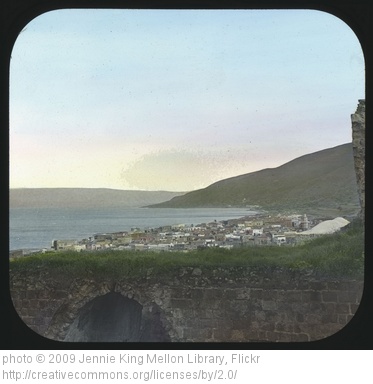
For the past couple of months I’ve been preparing for my first ever trip to Israel/Palestine. Visiting the Holy Land has long been a dream of mine (perhaps for most Christians), so when the opportunity came up, I’m glad I prepared with some great folks. With the guidance of my friends at The Global Immersion Project, I feel prepared for such a significant journey.
For Christians, several reasons exist for a trip to Israel, of which I will name two. First, the historical context of Jesus and the Apostles is something to be explored. The world of the New Testament can sometimes feel like an abstract story, so a visit (I assume) can help bridge the gap between the abstract and the concrete.
Second, the modern context of Israel/Palestine is a land with turmoil and at times – violence. Although one doesn’t need to be afraid when visiting the Jerusalem and the surrounding areas, having a lens toward the struggle between the Israeli Government and the Palestinians helps us to understand that there are real-world issues to address. As Christians, turning a blind eye should not compute – especially if we know more than the media portrays about the struggle for peace in the region.
With The Global Immersion Project, I’m learning about both motivations for the trip mentioned above. Their motto is: “The Global Immersion Project cultivates everyday peacemakers through immersion in global conflict.” In order to accomplish this aim, they teach about peacemaking from a biblical perspective, educate about the modern conflict in Israel/Palestine, and attempt to bridge the global-local gap by inviting participants to apply Jesus’ call to peacemaking in their own city.
When this experience is over, I will have: 1) spent nearly two months in the Understanding Phase – essentially an online class with Skype-style instruction sessions with the whole group; 2) spent almost 2 weeks in the Exposure Phase – in Israel/Palestine discovering the historical context of the Bible and the modern-day context of global conflict; 3) spent a lifetime (I hope!) in the Integration Phase – taking what I learned in the first two phases and applying them to my local context (while also seeking to stay connected to the global issues of Israel/Palestine).
TGIP Learning Labs Phase 1 :: Understanding from The Global Immersion Project on Vimeo.
During the Understanding Phase, I’ve been exposed to many things. What I want to do for the rest of this post, is to distill some key things that helped me to prepare for my trip to Israel/Palestine. Most of what I share here was either specifically part of my time in the Understanding Phase or is complementary to it. Whether you eventually choose to partner with The Global Immersion Project or not, hopefully this list will get you fully prepared to get the most out of your experience in the Holy Land.
#1 Watch documentaries
Without actually “seeing” it will be difficult to imagine both the ancient and modern contexts of Israel/Palestine prior to a trip. The following films will educate you on the issues which have caused much of the violence in the region. But, the reality is that this isn’t anything new. In Jesus’ day, the situation was tense as well. Here’s some helpful films to start with.
- Little Town of Bethlehem – a film exploring the modern day struggle for peace through the lives of three men, who in many ways ought to be enemies.
- With God on our Side – a film examining: the basic issues that led to the conflict, the current state of affairs for both Israelis and Palestinians, and the role of Christian Zionism.
- Ray Vander Laan Faith Lessons DVD series – in this series of films, Christian teacher Ray Vander Laan explores the context of the Bible. This will give you a small taste of the real thing and help you to understand what you are experiencing when you are on the ground.
#2 Read 1 book on historical context and another on modern context.
The following two resources, in keeping with our ancient and modern theme, will give you amazing insights into Israel/Palestine. Honestly, I can’t recommend these two books enough!!!!!!
- Blood Brothers: The Dramatic Story of a Palestinian Christian Working for Peace in Israel (Elias Chacour) – This is honestly one of the most powerful books that I’ve EVER read. Painful at some points, but also hopeful. I would go so far as saying that every American Christian should read this book! I’m thankful for my friends at the Global Immersion Project for exposing me to this amazing story.
- Simply Jesus: A New Vision of Who He Was, What He Did, and Why He Matters (N.T. Wright) – Anyone who wants to know the full scoop on Jesus within the historical context of his day, needs to read and absorb this great introduction. N.T. Wright’s work in this area is quite helpful, especially when he writes at a “popular” level.
#3 Go to the CDC Website to make sure that you are up to date on your shots.
Don’t be like me… totally let the whole shot thing slip. When did I realize this? You know… the afternoon prior to my morning departure!!!!!! Luckily I had a local drugstore that was able to give me the Tetanus shot that I needed boosted. So, go here and check your shot records!
#4 Learn about conflict/resolution through a biblical lens.
God is in the business of Shalom (peace). From creation to new creation we see a God who invites humans to join in a mission to bring peace where relationships have been fractured. This is a foundational premise for The Global Immersion Project. In our Understanding Phase, they invited us into the story of Scripture and into a process for peacemaking. This conflict/resolution journey consists of 4 words:
- See :: Pay attention to the humanity, dignity, & image of God in and the plight of others.
- Immerse :: Humbly enter the radical center of conflict, seeking to understand rather than to be understood.
- Contend :: Engage the person and the conflict through costly, creative initiatives.
- Restore :: Reintegrate the person back into flourishing relationship.
A key word in peacemaking is “restoration” which The Global Immersion Project defines as: the holistic repair of severed relationships that results in harmony between us & God, us & ourselves, us & each other, and us & creation.
A couple of helpful and SHORT books on this issue:
- God’s Shalom Project: An engaging look at the Bible’s sweeping story (Bernhard Ott)
- The Little Book of Conflict Transformation: Clear articulation of the guiding principles by a pioneer in the field (John Lederach)
#5 Go with a group committed to intentional conversation and mutual learning.
Look, all of this is great, but without conversation partners it won’t actualize beyond your own internal monologue. And what good is that?????!
Again, this is why my time with The Global Immersion Project has already been life changing. Through our online forum and video chat dialogues, I have grown in many ways and feel ready to appreciate my time in the Holy Land more than I ever would have without preparing. Of course, as I’ve already made clear, I would invite you to consider joining a Learning Lab/Trip like I did. But, even if you choose a different path for your own pilgrimage, I hope you will be intentionally in conversation with others. As you learn, you will dream. As you dream, you will collaborate. And as you collaborate, your world will never be the same.
So, for those of you who have visited Israel/Palestine: What other tips would you add to this list?
Previous Post

February 19, 2014
A "dummies" guide for understanding open theism?

Browse Our Archives
Select a Category (Series) All Out War-Spiritual Warfare (Series) Church Plant Journal (Series) Dear Reader... (Series) Earthquakes...Signs of the Times? (Series) Entering the... Conversation (Series) Evangelical Culture Myths (Series) Everything is Meaningless [Pete Enns] (Series) Evolving Evangelicalism (Series) Hell Yes. Hell No! Who Cares? (Series) Hidden Worldviews (Series) If Evolution is Right, what about Adam? (Series) in less than 300 words (Series) Jesus and Nationalism (Series) Liberating Women for Ministry? (Series) Life-Changing Books (Series) Markers of Church Plant Movement (Series) Nonviolence 101 (Series) Philemon - Reconciliation (Series) Quote to Ponder (Series) Red Letter Dialogues (Series) Resource of the Week (SERIES) Revelation Sermons (Series) Share Something Sundays (Series) Simplicity in the Burbs: $2 a day (Series) The Binding of God [Open Theism] (Series) The Creed: Anabaptist Reflections (Series) Values for Church Leadership (Series) Video to Ponder Anabaptism Animal Advocacy Books Church Ministry Church Planting Community Culture Eschatology Eucharist Evangelical Reject Evolution Fundamentalism Greek Greg Boyd Guest Contributors Hell Holy Spirit Israel/Palestine Kingdom of God Lent Missional N. T. Wright Nationalism New Creation Nonviolence Open Mic Open Theism Parenting Passover Paul Philemon Podcast Politics Restorative Justice Revelation (the book of) Rob Bell Ron Martoia Sermon Shane Claiborne Social Justice Speaking Engagement Spiritual Warfare Spirituality Temple Theology Tim Geddert Tribulation Uncategorized universalism Video Blog Women in Ministry Worship Music Youth Ministry
Select a Month August 2018 July 2018 June 2018 May 2018 April 2018 March 2018 February 2018 January 2018 December 2017 October 2017 July 2017 June 2017 May 2017 April 2017 December 2016 October 2016 August 2016 June 2016 May 2016 April 2016 March 2016 December 2015 November 2015 October 2015 September 2015 August 2015 June 2015 May 2015 April 2015 March 2015 February 2015 January 2015 December 2014 November 2014 October 2014 September 2014 August 2014 July 2014 June 2014 May 2014 April 2014 March 2014 February 2014 January 2014 December 2013 November 2013 October 2013 September 2013 August 2013 June 2013 May 2013 April 2013 March 2013 February 2013 January 2013 December 2012 November 2012 October 2012 September 2012 August 2012 July 2012 June 2012 May 2012 April 2012 March 2012 February 2012 January 2012 December 2011 November 2011 October 2011 September 2011 August 2011 July 2011 June 2011 May 2011 April 2011 March 2011 February 2011 January 2011 December 2010 November 2010 September 2010 August 2010 July 2010 June 2010 May 2010 April 2010 March 2010 February 2010 January 2010 October 2009 September 2009 August 2009 July 2009 June 2009 May 2009 April 2009 March 2009 February 2009 January 2009 December 2008 November 2008 October 2008 September 2008 August 2008 June 2008 May 2008 April 2008
Follow Us!
TAKE THE
Religious Wisdom Quiz
What did the people do when Ezra read from the Book of the Law?
Select your answer to see how you score.
Ran away Destroyed idols Wept and repented Laughed
Support this
Column


Related posts from The Pangea Blog

Giving Up on Nonviolence: For Those Who Want...
Why Christians Should Care About Hebron in the...
The Israel-Gaza Conflict has Names and Faces: Hearing...
Resources for Understanding the Israeli-Palestinian Conflict - Today...
TRENDING AT PATHEOS Progressive Christian

Why Christians Have a Sacred Duty to Vote:...
The Bible offers strong support for the sacred duty to vote. Here...

What Being a Modern-Day Apostle Means to Me
In my last column, I discussed the ins and outs of modern-day...

Did Ancient China Once Worship the God of...
Across human history, a common thread weaves through the origins of the...

Love Your Neighbor – Including Earth-Kin: Lev. 19,...
God’s command to love your neighbor means acting in an ethical and...

Lead a Church Study of “Jesus and Lao...
Guest writer Jack Thomas (The Irreverent Reverend) reflects on leading his church...

Principles for Understanding the Apostolic Ministry Today
Whenever people discover that my formal ministry title is "apostle," as in...
view all Progressive Christian blogs
Ad-Free & Subscriber Log-In Subscription Support
- About Us
- 2026 Calendar
- Videos
- Podcasts
- Library of World Religions
- Faith In Media Tracker
- Advertise With Us
- Write for Us
- Privacy Policy
- Terms of Service
- Do Not Sell My Data
- Contact Us
- Radiant Digital
- Manage Newsletter Subscriptions
- Unsubscribe From Notifications
- Sitemap
Copyright 2008-2026, Patheos. All rights reserved.
Subscription Support Ad-Free & Subscriber Log-In
Follow Patheos