
BuddhistCatholicContemplativeEvangelicalGeneral ChristianHinduJewishLatter-day SaintMuslimNew VisionsProgressive Christian
Beliefs
- Buddhist
- Catholic
- Contemplative
- Evangelical
- General Christian
- Hindu
- Jewish
- Latter-day Saint
- More Voices
- Muslim
- New Visions
- Pagan
- Progressive Christian
Topics
- Religion News
- Food and Religion
- Sports and Religion
- Religious Art
- Religious Music and Entertainment
- Religious Events
- History and Religion
- Style and Religion
- Politics and Religion
- Women in Religion
- Recreation Outdoors and Religion
- Business Finance and Religion
- Careers Workplace and Religion
- Education and Religion
- Family Parenting and Religion
- Health Fitness and Religion
- Home and Religion
- Relationships and Religion
- Technology and Religion
- Travel and Religion
Columnists
- Buddhist Columnists
- Business Finance and Religion Columnists
- Careers Workplace and Religion Columnists
- Catholic Columnists
- Contemplative Columnists
- Education and Religion Columnists
- Evangelists Columnists
- Family Parenting and Religion Columnists
- General Christian Columnists
- Health Fitness and Religion Columnists
- Hindu Columnists
- History and Religion Columnists
- Home and Religion Columnists
- Jewish Columnists
- More Voices Columnists
- Latter Day Columnists
- Muslim Columnists
- New Visions Columnists
- Nonreligious Columnists
- Pagan Columnists
- Politics and Religion Columnists
- Progressive Columnists
- Recreation Outdoors and Religion Columnists
- Relationships and Religion Columnists
- Religion News Columnists
- Religious Art Columnists
- Religious Events Columnists
- Religious Music and Entertainment Columnists
- Sports and Religion Columnists
- Style and Religion Columnists
- Technology and Religion Columnists
- Travel and Religion Columnists
- Women in Religion Columnists
Resource Library
- 2026 Calendar
- Library of World Religions
- The 100 Most Holy Places on Earth
- Patheos Answers
- Podcasts
- Videos
- Faith Leaders Database
- Anglican Episcopalian
- Bahai
- Baptist
- Buddhism
- Christianity
- Confucianism
- Eastern Orthodoxy
- Hinduism
- Holiness and Pentecostal
- ISKCON
- Islam
- Judaism
- Lutheran
- Methodist
- The Church of Jesus Christ of Latter-day Saints
- New Age
- Paganism
- Presbytarian and Reformed
- Protestantism
- Religion Behind the Scenes
- Roman Catholic
- Scientology
- Shia Islam
- Sikhism
- Sufism
- Sunni Islam
- Taoism
- Zen
- See all religions
Research Tools
 Ad-Free & Subscriber Log-In Subscription Support
Ad-Free & Subscriber Log-In Subscription Support
Follow Patheos 

- Trending:
- Forgiveness
- |
- Marriage
- |
- Consciousness
- |
- Death Penalty
- |
- Election
- |
- Halloween
 The Pangea Blog
- Home
- Progressive Christian
- The World is Cracked and Maybe That’s Just the Way it is
The World is Cracked and Maybe That’s Just the Way it is
Last updated on: October 11, 2011 at 5:00 am by Kurt Willems
The World is Cracked and Maybe That’s Just the Way it is 2011-10-11T01:46:47-07:00 Kurt Willems
Patheos Explore the world's faith through different perspectives on religion and spirituality! Patheos has the views of the prevalent religions and spiritualities of the world.
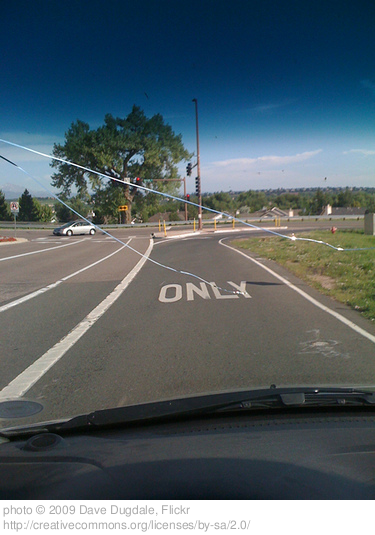 A few years ago I was on my way to a speaking engagement in LA. While I drove over the Grapevine, I saw an object moving rapidly toward my windshield. Before I could figure out what was flying toward my car, I heard the impact… “ding!” The object struck the bottom right hand side of my windshield and left a small crack. Before long, the crack started climbing across my windshield, until an arc shaped horizontal line went all the way across my window. I was frustrated, but also cheap. I decided to leave the crack alone as it wasn’t blocking my line of sight and it appeared to have stopped growing.
Enter, three years later. Same crack. Same window. But, something happened over time – not to the windshield, but to me. The fracture in the glass eventually became normal. Deep down I knew the crack was there and that it wasn’t supposed to be… but instead of doing something about it I decided to look through the windshield as though the crack didn’t exist. The crack was only there if I let myself focus on it. In other words, I chose to look past the crack in the windshield rather than choosing to repair it. My normal view included the crack.
I want to suggest that we often view our world in this way. The window through which we gaze at our world is full of cracks and imperfections. The easy thing to do is to ignore such problems, to allow them to become normal. When the cracks of our world become “normal” a subtle apathy can creep in. Instead of viewing ourselves as the people who can repair such brokenness, it’s easier to simply ignore it. We think:
The world is cracked and maybe that’s just the way it is…
The cracks in our world are quite obvious, really. We need not venture out of our homes before seeing 3 or 4 news stories that illustrate such cracks. A child gets kidnapped. A country declares war. A plane crashes. A famine threatens the lives of millions in the horn of Africa. And all of this before our first cup of coffee. By the time we walk out of the door for work or school, we’ve been overloaded with the many troubles in our world.
Then, the day begins and we realize that there are stresses in our personal spheres of reality that are enough to overwhelm us (without the help of the media). We’ve gotta make sure our family is taken care of. There’s three homeless people by three different streetlights that we drive past each day. There’s the family member that keeps choosing to live in darkness and no matter how much we talk to them, and no matter how many times we pray… they simply won’t “see the light.” Then, of course, there’s the issues caused by economic stress coupled with the fear of lay offs. And by the time we arrive at work or school, we’ve given up on the world’s problems… struggling ourselves to keep mental composure.
We know that our world is in trouble, that it is full of cracks… but we feel powerless to fix them, so much so, that we simply do all we can to ignore them. We focus on our small part of the world, because that’s all the strength we have.
The world is a cracked place and the natural result of this is to feel powerless. When we lack empowerment, even when confronted with the “cracks,” we often choose to normalize the brokenness… almost as if it doesn’t exist.
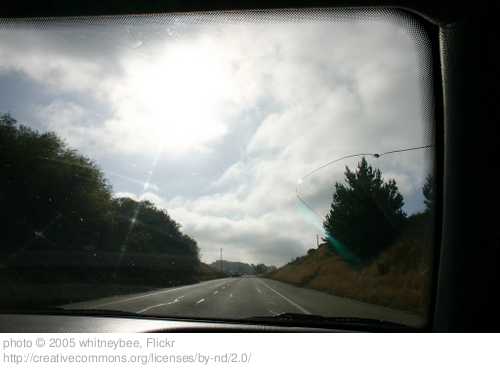 The Scriptures certainly aren’t ignorant of the fact that reality as we know it is fractured. At the climatic point of Paul’s letter to the Ephesians in chapter six, he reminds us to “be strong in the Lord and in his mighty power.” He adds that we also can “put on the full armor of God…” For many of us who grew up as part of the evangelical subculture, this passage calls us to resist demonic forces that tempt us personally. The “devil’s schemes” are the things that threaten to derail us spiritually, creating moral cracks. So, on days when temptation looms its ugly head, on the “day of evil,” we will be able to “stand.” As we put on the armor of God, we can find victory over any sort of demonic attack from the “powers of this dark world.”
Certainly this is all true, but how does that help us deal with the overwhelming cracks in our world? If temptation and personal demonic oppression are the only things that “spiritual warfare” are good for… and if the cracks that we see are much broader than these issues… then, do we still remain powerless against real world types of problems?
What if the armor of God isn’t primarily an image about personal temptations and oppression, but actually is about something more? I submit that Ephesians 6.10-20 is predominantly a text that invites the people of God to together undo evil in the world with an offensive rather than defensive posture. Consider the passage from where Paul draws much of his Armor of God imagery:
Yes, truth is gone, and anyone who renounces evil is attacked. The Lord looked and was displeased to find there was no justice. He was amazed to see that no one intervened to help the oppressed. So he himself stepped in to save them with his strong arm, and his justice sustained him. He put on righteousness as his body armor and placed the helmet of salvation on his head. He clothed himself with a robe of vengeance and wrapped himself in a cloak of divine passion. Isaiah 59.15-17
One of the major images that arises out of the Hebrew Scriptures is “God as warrior.” God looks around and is “displeased to find… no justice.” So, God puts on body armor to intervene and “help the oppressed.” Paul invites the people of God to put on the very armor of God… in other words… the armor God wears himself! God looks around and sees the “cracks” of this world – poverty, slavery, oppression, and every form of injustice – and he passionately fights on the behalf of the marginalized! We, then, can join up in his ongoing work of repairing cracks in our world, relying on his resources rather than feeling overwhelmed and defeated. The world is cracked and maybe it’s time to do some repair work.
Previous Post

October 10, 2011
David Crowder and Rob Bell have a Jam Session
Browse Our Archives
Select a Category (Series) All Out War-Spiritual Warfare (Series) Church Plant Journal (Series) Dear Reader... (Series) Earthquakes...Signs of the Times? (Series) Entering the... Conversation (Series) Evangelical Culture Myths (Series) Everything is Meaningless [Pete Enns] (Series) Evolving Evangelicalism (Series) Hell Yes. Hell No! Who Cares? (Series) Hidden Worldviews (Series) If Evolution is Right, what about Adam? (Series) in less than 300 words (Series) Jesus and Nationalism (Series) Liberating Women for Ministry? (Series) Life-Changing Books (Series) Markers of Church Plant Movement (Series) Nonviolence 101 (Series) Philemon - Reconciliation (Series) Quote to Ponder (Series) Red Letter Dialogues (Series) Resource of the Week (SERIES) Revelation Sermons (Series) Share Something Sundays (Series) Simplicity in the Burbs: $2 a day (Series) The Binding of God [Open Theism] (Series) The Creed: Anabaptist Reflections (Series) Values for Church Leadership (Series) Video to Ponder Anabaptism Animal Advocacy Books Church Ministry Church Planting Community Culture Eschatology Eucharist Evangelical Reject Evolution Fundamentalism Greek Greg Boyd Guest Contributors Hell Holy Spirit Israel/Palestine Kingdom of God Lent Missional N. T. Wright Nationalism New Creation Nonviolence Open Mic Open Theism Parenting Passover Paul Philemon Podcast Politics Restorative Justice Revelation (the book of) Rob Bell Ron Martoia Sermon Shane Claiborne Social Justice Speaking Engagement Spiritual Warfare Spirituality Temple Theology Tim Geddert Tribulation Uncategorized universalism Video Blog Women in Ministry Worship Music Youth Ministry
Select a Month August 2018 July 2018 June 2018 May 2018 April 2018 March 2018 February 2018 January 2018 December 2017 October 2017 July 2017 June 2017 May 2017 April 2017 December 2016 October 2016 August 2016 June 2016 May 2016 April 2016 March 2016 December 2015 November 2015 October 2015 September 2015 August 2015 June 2015 May 2015 April 2015 March 2015 February 2015 January 2015 December 2014 November 2014 October 2014 September 2014 August 2014 July 2014 June 2014 May 2014 April 2014 March 2014 February 2014 January 2014 December 2013 November 2013 October 2013 September 2013 August 2013 June 2013 May 2013 April 2013 March 2013 February 2013 January 2013 December 2012 November 2012 October 2012 September 2012 August 2012 July 2012 June 2012 May 2012 April 2012 March 2012 February 2012 January 2012 December 2011 November 2011 October 2011 September 2011 August 2011 July 2011 June 2011 May 2011 April 2011 March 2011 February 2011 January 2011 December 2010 November 2010 September 2010 August 2010 July 2010 June 2010 May 2010 April 2010 March 2010 February 2010 January 2010 October 2009 September 2009 August 2009 July 2009 June 2009 May 2009 April 2009 March 2009 February 2009 January 2009 December 2008 November 2008 October 2008 September 2008 August 2008 June 2008 May 2008 April 2008
Follow Us!
TAKE THE
Religious Wisdom Quiz
Who saw a burning bush that was not consumed?
Select your answer to see how you score.
Isaiah Moses Elijah Noah
Support this
Column


Related posts from The Pangea Blog

What is the Kingdom of God? (with Frank...

10 Years Ago, I Embraced Nonviolence & Anabaptism

Romans 13 Doesn't Give Government an Ethical Blank...

Does God plan everything that happens? (4 Views)
TRENDING AT PATHEOS Progressive Christian

What Being a Modern-Day Apostle Means to Me
In my last column, I discussed the ins and outs of modern-day...

Did Ancient China Once Worship the God of...
Across human history, a common thread weaves through the origins of the...

Love Your Neighbor – Including Earth-Kin: Lev. 19,...
God’s command to love your neighbor means acting in an ethical and...

Lead a Church Study of “Jesus and Lao...
Guest writer Jack Thomas (The Irreverent Reverend) reflects on leading his church...

Pastoral Wisdom for Responding to Sermon Pushback
Getting sermon pushback on your social justice sermon? Learn practical, Proverbs-based strategies...

Principles for Understanding the Apostolic Ministry Today
Whenever people discover that my formal ministry title is "apostle," as in...
view all Progressive Christian blogs
Ad-Free & Subscriber Log-In Subscription Support
- About Us
- 2026 Calendar
- Videos
- Podcasts
- Library of World Religions
- Faith In Media Tracker
- Advertise With Us
- Write for Us
- Privacy Policy
- Terms of Service
- Do Not Sell My Data
- Contact Us
- Radiant Digital
- Manage Newsletter Subscriptions
- Unsubscribe From Notifications
- Sitemap
Copyright 2008-2026, Patheos. All rights reserved.
Subscription Support Ad-Free & Subscriber Log-In
Follow Patheos