
BuddhistCatholicContemplativeEvangelicalGeneral ChristianHinduJewishLatter-day SaintMuslimNew VisionsProgressive Christian
Beliefs
- Buddhist
- Catholic
- Contemplative
- Evangelical
- General Christian
- Hindu
- Jewish
- Latter-day Saint
- More Voices
- Muslim
- New Visions
- Pagan
- Progressive Christian
Topics
- Religion News
- Food and Religion
- Sports and Religion
- Religious Art
- Religious Music and Entertainment
- Religious Events
- History and Religion
- Style and Religion
- Politics and Religion
- Women in Religion
- Recreation Outdoors and Religion
- Business Finance and Religion
- Careers Workplace and Religion
- Education and Religion
- Family Parenting and Religion
- Health Fitness and Religion
- Home and Religion
- Relationships and Religion
- Technology and Religion
- Travel and Religion
Columnists
- Buddhist Columnists
- Business Finance and Religion Columnists
- Careers Workplace and Religion Columnists
- Catholic Columnists
- Contemplative Columnists
- Education and Religion Columnists
- Evangelists Columnists
- Family Parenting and Religion Columnists
- General Christian Columnists
- Health Fitness and Religion Columnists
- Hindu Columnists
- History and Religion Columnists
- Home and Religion Columnists
- Jewish Columnists
- More Voices Columnists
- Latter Day Columnists
- Muslim Columnists
- New Visions Columnists
- Nonreligious Columnists
- Pagan Columnists
- Politics and Religion Columnists
- Progressive Columnists
- Recreation Outdoors and Religion Columnists
- Relationships and Religion Columnists
- Religion News Columnists
- Religious Art Columnists
- Religious Events Columnists
- Religious Music and Entertainment Columnists
- Sports and Religion Columnists
- Style and Religion Columnists
- Technology and Religion Columnists
- Travel and Religion Columnists
- Women in Religion Columnists
Resource Library
- 2026 Calendar
- Library of World Religions
- The 100 Most Holy Places on Earth
- Patheos Answers
- Podcasts
- Videos
- Faith Leaders Database
- Anglican Episcopalian
- Bahai
- Baptist
- Buddhism
- Christianity
- Confucianism
- Eastern Orthodoxy
- Hinduism
- Holiness and Pentecostal
- ISKCON
- Islam
- Judaism
- Lutheran
- Methodist
- The Church of Jesus Christ of Latter-day Saints
- New Age
- Paganism
- Presbytarian and Reformed
- Protestantism
- Religion Behind the Scenes
- Roman Catholic
- Scientology
- Shia Islam
- Sikhism
- Sufism
- Sunni Islam
- Taoism
- Zen
- See all religions
Research Tools
 Ad-Free & Subscriber Log-In Subscription Support
Ad-Free & Subscriber Log-In Subscription Support
Follow Patheos 

- Trending:
- Forgiveness
- |
- Marriage
- |
- Consciousness
- |
- Death Penalty
- |
- Election
- |
- Halloween
 The Other Side of the Hedge
- Home
- Pagan
- Three Ways to Pursue the Great Work
Three Ways to Pursue the Great Work
Last updated on: April 26, 2019 at 8:24 am by Christopher Drysdale
Three Ways to Pursue the Great Work 2019-04-26T08:24:31-07:00 Christopher Drysdale
Patheos Explore the world's faith through different perspectives on religion and spirituality! Patheos has the views of the prevalent religions and spiritualities of the world.
The Great Work, the Magnum Opus, calls all sacred practitioners. From the serious, shaved-pate monk to the powerful witch, and from the learned alchemist to the disciplined martial artist, our goal does not change.
Whether we call the goal something as esoteric as “the philosopher’s stone” or as humdrum as “finding our purpose” hardly matters. It is not the name of the work, but only the act of doing it, that counts.
The truth is, we are living in a time of social upheaval and division. It is not trendy to conjure the universal human experience, except to push our own narrative forward. But for those of us seeking something more, humanity’s commonalities are where we must start.

An alchemist in his laboratory. Oil painting by a follower of David Teniers the younger.
via Wikimedia Commons
To find our own Great Work, and the perform it, is the highest calling. In order to do that, we must know ourselves and understand the world around us. Only then can we truly find our place in all of this.
All of our lives, we have been led astray. The path does not lie outside of us. It is hardwired into every part of our bodies, spirits, and souls.
We have not abandoned the path. We have been taught to suppress it with all our might, every minute of every day. It is time to stop.
Coming to the Great Work
It is easy to imagine that the great saints**(1)** of the past were somehow different from us and the people we know. Practitioners, from Abramelin to Wang Chongyang, left everything they knew to seek out wisdom.
And it is hard to measure up to saints. Their stories are extreme and dramatic. We do not have to live saintly lives in order to have the deepest meaning and purpose.(2)
But this is a time when we, the common people, have unimaginable wealth and power. We have access to more information and education, context and perspective than any people before.
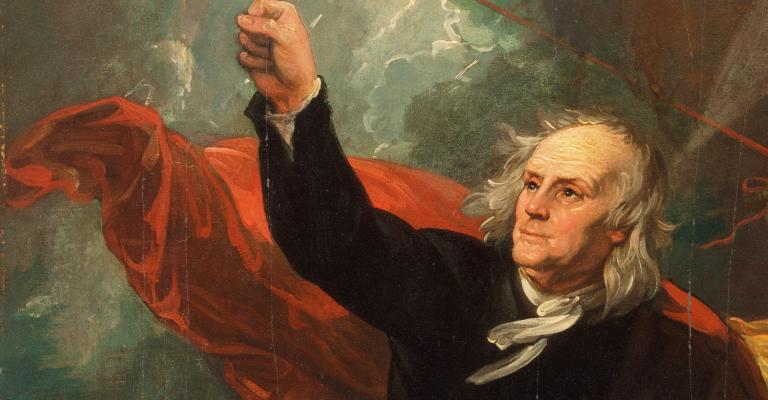
Benjamin Franklin Drawing Electricity from the Sky c. 1816 at the Philadelphia Museum of Art, by Benjamin West
Truly, our lives are unimaginable to any previous generation.(3) The sacrifices we need to make, then, are also different.
Finding your own purpose is not a matter of abandoning your life. It might mean changing things you do, but that is a matter of bringing your actions in line with who you are.
Rather than chase the latest and greatest distraction, we can instead become who we are meant to be. That, and only that, is the Great Work.
Know Yourself
Everyone talks about self knowledge like it is something easy to find. When they say “know yourself” we are just supposed understand how to do that, or what that even means. Worse, the words themselves are misleading.
We have a weird ideas of what “knowledge” is. Our culture treats knowledge as discrete, as if it were a substance passed on from one person to another. We learn in school, read books, and share with friends. We think that is “knowledge.”
But self knowledge is something entirely different. It doesn’t come from the outside, but rather from taking action and then understanding its consequences.
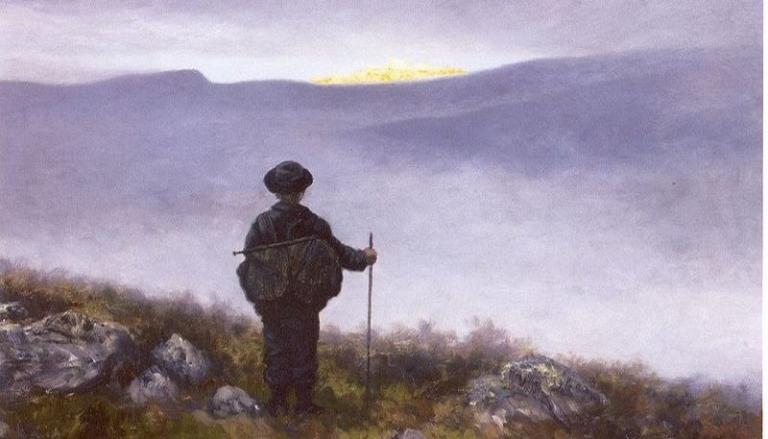
“Soria Moria” by Theodor Kittelsen. From WikiMedia.
If you want to know who you are, the key is to go try something. For the smallest of examples, are you a person who likes sushi? Well, if you’ve never tried delicious raw fish on rice with seaweed, you cannot know. You can only guess.
The only way to know if you like something is to go try it. All self knowledge is like that. If you want to know what kind of person you are, go live your life and you will find out.
Self knowledge does not exist in the brain, does not rest in language, is not made of thought. Self knowledge exists deeper inside of us. That is why it is so important.
For many people, self knowledge is the first kind of awareness we can experience that is beyond thought. In that, it is the very beginning of wisdom, beyond everything that has been poured into us. And that is why understanding who you are is the first part of the Great Work.
Understand Your World
If the first part of the Great Work is about knowing who you are, the second part is understanding the context of your life. Without that, it is impossible to understand how you fit and what you need to do.
Education is the first part in understanding the context of your life. But, like knowing yourself, understanding your world does not only mean education.
Talking, reading, and thinking about the world are the first steps. But understanding means going out and experiencing it.
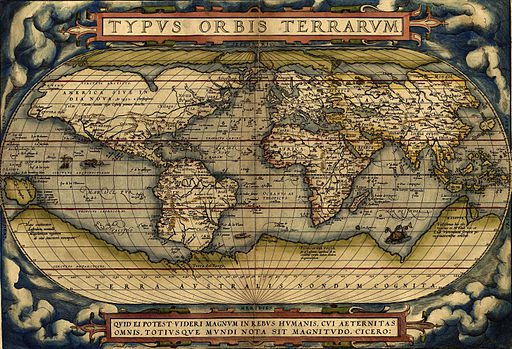
World Map 1570, Abraham Ortelius, via Wikimedia Commons
Formal education is one way to get through those first steps. Personally, I am a proponent of deep, mind-expanding, teacher-takes-a-prybar-and-opens-your-brain education.
New cultures, languages, and experiences**(4)** are of incredible value in understanding the world. These are the real values of education.
Formal education is the first step in learning how to learn. Understanding that context is the second part of the great work.
Find Purpose
Once we understand who we are, and can clearly see the world around us, our purpose in life will naturally unfold. But that does not mean that the Great Work is a one-thing-per-lifetime mission handed out from on high.
As we get older and see more, our understanding of who we are changes and deepens. In response, our Work adjusts. Our biology and spirituality both mature, and that brings changes as well.
As we come to understand the world better, we are called to work that is meaningful. And as the context of our lives change, we have to adapt.
In my teens, my work was to grow stronger, and in my twenties, to become whole. In my thirties, I learned to understand people. And in my forties, I worked to bring some harmony to things. But these have all been the Great Work, each building on the last and into the next.
The Great Work, by any name, gives purpose to our lives. That is the greatest gift we can give ourselves.

A Traveling Journeyman by Killian Zoll,(Wikimedia Commons)
When we live lives of purpose, the whole experience of life changes. Finally, we can begin to see our supposed enemies as necessary to the process. Our petty tyrants become useful (if unknowing) allies. The challenges of life take on meaning beyond pain and trauma.
Life stops happening to us. We start truly living. But at the same time, we need to be careful not to cling to that certainty. Having settled on a purpose, we must always be ready to move on to the next phase.
The Great Work is always a work in progress.
Notes
(1) While in the West, we associate “saints” with Christianity, I mean the term much more broadly.
(2) We may, however, need to live saintly lives in order to telegraph that meaning and purpose to even the most hardheaded of people.
(3) My generation was raised on science fiction. Today’s generation is being raised in science fiction. Everything we have known before needs to be reinterpreted and understood in a whole new world.
(4) When I talk about being exposed to new cultures, I mean more than just other countries. Chances are, there are people very different from you living far closer to home.
Previous Post

February 24, 2019
Power and Magical Ethics
Next Post

March 10, 2019 Three Virtues of the Practitioner
Browse Our Archives
Select a Category Columns History Holidays Politics Ritual and Practice The Other Side of the Hedge Theology, Ethics, Philosophy
Select a Month June 2019 May 2019 April 2019 March 2019 February 2019 January 2019 December 2018 November 2018 October 2018 September 2018 August 2018 July 2018 June 2018 May 2018 April 2018 March 2018 February 2018 January 2018 November 2017 October 2017 September 2017 August 2017 July 2017 June 2017 May 2017 April 2017 March 2017 February 2017 January 2016 December 2015 November 2015 October 2015 September 2015
TAKE THE
Religious Wisdom Quiz
What does James say about friendship with the world?
Select your answer to see how you score.
It pulls you from God It is foolishness It creates emnity with God It is dangerous
Related posts from The Other Side of the Hedge




TRENDING AT PATHEOS Pagan

I was recently chatting with someone on Instagram. She asked me what...

While there are many people who share their results, the end of...

On July 23, I saw Christopher Nolan's The Odyssey which is Homer’s...

As I write this two big events have just finished up. One...

Restoring the Watershed of Divine Love
Perhaps cooperation is not something we manufacture through legislation, ideology, or moral...

Many UUs don’t pray because of bad experiences in a previous religion,...
view all Pagan blogs
Ad-Free & Subscriber Log-In Subscription Support
- About Us
- 2026 Calendar
- Videos
- Podcasts
- Library of World Religions
- Faith In Media Tracker
- Advertise With Us
- Write for Us
- Privacy Policy
- Terms of Service
- Do Not Sell My Data
- Contact Us
- Radiant Digital
- Manage Newsletter Subscriptions
- Unsubscribe From Notifications
- Sitemap
Copyright 2008-2026, Patheos. All rights reserved.
Subscription Support Ad-Free & Subscriber Log-In
Follow Patheos