
BuddhistCatholicContemplativeEvangelicalGeneral ChristianHinduJewishLatter-day SaintMuslimNew VisionsProgressive Christian
Beliefs
- Buddhist
- Catholic
- Contemplative
- Evangelical
- General Christian
- Hindu
- Jewish
- Latter-day Saint
- More Voices
- Muslim
- New Visions
- Pagan
- Progressive Christian
Topics
- Religion News
- Food and Religion
- Sports and Religion
- Religious Art
- Religious Music and Entertainment
- Religious Events
- History and Religion
- Style and Religion
- Politics and Religion
- Women in Religion
- Recreation Outdoors and Religion
- Business Finance and Religion
- Careers Workplace and Religion
- Education and Religion
- Family Parenting and Religion
- Health Fitness and Religion
- Home and Religion
- Relationships and Religion
- Technology and Religion
- Travel and Religion
Columnists
- Buddhist Columnists
- Business Finance and Religion Columnists
- Careers Workplace and Religion Columnists
- Catholic Columnists
- Contemplative Columnists
- Education and Religion Columnists
- Evangelists Columnists
- Family Parenting and Religion Columnists
- General Christian Columnists
- Health Fitness and Religion Columnists
- Hindu Columnists
- History and Religion Columnists
- Home and Religion Columnists
- Jewish Columnists
- More Voices Columnists
- Latter Day Columnists
- Muslim Columnists
- New Visions Columnists
- Nonreligious Columnists
- Pagan Columnists
- Politics and Religion Columnists
- Progressive Columnists
- Recreation Outdoors and Religion Columnists
- Relationships and Religion Columnists
- Religion News Columnists
- Religious Art Columnists
- Religious Events Columnists
- Religious Music and Entertainment Columnists
- Sports and Religion Columnists
- Style and Religion Columnists
- Technology and Religion Columnists
- Travel and Religion Columnists
- Women in Religion Columnists
Resource Library
- 2026 Calendar
- Library of World Religions
- The 100 Most Holy Places on Earth
- Patheos Answers
- Podcasts
- Videos
- Faith Leaders Database
- Anglican Episcopalian
- Bahai
- Baptist
- Buddhism
- Christianity
- Confucianism
- Eastern Orthodoxy
- Hinduism
- Holiness and Pentecostal
- ISKCON
- Islam
- Judaism
- Lutheran
- Methodist
- The Church of Jesus Christ of Latter-day Saints
- New Age
- Paganism
- Presbytarian and Reformed
- Protestantism
- Religion Behind the Scenes
- Roman Catholic
- Scientology
- Shia Islam
- Sikhism
- Sufism
- Sunni Islam
- Taoism
- Zen
- See all religions
Research Tools
 Ad-Free & Subscriber Log-In Subscription Support
Ad-Free & Subscriber Log-In Subscription Support
Follow Patheos 

- Trending:
- Forgiveness
- |
- Marriage
- |
- Consciousness
- |
- Death Penalty
- |
- Election
- |
- Halloween
 The Other Side of the Hedge
- Home
- Pagan
- Separation of Coven and State
Separation of Coven and State
Last updated on: March 17, 2019 at 2:38 pm by Christopher Drysdale
Separation of Coven and State 2019-03-17T14:38:50-07:00 Christopher Drysdale
Patheos Explore the world's faith through different perspectives on religion and spirituality! Patheos has the views of the prevalent religions and spiritualities of the world.
It is hard, and getting harder, to distinguish between the Pagan community and the American political left. Perhaps, like the rest of America, we have abandoned the separation of church and state**(1)** that is enshrined in our Constitution.
Our lack of separation between the two is especially true in the new online socioeconomic environment of influencers and pay-per-click everything. In the world of social media, popularity is power and identity is currency. Constructing and curating social identity is not a game. It is key work of this new era.
With that in mind, any call to abandon social media would be both naive and hypocritical. Whether we like it or not, for many people (Pagans included) their public profile is directly linked to their economic and social status.
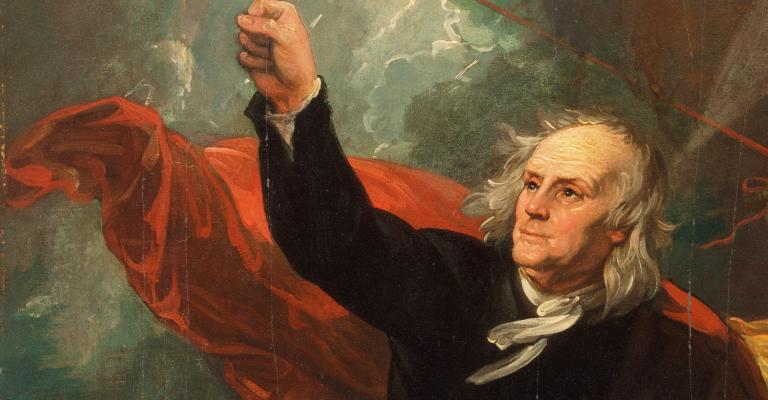
Benjamin Franklin Drawing Electricity from the Sky c. 1816 at the Philadelphia Museum of Art, by Benjamin West
People like to talk about, and hear about, things that are important to them. This is the true value, and mechanism for the success of, social media writ large.
But there are good reasons that religious speech and political speech should be kept separate. Our inability to distinguish between the two only sows confusion.
In recent political discourse, it has come en vogue for politicians to break down that wall. Such a move benefits certain politicians in the short run, harms America in the medium term, and makes religion irrelevant in the long view.
Separation of Church and State
Most Americans tend to think about the separation of church and state from the side of government. That is, we understand that the U.S. government is bound to take no role in regulating religion.(2)
But in theory that works both ways, and for good reasons. With recent attacks on the Johnson Amendment in mind, I would argue that religion benefits from staying out of direct politics. Even were it allowed by law, I would not do so.
The question that religious leaders should be asking themselves is whether they want their systems of belief and activity subsumed by politics and social action. Is their role to inspire, or simply to be another constituent group?
In America, we have priests and, separately, politicians and pundits. There is no room for priest-kings.
Religious Identity
It is true, for most people, that the separation of church and state is more notional than actual. It is an idea that we aspire to, and has little direct impact on our lives.
In the West, religion is one of a handful of identities that shape our social experience. Others include employment, social class, gender, and marital status. And religious identity is important. Even a swathe of our atheists hold up their own position as a part of identity.
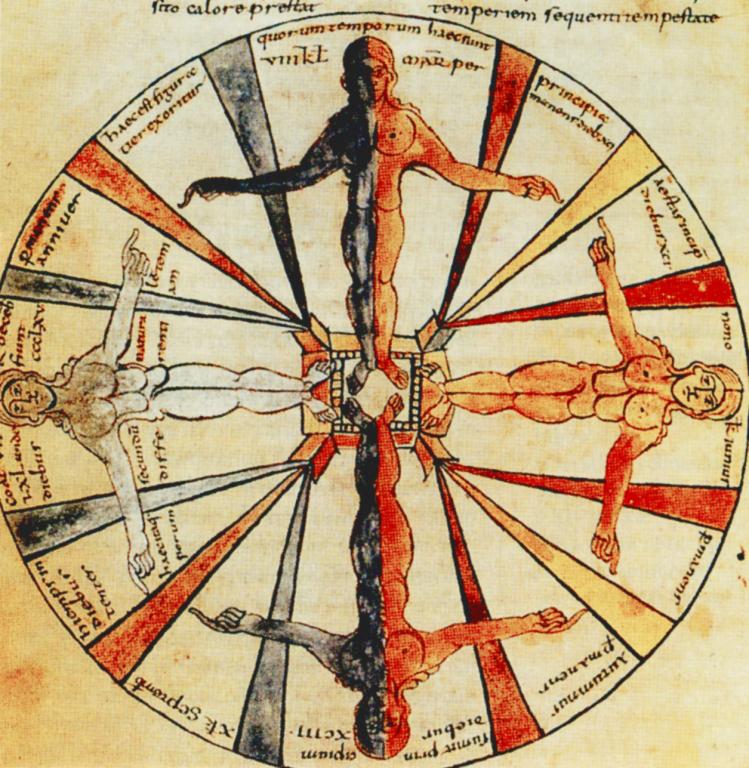
Isidore of Seville’s De natura rerum, via Wikimedia Commons
In everyday life, religion is no more or less than a social grouping of people who share certain assumptions. Religion is about belief, and then shared beliefs, and finally a solidified identity.
Religion in Crisis
My takeaway is that religion in America has been failing to do the work it is meant to do. Hang out in religious circles for more then five minutes, and you will almost certainly hear someone lamenting how American religion struggles to keep butts in the seats. This is just as true of the Christian churches as covens and magical orders.
In trying to understand what is happening, religious leaders point to changes in social organization, technology, and economic activity. That is all true as far as it goes.
But the real failure is in religion itself — how we conceive of it and how we participate. As long as religion caters to people where they are, instead of leading them based on the direction of Heaven (however defined), it is just another social club.
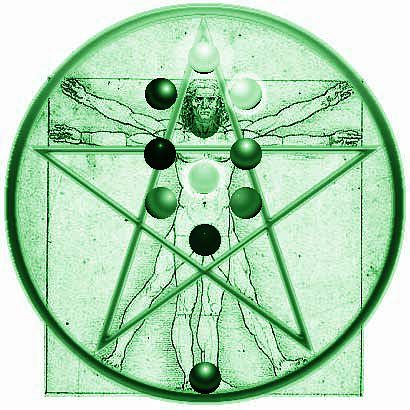
Public domain, via Wikimedia Commons
Most Americans do not want, need, or seek direct experience of what lies beyond the everyday. But being a member or a religious community was supposed to mean, at least, reaping the benefits of associating with people who do. And for those called to go further, it provided context and language for that journey.
But in this new social and economic landscape, religion has been struggling to find its footing. Its role as part of identity has, it seems, become more important than its actual purpose. It has become political.
American Paganism and Politics
Americans assume, as part of public discourse, that we cannot truly know what lies in people’s hearts. Religion, on the other side of things, concerns itself with those same unknowable hearts.
But the public face of Paganism has clearly been co-opted by the massive fissure in the middle of American society. And Pagans have not been shy taking sides.
The Paganism that came out of the 60s and 70s needed little help to find a side in this culture war. During that time, Wicca, which had previously been an occultist hangout and fertility cult, was re-imagined as a feminist, Earth-worshiping counterargument to modernity.
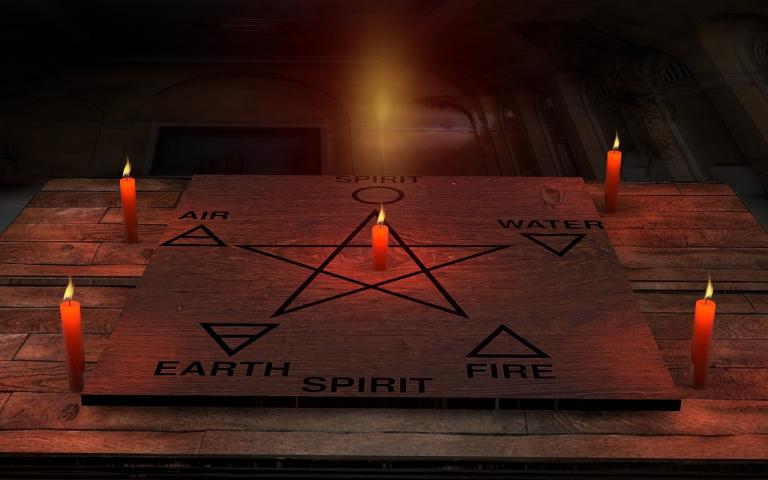
Image by Kalhh via Pixabay. CC0 License.
With its higher profile, Wicca also became, for a time, the spine of American Paganism. With Wicca in the forefront, Paganism positioned itself as part of a counterbalance to the rise of the Moral Majority and similar movements (a euphemism for the intrusion of conservative Christian churches into politics).
And then, in the 90s, we saw the rise of a far-right counterbalance within Paganism. Grounded in “blood and soil” arguments, it was unashamedly (if sometimes cagily) racist and nationalist, and part and parcel of the White Power movement.
Our difficulty in maintaining the separation of church and state is not a new thing in either the global or historical sense. The division between religion and politics is neither ancient nor natural. It is a choice, made to keep harmony in a diverse society.
If All Acts Are Political, then None Are
As a writer here on the Patheos platform, I am by default some kind of religious leader. And in my heart of hearts, it is not my job to play to the crowd. Instead, it is my role to assist people in understanding themselves. It is my work to forge their own relationship with that which exists beyond the everyday world.(3)
If I can spark in someone clarity and compassion, some self-respect and understanding of the deeper consequences of our actions in the world, I have done something worthwhile. And if that influences how a person votes or speak up or even protest actions done in their name, I am fine with that.
But as a religious leader, engaging with the ineffable is something that is more real than political discourse. If, religiously, I take sides in political debate, then I am assuming that those debates are a priori of my religious activities. I have become a pundit.
The American Divide In Inside Us
The separation of church and state is not only for government. It is an organizing principal America.
That which we know from ineffable sources is not the same as our social knowledge. And as religious leaders we cannot, and must not, let those ways of knowing fall into the same basket.

By U.S. Fish and Wildlife Service Headquarters (American Bald Eagle), via Wikimedia Commons
Bluntly, if my experience of the ineffable makes me understand the inherent equality of people, then I am someone who models the kind of behavior a liberal might look up to. But I am no liberal. By my own standards, and by my commitment to a deeper reality, I am something more.
No matter our religion, we who are expected to live the experience. We have no room to behave inauthentically, and we do not get to pick and choose our beliefs.
Instead, we must reach the deepest part of ourselves and express what is there. That is the job, whether we like it or not.
Notes
(1) The use of the term “church and state” is, obviously, phrased in a way that posits Christianity as the default religion. Here in America, that is simply true. Our time is better spent “doing” religion than having social debates about it.
(2) Like in so many things, the reality hardly lives up to the aspirations here. Religious identity and political identity have always interacted in America. But there is a world of difference between playing one off against the other and subsuming one identity under the other.
(3) My thinking on this topic was informed by a blog I read on Patheos, written by James Ford over at Monkey Mind on the Patheos Buddhist channel. His examination of questions around the Zen Buddhist Sangha in America and its clearly left-leaning leadership
Constitution of the United States
separation of church and state
Previous Post

March 10, 2019
Three Virtues of the Practitioner
Next Post

March 23, 2019 Is Magic Real?
Browse Our Archives
Select a Category Columns History Holidays Politics Ritual and Practice The Other Side of the Hedge Theology, Ethics, Philosophy
Select a Month June 2019 May 2019 April 2019 March 2019 February 2019 January 2019 December 2018 November 2018 October 2018 September 2018 August 2018 July 2018 June 2018 May 2018 April 2018 March 2018 February 2018 January 2018 November 2017 October 2017 September 2017 August 2017 July 2017 June 2017 May 2017 April 2017 March 2017 February 2017 January 2016 December 2015 November 2015 October 2015 September 2015
TAKE THE
Religious Wisdom Quiz
What is the main theme of the Parable of the Two Sons?
Select your answer to see how you score.
Obedience is proved by actions Repentance is easy Firstborns are favored Honesty is best
Related posts from The Other Side of the Hedge




TRENDING AT PATHEOS Pagan

I was recently chatting with someone on Instagram. She asked me what...

While there are many people who share their results, the end of...

On July 23, I saw Christopher Nolan's The Odyssey which is Homer’s...

As I write this two big events have just finished up. One...

Restoring the Watershed of Divine Love
Perhaps cooperation is not something we manufacture through legislation, ideology, or moral...

Many UUs don’t pray because of bad experiences in a previous religion,...
view all Pagan blogs
Ad-Free & Subscriber Log-In Subscription Support
- About Us
- 2026 Calendar
- Videos
- Podcasts
- Library of World Religions
- Faith In Media Tracker
- Advertise With Us
- Write for Us
- Privacy Policy
- Terms of Service
- Do Not Sell My Data
- Contact Us
- Radiant Digital
- Manage Newsletter Subscriptions
- Unsubscribe From Notifications
- Sitemap
Copyright 2008-2026, Patheos. All rights reserved.
Subscription Support Ad-Free & Subscriber Log-In
Follow Patheos