
BuddhistCatholicContemplativeEvangelicalGeneral ChristianHinduJewishLatter-day SaintMuslimNew VisionsProgressive Christian
Beliefs
- Buddhist
- Catholic
- Contemplative
- Evangelical
- General Christian
- Hindu
- Jewish
- Latter-day Saint
- More Voices
- Muslim
- New Visions
- Pagan
- Progressive Christian
Topics
- Religion News
- Food and Religion
- Sports and Religion
- Religious Art
- Religious Music and Entertainment
- Religious Events
- History and Religion
- Style and Religion
- Politics and Religion
- Women in Religion
- Recreation Outdoors and Religion
- Business Finance and Religion
- Careers Workplace and Religion
- Education and Religion
- Family Parenting and Religion
- Health Fitness and Religion
- Home and Religion
- Relationships and Religion
- Technology and Religion
- Travel and Religion
Columnists
- Buddhist Columnists
- Business Finance and Religion Columnists
- Careers Workplace and Religion Columnists
- Catholic Columnists
- Contemplative Columnists
- Education and Religion Columnists
- Evangelists Columnists
- Family Parenting and Religion Columnists
- General Christian Columnists
- Health Fitness and Religion Columnists
- Hindu Columnists
- History and Religion Columnists
- Home and Religion Columnists
- Jewish Columnists
- More Voices Columnists
- Latter Day Columnists
- Muslim Columnists
- New Visions Columnists
- Nonreligious Columnists
- Pagan Columnists
- Politics and Religion Columnists
- Progressive Columnists
- Recreation Outdoors and Religion Columnists
- Relationships and Religion Columnists
- Religion News Columnists
- Religious Art Columnists
- Religious Events Columnists
- Religious Music and Entertainment Columnists
- Sports and Religion Columnists
- Style and Religion Columnists
- Technology and Religion Columnists
- Travel and Religion Columnists
- Women in Religion Columnists
Resource Library
- 2026 Calendar
- Library of World Religions
- The 100 Most Holy Places on Earth
- Patheos Answers
- Podcasts
- Videos
- Faith Leaders Database
- Anglican Episcopalian
- Bahai
- Baptist
- Buddhism
- Christianity
- Confucianism
- Eastern Orthodoxy
- Hinduism
- Holiness and Pentecostal
- ISKCON
- Islam
- Judaism
- Lutheran
- Methodist
- The Church of Jesus Christ of Latter-day Saints
- New Age
- Paganism
- Presbytarian and Reformed
- Protestantism
- Religion Behind the Scenes
- Roman Catholic
- Scientology
- Shia Islam
- Sikhism
- Sufism
- Sunni Islam
- Taoism
- Zen
- See all religions
Research Tools
 Ad-Free & Subscriber Log-In Subscription Support
Ad-Free & Subscriber Log-In Subscription Support
Follow Patheos 

- Trending:
- Forgiveness
- |
- Marriage
- |
- Consciousness
- |
- Death Penalty
- |
- Election
- |
- Halloween
 The Other Side of the Hedge
- Home
- Pagan
- Abandon the Known, Pursue the Real
Abandon the Known, Pursue the Real
Last updated on: August 12, 2018 at 9:24 am by Christopher Drysdale
Abandon the Known, Pursue the Real 2018-08-12T09:24:46-07:00 Christopher Drysdale
Patheos Explore the world's faith through different perspectives on religion and spirituality! Patheos has the views of the prevalent religions and spiritualities of the world.
The study and practice of magic is lonely work. We only have so much attention to go around. Reaching for the heights of the universe and the depths of the self means that something has to give. People on the Path of Transformation — and this includes all practitioners from the witch to the mystic — often feel called to give up the everyday world in pursuit of the real.
Abandoning this world is a long-standing tradition.(1) Innumerable wandering ascetics, as well as monks, both Buddhist and Christian, have long separated themselves from the everyday world in order to spend their lives in contemplation and pursuit of what lies beyond.
Today’s practitioners are only different in that now we have relatively infinite wealth and knowledge with which to pursue our goals. And yet we are also infinitely more challenged because of the depth and power of society’s engagement. Plus ça change, plus c’est la même chose.
Separation is a Feature
In the history of humanity, the first career specialists arose with the technology of farming. They were a priestly class who functioned as agricultural managers, setting the times for planting and harvesting according to signs of nature and the stars.
Further, these priests came to direct the common works required by early agriculture, such as shared irrigation. By rising above the farmers, they set themselves apart.
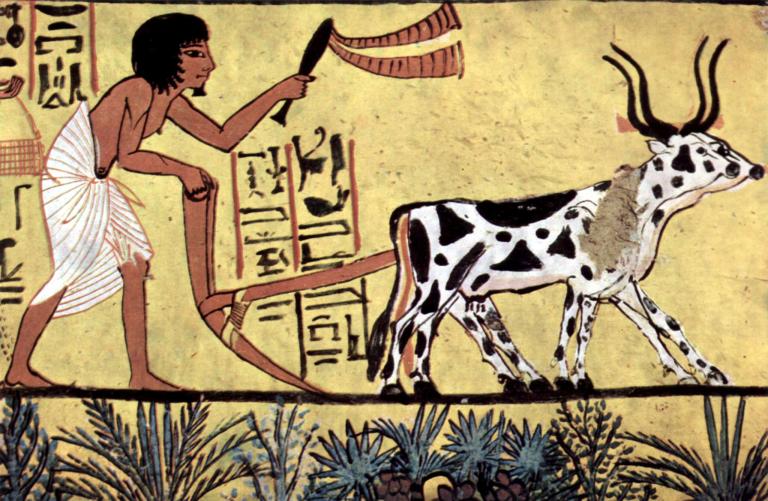
Egyptian agriculture, painting from the burial chamber of Sennedjem, via Wikimedia Commons
So we might imagine that the separation between priests and everyday people was driven by economics. But that is not the whole truth, either. When we look more closely, the separation is not by choice.
Our very image of the shaman (in the sense of the earliest and most raw practitioners) is of someone living between the known and the real. Set apart, they engaged with the infinite for the benefit of those around them.
But “shamans” are not special in this regard; they are only emblematic. As practitioners, the more we know of the real, the more we separate ourselves from the people around us. We experience the inexpressible and grow in ways that are inexplicable. More than anything else, we change.
We grow, develop, transform, and ourselves become something beyond what we previously could have imagined. But change means divorcing ourselves from the everyday experience of humanity. Needless to say, it comes with risk.
Engaging the Real is Dangerous
The geography of the real is the world that exists below, above, and within**(2)** the everyday world we experience. The world we feel that we live in, with all the choices it offers and meanings it holds, is just a small sliver of the infinite heights and depths of reality.
But no one created the everyday world to be mean. We are not constrained by our culture and our experience just because someone wanted to get one over on us. Everyday reality is not a trick. It might be easiest to think of our everyday existence as constrained in ways that keep us safe.
Perhaps a metaphor can make this more clear. Imagine that real life is, for instance, bowling. The life we live within the known, the everyday world, is like bowling with bumpers in the gutters, like we do for small children. The constrained lives we live protect us from many real dangers.
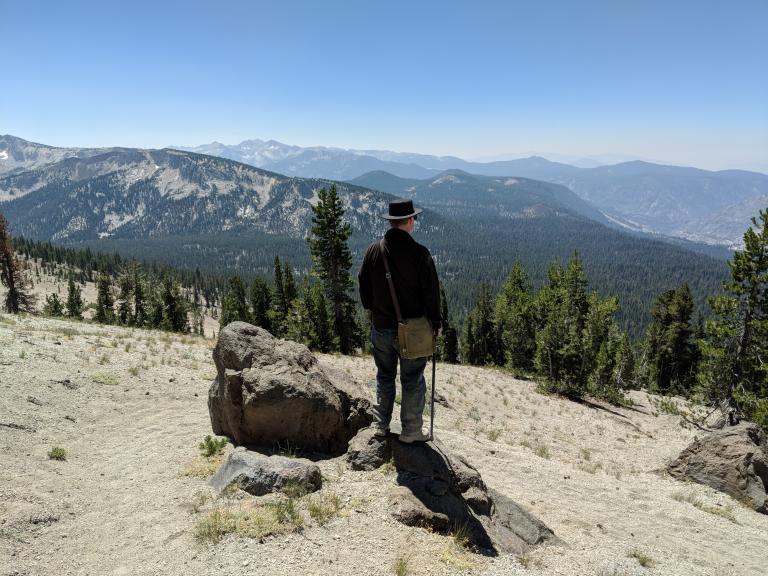
The Path of Transformation might lead anywhere.
Photo (c)2018 by Polly Peterson, used with permission.
That does not mean that there is no challenge to the everyday world. However, it means that instead of spending our lives trying our best (metaphorically) not to throw the ball in the gutter, we can spend all of our efforts competing against one another.
Part of the game of the known is that there are, just like in bowling, winners and losers. At the same time, we are generally protected from many of the real challenges of the world.
Using society to protect us from reality is not new. From the earliest banding together of humans for gathering and hunting, we have relied on one another for support. Neither good nor bad, this is just the nature of people.
The Promise of Freedom
Over time, humanity has gone from fifty-person kin groups to a massive, interactive system of more than seven billion seething, sweating primates. It is unsurprising that each of us needs to walk around bound by constraints that are mental, physical, and spiritual in nature. Without all three of those bindings, the whole thing falls apart. Even with them, the system is given to slippage.
Even though humanity as a whole, in order to maintain a relatively stable world, must be bound, individuals can still break free. This promise of the possibility of freedom is no more than the slippage in an otherwise overwhelming system.
The Path of Transformation means unburying the parts of ourselves we have given up to be part of the everyday world. In order to get along and take part in society, we have all handed away much of our power.
Returning to ourselves means becoming infinitely more than what we were taught we could be. But we also must confront (and accept) all the parts of ourselves we keep locked away for “good” reason.
In a very real sense, “society” is a magical binding. But it is not one that we can just cast off willy-nilly without consequences. Abandoning the known and engaging the real courts madness, illness, and death.
Breaking Our Bonds
When we come to understand that human culture resembles a giant magical binding, then we can begin to realize why change — internal or external — is so difficult. We pretend that change is a simple choice, a mental game, but the real is a whole lot deeper than we care to recognize. It is not reality that is shallow; it is our understanding.
There are practitioners from every path who imagine we can have a world better than the one in which we live. They strive to create that world, and often become embittered and frustrated over their lack of progress.
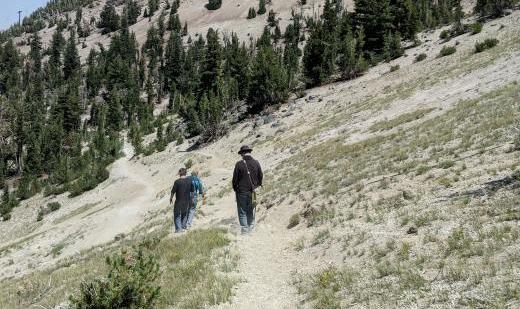
Photo (c)2018 by Polly Peterson, used with permission.
Changing society is not about simply selecting another path forward, but about redirecting the seemingly infinite physical, mental, and spiritual inertia of the whole of human experience and history. It can be done, but the idea that it is purely about choosing a new path is an intellectual conceit that has little to do with the lived human experience.
The modern man, who understands only the known, might not believe in the world of the spirit, but that does not make its constraints less real. It only makes them invisible.
In order to confront our invisible bonds, we must begin to become whole. That is the key to the Path of Transformation. The Path does not care if you call yourself a witch, a wizard, or a monk. It does not differentiate between Pagan or Christian, Muslim or Buddhist.(3) It only cares about the real, and your attainment of it.
The path forward is yours and yours alone.
(1) From a larger perspective, there is no “this” world and “that” world. All of the universe exists all at once. But we have language so that we can begin to talk about reality. Nonetheless, we have to realize that if we abandon “this” world for “that” one, then we are no better off. It is not this or that, but this and that.
(2) “Below, above, and within” is a gloss for “in directions that do not really exist as we conceive the world.”
(3) On the other hand, it is important to remember that people do care. No matter what path you find yourself on in life, it is important to find common language with the people around you. I am willing to go out on a limb and say that we are under no obligation to give people more reality than they can, in our best judgement, handle. And always, always consider that every person is not only a member of society, but also an infinite spiritual being and a dangerous, irrational primate. Imagining then to be just one of those things is signing up for trouble.
Previous Post

July 28, 2018
Set Goals like a Wizard
Next Post

August 25, 2018 Identity Is Not Your Friend
Browse Our Archives
Select a Category Columns History Holidays Politics Ritual and Practice The Other Side of the Hedge Theology, Ethics, Philosophy
Select a Month June 2019 May 2019 April 2019 March 2019 February 2019 January 2019 December 2018 November 2018 October 2018 September 2018 August 2018 July 2018 June 2018 May 2018 April 2018 March 2018 February 2018 January 2018 November 2017 October 2017 September 2017 August 2017 July 2017 June 2017 May 2017 April 2017 March 2017 February 2017 January 2016 December 2015 November 2015 October 2015 September 2015
TAKE THE
Religious Wisdom Quiz
True or False: The entire city of Nineveh repented after Jonah preached to them.
Select your answer to see how you score.
TRUE FALSE
Related posts from The Other Side of the Hedge




TRENDING AT PATHEOS Pagan

I was recently chatting with someone on Instagram. She asked me what...

While there are many people who share their results, the end of...

On July 23, I saw Christopher Nolan's The Odyssey which is Homer’s...

As I write this two big events have just finished up. One...

Restoring the Watershed of Divine Love
Perhaps cooperation is not something we manufacture through legislation, ideology, or moral...

Many UUs don’t pray because of bad experiences in a previous religion,...
view all Pagan blogs
Ad-Free & Subscriber Log-In Subscription Support
- About Us
- 2026 Calendar
- Videos
- Podcasts
- Library of World Religions
- Faith In Media Tracker
- Advertise With Us
- Write for Us
- Privacy Policy
- Terms of Service
- Do Not Sell My Data
- Contact Us
- Radiant Digital
- Manage Newsletter Subscriptions
- Unsubscribe From Notifications
- Sitemap
Copyright 2008-2026, Patheos. All rights reserved.
Subscription Support Ad-Free & Subscriber Log-In
Follow Patheos