
BuddhistCatholicContemplativeEvangelicalGeneral ChristianHinduJewishLatter-day SaintMuslimNew VisionsProgressive Christian
Beliefs
- Buddhist
- Catholic
- Contemplative
- Evangelical
- General Christian
- Hindu
- Jewish
- Latter-day Saint
- More Voices
- Muslim
- New Visions
- Pagan
- Progressive Christian
Topics
- Religion News
- Food and Religion
- Sports and Religion
- Religious Art
- Religious Music and Entertainment
- Religious Events
- History and Religion
- Style and Religion
- Politics and Religion
- Women in Religion
- Recreation Outdoors and Religion
- Business Finance and Religion
- Careers Workplace and Religion
- Education and Religion
- Family Parenting and Religion
- Health Fitness and Religion
- Home and Religion
- Relationships and Religion
- Technology and Religion
- Travel and Religion
Columnists
- Buddhist Columnists
- Business Finance and Religion Columnists
- Careers Workplace and Religion Columnists
- Catholic Columnists
- Contemplative Columnists
- Education and Religion Columnists
- Evangelists Columnists
- Family Parenting and Religion Columnists
- General Christian Columnists
- Health Fitness and Religion Columnists
- Hindu Columnists
- History and Religion Columnists
- Home and Religion Columnists
- Jewish Columnists
- More Voices Columnists
- Latter Day Columnists
- Muslim Columnists
- New Visions Columnists
- Nonreligious Columnists
- Pagan Columnists
- Politics and Religion Columnists
- Progressive Columnists
- Recreation Outdoors and Religion Columnists
- Relationships and Religion Columnists
- Religion News Columnists
- Religious Art Columnists
- Religious Events Columnists
- Religious Music and Entertainment Columnists
- Sports and Religion Columnists
- Style and Religion Columnists
- Technology and Religion Columnists
- Travel and Religion Columnists
- Women in Religion Columnists
Resource Library
- 2026 Calendar
- Library of World Religions
- The 100 Most Holy Places on Earth
- Patheos Answers
- Podcasts
- Videos
- Faith Leaders Database
- Anglican Episcopalian
- Bahai
- Baptist
- Buddhism
- Christianity
- Confucianism
- Eastern Orthodoxy
- Hinduism
- Holiness and Pentecostal
- ISKCON
- Islam
- Judaism
- Lutheran
- Methodist
- The Church of Jesus Christ of Latter-day Saints
- New Age
- Paganism
- Presbytarian and Reformed
- Protestantism
- Religion Behind the Scenes
- Roman Catholic
- Scientology
- Shia Islam
- Sikhism
- Sufism
- Sunni Islam
- Taoism
- Zen
- See all religions
Research Tools
 Ad-Free & Subscriber Log-In Subscription Support
Ad-Free & Subscriber Log-In Subscription Support
Follow Patheos 

- Trending:
- Forgiveness
- |
- Marriage
- |
- Consciousness
- |
- Death Penalty
- |
- Election
- |
- Halloween
 The Other Side of the Hedge
- Home
- Pagan
- Spiritual Anatomy: Never Mind
Spiritual Anatomy: Never Mind
Last updated on: July 15, 2018 at 8:18 am by Christopher Drysdale
Spiritual Anatomy: Never Mind 2018-07-15T08:18:37-07:00 Christopher Drysdale
Patheos Explore the world's faith through different perspectives on religion and spirituality! Patheos has the views of the prevalent religions and spiritualities of the world.
Mind, body, and spirit; these are ideas we take for granted. Yet, in our culture, the understanding of these concepts is relatively undeveloped. This is not a Paganism problem; it is a Western problem. Though, truth be told, Paganism and the New Age seem to have a more nuanced and developed understanding of these concepts (and their interactions) than most anyone else in the West.
Here in the West, we are enamored of the mind. We believe it is through the mind that we control ourselves and our lives. The everyday mind is considered the sum total of the self and the locus of thinking, knowledge, and identity. Such as view is, to the experienced practitioner, desperately naive. To mix metaphors with abandon, anyone who has been “down the rabbit hole” understands that the everyday mind is just the tip of the iceberg.
Practice and Knowledge
On the whole, Pagans have a deeper-than-average understanding of the depth and breadth of the human experience. Whether we have developed a lot of control or just have a little, we quickly come to understand that the everyday mind is only part of who we are. But that does not mean that everything we believe about our nature is true.
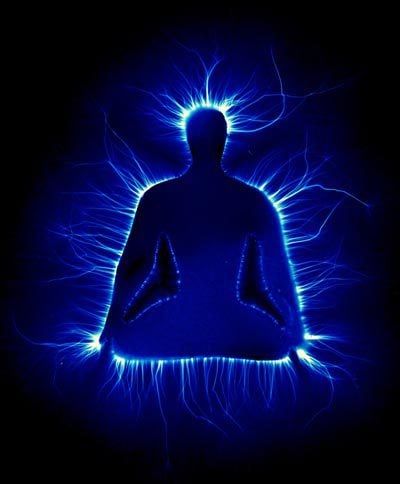
Lotus Kirlian, by Emmanuel HEREDIA, via Wikimedia Commons
In Pagan worldviews, our understanding of the spirit is often not just practical, but practice-based. We learn, though practice and training, how to alter our state in complex ways so that we can achieve our goals.
As practitioners, our understanding of the spirit is much like an athlete’s knowledge of the body. That is, we know how to make it do what we need it to do. We can even make it do incredible things. But that is not the same as understanding the spirit on its own terms.
A healer’s knowledge of the spirit is different from the average Pagan’s. Where the magician is like a spiritual athlete, able to accomplish things, a healer is like a spiritual doctor, able to understand how the systems interrelate and how to bring them back into harmony.
Spiritual Anatomy
I have been a healer for a long time. One of my areas of study, which has fascinated me for about a quarter of a century, is spiritual anatomy.
Spiritual anatomy is not just about examining and understanding the relationships between the parts of the spirit. Spiritual anatomy also studies the interactions of the various parts: spirit and body, the spirit and mind, the mind and body, all of these pieces with the soul, and then each of these parts as they connect outward to the larger universe.
Understanding the whole human, including not just the mind, body, spirit, and soul, but each of the systems that govern and regulate the interactions, is the study of a lifetime — my lifetime, specifically. And while all of that will not fit into one blog, I would like to address is a casual mistake I made a couple of posts back.
When talking about “how magic works” I referred to a person’s “state” as their current way of holding the mind, body, and spirit. But the way that comes together in English, it makes them seem like three independent things. This is not true.
Have you ever wondered how to reconcile the mind-body-spirit with the physical/spiritual dualism? Well, no, probably not.
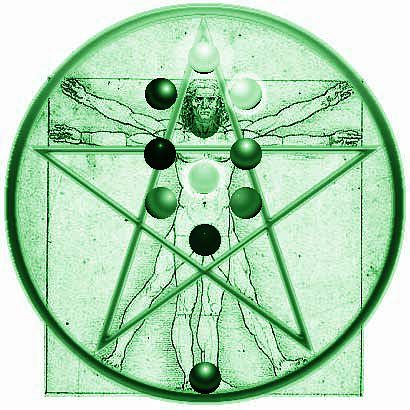
Public domain, via Wikimedia Commons
But I’ll bet that, if you do magical and religious stuff, you’ve probably wondered about whether the spirit or body is more important. Are we naturally biological creatures who think we have a spirit, or creatures of the spirit who happen to be having a biological day?
In asking this question, we are giving ourselves a false choice. It is like asking whether your right or left leg is “more important.” One might be dominant, but both are necessary to walk.
The Everyday Mind
So let me lay this right out: the “mind” that we experience all the time, arises from the interaction of the body and spirit. That incessant voice inside us, that self-talks and seems to determine our focus and mood? It is not actually in charge. The everyday mind is, in fact, the least powerful bit in the system of self. It has as barely more effect on out state than barometer does on the weather.
However, in the everyday world, our mind can successfully direct us. Most of the time, we are only dealing with situations that we already understand. We spend most of our life in known situations. Our everyday mind is about perfect for getting us through our workday, navigating the grocery store, and dealing with traffic (as long as nothing goes wrong).
But when something goes wrong we are unprepared. We are lost when matters of life and death intrude. We find, suddenly, that we have turned our mind into something that hardly recognizes let alone represents our deepest nature.

Tiger chasing a deer, via Wikimedia Commons
Where we get into trouble is when we start acting like the everyday mind is actually running the show. The everyday mind tell us that it is brilliant and perceptive and will take care of things. Realistically, it has a very narrow view of the world and is really talented at distinguishing things that we think we like from things we do not.
The deeper parts of ourselves have access to different information. If we were to chunk it up, we can imagine the body’s knowledge as “animal wisdom” – not in the sense of anthropomorphizing other animals, but in the sense of recognizing our own animal nature. Further, we can come to understand that the human spirit is every bit as much a “spirit” as any other.
The Everyday Mind Defends Itself
For most people, that is the point where the mind will generally jump in and start asking awkward questions like, “well, then, where to do the spirit and body come from?” “how do you know this?” and so on and so forth.
But, no. Let’s stay where we are. Because if we just stick with this idea, we can explain a lot of our troubles in life. When we put the mind in charge of ourselves, it’s like letting the kid decide where we’re going to go for dinner. And letting them drive. And expecting them to pay for it. This is why our lives feel out of control so much of the time.
This is why I have spent so much time and effort on this blog exhorting people toward self-cultivation. Yes, I know it’s a pain in the ass. It can be boring and seems “easy.” I also know it is hard enough we want to avoid it. But it is also the path forward.
Mind, Body, Spirit
The everyday mind is more or less powerless on its own. When we treat it like it is in charge, we dis-empower and disconnect from our deeper selves. Our culture teaches us to use the everyday mind this way because weak people work together better. In the wider perspective, society works better when we need each other. But we need to find a balance that takes care of our needs, too.
A common Eastern approach, meditative in nature, is to dissolve that mind so that a deeper self arises. To do this, we starve the mind of attention until it breaks into its component parts.

Monk Shoes – (c)2009 Polly Peterson, used with permission
The Western path is, instead, to purify the everyday mind. This is something of a trick. No matter what type of “purification” it is, it teaches the lesson that the everyday mind is not truly in charge.
Though the results of these two techniques look different in the everyday world, both paths both can bring out a more authentic self. Controlling the everyday mind can only be done by seeking deeper parts of the self.
Self-cultivation means developing relationships with both the body and the spirit. Neither one or the other can be in overwhelming control. Only when the two are harmonized can we open the way to the sacred.
Previous Post

May 25, 2018
How to Make a Wizard's Staff
Next Post

June 9, 2018 The Path of Transformation
Browse Our Archives
Select a Category Columns History Holidays Politics Ritual and Practice The Other Side of the Hedge Theology, Ethics, Philosophy
Select a Month June 2019 May 2019 April 2019 March 2019 February 2019 January 2019 December 2018 November 2018 October 2018 September 2018 August 2018 July 2018 June 2018 May 2018 April 2018 March 2018 February 2018 January 2018 November 2017 October 2017 September 2017 August 2017 July 2017 June 2017 May 2017 April 2017 March 2017 February 2017 January 2016 December 2015 November 2015 October 2015 September 2015
TAKE THE
Religious Wisdom Quiz
Which parable tells of a traveler who fell among thieves?
Select your answer to see how you score.
The Lost Coin The Rich Fool The Good Samaritan The Pearl of Great Price
Related posts from The Other Side of the Hedge




TRENDING AT PATHEOS Pagan

I was recently chatting with someone on Instagram. She asked me what...

While there are many people who share their results, the end of...

On July 23, I saw Christopher Nolan's The Odyssey which is Homer’s...

As I write this two big events have just finished up. One...

Restoring the Watershed of Divine Love
Perhaps cooperation is not something we manufacture through legislation, ideology, or moral...

Many UUs don’t pray because of bad experiences in a previous religion,...
view all Pagan blogs
Ad-Free & Subscriber Log-In Subscription Support
- About Us
- 2026 Calendar
- Videos
- Podcasts
- Library of World Religions
- Faith In Media Tracker
- Advertise With Us
- Write for Us
- Privacy Policy
- Terms of Service
- Do Not Sell My Data
- Contact Us
- Radiant Digital
- Manage Newsletter Subscriptions
- Unsubscribe From Notifications
- Sitemap
Copyright 2008-2026, Patheos. All rights reserved.
Subscription Support Ad-Free & Subscriber Log-In
Follow Patheos