
BuddhistCatholicContemplativeEvangelicalGeneral ChristianHinduJewishLatter-day SaintMuslimNew VisionsProgressive Christian
Beliefs
- Buddhist
- Catholic
- Contemplative
- Evangelical
- General Christian
- Hindu
- Jewish
- Latter-day Saint
- More Voices
- Muslim
- New Visions
- Pagan
- Progressive Christian
Topics
- Religion News
- Food and Religion
- Sports and Religion
- Religious Art
- Religious Music and Entertainment
- Religious Events
- History and Religion
- Style and Religion
- Politics and Religion
- Women in Religion
- Recreation Outdoors and Religion
- Business Finance and Religion
- Careers Workplace and Religion
- Education and Religion
- Family Parenting and Religion
- Health Fitness and Religion
- Home and Religion
- Relationships and Religion
- Technology and Religion
- Travel and Religion
Columnists
- Buddhist Columnists
- Business Finance and Religion Columnists
- Careers Workplace and Religion Columnists
- Catholic Columnists
- Contemplative Columnists
- Education and Religion Columnists
- Evangelists Columnists
- Family Parenting and Religion Columnists
- General Christian Columnists
- Health Fitness and Religion Columnists
- Hindu Columnists
- History and Religion Columnists
- Home and Religion Columnists
- Jewish Columnists
- More Voices Columnists
- Latter Day Columnists
- Muslim Columnists
- New Visions Columnists
- Nonreligious Columnists
- Pagan Columnists
- Politics and Religion Columnists
- Progressive Columnists
- Recreation Outdoors and Religion Columnists
- Relationships and Religion Columnists
- Religion News Columnists
- Religious Art Columnists
- Religious Events Columnists
- Religious Music and Entertainment Columnists
- Sports and Religion Columnists
- Style and Religion Columnists
- Technology and Religion Columnists
- Travel and Religion Columnists
- Women in Religion Columnists
Resource Library
- 2026 Calendar
- Library of World Religions
- The 100 Most Holy Places on Earth
- Patheos Answers
- Podcasts
- Videos
- Faith Leaders Database
- Anglican Episcopalian
- Bahai
- Baptist
- Buddhism
- Christianity
- Confucianism
- Eastern Orthodoxy
- Hinduism
- Holiness and Pentecostal
- ISKCON
- Islam
- Judaism
- Lutheran
- Methodist
- The Church of Jesus Christ of Latter-day Saints
- New Age
- Paganism
- Presbytarian and Reformed
- Protestantism
- Religion Behind the Scenes
- Roman Catholic
- Scientology
- Shia Islam
- Sikhism
- Sufism
- Sunni Islam
- Taoism
- Zen
- See all religions
Research Tools
 Ad-Free & Subscriber Log-In Subscription Support
Ad-Free & Subscriber Log-In Subscription Support
Follow Patheos 

- Trending:
- Forgiveness
- |
- Marriage
- |
- Consciousness
- |
- Death Penalty
- |
- Election
- |
- Halloween
 The Other Side of the Hedge
- Home
- Pagan
- The Other Side of the Hedge: Restoring Virtue
The Other Side of the Hedge: Restoring Virtue
Last updated on: May 22, 2017 at 3:29 am by Christopher Drysdale
The Other Side of the Hedge: Restoring Virtue 2017-05-22T03:29:35-07:00 Christopher Drysdale
Patheos Explore the world's faith through different perspectives on religion and spirituality! Patheos has the views of the prevalent religions and spiritualities of the world.
We’ve lost our virtue. And we’ve lost it so badly that we hardly even know what that means.
Virtue is not what we’ve been taught. In the West, “virtue” is an old-fashioned word. It’s tied together with purity, and sometimes it’s even used as a euphemism for virginity. As a culture, we’ve lost our understanding of what it means to be virtuous.

“Vision of Cornelius the Centurion” (adapted) by Gerbrand van den Eeckhout. From WikiMedia.
The origins of virtue are the courage and strength (L. virtus) of the military man of Rome. But its deeper meaning rests on the wisdom and prudence of the ancient Greek philosophers. We Pagans talk of finding the hidden magic of the ancients. Virtue is part of that power.
Over the past half-millennium in the West, there has been a furious dialogue over the meaning of power. On the whole, it has been an argument between Judeo-Christian monotheism and materialist-positivist science. Each side begs us to join, casting disdain or eternal condemnation on those who would disagree.
Yet something quieter calls to us, wordlessly reminding us that truth is neither of these lies. Virtue comes from within. Words might be used to describe it, to point to it, but they can never contain it. Virtue comes from integrity, from authenticity, and from a deep connection to self.
CHRISTIAN VIRTUE
I don’t usually consider it my place to speak about Christianity. In this case, doing so is needed if we want to understand what virtue is, and where we lost it. While Christian virtues are not my virtues, four of their seven have a pagan origin. It was the ancient Greek philosophers who first described virtue in the West.
In antiquity, Plato codified the four virtues as temperance, prudence, courage, and justice. Christianity added faith, hope, and love – three words of slippery meaning, indeed.
Christian virtue began as an expression of the human soul when bathed in the light of their God. It was shown through compassion, right action, and a turning away from worldly things in service of something greater. But in short order, these virtues became a yoke to be worn, values to be aped without understanding and without sacred basis.
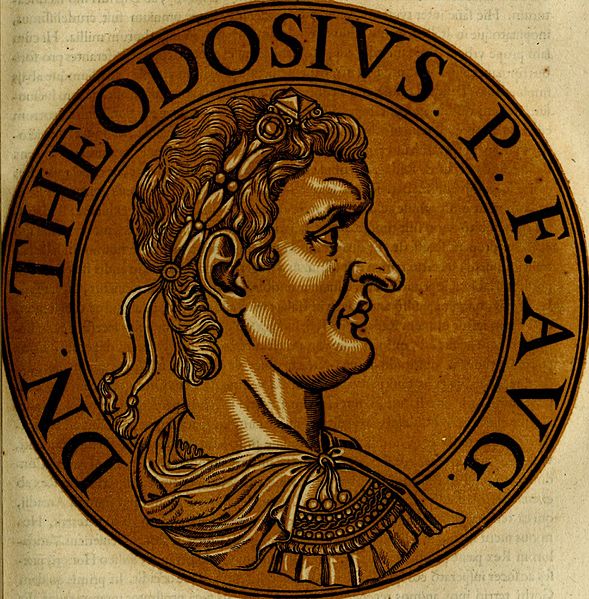
From WikiMedia.
By the time of Roman Emperor Theodosius I (347-395 C.E.) and Saint Augustine of Hippo (354-430 C.E.), Christian virtue lost its home in the sacred and became worldly law. That law held a stranglehold on the West until the rise of science.
Certainly, there are Christians who express virtue, and they are to be esteemed. But there are many more who have turned away. They have bent these sacred virtues into mundane values, and what were once sacred gifts have become mundane culture, wielded to measure and distribute earthly power. However good their intentions, there is no virtue in that.
TURNING OUR BACKS ON VIRTUE
Over the last five hundred years, in a rising crescendo, a materialist positivism has risen in the West. It has attempted to put paid to any true notion of virtue. Driven by the need to break the Christian church’s hold on worldly power and knowledge, the scientific narrative has become the new status language of the West.
Once the West stood with the virtues of Christianity, using its spiritual power to bolster society’s status quo. But now a new narrative has emerged. Soaring rhetoric has been abandoned in a struggle for naked power. Popularity has replaced civic virtue. As this new narrative has intertwined with society, scientism (not science!) has arisen as a new judge of right and wrong.
Especially in the last two generations, this shift has meant abandoning the sacred. It’s understandable. One side claims that everything they know about the sacred and the world is true. They believe that they possess perfect knowledge, passed down in words from generation to generation. The other side knows that such claims are poppycock.
And unless we delve deeper on our own, only these two choices are laid before us. One tradition is steeped in more than a millennium of grasping after temporal power. The other tradition tells us to abandon all knowledge of the sacred and the spiritual.
It’s a false choice.
RECLAIMING VIRTUE
Virtue is not simple goodness. It’s not about being kind, or, nice, or friendly. It’s a power that you can find within yourself, and it comes from expressing your deepest self into the world. Not the best part of yourself. Not your fantasy of yourself. Your deepest, most authentic self.
Virtue is real, sacred power. We don’t lose it by taking part in the world. In fact, virtue is not found only in people. It might be found in anything: a tree, a rock, a walking stick, an idea, or a mountain. Anything might, or might not, be virtuous.

“Mudang’s Tree” ©2008 Polly Peterson – Used with Permission
If this is confusing, remember that virtue isn’t some strange thing waiting out there for you. It’s just you, coming forth. Virtue is not complicated. Like so many things we struggle with in life, it is very simple and yet very hard.
HOW TO BEGIN
The two watchwords in seeking virtue are integrity and harmony. Train your heart through prayer, your mind through meditation, and your body through discipline. Understand that harmony isn’t passiveness, but an active stillness of spirit. Delve deeper into yourself, and bring that self into alignment with your surroundings.
If that all seems a little much, then sit. Breathe. You’re not seeking virtue. You’re learning to hold still long enough for it to find you.
Virtue comes from within, but from a place we are never taught to reach. That is why it cannot be claimed; it can only be cultivated. And the path to growing it within yourself starts from where you are.
Previous Post

May 15, 2017
The Other Side of the Hedge: Everyday Magic
Next Post
May 29, 2017 The Other Side of the Hedge: How to Build Your Magical Altar
Browse Our Archives
Select a Category Columns History Holidays Politics Ritual and Practice The Other Side of the Hedge Theology, Ethics, Philosophy
Select a Month June 2019 May 2019 April 2019 March 2019 February 2019 January 2019 December 2018 November 2018 October 2018 September 2018 August 2018 July 2018 June 2018 May 2018 April 2018 March 2018 February 2018 January 2018 November 2017 October 2017 September 2017 August 2017 July 2017 June 2017 May 2017 April 2017 March 2017 February 2017 January 2016 December 2015 November 2015 October 2015 September 2015
TAKE THE
Religious Wisdom Quiz
Who was Jephthah's daughter?
Select your answer to see how you score.
Unnamed Deborah Miriam Ruth
Related posts from The Other Side of the Hedge




TRENDING AT PATHEOS Pagan

I was recently chatting with someone on Instagram. She asked me what...

While there are many people who share their results, the end of...

On July 23, I saw Christopher Nolan's The Odyssey which is Homer’s...

As I write this two big events have just finished up. One...

Restoring the Watershed of Divine Love
Perhaps cooperation is not something we manufacture through legislation, ideology, or moral...

Many UUs don’t pray because of bad experiences in a previous religion,...
view all Pagan blogs
Ad-Free & Subscriber Log-In Subscription Support
- About Us
- 2026 Calendar
- Videos
- Podcasts
- Library of World Religions
- Faith In Media Tracker
- Advertise With Us
- Write for Us
- Privacy Policy
- Terms of Service
- Do Not Sell My Data
- Contact Us
- Radiant Digital
- Manage Newsletter Subscriptions
- Unsubscribe From Notifications
- Sitemap
Copyright 2008-2026, Patheos. All rights reserved.
Subscription Support Ad-Free & Subscriber Log-In
Follow Patheos