
BuddhistCatholicContemplativeEvangelicalGeneral ChristianHinduJewishLatter-day SaintMuslimNew VisionsProgressive Christian
Beliefs
- Buddhist
- Catholic
- Contemplative
- Evangelical
- General Christian
- Hindu
- Jewish
- Latter-day Saint
- More Voices
- Muslim
- New Visions
- Pagan
- Progressive Christian
Topics
- Religion News
- Food and Religion
- Sports and Religion
- Religious Art
- Religious Music and Entertainment
- Religious Events
- History and Religion
- Style and Religion
- Politics and Religion
- Women in Religion
- Recreation Outdoors and Religion
- Business Finance and Religion
- Careers Workplace and Religion
- Education and Religion
- Family Parenting and Religion
- Health Fitness and Religion
- Home and Religion
- Relationships and Religion
- Technology and Religion
- Travel and Religion
Columnists
- Buddhist Columnists
- Business Finance and Religion Columnists
- Careers Workplace and Religion Columnists
- Catholic Columnists
- Contemplative Columnists
- Education and Religion Columnists
- Evangelists Columnists
- Family Parenting and Religion Columnists
- General Christian Columnists
- Health Fitness and Religion Columnists
- Hindu Columnists
- History and Religion Columnists
- Home and Religion Columnists
- Jewish Columnists
- More Voices Columnists
- Latter Day Columnists
- Muslim Columnists
- New Visions Columnists
- Nonreligious Columnists
- Pagan Columnists
- Politics and Religion Columnists
- Progressive Columnists
- Recreation Outdoors and Religion Columnists
- Relationships and Religion Columnists
- Religion News Columnists
- Religious Art Columnists
- Religious Events Columnists
- Religious Music and Entertainment Columnists
- Sports and Religion Columnists
- Style and Religion Columnists
- Technology and Religion Columnists
- Travel and Religion Columnists
- Women in Religion Columnists
Resource Library
- 2026 Calendar
- Library of World Religions
- The 100 Most Holy Places on Earth
- Patheos Answers
- Podcasts
- Videos
- Faith Leaders Database
- Anglican Episcopalian
- Bahai
- Baptist
- Buddhism
- Christianity
- Confucianism
- Eastern Orthodoxy
- Hinduism
- Holiness and Pentecostal
- ISKCON
- Islam
- Judaism
- Lutheran
- Methodist
- The Church of Jesus Christ of Latter-day Saints
- New Age
- Paganism
- Presbytarian and Reformed
- Protestantism
- Religion Behind the Scenes
- Roman Catholic
- Scientology
- Shia Islam
- Sikhism
- Sufism
- Sunni Islam
- Taoism
- Zen
- See all religions
Research Tools
 Ad-Free & Subscriber Log-In Subscription Support
Ad-Free & Subscriber Log-In Subscription Support
Follow Patheos 

- Trending:
- Forgiveness
- |
- Marriage
- |
- Consciousness
- |
- Death Penalty
- |
- Election
- |
- Halloween
 Theology of Work Project
- Home
- Business, Finance and Religion
- When Unemployment Strikes: Lessons from Ruth
When Unemployment Strikes: Lessons from Ruth
Last updated on: July 7, 2015 at 3:45 pm by Guest Contributor
When Unemployment Strikes: Lessons from Ruth 2015-07-07T15:45:40-05:00 Guest Contributor
Patheos Explore the world's faith through different perspectives on religion and spirituality! Patheos has the views of the prevalent religions and spiritualities of the world.
Guest Contributor: Eileen Sommi
I have heard the story of Ruth told many times. I’ve read it for myself over and over again. But when I started studying the book of Ruth in preparation for writing the Bible study for the Theology of Work Project, I discovered truths and wisdom that had eluded me in past approaches. How did I miss them? The Bible is an amazing book. There is always more. Things we never saw before. New truths that emerge. The book is deep. Really deep. And I am glad, because it means we can never exhaust our time with it. We can read it until our last day and it will always have something for us – something profitable (2 Timothy 3:16, ESV).
One surprise that I found: the book of Ruth is a powerful guide for what to do when unexpected workplace crises—such as unemployment—hit us.
Since Naomi seems to have had to navigate through the most difficulties in this story, let me start with what I learned from her. Naomi’s six strategies are as follows.

Image via Pixabay
1. Don’t give up.
The story begins in Bethlehem during a famine. You can be sure there were many people in the region who were overwhelmed by the conditions and feeling hopeless. Naomi and her family were obviously not among those who had succumbed to the conditions. They were survivors and had kept doing whatever it took to remain alive in the middle of such harsh conditions. They didn’t give up.
Job seekers who have been unemployed for unpredictable lengths of time know the psychological toll that unemployment can take. Often times it is difficult to keep going, especially when you don’t know the length of your suffering. As hard as it is, you have to keep going and taking steps to get through it. You just cannot give up.
2. Make a move.

Image via Pixabay
We see soon after the story begins that Naomi and her family decide it is time to move from Bethlehem. It has become too hard. She and her husband had obviously done all they could up until this point, but now decided it was time to go and find food and work elsewhere. Even though it was difficult to make a move and leave their friends, family, culture, and home, they knew they had no choice and were willing to do what needed to be done in uprooting their family in order to survive.
Sometimes our circumstances require that we do something radical so we will not be overtaken by it. Naomi knew when it was time to make a move. There’s an old Kenny Rogers song with a poker metaphor where the lyrics speak to this moment. It goes: “You’ve gotta know when to hold ‘em, know when to fold ‘em, know when to walk away, know when to run…” Even though those lyrics sound a bit lighthearted when addressing steps to take when dealing with a crisis, the point is there. In the middle of difficulty, you must discern when it is time to do something different, maybe something radical, in order to keep moving forward.
For some, this might be a physical move. For others, “moving” might mean investing in a career change or taking a temporary job until we find the job.
3. Keep faith in God.

Image via Pixabay
The third strategy I found in the book of Ruth for dealing with difficult circumstances was: no matter what, no matter how hard, keep the faith. It’s natural for us to lay down our faith in God when bad things happen to us. Bad things make us doubt that there even is a God. But, if you watch Naomi carefully throughout the story you see that through famine, deaths, and hardship, her faith in God remained in tact. She wasn’t necessarily singing songs of praise around a camp fire, but she still believed in the God of her fathers. It was her faith that brought her back to Bethlehem after the death of her sons, and because of that faith God was able to show himself faithful by providing for her greatest needs and even, eventually, giving her a grandchild that would be in the genealogy of his son, Jesus Christ. Amazing really.
4. Be honest.
Another helpful point when dealing with trials that Naomi demonstrates well is being honest. When Naomi returns to Bethlehem alone with Ruth, she does not play the martyr. She does not try to act as if everything is alright. As her old friends gather around her, she tells them quite plainly how the Lord has dealt bitterly with her and that they should now call her “Mara,” a name meaning “bitter,” because the “Almighty has dealt very bitterly with me…and afflicted me” (Ruth 1:20-21).
I believe because of her honesty and candor, her friends understood her heart and her needs. As a result, they were able to help and encourage her. So often in our culture we try to hide how we are feeling so as not to look weak or needy or be a burden. But if people don’t know that you are weak and needy, they won’t come to your aid and help you.
Naomi gives us a great example. In her despair, she doesn’t hide her feelings. As a result, she gets the help and support she so desperately needs.
5. Find community.

Image via Pixabay
For those of us who have experienced job loss or extended unemployment, we can testify that we probably wouldn’t have made it through without community. Friends encourage us to both persist when we’re discouraged and rest when we need to. They lend us their spare rooms or couches. They connect us with potential job opportunities.
It is interesting to note that the first thing Naomi decides to do following the death of her sons is to head back home. She had heard that the Lord had restored productivity to her homeland and she knew she needed to be back in community. I am sure she had some community after living in Moab for ten years, but nothing can compare to home. So, in her grief, she headed home where there would be great support.
6. Think strategically.

Image via Pixabay
The last thing Naomi teaches us to do when dealing with crisis is to think strategically. When a crisis, catastrophe, or death happens the last thing we are able to do is think strategically. But, when the emotions settle a bit and the shock wears off, we must muster the fortitude to think proactively and get a plan together.
Once Naomi settles back into life in Bethlehem, she and Ruth figure out how to live by gleaning food from Boaz’ farm. Naomi plays a big role in thinking through how they can get food for themselves and also coming up with the idea to have Ruth present herself to Boaz – knowing he could possibly save them by becoming their kinsman-redeemer. It’s shrewd, prudent, and worth a try. Best of all, it works out for all of them and Naomi’s strategic thinking helps make things happen that work for all of their good.
So, there you have it. Six points to help walk us through unemployment’s darkest days, thanks to Naomi.
More resources about unemployment, from Theology of Work Project:
- Join Haddon Robinson and Alice Mathews as they talk with Chuck Fritsma about how to get through a season of unemployment: How to Get Through a Season of Unemployment
- Listen in as Haddon Robinson and Alice Mathews talk with Chuck Fritsma about applying for a new job once you are unemployed: Practical Tools for Launching a Successful Job Search
Click to Like Theology of Work Project on Facebook

Click to Like Theology of Work Project on Facebook
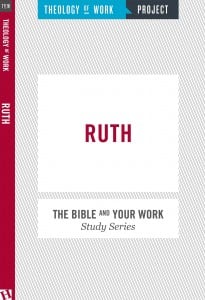 Eileen Sommi is a freelance writer living in Knoxville, Tennessee with her husband and four kids. She wrote the TOW Project Book of Ruth Bible Study, which is based on the Theology of Work Bible Commentary chapter on Ruth.
Eileen also serves at Two Rivers Church where she is involved in worship and prayer ministry. She leads Bible studies and loves the opportunity to teach at faith based events and retreats. When not working, she can be found on a field watching her kids play soccer and lacrosse. She received her bachelors degree at Wheaton College, Ill. and her Masters in Higher Education from Buffalo State University, NY.
Previous Post

June 16, 2015
Honoring Your Parents Through Your Work
Next Post

June 30, 2015 Is God Really Faithful?: Lessons from Ruth
Browse Our Archives
Select a Category Advent Ambition Bible and Work Business Calling Christmas Common Good Communication Conflict Culture Disappointment Discipleship Earth Day Easter Economics Environmental Sustainability Envy Faith and the Workplace Family and Work Generosity Giving Gossip Government Gratitude Hospitality Human Flourishing Humility Investing Justice Leadership Lent Local Church Making Mistakes Men and Work Millennials and Work Minimum Wage Money New Year Pastors Patience Pay Politics Poverty Prayer Race Rest Sabbath Sacred vs. Secular Sharing Faith Slavery Song of Songs Status Success Suffering Teamwork Thanksgiving Theology of Work TOW Project News Unemployment Valentine's Day Vocation Women and Work Work Life Balance
Select a Month September 2015 August 2015 July 2015 June 2015 May 2015 April 2015 March 2015 February 2015 January 2015 December 2014 November 2014 October 2014 September 2014 August 2014 July 2014 June 2014 May 2014 April 2014 March 2014 February 2014 January 2014 December 2013
Follow Us!
TAKE THE
Religious Wisdom Quiz
According to 2 John, what should believers not do to anyone who does not bring the teaching of Christ?
Select your answer to see how you score.
Give them money Argue with them Take them into your house or welcome them Share a meal with them
Related posts from Theology of Work Project

Theology of Work Bible Commentary Vol. 2 Now...

How to Be a Rich Christian (Part 3:...

How to Be a Rich Christian (Part 1:...

Every Christian is Called to Full Time Ministry
TRENDING AT PATHEOS Business, Finance and Religion

St. Francis by Bill Droel Pope Leo XIV declares 2026 as “Year...

Catholics are schooled in the faith by memorizing dogmatic points and lots...

The Good News of Our Human Limitations -...
After another day of trying to meet deadlines and working on projects,...

Quiet Holy Attentiveness (podcast) with Sarah Clarkson
We know that quiet is an essential aspect of the spiritual life,...

Every Vocation Everywhere All At Once
What is a vocation? How does it endure through the years? Can...

I promise this is not going to become a Taylor Swift Studies...
view all Business, Finance and Religion blogs
Ad-Free & Subscriber Log-In Subscription Support
- About Us
- 2026 Calendar
- Videos
- Podcasts
- Library of World Religions
- Faith In Media Tracker
- Advertise With Us
- Write for Us
- Privacy Policy
- Terms of Service
- Do Not Sell My Data
- Contact Us
- Radiant Digital
- Manage Newsletter Subscriptions
- Unsubscribe From Notifications
- Sitemap
Copyright 2008-2026, Patheos. All rights reserved.
Subscription Support Ad-Free & Subscriber Log-In
Follow Patheos