
BuddhistCatholicContemplativeEvangelicalGeneral ChristianHinduJewishLatter-day SaintMuslimNew VisionsProgressive Christian
Beliefs
- Buddhist
- Catholic
- Contemplative
- Evangelical
- General Christian
- Hindu
- Jewish
- Latter-day Saint
- More Voices
- Muslim
- New Visions
- Pagan
- Progressive Christian
Topics
- Religion News
- Food and Religion
- Sports and Religion
- Religious Art
- Religious Music and Entertainment
- Religious Events
- History and Religion
- Style and Religion
- Politics and Religion
- Women in Religion
- Recreation Outdoors and Religion
- Business Finance and Religion
- Careers Workplace and Religion
- Education and Religion
- Family Parenting and Religion
- Health Fitness and Religion
- Home and Religion
- Relationships and Religion
- Technology and Religion
- Travel and Religion
Columnists
- Buddhist Columnists
- Business Finance and Religion Columnists
- Careers Workplace and Religion Columnists
- Catholic Columnists
- Contemplative Columnists
- Education and Religion Columnists
- Evangelists Columnists
- Family Parenting and Religion Columnists
- General Christian Columnists
- Health Fitness and Religion Columnists
- Hindu Columnists
- History and Religion Columnists
- Home and Religion Columnists
- Jewish Columnists
- More Voices Columnists
- Latter Day Columnists
- Muslim Columnists
- New Visions Columnists
- Nonreligious Columnists
- Pagan Columnists
- Politics and Religion Columnists
- Progressive Columnists
- Recreation Outdoors and Religion Columnists
- Relationships and Religion Columnists
- Religion News Columnists
- Religious Art Columnists
- Religious Events Columnists
- Religious Music and Entertainment Columnists
- Sports and Religion Columnists
- Style and Religion Columnists
- Technology and Religion Columnists
- Travel and Religion Columnists
- Women in Religion Columnists
Resource Library
- 2026 Calendar
- Library of World Religions
- The 100 Most Holy Places on Earth
- Patheos Answers
- Podcasts
- Videos
- Faith Leaders Database
- Anglican Episcopalian
- Bahai
- Baptist
- Buddhism
- Christianity
- Confucianism
- Eastern Orthodoxy
- Hinduism
- Holiness and Pentecostal
- ISKCON
- Islam
- Judaism
- Lutheran
- Methodist
- The Church of Jesus Christ of Latter-day Saints
- New Age
- Paganism
- Presbytarian and Reformed
- Protestantism
- Religion Behind the Scenes
- Roman Catholic
- Scientology
- Shia Islam
- Sikhism
- Sufism
- Sunni Islam
- Taoism
- Zen
- See all religions
Research Tools
 Ad-Free & Subscriber Log-In Subscription Support
Ad-Free & Subscriber Log-In Subscription Support
Follow Patheos 

- Trending:
- Forgiveness
- |
- Marriage
- |
- Consciousness
- |
- Death Penalty
- |
- Election
- |
- Halloween
 Theology of Work Project
- Home
- Business, Finance and Religion
- 6 Ideas to Jumpstart Your Personal Bible Study
6 Ideas to Jumpstart Your Personal Bible Study
Last updated on: July 7, 2015 at 3:47 pm by Guest Contributor
6 Ideas to Jumpstart Your Personal Bible Study 2015-07-07T15:47:19-05:00 Guest Contributor
Patheos Explore the world's faith through different perspectives on religion and spirituality! Patheos has the views of the prevalent religions and spiritualities of the world.
This article is part of a symposium, Spiritual Disciplines for Work, with the Catholic, Evangelical and Faith and Work Channels.
Guest Contributor: Randy Kilgore

Image via Pixabay
Wise Christians turn to the Bible to discover how God wants His Creation tended. Many of us use devotional books as a part of our daily Bible study. What a joy it is to read what Oswald Chambers and others have to say about a Scripture passage. But don’t make the mistake of considering this as adequate for your spiritual journey. We should never rely merely on someone else’s opinion of what the Bible says; we should study and discover Scripture for ourselves. But not everybody finds it easy to read Scripture; and many people simply don’t know where to start in trying to understand the Bible. Here are six ideas for developing a love for Bible study.
1. The Scripture as biography approach.
Research teaches us many Christians have little or no knowledge of the people in the Bible. This is a shame because each of the men and women in Scripture are included for specific reasons. Each person’s story teaches us valuable lessons, stories about real people for real people. For this approach, I suggest a Bible with a cyclopedic index, or one with a reasonably exhaustive concordance. (Both the cyclopedic index and concordances can also be found online.) The cyclopedic index is usually preferable because it lists all the key passages pertaining to the people of Scripture, but many concordances do an adequate job. Armed with this tool, select a person you want to know more about in Scripture.
For example, try looking up the passages pertaining to David. By reading all the passages listed under David’s name, you watch David grow from shepherd boy conquering Goliath to King of Israel, and you can even follow him through his failed moments. What you learn about David teaches you much about God, and much about yourself. It’s also likely to introduce you to other people you’ll want to know more about, like Samuel, Solomon and Jonathan.
Don’t know where to start? Try these names: Peter; David; John (Jesus’ disciple); James (Jesus’ brother and an early leader in the church); King Saul; Hannah (don’t miss this one!); Esther; Ruth; Noah: Cornelius; John Mark, and my personal favorites, Andrew and Barnabas. For those of you working Christians who wonder if God can use your skills, try reading about Bezalel and Oholiab.
2. Why is this person’s story here?
Pick a more obscure person in the Old or New Testament. As you read the passages related to this person, ask yourself some questions: Why do you think that person’s story is included in the Bible? What lesson(s) does it offer for you in your life? If the person you selected fails to bring anything to mind immediately, try reading about that passage, and that person, in a Bible dictionary, or a commentary.
Always remember this rule in studying Scripture: Measure the part by the whole. If one Scripture passage seems to mean something that is inconsistent with the whole of Scripture, then you’ve understood that passage wrong. For example, if you read James and believe there are verses there that suggest that salvation comes through works, then you know you’re wrong because the whole of Scripture teaches us that salvation is through grace alone.

Image via Pixabay
3. The I-need-help-right-now approach.
Choose an area of Scripture to read based on the season of your life right now. For example, if you’re in the middle of great struggles, read the Psalms. Because they’ve become one-liners in so many sermons and books, many people dismiss them as mere poetry. But step back, and you’ll see how the Psalmist cries out to God in extremely honest fashion. We Christians like to play head games with ourselves, thinking one thing about the difficulties we face, but “cleaning up our act” when we sit down to pray to God, as if He couldn’t see our earlier thoughts. Psalms is rich with passages that will calm the storms of your life simply because you’ll find yourself saying “That’s exactly how I feel!!” Notice how often David says the Lord is His strength; over and over and over again. That’s likely because he was reminding himself over and over and over again in the face of struggle, something we often need to do ourselves.
If, like me, you enjoy history, then start in Chronicles or Kings. You’ll be surprised how much new information you discover about God and His people simply by reading these books. Want some ideas on how to reach out to cultures that rebel against God? Then, start reading through the Minor Prophets.
Or try this, (keeping in mind each of the Gospels offers much more than just the focuses suggested here) read the books of Luke and Acts to see Jesus as a professional (Luke was a doctor) saw him; read the book of John, the disciple “whom Jesus loved” and notice how much more vividly he seems to communicate the love of Christ, likely because of that love of Jesus for Him; read the book of Mark for an understanding of how to communicate the Gospel message in a succinct yet vivid fashion. Read the book of Matthew when you find yourself tempted to be judgmental and legalistic.

4. Training wheels approach.
Choose an easy-to-read paraphrase Bible. When I give a Bible to a seeker, I’ll often use a Life Application Bible. Many pastors use a version called The Message. While these paraphrase Bibles are not as precise as the NIV, NASV and other literal translations, they can make the Scripture accessible to Biblical novices. Even if you’re a longtime believer, you may discover you fit the category of Biblical novice. Read the paraphrase side by side with an NIV, NASV or more literal translation. Using both Bibles together will acclimate you to the more literal translations’ style, and will help you to develop an ability to understand the passages as they were meant to be read. I personally love the NIV, but you’ll discover pastors and mature Christians have strong connections to other translations, also.
Whatever you do, don’t allow yourself to be tempted to read only paraphrase versions of the Bible. These miss the nuance of Scripture, and are at best an attempt by one person or group to tell us what Scriptures mean to say. It’s important to read a literal version and allow the Holy Spirit to speak through those words. Think of paraphrase versions as the training wheels of Scripture reading; get off of them as soon as you’re able.

5. Discovering Jesus’ strategy for dealing with people.
Jesus’ mission on Earth was to remove the barriers between us and God. With this idea in mind, select a Gospel and read it with pencil and paper handy to make notes you can refer back to later. As you read through this Gospel, each time you see Jesus in a one-on-one encounter, write down your answers to the following questions: What is the barrier Jesus is trying to eliminate between this person and God? Why is this person’s story described here? How is the barrier Jesus is confronting in this person’s life similar to one in my own life? Keep in mind you’re not focusing on what Jesus’ is doing in that person’s life (healing, rescuing, forgiving, etc.–another great study idea); stay focused on trying to identify what it is that is preventing this person from being in fellowship with God. And don’t miss the fact Jesus uses a different approach in nearly every encounter. Are you a mature Christian? Then instead of just studying the barriers, also study the ways Jesus overcame these barriers, and consider the people in your circle who may be similar. Try to incorporate Jesus’ approach to these people into your own life.
6. The Theology of Work Project’s commentary on Luke.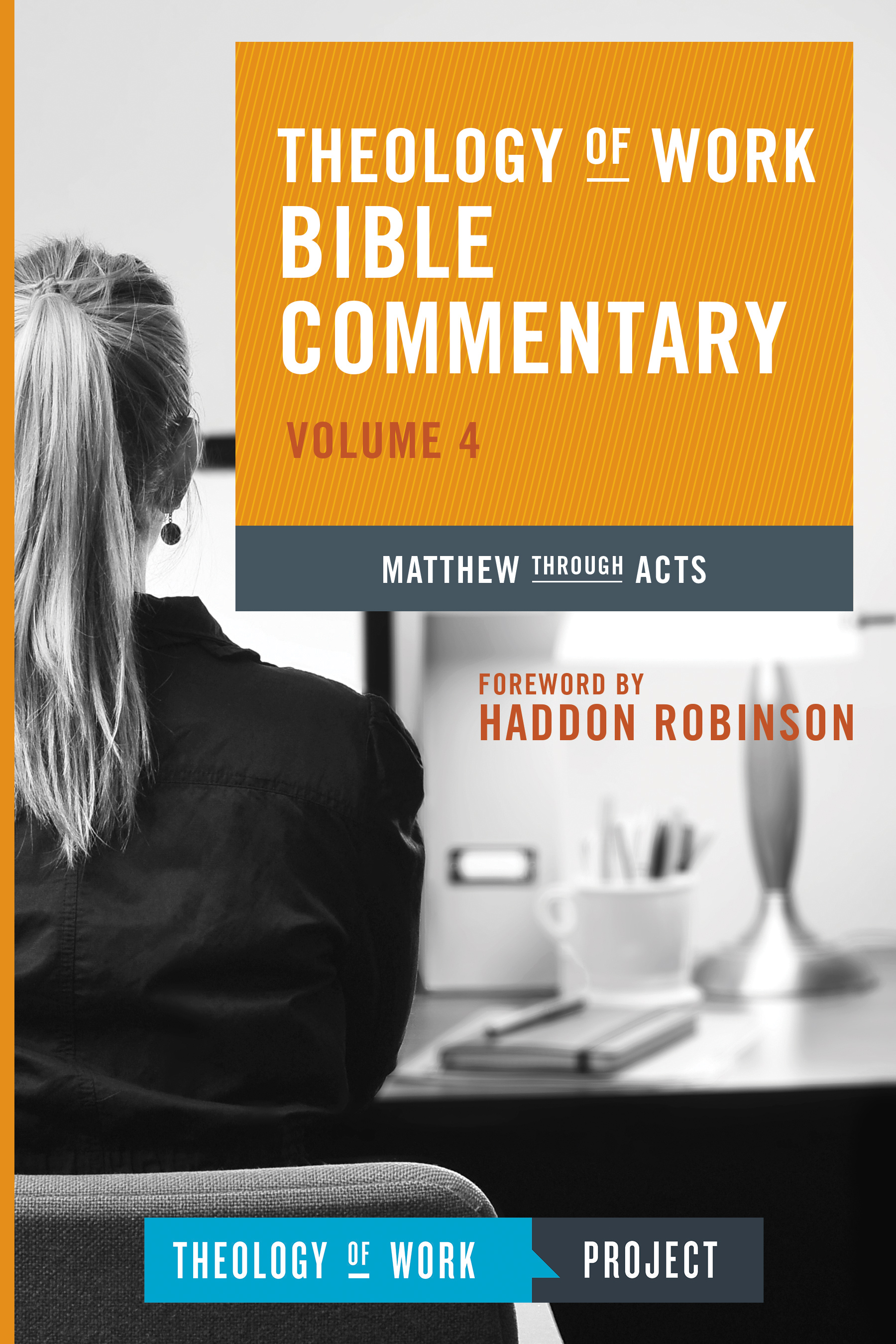
An exciting new resource, the Theology of Work Bible Commentary (available in print, or online for free), has opened up new focus and clarity on what Scripture says about vocation, and the place it has in our daily lives as both followers of Jesus and tenders of Creation (Genesis 1:28-30; Gen 2:15). For Christians struggling with incorporating Bible reading into their daily journeys, or struggling to understand what God wants from them in their work lives, this is an incredibly timely and useful resource.
I usually encourage people who are having trouble seeing the Bible’s relevance to their daily lives, especially their working lives, to start by reading the TOW Project’s commentary on the Gospel of Luke, and then reading Luke directly with this new information. Luke was a professional (a physician) and a Gentile who wrote his gospel with an eye towards helping non-Jewish readers understand Jesus as Messiah and Lord. Luke is often considered one of the most accessible books of the Bible for new believers, and it jumpstarts an understanding that the Bible is as useful and practical in today’s journey as it was in the early days of the Church.
Remember, God promises his Word will never return void (Isaiah 55:11); meaning every time you read the Bible, its truths are stored there for the Holy Spirit to use, if not now, then at some point in your lives.
While the Holy Spirit will not “google” what isn’t there, once you’ve read a passage, its truths are now stored in you, available from that point forward to be drawn out by the Holy Spirit for use when you need it most.
 Randy Kilgore is Senior Writer and Workplace Chaplain for Desired Haven Ministries, Inc. He also contributes monthly devotions to Our Daily Bread, the flagship publication of Our Daily Bread Ministries, (formerly RBC Ministries). Randy received his M.Div. in 2000, from Gordon-Conwell Theological Seminary (including two years of study at Covenant Theological Seminary) after a twenty-plus year career in business, most of which was spent in senior human resource management positions. Randy has released six volumes of workplace Bible studies: Thirty Moments Christians Face in the Workplace, and two books: Made to Matter: Devotions for Working Christians (Discovery House Publishers: 2008); and Talking About God in the 21st Century Workplace. Randy also serves on the executive and steering committees for the Theology of Work Project.
Click to Like Theology of Work Project on Facebook

Click to Like Theology of Work Project on Facebook
Previous Post

April 20, 2015
Is Administrative Professionals Day Demeaning?
Next Post

April 30, 2015 Bad Day at Work?: Career Lessons from Joseph
Browse Our Archives
Select a Category Advent Ambition Bible and Work Business Calling Christmas Common Good Communication Conflict Culture Disappointment Discipleship Earth Day Easter Economics Environmental Sustainability Envy Faith and the Workplace Family and Work Generosity Giving Gossip Government Gratitude Hospitality Human Flourishing Humility Investing Justice Leadership Lent Local Church Making Mistakes Men and Work Millennials and Work Minimum Wage Money New Year Pastors Patience Pay Politics Poverty Prayer Race Rest Sabbath Sacred vs. Secular Sharing Faith Slavery Song of Songs Status Success Suffering Teamwork Thanksgiving Theology of Work TOW Project News Unemployment Valentine's Day Vocation Women and Work Work Life Balance
Select a Month September 2015 August 2015 July 2015 June 2015 May 2015 April 2015 March 2015 February 2015 January 2015 December 2014 November 2014 October 2014 September 2014 August 2014 July 2014 June 2014 May 2014 April 2014 March 2014 February 2014 January 2014 December 2013
Follow Us!
TAKE THE
Religious Wisdom Quiz
Which king of Judah burned the scroll of Jeremiah's prophecy?
Select your answer to see how you score.
Jehoiakim Zedekiah Hezekiah Josiah
Related posts from Theology of Work Project

Theology of Work Bible Commentary Vol. 2 Now...

How to Be a Rich Christian (Part 3:...

How to Be a Rich Christian (Part 1:...

Every Christian is Called to Full Time Ministry
TRENDING AT PATHEOS Business, Finance and Religion

St. Francis by Bill Droel Pope Leo XIV declares 2026 as “Year...

Catholics are schooled in the faith by memorizing dogmatic points and lots...

The Good News of Our Human Limitations -...
After another day of trying to meet deadlines and working on projects,...

Quiet Holy Attentiveness (podcast) with Sarah Clarkson
We know that quiet is an essential aspect of the spiritual life,...

Every Vocation Everywhere All At Once
What is a vocation? How does it endure through the years? Can...

I promise this is not going to become a Taylor Swift Studies...
view all Business, Finance and Religion blogs
Ad-Free & Subscriber Log-In Subscription Support
- About Us
- 2026 Calendar
- Videos
- Podcasts
- Library of World Religions
- Faith In Media Tracker
- Advertise With Us
- Write for Us
- Privacy Policy
- Terms of Service
- Do Not Sell My Data
- Contact Us
- Radiant Digital
- Manage Newsletter Subscriptions
- Unsubscribe From Notifications
- Sitemap
Copyright 2008-2026, Patheos. All rights reserved.
Subscription Support Ad-Free & Subscriber Log-In
Follow Patheos