
BuddhistCatholicContemplativeEvangelicalGeneral ChristianHinduJewishLatter-day SaintMuslimNew VisionsProgressive Christian
Beliefs
- Buddhist
- Catholic
- Contemplative
- Evangelical
- General Christian
- Hindu
- Jewish
- Latter-day Saint
- More Voices
- Muslim
- New Visions
- Pagan
- Progressive Christian
Topics
- Religion News
- Food and Religion
- Sports and Religion
- Religious Art
- Religious Music and Entertainment
- Religious Events
- History and Religion
- Style and Religion
- Politics and Religion
- Women in Religion
- Recreation Outdoors and Religion
- Business Finance and Religion
- Careers Workplace and Religion
- Education and Religion
- Family Parenting and Religion
- Health Fitness and Religion
- Home and Religion
- Relationships and Religion
- Technology and Religion
- Travel and Religion
Columnists
- Buddhist Columnists
- Business Finance and Religion Columnists
- Careers Workplace and Religion Columnists
- Catholic Columnists
- Contemplative Columnists
- Education and Religion Columnists
- Evangelists Columnists
- Family Parenting and Religion Columnists
- General Christian Columnists
- Health Fitness and Religion Columnists
- Hindu Columnists
- History and Religion Columnists
- Home and Religion Columnists
- Jewish Columnists
- More Voices Columnists
- Latter Day Columnists
- Muslim Columnists
- New Visions Columnists
- Nonreligious Columnists
- Pagan Columnists
- Politics and Religion Columnists
- Progressive Columnists
- Recreation Outdoors and Religion Columnists
- Relationships and Religion Columnists
- Religion News Columnists
- Religious Art Columnists
- Religious Events Columnists
- Religious Music and Entertainment Columnists
- Sports and Religion Columnists
- Style and Religion Columnists
- Technology and Religion Columnists
- Travel and Religion Columnists
- Women in Religion Columnists
Resource Library
- 2026 Calendar
- Library of World Religions
- The 100 Most Holy Places on Earth
- Patheos Answers
- Podcasts
- Videos
- Faith Leaders Database
- Anglican Episcopalian
- Bahai
- Baptist
- Buddhism
- Christianity
- Confucianism
- Eastern Orthodoxy
- Hinduism
- Holiness and Pentecostal
- ISKCON
- Islam
- Judaism
- Lutheran
- Methodist
- The Church of Jesus Christ of Latter-day Saints
- New Age
- Paganism
- Presbytarian and Reformed
- Protestantism
- Religion Behind the Scenes
- Roman Catholic
- Scientology
- Shia Islam
- Sikhism
- Sufism
- Sunni Islam
- Taoism
- Zen
- See all religions
Research Tools
 Ad-Free & Subscriber Log-In Subscription Support
Ad-Free & Subscriber Log-In Subscription Support
Follow Patheos 

- Trending:
- Forgiveness
- |
- Marriage
- |
- Consciousness
- |
- Death Penalty
- |
- Election
- |
- Halloween
 Theology of Work Project
- Home
- Business, Finance and Religion
- Must-Study Books of the Bible for a Theology of Work: Nehemiah Builds for the Common Good
Must-Study Books of the Bible for a Theology of Work: Nehemiah Builds for the Common Good
Last updated on: June 10, 2015 at 2:46 pm by Theology of Work Project
Must-Study Books of the Bible for a Theology of Work: Nehemiah Builds for the Common Good 2015-06-10T14:46:34-05:00 Theology of Work Project
Patheos Explore the world's faith through different perspectives on religion and spirituality! Patheos has the views of the prevalent religions and spiritualities of the world.
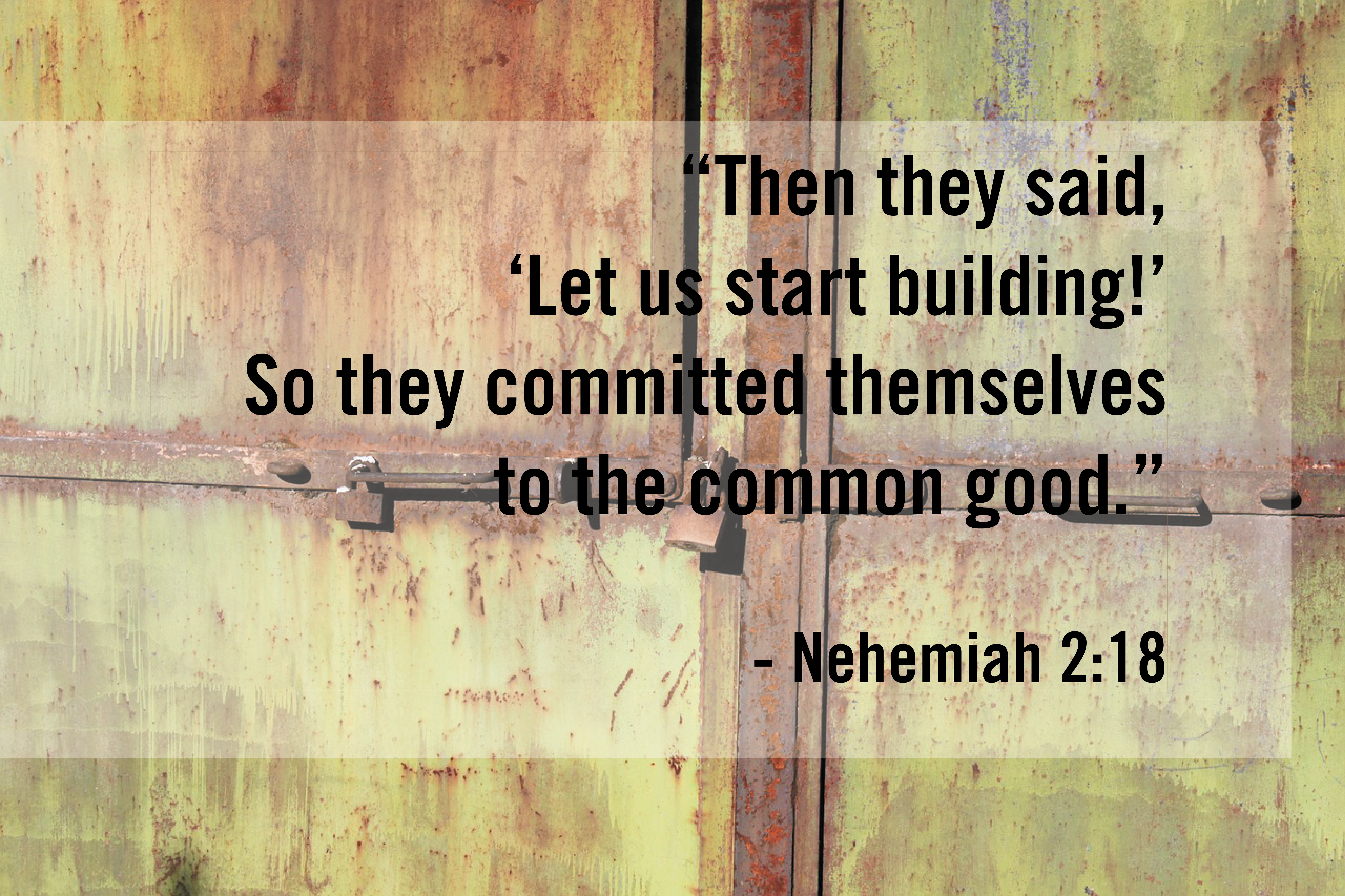
Background image via Pixabay CC
Ever wonder if non-church work can contribute to fulfilling God’s plans? Here are five lessons we can take from Nehemiah about faith, work and calling.
Lesson 1: God’s call is not limited to traditionally defined “religious” activities. Nehemiah was called to help rebuild the walls of Jerusalem. His call to rebuild the walls is just as important as Ezra’s call to rebuild the temple. Though one job is has a more obvious religious affiliation, both were sacred activities ordained for God’s purposes. Both contributed to the common good. Vocation is not limited by our concepts of “sacred” and “secular.”
Lesson 2: Justice and economic matters matter to God. In Nehemiah 5, we see Nehemiah rebuking the wealthy for taking advantage of their fellow Jews. The wealthy were charging interest (which was prohibited by Jewish law) and forcing debtors to sell their own children to repay their loans. Nehemiah connects economic issues with the fear of the Lord when he asks, “Should you not walk in the fear of our God, to prevent the taunts of the nations of our enemies [to whom the wealthy had forced the sale of Jewish debtors as slaves] (Neh.5:9)?”
In awe of God, we are to care for those who we work with–employees, employers, co-workers, customers–and work for the common good.
Lesson 3: God’s kingdom is advanced through multiple spheres of influence. The temple and and the city walls were mutually dependent instruments of God’s kingdom law, government, security and prosperity. The wall was an integral part of the city’s protection, but so was the temple because it was God’s dwelling place (Ezr.1:3); God was credited with foiling the violent plans of the city’s enemies (Neh.4:15). Likewise with government and justice. The gates of the wall were where lawsuits were tried (Deu.21:19, Isa.29:21), while at the same time the Lord from his temple “execute[d] justice for the orphan and the widow” (Deu.10:18). The temple and the walls are united in a society founded on God’s “covenant and steadfast love” (Neh.1:5).
Thus, we observe God’s love at work in multiple spheres of society. We are reminded of what Cornel West has said, “Never forget that justice is what love looks like in public.”
Lesson 4: God works through people. God worked through his people, pagan kings, leaders, lay people (such as Nehemiah, who was a cupbearer to the king), builders, guards and everyday workers to fulfill his purposes.
Lesson 5: Take time for worship, Sabbath and celebration. What is it that separates the work of God’s people from the rest of the world? A conscience reliance on–and motivating awe of–God. In Nehemiah, the people are reminded to remember who God is, honor the Sabbath (Neh.10:31, Neh.13:7-8) and celebrate God’s provision.
When Nehemiah says, “send portions of them to those for whom nothing is prepared, for this day is holy to our Lord (Neh.8:10),” we also see that celebrating God’s provision includes giving to those who have less.
What do you think? What workplace lessons do you see in Nehemiah? Let us know your thoughts below.
The Theology of Work Project blog is exploring five must-study books of the Bible for forming a theology of work. This post is second in a series that started with Genesis.

Click to Like Theology of Work Project on Facebook

Browse Our Archives
Select a Category Advent Ambition Bible and Work Business Calling Christmas Common Good Communication Conflict Culture Disappointment Discipleship Earth Day Easter Economics Environmental Sustainability Envy Faith and the Workplace Family and Work Generosity Giving Gossip Government Gratitude Hospitality Human Flourishing Humility Investing Justice Leadership Lent Local Church Making Mistakes Men and Work Millennials and Work Minimum Wage Money New Year Pastors Patience Pay Politics Poverty Prayer Race Rest Sabbath Sacred vs. Secular Sharing Faith Slavery Song of Songs Status Success Suffering Teamwork Thanksgiving Theology of Work TOW Project News Unemployment Valentine's Day Vocation Women and Work Work Life Balance
Select a Month September 2015 August 2015 July 2015 June 2015 May 2015 April 2015 March 2015 February 2015 January 2015 December 2014 November 2014 October 2014 September 2014 August 2014 July 2014 June 2014 May 2014 April 2014 March 2014 February 2014 January 2014 December 2013
Follow Us!
TAKE THE
Religious Wisdom Quiz
What does "Sabbath" mean in Hebrew?
Select your answer to see how you score.
Holy Day Offering Worship Rest
Related posts from Theology of Work Project

Theology of Work Bible Commentary Vol. 2 Now...

How To Be a Rich Christian: 3 Ways...

How to Be a Rich Christian (3 Key...

How to Be a Rich Christian (Part 3:...
TRENDING AT PATHEOS Business, Finance and Religion

St. Francis by Bill Droel Pope Leo XIV declares 2026 as “Year...

Catholics are schooled in the faith by memorizing dogmatic points and lots...

The Good News of Our Human Limitations -...
After another day of trying to meet deadlines and working on projects,...

Quiet Holy Attentiveness (podcast) with Sarah Clarkson
We know that quiet is an essential aspect of the spiritual life,...

Every Vocation Everywhere All At Once
What is a vocation? How does it endure through the years? Can...

I promise this is not going to become a Taylor Swift Studies...
view all Business, Finance and Religion blogs
Ad-Free & Subscriber Log-In Subscription Support
- About Us
- 2026 Calendar
- Videos
- Podcasts
- Library of World Religions
- Faith In Media Tracker
- Advertise With Us
- Write for Us
- Privacy Policy
- Terms of Service
- Do Not Sell My Data
- Contact Us
- Radiant Digital
- Manage Newsletter Subscriptions
- Unsubscribe From Notifications
- Sitemap
Copyright 2008-2026, Patheos. All rights reserved.
Subscription Support Ad-Free & Subscriber Log-In
Follow Patheos