
BuddhistCatholicContemplativeEvangelicalGeneral ChristianHinduJewishLatter-day SaintMuslimNew VisionsProgressive Christian
Beliefs
- Buddhist
- Catholic
- Contemplative
- Evangelical
- General Christian
- Hindu
- Jewish
- Latter-day Saint
- More Voices
- Muslim
- New Visions
- Pagan
- Progressive Christian
Topics
- Religion News
- Food and Religion
- Sports and Religion
- Religious Art
- Religious Music and Entertainment
- Religious Events
- History and Religion
- Style and Religion
- Politics and Religion
- Women in Religion
- Recreation Outdoors and Religion
- Business Finance and Religion
- Careers Workplace and Religion
- Education and Religion
- Family Parenting and Religion
- Health Fitness and Religion
- Home and Religion
- Relationships and Religion
- Technology and Religion
- Travel and Religion
Columnists
- Buddhist Columnists
- Business Finance and Religion Columnists
- Careers Workplace and Religion Columnists
- Catholic Columnists
- Contemplative Columnists
- Education and Religion Columnists
- Evangelists Columnists
- Family Parenting and Religion Columnists
- General Christian Columnists
- Health Fitness and Religion Columnists
- Hindu Columnists
- History and Religion Columnists
- Home and Religion Columnists
- Jewish Columnists
- More Voices Columnists
- Latter Day Columnists
- Muslim Columnists
- New Visions Columnists
- Nonreligious Columnists
- Pagan Columnists
- Politics and Religion Columnists
- Progressive Columnists
- Recreation Outdoors and Religion Columnists
- Relationships and Religion Columnists
- Religion News Columnists
- Religious Art Columnists
- Religious Events Columnists
- Religious Music and Entertainment Columnists
- Sports and Religion Columnists
- Style and Religion Columnists
- Technology and Religion Columnists
- Travel and Religion Columnists
- Women in Religion Columnists
Resource Library
- 2026 Calendar
- Library of World Religions
- The 100 Most Holy Places on Earth
- Patheos Answers
- Podcasts
- Videos
- Faith Leaders Database
- Anglican Episcopalian
- Bahai
- Baptist
- Buddhism
- Christianity
- Confucianism
- Eastern Orthodoxy
- Hinduism
- Holiness and Pentecostal
- ISKCON
- Islam
- Judaism
- Lutheran
- Methodist
- The Church of Jesus Christ of Latter-day Saints
- New Age
- Paganism
- Presbytarian and Reformed
- Protestantism
- Religion Behind the Scenes
- Roman Catholic
- Scientology
- Shia Islam
- Sikhism
- Sufism
- Sunni Islam
- Taoism
- Zen
- See all religions
Research Tools
 Ad-Free & Subscriber Log-In Subscription Support
Ad-Free & Subscriber Log-In Subscription Support
Follow Patheos 

- Trending:
- Forgiveness
- |
- Marriage
- |
- Consciousness
- |
- Death Penalty
- |
- Election
- |
- Halloween
 Theology of Work Project
- Home
- Business, Finance and Religion
- 7 Obstacles Pastors Face When Helping Congregations Integrate Faith and Everyday Work
7 Obstacles Pastors Face When Helping Congregations Integrate Faith and Everyday Work
Last updated on: July 23, 2015 at 12:51 pm by Theology of Work Project
7 Obstacles Pastors Face When Helping Congregations Integrate Faith and Everyday Work 2015-07-23T12:51:59-05:00 Theology of Work Project
Patheos Explore the world's faith through different perspectives on religion and spirituality! Patheos has the views of the prevalent religions and spiritualities of the world.
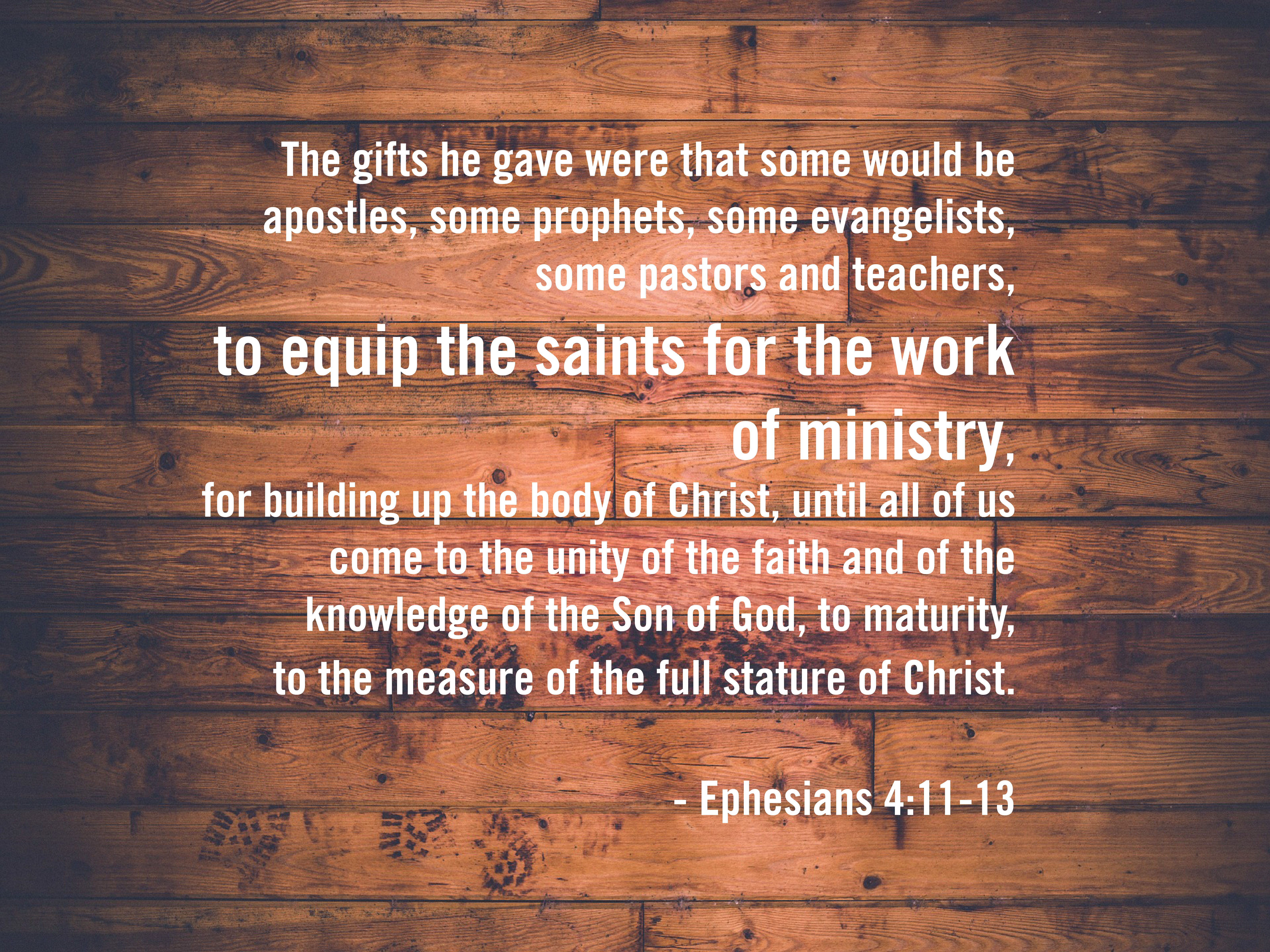
Background image via Pixabay CC
If you’re a pastor, you’ve likely fielded parishioner questions about work-related topics such as calling, ethics and evangelism. How do I know what job God is calling me to? How do I talk to my co-workers about Jesus? How can I stand up to my boss if s/he demands me to cheat?
Many pastors recognize the need to equip believers for ministry outside the walls of the church, especially in the workplace. But pastors and leaders attempting to address the Sunday-Monday divide face myriad challenges, ranging from personal uncertainty to external resistance. Has this been your experience? If so, you’re not alone.
Dwight Dubois of Grand View University’s Center for Renewal gathered over 50 pastors to discuss the difficulties of helping their congregations integrate faith and work. His report, “Equipping Pastors Conversations” explores the obstacles most cited by pastors.
1. Uncertainty about what to do.
The limited scope of pastoral training creates a gap that makes it difficult for pastors to identify with work outside the church. Though intensely interested in helping parishioners partner with God at work, many pastors are simply uncertain about how to do so.
As one pastor said, “We’ve been trained how to do ministry in and for the church, but we’ve not gone beyond that. We know we should equip people for ministry in daily life, but we don’t know how.”
And another reflected, “I’ve been a paid Christian for so long that I no longer remember what it is like to be a Christian in the world.”
2. Congregations expect “the pastor does the ministry.”
This problem was often mentioned first by pastors. Some churchgoers erroneously believe that the pastor is the one (paid) to “do ministry”, while parishioners are there to consume a ministry product, be it music, preaching or community.
“The hire-and-fire mentality of the North American society has reduced the pastor’s ministry to a buy-and-sell commodity. A pastor with a vision to equip all the members for ministry…is apt to run into the mentality, ‘We hired you to do the ministry.’” – R. Paul Stevens and Phil Collins, The Equipping Pastor: A Systems Approach to Congregational Leadership
3. Leaders face pressure to keep the institution alive.
In an age when trust in religious institutions is declining, there remains immense pressure on pastors to keep the institution of the church alive. Much of a pastor’s time might be invested in getting people to lead within the church. There is nothing wrong with this in itself; congregational leaders are needed. However, when church programs become the ends, focused on keeping people in, instead of a means of equipping and sending people out, churches lose credibility and effectiveness.
One pastor commented, “The church building can and should serve as a hub for ministry in the world, but we need to remember that most members spend most of their time away from the building, in the world. I don’t like to equate ‘active faith’ with being on 3 committees. People are involved in ministry in the world, and we need to recognize and support that.”
4. The Sunday-Monday divide = the sacred-secular divide.
According to DuBois, studies show that people are leaving the church because “what happens there has no connection to my life.” And as we mentioned previously, millennials who stay in church are four times more likely to say “My church teaches me how the Bible relates to my field or career interests.” Fortunately, the growing faith-work movement challenges the sacred-secular divide.
Ironically, however, there is still congregational resistance to bridging the sacred-secular divide. Pastors explained, “People want both a ‘spiritual world’ and a ‘real world.’ In my congregation, when we began to deal with this, at first there was resistance to admitting this was true. I felt I was going to be run out of town for raising the question.”
William Diehl’s The Monday Connection points out:
“For the majority of churchgoing people, Sunday morning is the time to get away from the cares of the world and to think about ‘spiritual’ things… when asked if they experience God’s presence in their daily activities, the answer is almost universally, ‘No.’”
5. Existing definitions of “ministry” are confusing.
Another issue facing pastors is differing definitions of “ministry.”
Again, some pastors cited the need to “focus on keeping the machine” – the church itself – “alive” as a pressing issue. In these cases, the working definition of ministry had unintentionally narrowed to include church work alone.
For some pastors and congregants, ministry in the workplace was limited to being nice, moral, kind or ethical. Activities outside of the church only “counted” as ministry if they included evangelism.
6. It’s difficult to measure effectiveness.
A surprising hindrance that came up during the pastors’ conversations was concern about how to measure effectiveness.
One pastor asked, “Where is our measuring stick that shows us we have effectively equipped people?”
Another explained, “Unless you are ‘successful,’ ministry is tough.”
7. Theological grounding is needed.
Some of the issues raised by these pastors’ conversations highlight a need for theological grounding. What is the nature and purpose of the church? What is God’s desire for the world and how do people and churches fit into God’s mission? What is ministry? These are all theological questions.
We won’t offer solutions now, but in future posts, we’ll explore how churches and pastors are spearheading the faith and work movement. We hope that you’ll be part of the discussion.
Pastors and church-based leaders, what do you think? Do you identify with the above? What other obstacles do you experience in equipping your congregation for ministry in everyday work? Let us know by commenting below.
If you’re not a pastor or church-based leader, what do you think? What are the faith and work challenges you’d like your pastor to know about?
This post is part of the Theology of Work Project’s summer blog series, focused on helping pastors and leaders to “equip the saints” (Eph. 4:12) at work. Stay tuned by following us here, on Facebook or via Twitter.
Click to Like Theology of Work Project on Facebook

Click to Like Theology of Work Project on Facebook
Previous Post
July 2, 2014
Equipping Pastors: The Call to Integrate Faith and Work
Next Post

July 16, 2014 Chuck Colson Encouraging Pastors to Reclaim a Theology of Work
Browse Our Archives
Select a Category Advent Ambition Bible and Work Business Calling Christmas Common Good Communication Conflict Culture Disappointment Discipleship Earth Day Easter Economics Environmental Sustainability Envy Faith and the Workplace Family and Work Generosity Giving Gossip Government Gratitude Hospitality Human Flourishing Humility Investing Justice Leadership Lent Local Church Making Mistakes Men and Work Millennials and Work Minimum Wage Money New Year Pastors Patience Pay Politics Poverty Prayer Race Rest Sabbath Sacred vs. Secular Sharing Faith Slavery Song of Songs Status Success Suffering Teamwork Thanksgiving Theology of Work TOW Project News Unemployment Valentine's Day Vocation Women and Work Work Life Balance
Select a Month September 2015 August 2015 July 2015 June 2015 May 2015 April 2015 March 2015 February 2015 January 2015 December 2014 November 2014 October 2014 September 2014 August 2014 July 2014 June 2014 May 2014 April 2014 March 2014 February 2014 January 2014 December 2013
Follow Us!
TAKE THE
Religious Wisdom Quiz
How many animals did Moses take on the Ark?
Select your answer to see how you score.
One of each None Seven of each Two of each
Related posts from Theology of Work Project

Embedding Faith's Roots Into Your Work

The Power of Plugging Into Silence

Guarding Against Gossip at Work

TRENDING AT PATHEOS Business, Finance and Religion

St. Francis by Bill Droel Pope Leo XIV declares 2026 as “Year...

Catholics are schooled in the faith by memorizing dogmatic points and lots...

The Good News of Our Human Limitations -...
After another day of trying to meet deadlines and working on projects,...

Quiet Holy Attentiveness (podcast) with Sarah Clarkson
We know that quiet is an essential aspect of the spiritual life,...

Every Vocation Everywhere All At Once
What is a vocation? How does it endure through the years? Can...

I promise this is not going to become a Taylor Swift Studies...
view all Business, Finance and Religion blogs
Ad-Free & Subscriber Log-In Subscription Support
- About Us
- 2026 Calendar
- Videos
- Podcasts
- Library of World Religions
- Faith In Media Tracker
- Advertise With Us
- Write for Us
- Privacy Policy
- Terms of Service
- Do Not Sell My Data
- Contact Us
- Radiant Digital
- Manage Newsletter Subscriptions
- Unsubscribe From Notifications
- Sitemap
Copyright 2008-2026, Patheos. All rights reserved.
Subscription Support Ad-Free & Subscriber Log-In
Follow Patheos