
BuddhistCatholicContemplativeEvangelicalGeneral ChristianHinduJewishLatter-day SaintMuslimNew VisionsProgressive Christian
Beliefs
- Buddhist
- Catholic
- Contemplative
- Evangelical
- General Christian
- Hindu
- Jewish
- Latter-day Saint
- More Voices
- Muslim
- New Visions
- Pagan
- Progressive Christian
Topics
- Religion News
- Food and Religion
- Sports and Religion
- Religious Art
- Religious Music and Entertainment
- Religious Events
- History and Religion
- Style and Religion
- Politics and Religion
- Women in Religion
- Recreation Outdoors and Religion
- Business Finance and Religion
- Careers Workplace and Religion
- Education and Religion
- Family Parenting and Religion
- Health Fitness and Religion
- Home and Religion
- Relationships and Religion
- Technology and Religion
- Travel and Religion
Columnists
- Buddhist Columnists
- Business Finance and Religion Columnists
- Careers Workplace and Religion Columnists
- Catholic Columnists
- Contemplative Columnists
- Education and Religion Columnists
- Evangelists Columnists
- Family Parenting and Religion Columnists
- General Christian Columnists
- Health Fitness and Religion Columnists
- Hindu Columnists
- History and Religion Columnists
- Home and Religion Columnists
- Jewish Columnists
- More Voices Columnists
- Latter Day Columnists
- Muslim Columnists
- New Visions Columnists
- Nonreligious Columnists
- Pagan Columnists
- Politics and Religion Columnists
- Progressive Columnists
- Recreation Outdoors and Religion Columnists
- Relationships and Religion Columnists
- Religion News Columnists
- Religious Art Columnists
- Religious Events Columnists
- Religious Music and Entertainment Columnists
- Sports and Religion Columnists
- Style and Religion Columnists
- Technology and Religion Columnists
- Travel and Religion Columnists
- Women in Religion Columnists
Resource Library
- 2026 Calendar
- Library of World Religions
- The 100 Most Holy Places on Earth
- Patheos Answers
- Podcasts
- Videos
- Faith Leaders Database
- Anglican Episcopalian
- Bahai
- Baptist
- Buddhism
- Christianity
- Confucianism
- Eastern Orthodoxy
- Hinduism
- Holiness and Pentecostal
- ISKCON
- Islam
- Judaism
- Lutheran
- Methodist
- The Church of Jesus Christ of Latter-day Saints
- New Age
- Paganism
- Presbytarian and Reformed
- Protestantism
- Religion Behind the Scenes
- Roman Catholic
- Scientology
- Shia Islam
- Sikhism
- Sufism
- Sunni Islam
- Taoism
- Zen
- See all religions
Research Tools
 Ad-Free & Subscriber Log-In Subscription Support
Ad-Free & Subscriber Log-In Subscription Support
Follow Patheos 

- Trending:
- Forgiveness
- |
- Marriage
- |
- Consciousness
- |
- Death Penalty
- |
- Election
- |
- Halloween
 Theology of Work Project
- Home
- Business, Finance and Religion
- Resident aliens and priests
Resident aliens and priests
Last updated on: July 14, 2014 at 5:13 pm by Theology of Work Project
Resident aliens and priests 2014-07-14T17:13:28-05:00 Theology of Work Project
Patheos Explore the world's faith through different perspectives on religion and spirituality! Patheos has the views of the prevalent religions and spiritualities of the world.
 A post on 1 PETER 1:1-2:12
In the opening line of I Peter, Peter addresses his readers as “exiles…who have been chosen” (1 Peter 1:1), a phrase which foreshadows Peter’s entire message in the letter. This phrase has two parts: “exiles” and “chosen.”
If you are a citizen of Christ’s kingdom, you are an exile because at present the world around you is not under Christ’s rule. You are living under foreign rule. While you await Christ’s return, your true citizenship in his kingdom is “kept in heaven for you” (1 Peter 1:4). Like exiles in any country, you do not necessarily enjoy the favor of the rulers of the land where you live. Christ came to this land himself, but was “rejected by mortals” (1 Peter 2:4); all citizens of his kingdom should expect the same treatment. Nonetheless, God has called us to stay here, to reside in this alien land while conducting the work of Christ (1 Peter 1:15-17).
Although couched in a political metaphor, Peter’s discussion is full of with workplace terminology: “deeds” (1 Peter 1:17), “silver or gold” (1 Peter 1:18), “tested by fire” (1 Peter 1:7), “purified” (1 Peter 1:22), “built into a…house” (1 Peter 2:5). Peter’s workplace terms remind us that we live in a world of work, and we have to find a way of following Christ in the midst of the working world around us.
Having described what it means to be “exiles,” Peter takes up the other term from 1 Peter 1:1 — “chosen.” If you’re a Christian, you have been chosen by God. For what purpose? To be one of God’s priests in the foreign country you inhabit. “Like living stones, let yourselves be built into a spiritual house, to be a holy priesthood, to offer spiritual sacrifices acceptable to God through Jesus Christ” (1 Peter 2:5). The title of priest is repeated in 1 Peter 2:9 (“royal priesthood”).
PRIESTS IN ANCIENT ISRAEL OFFERED SACRIFICES AND BLESSINGS FOR ISRAEL
Before continuing, we must understand what it meant to be a priest in ancient Israel. Priests performed two chief functions: offering sacrifices in the Temple in Jerusalem and pronouncing the priestly blessing. In order to perform their duty of offering sacrifices, priests had to be able to enter the inner portions of the Temple and — once a year, in the case of the high priest — to stand in the Holy of Holies before the divine presence. In order to say the priestly blessing, priests had to speak for God himself. Both of these duties required priests to enter God’s presence. This in turn required exceptional purity or holiness, since God’s presence cannot abide anything impure or polluted. Yet priests served part-time according to a rotation system (Luke 1:8) and had ordinary jobs as their chief means of livelihood. They could not sequester themselves from daily life, but had to maintain purity despite the dirt and corruption of the world. (Click here for more on priests in ancient Israel in Numbers and Work.)
CHRISTIANS AS PRIESTS OFFER SELF-SACRIFICE AND BLESSINGS FOR OTHERS IN NEED
Don Flow, CEO Of Flow Automotive, On Priesthood At Work
A priest bears the burdens of people by absorbing those burdens and bringing them before God and bringing God’s blessing to the people. Paul made it clear that to fulfill the law of Christ means to bear each other’s burdens. Both John and Peter call us a “Kingdom of Priests.” As Christian leaders, we must “lean into” the burdens of the people in our organizations. This means that we must genuinely know the people with whom we work. For Christian leaders, who a person is and what they do are fully integrated. People cannot be reduced to instruments of production.
Christian leadership requires that prayer be fully integrated into the life of work. The whole world groans with the burden of the fall and it is our calling to participate in the healing of this world. In prayer, we can lift the burdens of others before God and we can bring God’s refreshing touch to the world. I believe we are called to pray for the people with whom we interact every day, for His in-breaking into our day, that our organization would be a blessing, that it would do good, that it would be a positive force for shalom, and for God’s blessing, which is the source of all abundance in this world. Prayer is central to the calling of leadership.
Talk given at Seattle Pacific University, October 2008
So for Peter to call Christians “a holy priesthood” (1 Peter 2:5) and “a royal priesthood” (1 Peter 2:9) does not mean that all Christians should think of themselves as professional pastors. It does not mean that everyone’s becoming an evangelist or missionary is the highest way of fulfilling God’s call to be chosen people. It means that Christians are to live lives of exceptional purity in the midst of whatever our livelihoods are. Only so can we offer sacrifices to God and blessings from God on behalf of the people around us. Peter states this directly: “Beloved, I urge you as aliens and exiles to abstain from the desires of the flesh that wage war against the soul. Conduct yourselves honorably among the Gentiles, so that, though they malign you as evildoers, they may see your honorable deeds and glorify God when he comes to judge” (1 Peter 2:11-12).
Of course, Christians do not perform the same sacrifice as Jewish priests. We do not slaughter animals. Instead, we perform the kind of sacrifice our Lord did: self-sacrifice for the benefit of others in need. “To this you have been called,” Peter says, “because Christ also suffered for you, leaving you an example, so that you should follow in his steps” (1 Peter 2:21). This is not to be taken over-literally as death on a cross, but is to be understood as “spiritual sacrifices” (1 Peter 2:5) — meaning acts performed at the expense of self for the benefit of others in need (1 Peter 4:10). Our workplaces offer daily opportunities for self-sacrifices — small or large.
This brief survey of 1 Peter 1:3-2:10 fills out the picture Peter paints when he calls his readers “exiles…who have been chosen.” The term “exiles” means that we live out this vocation as resident aliens in a land that is yet to be our home — a place that is characterized by systemic injustice and corruption. The term “chosen” affirms that followers of Jesus — a “royal priesthood” — have the priest’s vocation to be a blessing to the world, especially through self-sacrifice.
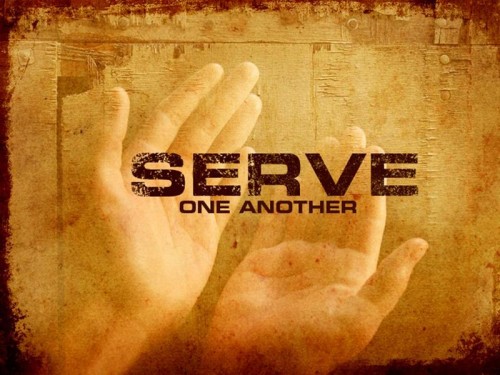
From Theology of Work Project. Image: Spread The Flame.
Previous Post

March 19, 2014
Economic justice
Next Post
March 26, 2014 The foundations of finance are created by God
Browse Our Archives
Select a Category Advent Ambition Bible and Work Business Calling Christmas Common Good Communication Conflict Culture Disappointment Discipleship Earth Day Easter Economics Environmental Sustainability Envy Faith and the Workplace Family and Work Generosity Giving Gossip Government Gratitude Hospitality Human Flourishing Humility Investing Justice Leadership Lent Local Church Making Mistakes Men and Work Millennials and Work Minimum Wage Money New Year Pastors Patience Pay Politics Poverty Prayer Race Rest Sabbath Sacred vs. Secular Sharing Faith Slavery Song of Songs Status Success Suffering Teamwork Thanksgiving Theology of Work TOW Project News Unemployment Valentine's Day Vocation Women and Work Work Life Balance
Select a Month September 2015 August 2015 July 2015 June 2015 May 2015 April 2015 March 2015 February 2015 January 2015 December 2014 November 2014 October 2014 September 2014 August 2014 July 2014 June 2014 May 2014 April 2014 March 2014 February 2014 January 2014 December 2013
Follow Us!
TAKE THE
Religious Wisdom Quiz
What happened to Jesus 40 days after His resurrection?
Select your answer to see how you score.
He performed one last miracle He ascended into heaven He went back into hiding He visited the temple
Related posts from Theology of Work Project

Theology of Work Bible Commentary Vol. 2 Now...

How to Be a Rich Christian (Part 3:...

How to Be a Rich Christian (Part 1:...

Every Christian is Called to Full Time Ministry
TRENDING AT PATHEOS Business, Finance and Religion

St. Francis by Bill Droel Pope Leo XIV declares 2026 as “Year...

Catholics are schooled in the faith by memorizing dogmatic points and lots...

The Good News of Our Human Limitations -...
After another day of trying to meet deadlines and working on projects,...

Quiet Holy Attentiveness (podcast) with Sarah Clarkson
We know that quiet is an essential aspect of the spiritual life,...

Every Vocation Everywhere All At Once
What is a vocation? How does it endure through the years? Can...

I promise this is not going to become a Taylor Swift Studies...
view all Business, Finance and Religion blogs
Ad-Free & Subscriber Log-In Subscription Support
- About Us
- 2026 Calendar
- Videos
- Podcasts
- Library of World Religions
- Faith In Media Tracker
- Advertise With Us
- Write for Us
- Privacy Policy
- Terms of Service
- Do Not Sell My Data
- Contact Us
- Radiant Digital
- Manage Newsletter Subscriptions
- Unsubscribe From Notifications
- Sitemap
Copyright 2008-2026, Patheos. All rights reserved.
Subscription Support Ad-Free & Subscriber Log-In
Follow Patheos