
BuddhistCatholicContemplativeEvangelicalGeneral ChristianHinduJewishLatter-day SaintMuslimNew VisionsProgressive Christian
Beliefs
- Buddhist
- Catholic
- Contemplative
- Evangelical
- General Christian
- Hindu
- Jewish
- Latter-day Saint
- More Voices
- Muslim
- New Visions
- Pagan
- Progressive Christian
Topics
- Religion News
- Food and Religion
- Sports and Religion
- Religious Art
- Religious Music and Entertainment
- Religious Events
- History and Religion
- Style and Religion
- Politics and Religion
- Women in Religion
- Recreation Outdoors and Religion
- Business Finance and Religion
- Careers Workplace and Religion
- Education and Religion
- Family Parenting and Religion
- Health Fitness and Religion
- Home and Religion
- Relationships and Religion
- Technology and Religion
- Travel and Religion
Columnists
- Buddhist Columnists
- Business Finance and Religion Columnists
- Careers Workplace and Religion Columnists
- Catholic Columnists
- Contemplative Columnists
- Education and Religion Columnists
- Evangelists Columnists
- Family Parenting and Religion Columnists
- General Christian Columnists
- Health Fitness and Religion Columnists
- Hindu Columnists
- History and Religion Columnists
- Home and Religion Columnists
- Jewish Columnists
- More Voices Columnists
- Latter Day Columnists
- Muslim Columnists
- New Visions Columnists
- Nonreligious Columnists
- Pagan Columnists
- Politics and Religion Columnists
- Progressive Columnists
- Recreation Outdoors and Religion Columnists
- Relationships and Religion Columnists
- Religion News Columnists
- Religious Art Columnists
- Religious Events Columnists
- Religious Music and Entertainment Columnists
- Sports and Religion Columnists
- Style and Religion Columnists
- Technology and Religion Columnists
- Travel and Religion Columnists
- Women in Religion Columnists
Resource Library
- 2026 Calendar
- Library of World Religions
- The 100 Most Holy Places on Earth
- Patheos Answers
- Podcasts
- Videos
- Faith Leaders Database
- Anglican Episcopalian
- Bahai
- Baptist
- Buddhism
- Christianity
- Confucianism
- Eastern Orthodoxy
- Hinduism
- Holiness and Pentecostal
- ISKCON
- Islam
- Judaism
- Lutheran
- Methodist
- The Church of Jesus Christ of Latter-day Saints
- New Age
- Paganism
- Presbytarian and Reformed
- Protestantism
- Religion Behind the Scenes
- Roman Catholic
- Scientology
- Shia Islam
- Sikhism
- Sufism
- Sunni Islam
- Taoism
- Zen
- See all religions
Research Tools
 Ad-Free & Subscriber Log-In Subscription Support
Ad-Free & Subscriber Log-In Subscription Support
Follow Patheos 

- Trending:
- Forgiveness
- |
- Marriage
- |
- Consciousness
- |
- Death Penalty
- |
- Election
- |
- Halloween
 Theology of Work Project
- Home
- Business, Finance and Religion
- God meant all for good
God meant all for good
Last updated on: May 27, 2014 at 4:08 pm by Theology of Work Project
God meant all for good 2014-05-27T16:08:42-05:00 Theology of Work Project
Patheos Explore the world's faith through different perspectives on religion and spirituality! Patheos has the views of the prevalent religions and spiritualities of the world.
 Reflections on GENESIS 50:15-21
The penitent words of Joseph’s brothers led Joseph to one of the finest theological points of his life and indeed, of much of Genesis. He told them not to be afraid, for he would not retaliate for their mistreatment of him. “Even though you intended to do harm to me,” he told them, “God intended it for good, in order to preserve a numerous people, as he is doing today. So have no fear; I myself will provide for you and your little ones” (Gen. 50:20-21). Joseph’s reference to “numerous people” echoes God’s covenantal promise to bless “all families of the earth” (Gen. 12:3). From our vantage point today, we can see that God sent far more blessings than Joseph could have ever asked or imagined (see Ephesians 3:20).
God’s work in and through Joseph had real, practical, serious value —to preserve lives. If we ever have the impression that God only wants us in the workplace so we can tell others about him, or if we get the impression that the only part of our work that matters to God is building relationships, Joseph’s work says otherwise. The things we make and do in our work are themselves crucially important to God and to other people. Sometimes this is true because our work is a piece of a bigger whole, and we lose sight of the result of the work. Joseph took a larger perspective on his work, and was not discouraged by its inevitable ups and downs.
This is not to say that relationships at work aren’t also of the highest importance. Perhaps Christians have the special gift of offering forgiveness to people in our workplaces. Joseph’s reassurance to his brothers is a model of forgiveness. Following his father’s instruction, Joseph forgave his brothers and verbally released them from guilt. But his forgiveness—like all true forgiveness—was not just verbal. Joseph used the extensive resources of Egypt that God had placed under his control to support them materially so that they could prosper. He acknowledged that judging his brothers was not his role. “Am I in the place of God?” (Genesis 50:19), he asked. He did not usurp God’s role as judge, but helped his brothers to connect with God who had saved them.
The relationship Joseph had with his brothers was both familial and economic. There is no clearly defined boundary between these areas; forgiveness is appropriate to both. We may be tempted to think that our cherished religious values are primarily meant to function in identifiably religious spheres, such as the local church. Of course, much of our work life does take place in the public realm where we must respect the fact that some others do not share our Christian faith. But the neat division of life into separate compartments labeled “sacred” and “secular” is foreign to the worldview of Scripture. Forgiveness is a sound workplace practice.
There will always be plenty of hurt and pain in life. No company or organization is immune from that. It would be naïve to assume that nobody deliberately means to cause harm by what they say or do. Joseph acknowledged that people did intend to harm him; we can do the same. But in the same sentence lives a larger truth about God’s intention for good. Recalling the point when we feel hurt helps us to bear the pain and to identify with Christ.
Joseph saw himself as an agent of God, instrumental in effecting the work of God with his people. He knew the harm that people were capable of and accepted that sometimes people are their own worst enemies. He knew his family stories of faith mixed with doubt, of faithful service mingled with self-preservation, of both truth and deceit. He also knew of the promises God made to Abraham, of God’s commitment to bless his family, and of God’s wisdom in working with his people as he refined them through the fires of life. He did not paint over their sins; rather, he absorbed their sins into his awareness of God’s grand work. Our awareness of the inevitable providential successfulness of God’s promises makes our labor worthwhile, no matter the cost to us.
Of the many lessons about work in the book of Genesis, this one in particular endures and even explains redemption itself—the crucifixion of the Lord of glory (1 Corinthians 2:8-10). Our places of work provide contexts in which our values and character are brought to light as we make decisions that affect ourselves and those around us. In his wise power, God is capable of working with our faithfulness, mending our weakness, and forging our failures to accomplish what he himself has prepared for us who love him.
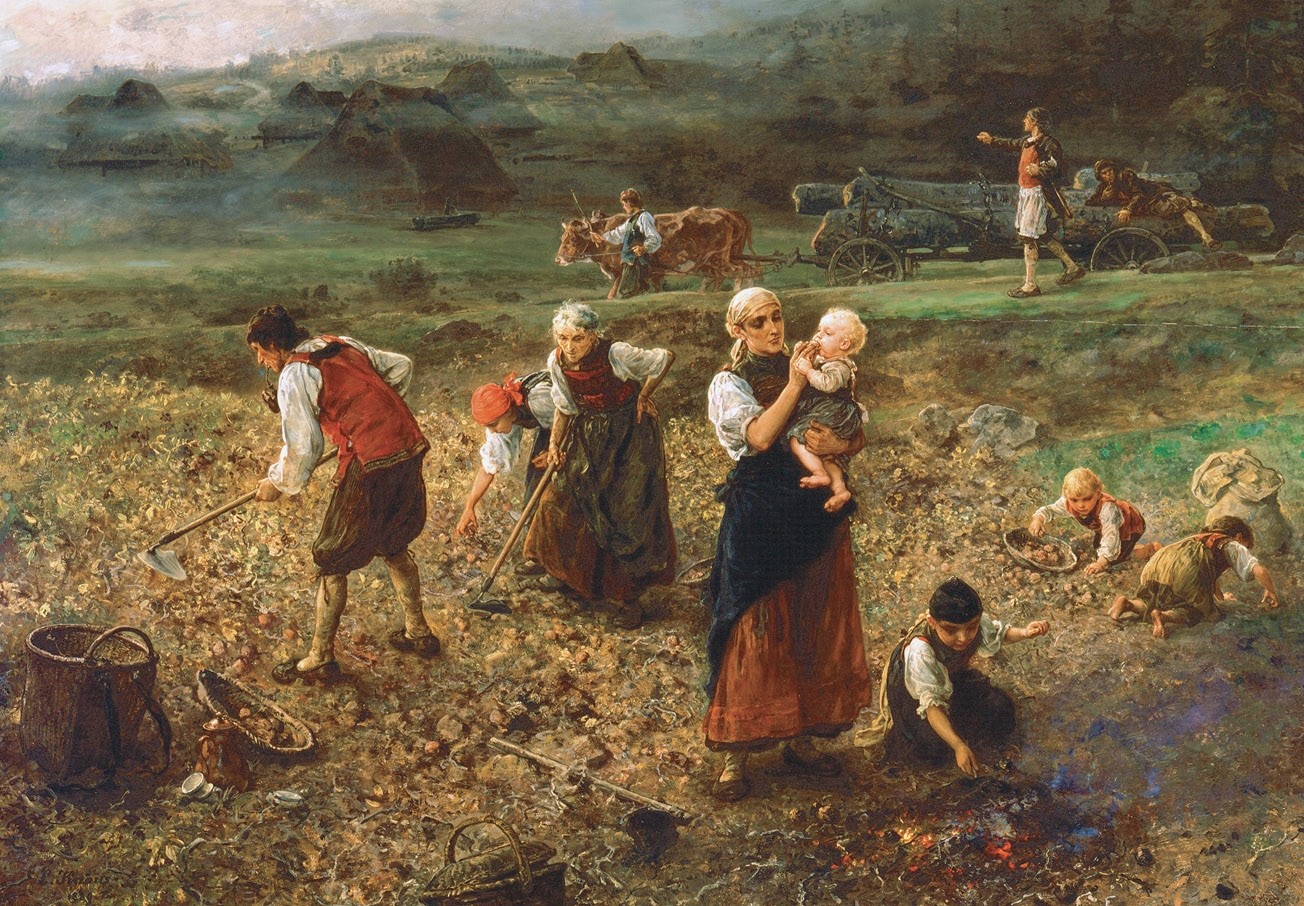
From Theology of Work Project. Image: Ludwig Knaus, “Potato Harvest.” Courtesy of the Grohmann Musuem at the Milwaukee School of Engineering.
Previous Post

February 25, 2014
The church and those who cannot work
Next Post
February 27, 2014 The need for social capital
Browse Our Archives
Select a Category Advent Ambition Bible and Work Business Calling Christmas Common Good Communication Conflict Culture Disappointment Discipleship Earth Day Easter Economics Environmental Sustainability Envy Faith and the Workplace Family and Work Generosity Giving Gossip Government Gratitude Hospitality Human Flourishing Humility Investing Justice Leadership Lent Local Church Making Mistakes Men and Work Millennials and Work Minimum Wage Money New Year Pastors Patience Pay Politics Poverty Prayer Race Rest Sabbath Sacred vs. Secular Sharing Faith Slavery Song of Songs Status Success Suffering Teamwork Thanksgiving Theology of Work TOW Project News Unemployment Valentine's Day Vocation Women and Work Work Life Balance
Select a Month September 2015 August 2015 July 2015 June 2015 May 2015 April 2015 March 2015 February 2015 January 2015 December 2014 November 2014 October 2014 September 2014 August 2014 July 2014 June 2014 May 2014 April 2014 March 2014 February 2014 January 2014 December 2013
Follow Us!
TAKE THE
Religious Wisdom Quiz
Who was raised from the dead by Peter in Joppa?
Select your answer to see how you score.
The widow's son Lazarus Eutychus Tabitha
Related posts from Theology of Work Project

Theology of Work Bible Commentary Vol. 2 Now...

How to Be a Rich Christian (Part 3:...

How to Be a Rich Christian (Part 1:...

Every Christian is Called to Full Time Ministry
TRENDING AT PATHEOS Business, Finance and Religion

St. Francis by Bill Droel Pope Leo XIV declares 2026 as “Year...

Catholics are schooled in the faith by memorizing dogmatic points and lots...

The Good News of Our Human Limitations -...
After another day of trying to meet deadlines and working on projects,...

Quiet Holy Attentiveness (podcast) with Sarah Clarkson
We know that quiet is an essential aspect of the spiritual life,...

Every Vocation Everywhere All At Once
What is a vocation? How does it endure through the years? Can...

I promise this is not going to become a Taylor Swift Studies...
view all Business, Finance and Religion blogs
Ad-Free & Subscriber Log-In Subscription Support
- About Us
- 2026 Calendar
- Videos
- Podcasts
- Library of World Religions
- Faith In Media Tracker
- Advertise With Us
- Write for Us
- Privacy Policy
- Terms of Service
- Do Not Sell My Data
- Contact Us
- Radiant Digital
- Manage Newsletter Subscriptions
- Unsubscribe From Notifications
- Sitemap
Copyright 2008-2026, Patheos. All rights reserved.
Subscription Support Ad-Free & Subscriber Log-In
Follow Patheos