
BuddhistCatholicContemplativeEvangelicalGeneral ChristianHinduJewishLatter-day SaintMuslimNew VisionsProgressive Christian
Beliefs
- Buddhist
- Catholic
- Contemplative
- Evangelical
- General Christian
- Hindu
- Jewish
- Latter-day Saint
- More Voices
- Muslim
- New Visions
- Pagan
- Progressive Christian
Topics
- Religion News
- Food and Religion
- Sports and Religion
- Religious Art
- Religious Music and Entertainment
- Religious Events
- History and Religion
- Style and Religion
- Politics and Religion
- Women in Religion
- Recreation Outdoors and Religion
- Business Finance and Religion
- Careers Workplace and Religion
- Education and Religion
- Family Parenting and Religion
- Health Fitness and Religion
- Home and Religion
- Relationships and Religion
- Technology and Religion
- Travel and Religion
Columnists
- Buddhist Columnists
- Business Finance and Religion Columnists
- Careers Workplace and Religion Columnists
- Catholic Columnists
- Contemplative Columnists
- Education and Religion Columnists
- Evangelists Columnists
- Family Parenting and Religion Columnists
- General Christian Columnists
- Health Fitness and Religion Columnists
- Hindu Columnists
- History and Religion Columnists
- Home and Religion Columnists
- Jewish Columnists
- More Voices Columnists
- Latter Day Columnists
- Muslim Columnists
- New Visions Columnists
- Nonreligious Columnists
- Pagan Columnists
- Politics and Religion Columnists
- Progressive Columnists
- Recreation Outdoors and Religion Columnists
- Relationships and Religion Columnists
- Religion News Columnists
- Religious Art Columnists
- Religious Events Columnists
- Religious Music and Entertainment Columnists
- Sports and Religion Columnists
- Style and Religion Columnists
- Technology and Religion Columnists
- Travel and Religion Columnists
- Women in Religion Columnists
Resource Library
- 2026 Calendar
- Library of World Religions
- The 100 Most Holy Places on Earth
- Patheos Answers
- Podcasts
- Videos
- Faith Leaders Database
- Anglican Episcopalian
- Bahai
- Baptist
- Buddhism
- Christianity
- Confucianism
- Eastern Orthodoxy
- Hinduism
- Holiness and Pentecostal
- ISKCON
- Islam
- Judaism
- Lutheran
- Methodist
- The Church of Jesus Christ of Latter-day Saints
- New Age
- Paganism
- Presbytarian and Reformed
- Protestantism
- Religion Behind the Scenes
- Roman Catholic
- Scientology
- Shia Islam
- Sikhism
- Sufism
- Sunni Islam
- Taoism
- Zen
- See all religions
Research Tools
 Ad-Free & Subscriber Log-In Subscription Support
Ad-Free & Subscriber Log-In Subscription Support
Follow Patheos 

- Trending:
- Forgiveness
- |
- Marriage
- |
- Consciousness
- |
- Death Penalty
- |
- Election
- |
- Halloween
 Theology of Work Project
- Home
- Business, Finance and Religion
- Tent-making and the Christian life
Tent-making and the Christian life
Last updated on: May 27, 2014 at 4:08 pm by Theology of Work Project
Tent-making and the Christian life 2014-05-27T16:08:43-05:00 Theology of Work Project
Patheos Explore the world's faith through different perspectives on religion and spirituality! Patheos has the views of the prevalent religions and spiritualities of the world.
 The passage most often connected to work in the book of Acts is Paul’s tent making in Acts 18:1-4. Although this passage is familiar, it is often understood too narrowly. In the familiar reading, Paul earns money by making tents in order to support himself in his real ministry of witnessing to Christ. This view is too narrow, because it doesn’t see that the tent-making itself is a real ministry of witnessing to Christ. Paul is a witness when he preaches, and when he makes tents and uses his earnings to benefit the broader community.
This fits directly into Luke’s view that the Spirit empowers Christians to use their resources for the sake of the whole community, which in turn becomes a witness to the Gospel. Remember that Luke’s orienting idea for Christian life is that of witness, and that the entirety of one’s life has the potential to bear witness. It is no surprise, then, that Paul is an exemplar of this Spirit-formed practice.
It is certainly true that Paul wants to support himself. But his impulse was not only to support himself in his preaching ministry, but also to provide financial support to the entire community. When Paul describes his economic impact among the Ephesians, he says:
I coveted no one’s silver or gold or apparel. You yourselves know that these hands ministered to my necessities, and to those who were with me. In all things I have shown you that by so toiling one must help the weak, remembering the words of the Lord Jesus, how he said, ‘It is more blessed to give than to receive.’ (Acts 20:33-35, emphasis added, RSV)
Paul’s money-earning work was an effort to build up the community economically. Paul employs his skills and possessions for the sake of the community, and explicitly says this is an example others should follow. He does not say that everyone should follow his example of preaching. But he does say everyone should follow his example of toiling to help the weak, and being generous in giving, as Jesus himself taught. Ben Witherington argues convincingly that Paul is not claiming any higher status arising from his apostolic position, but rather is “stepping down the social ladder for the sake of Christ.”
Paul’s varieties of work in the sewing shop, marketplace, synagogue, lecture hall and prison are all forms of witness. In any of these contexts, Paul participates in God’s restorative project. In any of these contexts, Paul lives out his new identity in Christ for the sake of God’s glory and out of love for his neighbors—even his former enemies. Even as he is being transported across the sea as a prisoner, he employs his gifts of leadership and encouragement to guide the soldiers and sailors holding him captive to safety during a severe storm (Acts 27:27-38). If he had not had the gift of being a preacher and apostle, he would still have been a witness to Christ simply by the way he engaged in making tents, toiling for the sake of the community, and working for the good of others in all situations.
Tent-making has become a common metaphor for Christians who engage in a money-earning profession as a means to support what is often called “professional ministry.” The term “bi-vocational” is often used to indicate that two separate professions are involved, the money-earning one and the ministry one. But Paul’s example shows that all aspects of human life should be a seamless witness. There is little room to draw distinctions between “professional ministry” and other forms of witness. Christians actually have only one vocation, according to Acts—witnessing to the Gospel. We have many forms of service, including preaching and pastoral care, making tents, building furniture, giving money and caring for the weak. A Christian who engages in a money-earning profession such as making tents in order to support a non-money-earning profession such as teaching about Jesus would be more accurately described as “dual-service,” rather than “bi-vocational.” One calling, two forms of service. The same would be true of any Christian who serves in more than one line of work.
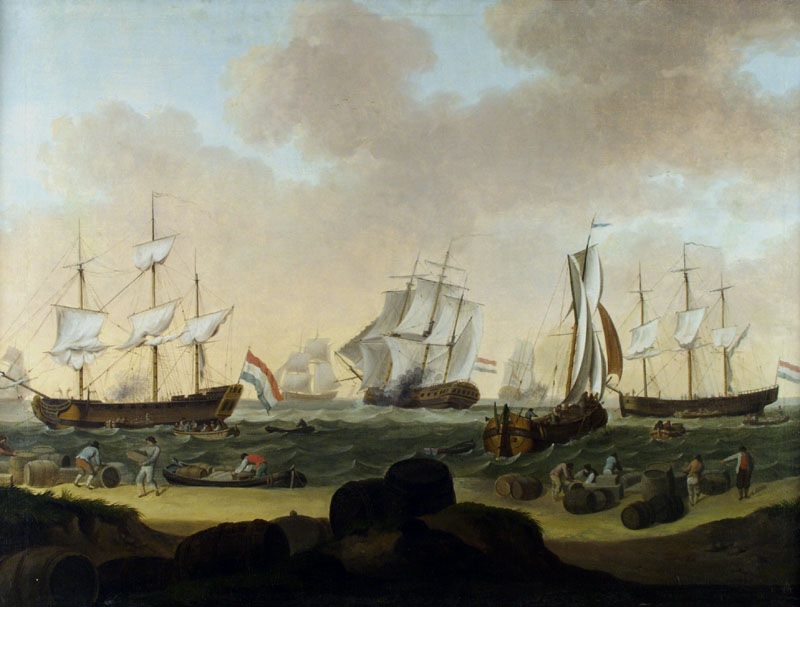
From Theology of Work Project. Image: “Stevedores Loading Sail Ships,” anonymous 18th c. Dutch. Courtesy of the Grohmann Museum at the Milwaukee School of Engineering.
Previous Post

January 23, 2014
Pay equity: one company's story
Next Post
February 6, 2014 Bloom where you are planted
Browse Our Archives
Select a Category Advent Ambition Bible and Work Business Calling Christmas Common Good Communication Conflict Culture Disappointment Discipleship Earth Day Easter Economics Environmental Sustainability Envy Faith and the Workplace Family and Work Generosity Giving Gossip Government Gratitude Hospitality Human Flourishing Humility Investing Justice Leadership Lent Local Church Making Mistakes Men and Work Millennials and Work Minimum Wage Money New Year Pastors Patience Pay Politics Poverty Prayer Race Rest Sabbath Sacred vs. Secular Sharing Faith Slavery Song of Songs Status Success Suffering Teamwork Thanksgiving Theology of Work TOW Project News Unemployment Valentine's Day Vocation Women and Work Work Life Balance
Select a Month September 2015 August 2015 July 2015 June 2015 May 2015 April 2015 March 2015 February 2015 January 2015 December 2014 November 2014 October 2014 September 2014 August 2014 July 2014 June 2014 May 2014 April 2014 March 2014 February 2014 January 2014 December 2013
Follow Us!
TAKE THE
Religious Wisdom Quiz
What does God question Job about, showing His wisdom in creation?
Select your answer to see how you score.
Battles Religious rituals Kingdoms Animals and nature
Related posts from Theology of Work Project

Theology of Work Bible Commentary Vol. 2 Now...

How to Be a Rich Christian (Part 3:...

How to Be a Rich Christian (Part 1:...

Every Christian is Called to Full Time Ministry
TRENDING AT PATHEOS Business, Finance and Religion

St. Francis by Bill Droel Pope Leo XIV declares 2026 as “Year...

Catholics are schooled in the faith by memorizing dogmatic points and lots...

The Good News of Our Human Limitations -...
After another day of trying to meet deadlines and working on projects,...

Quiet Holy Attentiveness (podcast) with Sarah Clarkson
We know that quiet is an essential aspect of the spiritual life,...

Every Vocation Everywhere All At Once
What is a vocation? How does it endure through the years? Can...

I promise this is not going to become a Taylor Swift Studies...
view all Business, Finance and Religion blogs
Ad-Free & Subscriber Log-In Subscription Support
- About Us
- 2026 Calendar
- Videos
- Podcasts
- Library of World Religions
- Faith In Media Tracker
- Advertise With Us
- Write for Us
- Privacy Policy
- Terms of Service
- Do Not Sell My Data
- Contact Us
- Radiant Digital
- Manage Newsletter Subscriptions
- Unsubscribe From Notifications
- Sitemap
Copyright 2008-2026, Patheos. All rights reserved.
Subscription Support Ad-Free & Subscriber Log-In
Follow Patheos