
BuddhistCatholicContemplativeEvangelicalGeneral ChristianHinduJewishLatter-day SaintMuslimNew VisionsProgressive Christian
Beliefs
- Buddhist
- Catholic
- Contemplative
- Evangelical
- General Christian
- Hindu
- Jewish
- Latter-day Saint
- More Voices
- Muslim
- New Visions
- Pagan
- Progressive Christian
Topics
- Religion News
- Food and Religion
- Sports and Religion
- Religious Art
- Religious Music and Entertainment
- Religious Events
- History and Religion
- Style and Religion
- Politics and Religion
- Women in Religion
- Recreation Outdoors and Religion
- Business Finance and Religion
- Careers Workplace and Religion
- Education and Religion
- Family Parenting and Religion
- Health Fitness and Religion
- Home and Religion
- Relationships and Religion
- Technology and Religion
- Travel and Religion
Columnists
- Buddhist Columnists
- Business Finance and Religion Columnists
- Careers Workplace and Religion Columnists
- Catholic Columnists
- Contemplative Columnists
- Education and Religion Columnists
- Evangelists Columnists
- Family Parenting and Religion Columnists
- General Christian Columnists
- Health Fitness and Religion Columnists
- Hindu Columnists
- History and Religion Columnists
- Home and Religion Columnists
- Jewish Columnists
- More Voices Columnists
- Latter Day Columnists
- Muslim Columnists
- New Visions Columnists
- Nonreligious Columnists
- Pagan Columnists
- Politics and Religion Columnists
- Progressive Columnists
- Recreation Outdoors and Religion Columnists
- Relationships and Religion Columnists
- Religion News Columnists
- Religious Art Columnists
- Religious Events Columnists
- Religious Music and Entertainment Columnists
- Sports and Religion Columnists
- Style and Religion Columnists
- Technology and Religion Columnists
- Travel and Religion Columnists
- Women in Religion Columnists
Resource Library
- 2026 Calendar
- Library of World Religions
- The 100 Most Holy Places on Earth
- Patheos Answers
- Podcasts
- Videos
- Faith Leaders Database
- Anglican Episcopalian
- Bahai
- Baptist
- Buddhism
- Christianity
- Confucianism
- Eastern Orthodoxy
- Hinduism
- Holiness and Pentecostal
- ISKCON
- Islam
- Judaism
- Lutheran
- Methodist
- The Church of Jesus Christ of Latter-day Saints
- New Age
- Paganism
- Presbytarian and Reformed
- Protestantism
- Religion Behind the Scenes
- Roman Catholic
- Scientology
- Shia Islam
- Sikhism
- Sufism
- Sunni Islam
- Taoism
- Zen
- See all religions
Research Tools
 Ad-Free & Subscriber Log-In Subscription Support
Follow Patheos 

- Trending:
- Advent
- |
- Forgiveness
- |
- Thanksgiving
- |
- Election
- |
- Seasonal Holidays
- |
- Marriage
 Theology in the Raw
- Home
- About
- Publications
- Comment Policy
- Preston Sprinkle Website
- Eternity Bible College
- Speaking
- Event Calendar
- Living in a Gray World
- People to Be Loved
- Podcast
- Archive Index
- Home
- Evangelical
- A (More Critical) Review of Ken Wilson’s “Third Way:” Part 2
A (More Critical) Review of Ken Wilson’s “Third Way:” Part 2
Last updated on: August 13, 2015 at 1:03 pm by Preston Sprinkle
A (More Critical) Review of Ken Wilson’s “Third Way:” Part 2 2015-08-13T13:03:34-06:00 Preston Sprinkle
Patheos Explore the world's faith through different perspectives on religion and spirituality! Patheos has the views of the prevalent religions and spiritualities of the world.
As stated in my previous blog, there are many things I appreciated about Ken Wilson’s book, A Letter to My Congregation. I need to say this up front because this blog is going to be pretty critical. I’m going to focus on and 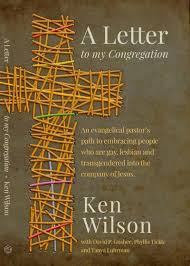 evaluate Ken’s use of Scripture in chapter 3 of his book. And to be completely honest, I felt that it was by far the weakest part of the book and yet, perhaps, the most important part as well.
But let me start off on a positive note. Ken rightly points out some sloppy and misleading approaches to Scripture by non-affirming evangelical scholars. For instance, he cites Grant Osborne’s summary of homosexuality in the Old Testament in his Romans commentary:
The Old Testament contains many condemnations of homosexual practices (Genesis 19:5, 8; Leviticus 18:22 and 20:13; Deuteronomy 23:17-18; Judges 19:22-24; 1 Kings 14:24 and 15:12; 2 Kings 23:7; Isaiah 1:9 and 3:9: Lamentations 4:6) (Osborne, Romans, 57).
Ken Wilson points out that “In the same section, Osborne asserts that Scripture condemns all same-sex activity” (pg. 77).
A few years ago, I developed a habit of looking up the actual Scripture references when they occur in a long string like Osborne’s. And in almost every instance, I find some—and sometimes many—references that have nothing to do with the stated claim. It sure looks good; it feels biblical; it makes it seem like the Bible is speaking for itself. But oftentimes such string of references is nothing more than inaccurate proof texts.
This is the case with Osborne’s statements. Genesis 19 is about attempted gang rape, Deuteronomy 23 and 1 Kings might be about prostitution (or at least cultic service), Judges 19 is about gang rape, and Isaiah 1, 3 and Lamentations 4 is about the “sin of Sodom” but there’s no mention of same-sex behavior. I can’t tell you how annoying this is. To see a credible evangelical scholar make a broad brush statement about such an important issue and use the Bible haphazardly (and inaccurately and misleadingly) to support his claim. For those who believe that the Bible is God’s inspired word, we need to do better.
Unfortunately, I don’t think Ken does much better. Ken looks at the main prohibition texts (Lev 18, 20; Rom 1; 1 Cor 6; 1 Tim 1) and tries to show that they are not all that clear. He concludes that “there are real problems in applying the prohibitions of Leviticus 18, 20; Romans 1; 1 Corinthians 6; and 1 Timothy 1 to people in modern monogamous gay unions” (p. 76). But Ken’s evidence is selective, his synthesis misleading, and some of his statements are downright inaccurate. Again, I don’t want to question Ken’s heart. I don’t question his love for Jesus. And I still want Ken at my bedside if I contract a terminal disease. But I really hope he rewrites this chapter in his second edition.
Ken, if you’re reading this, here are some suggestions. I know you’re a pastor and don’t claim to be a scholar. But you are a brilliant thinker and according to your footnotes you’ve read a ton of scholarly books and articles on this topic. I know you’re capable of more precision.
First, your conclusion that Leviticus 18 and 20 is probably talking about temple prostitution is held by hardly any credible scholar these days (see for instance, Stephanie Budin’s book, The Myth of Sacred Prostitution in Antiquity), and you never considered the actual language of the text that speaks of mutuality and doesn’t give any indication that some specific form of same-sex relations is in view.
Second, you argued that the main forms of same-sex relations in the Greco-Roman world were temple prostitution, pederasty, and sex with slaves. This is actually correct. According to the literature (more on that below), these were the main forms. But then you said that you could only find two examples of relationships analogous to contemporary, consensual, monogamous gay relations: Nero’s marriage to his slave and that funky tale in Plato’s Symposium. As you rightly point out, these are terrible examples! Nero castrated his slave and married him because the slave reminded Nero of his late wife. Yikes! I’m with you, this is a terrible parallel.
But there are many others more legitimate examples that you never mentioned, some of which have been documented in the same books you cite in your footnotes.
I’ll save you a long list, but just a few examples. In the Greek period, we see examples of pederastic relations that grew into life-long partners. Okay, but they began as pederasty. But we also see examples of consensual same-sex relations among (not just towards) teenagers in Greece, and other relations between similar age adults.
Consensual and loving same-sex relationships can be seen during the Roman period as well. For instance, Xenophon’s second-century AD novel An Ephesian Tale depicts a young man named Hippothous who falls in love with another man of the same age named Hyperanthes. Hippothous says “our first steps in lovemaking were kisses and caresses, while I shed floods of tears … we were both the same age, and no one was suspicious. For a long time we were together, passionately in love.” Another novel by Achilles Tatius written around the same time depicts male lovers who are roughly the same age. Both of these are novels and not histories, but novels only make sense if they mirror the real world. Likewise, the first century Roman author, Petronius, wrote a book called the Satyricon, which discusses homosexuality at great length. In it, the author portrays two male lovers, Encolpius and Ascyltos, who are equal in age and status. Strikingly, the author doesn’t make a big stink about their relationship—as if it’s some weird, crazy, abnormal thing. It appears that their consensual, non-exploitative, mutual love-relationship may have been more common than some scholars think.
Consensual, same-sex love—even marriages—can be found among women around the time of Paul. A second-century writer named Iamblichos talks about the marriage between two women named Berenike and Mesopotamia. Lucian of Samosata also mentions the marriage of two wealthy women named Megilla and Demonassa. The early Christian theologian Clement of Alexandria refers to women-women marriage. And Ptolemy of Alexandria, a famous second-century scholar of many trades, refers to women taking other women as “lawful wives.” Two Jewish documents that were written shortly after the New Testament refer to (and forbid) female marriages that were happening in their day. Several archaeological discoveries depict mutual love between women, including a funeral relief that dates back to the time of Caesar Augustus, where two women are holding hands in a way that resembles “the classic gesture of ancient Roman married couples” (Brooten, 59-60).
I could keep going on (my book talks about this in more detail), but it just feels like you did quite a bit of homework in digging up examples of pederasty, slave-sex, and prostitution but you didn’t put the same time and energy in digging up examples of other, more consensual, same-sex relations.
Third, with your (incomplete) historical background in place, you re-read Romans 1 through the lens of the question: “Is the text [Rom 1] a sweeping condemnation of all same-sex practice or does it speak to the predominant practice of the time, especially temple prostitution and pederasty?” (p. 64). Again: “How would we modern readers understand Paul’s condemnation of same-sex practice if widespread and widely accepted institutions like temple prostitution, pederasty, and slavery had shape our view of it?” (p. 65-66). These are good questions. But asking them in light of your historical background nudges the read to give a jaded answer. Plus, you neglected one important feature that’s necessary for interpretation: the text.
In other words, I didn’t find any compelling argument from the actual text of Romans 1 that supports the interpretation you highlight (or support? Perhaps strongly lean toward?). Romans 1 prohibits same-sex females relations (1:26) and parallels these with same-sex male relations (1:27), and female relations were not characterized by pederasty, sex with slaves (for the most part, though Martial has some pretty graphic and filthy satirical comments to the contrary), or cultic prostitution. Plus, Paul uses language of mutuality throughout Romans 1:26-27 that doesn’t at all fit the historical background you’re reading the text through. It’s totally fine if you can refute (with evidence) these and other points. But at least do your reader the service of mentioning them.
All and all, this chapter just felt like you went out of your way to say that we just don’t really know what these passages are saying, but the evidence you used to support such ambiguity was misleading, selective, and incomplete.
But this is the most important chapter, I believe, in your book. Chapters 4 and 5, where you articulate the possibility of “the third way,” only work, to my mind, if the Bible really isn’t that clear on same-sex relations.
One more quick thought about using Greco-Roman literature to re-construct (and often re-interpret) the New Testament. We must be very careful in using such literature to give us a real picture of “life on the ground” in the first-century. A vast portion of this literature was written by wealthy, elite, educated, literature, high-class men, who had their heads so far up their ivory tower that they could never see what real life was like for the rest of humanity. They constitute 5%, maybe 10%, of the population. In other words, the literature gives us a very slanted picture (sometimes a very inaccurate picture) of the views and practices of the other 90%—the rest of the (largely illiterate) society trying to squeak out a living. We have hardly any texts written by women, for instance. And the stuff we do have actually show that mutual, consensual same-sex relations were more popular than the elite males would care to admit (see for example the poetry of Sappho).
But Paul was writing to the 90%. There are only a few examples of such elites in the early church (see 1 Cor 1). In fact, Paul’s letters are actually some of the best examples we have of a perspective of life on the ground, the 90%. We should not just read Paul against the background of Greco-Roman literature. Rather, we should read him as Greco-Roman literature.
Previous Post

August 12, 2015
A Review of Ken Wilson’s “Third Way” Approach to Homosexuality: Part 1
Browse Our Archives
Select a Category 40 Questions A Letter to my congregation adoption Alan Chambers Alcohol America american Jesus andrew marin angels Anne Paulk Annihilation apology Apostles creed atonement AudioFeed Balkhu Baptism bastard being biblical believer's baptism bible Bible College biblical love biblical studies Boise book review Books buzzwords called celibacy Center for Pastoral Theologians Charis charleston shooting cherubim christian movies Christian teens Christianeze Christmas church Church Refugees civil rights college debt communal faith Conditional Immortality conference david gushee debt free education Dechurched derwin gray desiring the kingdom Discipleship Don Miller Dones ecclesia and ethics Erasing Hell Esther eternal conscious torment Eternity Bible College ethnic diversity ETS eunuch evangelicalism Fight Four Views on Hell Francis Chan Francis Watson Free Bible Resources French Quarter grace gran torino gun control haters hell holy war homeschool homosexuality house church immigration Incarnation individualism Infant Baptism interpretation Intersex Israel James Dunn james smith Jerry Fallwell Jr. Jessica Minassian Jesus Jesus refugee Joey Dodson John MacArthur John Piper John Stott Josh Packard Joshua Ryan Butler judgment Justification Karl Barth Ken Wilson Kevin DeYoung Lance Hancock Leper lesbian LGBT LGBTQ Life Love God liturgy living in a gray world Luke 22 martin luther king mary magdalene Matthew Vines Megan DeFranza Michael Bird millennials Ministry Missions mixed orientation marriage movies Multiethnic churches Music Festival My Exodus N.T. Wright nationalism New Perspective New Year resolution nonviolence obedience Old Testament Online Biblical Training orlando massacre Pacifism parenting pastoral ministry Pastoral Theologian patriotism people to be loved personal relationship with Jesus politics poverty Prayer Preston Sprinkle Project Bayview public square Q Conference qualifications for ministry Racial Reconciliation radio show Reading reading plan real Christianity Reformed refugee refugee crisis rick hogaboam robb bell robert gagnon Romans Romans 13 Romans 9 sam allberry same sex attraction sanctification school segrated churches seraphim sex Sex Difference in Christian Theology sexual fluidity Shawn Gordon short term missions Skeletons in God's Closet Slums Sodom Speaking syrian refugee crisis technology teen girls texting The Bible Project The Gospel Coalition the high definition leader theology Third Way Tim Mackie Touch Nepal trols UK Tour Uncategorized Urban Ministry Us vs. Us Vieux Carre Baptist Church violence vocation Waiting warfare welcome the stranger women women in ministry worship songs writing
Select a Month August 2016 June 2016 May 2016 April 2016 March 2016 February 2016 January 2016 December 2015 November 2015 October 2015 September 2015 August 2015 July 2015 June 2015 May 2015 April 2015 March 2015 February 2015 January 2015 December 2014 November 2014 October 2014 September 2014
Follow Us!
TAKE THE
Religious Wisdom Quiz
Who was the longest-reigning king?
Select your answer to see how you score.
Manasseh David Solomon Asa
Related posts from Theology in the Raw


Reflections on the Orlando Massacre

Is a Traditional Sexual Ethic Intrinsically Harmful?
TRENDING AT PATHEOS Evangelical

When you hear the word riches, what comes to mind? For most...

Don’t Miss the Parents: A Creative Christmas Meditation
As we enter the Advent Season, I see many people trying to...

Making Stones Into Bread: Choosing the “Right” Work
I was on my online arts ministry Zoom meeting with the International...

Ukraine’s exhausted Christians face fifth winter of war
By Julian Lukins The full-scale war in Ukraine is taking “a serious...

Russell Brand's Conviction is not anti-Christian Persecution
How do we shed the reputation that the Church is OK with...

Have you ever caught yourself saying, “I’ll do it tomorrow,” or “Now...
view all Evangelical blogs
Ad-Free & Subscriber Log-In Subscription Support
- About Us
- 2026 Calendar
- Videos
- Podcasts
- Library of World Religions
- Faith In Media Tracker
- Advertise With Us
- Write for Us
- Privacy Policy
- Terms of Service
- Do Not Sell My Data
- Contact Us
- Radiant Digital
- Manage Newsletter Subscriptions
- Unsubscribe From Notifications
- Sitemap
Copyright 2008-2026, Patheos, part of the Radiant Digital network of media brands. All rights reserved.
Subscription Support Ad-Free & Subscriber Log-In
Follow Patheos