
BuddhistCatholicContemplativeEvangelicalGeneral ChristianHinduJewishLatter-day SaintMuslimNew VisionsProgressive Christian
Beliefs
- Buddhist
- Catholic
- Contemplative
- Evangelical
- General Christian
- Hindu
- Jewish
- Latter-day Saint
- More Voices
- Muslim
- New Visions
- Pagan
- Progressive Christian
Topics
- Religion News
- Food and Religion
- Sports and Religion
- Religious Art
- Religious Music and Entertainment
- Religious Events
- History and Religion
- Style and Religion
- Politics and Religion
- Women in Religion
- Recreation Outdoors and Religion
- Business Finance and Religion
- Careers Workplace and Religion
- Education and Religion
- Family Parenting and Religion
- Health Fitness and Religion
- Home and Religion
- Relationships and Religion
- Technology and Religion
- Travel and Religion
Columnists
- Buddhist Columnists
- Business Finance and Religion Columnists
- Careers Workplace and Religion Columnists
- Catholic Columnists
- Contemplative Columnists
- Education and Religion Columnists
- Evangelists Columnists
- Family Parenting and Religion Columnists
- General Christian Columnists
- Health Fitness and Religion Columnists
- Hindu Columnists
- History and Religion Columnists
- Home and Religion Columnists
- Jewish Columnists
- More Voices Columnists
- Latter Day Columnists
- Muslim Columnists
- New Visions Columnists
- Nonreligious Columnists
- Pagan Columnists
- Politics and Religion Columnists
- Progressive Columnists
- Recreation Outdoors and Religion Columnists
- Relationships and Religion Columnists
- Religion News Columnists
- Religious Art Columnists
- Religious Events Columnists
- Religious Music and Entertainment Columnists
- Sports and Religion Columnists
- Style and Religion Columnists
- Technology and Religion Columnists
- Travel and Religion Columnists
- Women in Religion Columnists
Resource Library
- 2026 Calendar
- Library of World Religions
- The 100 Most Holy Places on Earth
- Patheos Answers
- Podcasts
- Videos
- Faith Leaders Database
- Anglican Episcopalian
- Bahai
- Baptist
- Buddhism
- Christianity
- Confucianism
- Eastern Orthodoxy
- Hinduism
- Holiness and Pentecostal
- ISKCON
- Islam
- Judaism
- Lutheran
- Methodist
- The Church of Jesus Christ of Latter-day Saints
- New Age
- Paganism
- Presbytarian and Reformed
- Protestantism
- Religion Behind the Scenes
- Roman Catholic
- Scientology
- Shia Islam
- Sikhism
- Sufism
- Sunni Islam
- Taoism
- Zen
- See all religions
Research Tools
 Ad-Free & Subscriber Log-In Subscription Support
Follow Patheos 

- Trending:
- Advent
- |
- Forgiveness
- |
- Thanksgiving
- |
- Election
- |
- Seasonal Holidays
- |
- Marriage
 Theology in the Raw
- Home
- About
- Publications
- Comment Policy
- Preston Sprinkle Website
- Eternity Bible College
- Speaking
- Event Calendar
- Living in a Gray World
- People to Be Loved
- Podcast
- Archive Index
- Home
- Evangelical
- The Hope of Holy War
The Hope of Holy War
Last updated on: June 19, 2015 at 5:00 am by Preston Sprinkle
The Hope of Holy War 2015-06-18T14:09:39-06:00 Preston Sprinkle
Patheos Explore the world's faith through different perspectives on religion and spirituality! Patheos has the views of the prevalent religions and spiritualities of the world.
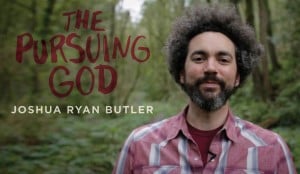
The following post is written by my friend Joshua Ryan Butler and it’s the last of three that he’s written this week (His first two are HERE and HERE) Josh has written an amazing book titled The Skeletons in God’s Closet: The Mercy of Hell, the Surprise of Judgment, and the Hope of Holy War. In this third blog, Josh looks at the the whole genocide problem in Joshua. Do we worship a God who commands ethnic extinction?
“How can you believe in a God who commanded the genocidal slaughter of the Canaanites?”
Many today are distressed by Old Testament violence, particularly Israel’s encounter with Canaan. While this is too big a  topic to tackle fully in a blog post, I want to share a few paradigm shifts that have been helpful for me.
Weak vs. Strong
We tend to think of holy war as the strong using God to justify their conquest of the weak, but Old Testament holy war works in the opposite direction: God arising on behalf of the weak against the tyranny of the strong when it’s raged for far too long.
Israel is a rag-tag group of slaves going up against the mightiest imperial powerhouses of the ancient world. And it isn’t like there was a stockpile of AK-47s waiting for them in the wilderness after they left Egypt. Israel has whatever they’ve been able to muddle together wandering through the desert.
Canaan, in contrast, has the most advanced weapons of the day. Their chariots can easily take out Israel’s foot soldiers. Their horses can easily knock down Israel’s ground-fighters. Canaan’s swords and spears can do their long-range damage well before Israel’s sticks and stones come close.
As Israel cowers under the shadow of this militarized giant, it is here that she learns to sing,
“Some trust in chariots and some in horses, but we trust in the name of the LORD our God.” (Psalm 20:7)
Ancient Israel is a lone kindergartener taking on the high school senior class with a Wiffle bat. Her only hope is that God fights for her.
Ridiculous Strategies
Israel’s strategies are ridiculous. If God doesn’t show up, they are not really strategies at all. Take Jericho, for example, the gateway fortress into Canaan: heavily defended, surrounded by high walls, protected by a river and armed to the teeth.
So what brilliant military strategy is Israel going to use to take down Jericho? Fly planes into its walls? Use billions of dollars in international oil money to equip guerrilla insurgents? Joshua waits for instructions and is finally told to . . . wait for it . . .
March around its walls for seven days and blow trumpets.
Seriously? Can you imagine the Allied Forces of World War II storming the beaches of Normandy with—not guns—but musical instruments? Or the Mongols marching up to the Great Wall of China and making—not war—but music?
This is not a battle strategy; it’s a recipe for disaster.
Unless God is the one leading the charge. These ridiculous battle strategies are not the exception but the norm. Apparently it’s part of the point: so they will know God is the one, not them, who is really doing the fighting.
Israel is not taking on the empire for God; God is taking on the empire for Israel.
Her motto is not “We will fight for God,” but the opposite: “God will fight for us . . . if He doesn’t, we don’t stand a chance.”
Drastic Marching Orders
Many people’s greatest concern, however, is Israel’s drastic marching orders: “utterly destroy them,” “show no mercy,” “do not leave alive anything that breathes.” How do we make sense of these? My book goes into a lot more depth, but here’s three quick thoughts.
First, the cities Israel takes out are military strongholds, not civilian population centers. Say the word city today, and most of us think of an urban metropolis with houses, schools, restaurants, hospitals and businesses. But in the ancient Middle East, things were different. Cities (‘iyr) were military outposts defending the roads leading up to the surrounding countryside–where the people were.
So when Israel “utterly destroys” a city like Jericho or Ai, we should picture a military fort being taken over–not a civilian massacre. God is pulling down the Great Wall of China, not demolishing Beijing. Israel is taking out the Pentagon, not New York City.
Second, the Old Testament makes clear it is using exaggerated war rhetoric, what I like to call ancient trash talk. Think of sports trash talk today, when a basketball team says things in the locker room like, “We wasted them! Annihilated them! They couldn’t get a thing past us!” If you dropped into the locker-room and took this post-game talk literally, you’d think the score was 120-0.
When you later learn the actual score was 120-105, you realize it was still a decisive victory, but not anywhere near as drastic as the rhetoric alone would lead you to believe. The basketball team is not telling lies in the locker room. They simply expect you to understand this is an exaggerated way of speaking.
Similarly, this was how people in the ancient Middle East talked about war. Victors made claims that sound sweeping to our ears today but were clearly, in their historical context, exaggerated trash talk. Nations supposedly wiped off the face of the planet one year, were back the next year strong as ever. Such war rhetoric was universally common in the genre of military history.
The Old Testament makes clear it is using the language this way: the drastic marching orders only show up in a few rare places, and every time they do we only have to go a bit further in the story to find the same enemies, who were supposedly knocked out for good, back causing trouble again.
Driving Out
Third and finally, the primary language used for Canaan is “driving out,” not “killing off.” The phrase “drive out” shows up more than fifty times–in comparison to the drastic marching orders, which only show up in a few rare places. Bring driven out is the language of eviction, not murder.
And like a rowdy dancer bounced from a club, if you’re driven out the good news is you’re still alive.
“Drive out” is the language of exile. Similar to Adam and Eve being driven out of Eden by God, now the imperial powers are being driven out from the garden of Canaan. God evicts “larger and stronger” nations, “little by little” over many generations, and hands his promised garden over to his homeless nation of wandering slaves–the last and the least of the ancient world (Ex 23:30; Deut 7:7; 11:23; Josh 23:9).
Later in her history, Israel eventually becomes just as bad and is also driven out by God, into exile in Babylon.
–
 There is much more to be said, but this begins to emerge as a radically different picture from the caricature of Old Testament holy war. In the book, I demonstrate this is actually a source of hope for our world, particularly for the oppressed and downtrodden of our world crushed under the weight of modern empire.
When properly understood, these texts can even be a resource for peacemaking in the world today, as we follow Jesus by loving our enemies and practicing non-violence, entrusting the vengeance we often desire into the patient hands of God while anticipating God’s eventual coming to tear down Babylon and establish his kingdom in fullness upon the earth.
Joshua Ryan Butler is the author of The Skeletons in God’s Closet (free sample chapter, video trailer, and more here) and pastor of local & global outreach at Imago Dei Community (Portland, OR).
Previous Post

June 17, 2015
The Surprise of Judgment
Next Post
June 19, 2015 My Reflections on the Charleston Shooting
Browse Our Archives
Select a Category 40 Questions A Letter to my congregation adoption Alan Chambers Alcohol America american Jesus andrew marin angels Anne Paulk Annihilation apology Apostles creed atonement AudioFeed Balkhu Baptism bastard being biblical believer's baptism bible Bible College biblical love biblical studies Boise book review Books buzzwords called celibacy Center for Pastoral Theologians Charis charleston shooting cherubim christian movies Christian teens Christianeze Christmas church Church Refugees civil rights college debt communal faith Conditional Immortality conference david gushee debt free education Dechurched derwin gray desiring the kingdom Discipleship Don Miller Dones ecclesia and ethics Erasing Hell Esther eternal conscious torment Eternity Bible College ethnic diversity ETS eunuch evangelicalism Fight Four Views on Hell Francis Chan Francis Watson Free Bible Resources French Quarter grace gran torino gun control haters hell holy war homeschool homosexuality house church immigration Incarnation individualism Infant Baptism interpretation Intersex Israel James Dunn james smith Jerry Fallwell Jr. Jessica Minassian Jesus Jesus refugee Joey Dodson John MacArthur John Piper John Stott Josh Packard Joshua Ryan Butler judgment Justification Karl Barth Ken Wilson Kevin DeYoung Lance Hancock Leper lesbian LGBT LGBTQ Life Love God liturgy living in a gray world Luke 22 martin luther king mary magdalene Matthew Vines Megan DeFranza Michael Bird millennials Ministry Missions mixed orientation marriage movies Multiethnic churches Music Festival My Exodus N.T. Wright nationalism New Perspective New Year resolution nonviolence obedience Old Testament Online Biblical Training orlando massacre Pacifism parenting pastoral ministry Pastoral Theologian patriotism people to be loved personal relationship with Jesus politics poverty Prayer Preston Sprinkle Project Bayview public square Q Conference qualifications for ministry Racial Reconciliation radio show Reading reading plan real Christianity Reformed refugee refugee crisis rick hogaboam robb bell robert gagnon Romans Romans 13 Romans 9 sam allberry same sex attraction sanctification school segrated churches seraphim sex Sex Difference in Christian Theology sexual fluidity Shawn Gordon short term missions Skeletons in God's Closet Slums Sodom Speaking syrian refugee crisis technology teen girls texting The Bible Project The Gospel Coalition the high definition leader theology Third Way Tim Mackie Touch Nepal trols UK Tour Uncategorized Urban Ministry Us vs. Us Vieux Carre Baptist Church violence vocation Waiting warfare welcome the stranger women women in ministry worship songs writing
Select a Month August 2016 June 2016 May 2016 April 2016 March 2016 February 2016 January 2016 December 2015 November 2015 October 2015 September 2015 August 2015 July 2015 June 2015 May 2015 April 2015 March 2015 February 2015 January 2015 December 2014 November 2014 October 2014 September 2014
Follow Us!
TAKE THE
Religious Wisdom Quiz
Which book follows the Gospels in the New Testament?
Select your answer to see how you score.
Romans Hebrews 1 Corinthians Acts
Related posts from Theology in the Raw

Reflections on the Orlando Massacre
TRENDING AT PATHEOS Evangelical

Making Stones Into Bread: Choosing the “Right” Work
I was on my online arts ministry Zoom meeting with the International...

Ukraine’s exhausted Christians face fifth winter of war
By Julian Lukins The full-scale war in Ukraine is taking “a serious...

Russell Brand's Conviction is not anti-Christian Persecution
How do we shed the reputation that the Church is OK with...

Have you ever caught yourself saying, “I’ll do it tomorrow,” or “Now...

Write Your Story: A Great Way to Find...
A few month’s back, my son was scrolling around Facebook and saw...

Throughout history, people have pursued pleasure, possessions, relationships, and success in an...
view all Evangelical blogs
Ad-Free & Subscriber Log-In Subscription Support
- About Us
- 2026 Calendar
- Videos
- Podcasts
- Library of World Religions
- Faith In Media Tracker
- Advertise With Us
- Write for Us
- Privacy Policy
- Terms of Service
- Do Not Sell My Data
- Contact Us
- Radiant Digital
- Manage Newsletter Subscriptions
- Unsubscribe From Notifications
- Sitemap
Copyright 2008-2026, Patheos, part of the Radiant Digital network of media brands. All rights reserved.
Subscription Support Ad-Free & Subscriber Log-In
Follow Patheos