
BuddhistCatholicContemplativeEvangelicalGeneral ChristianHinduJewishLatter-day SaintMuslimNew VisionsProgressive Christian
Beliefs
- Buddhist
- Catholic
- Contemplative
- Evangelical
- General Christian
- Hindu
- Jewish
- Latter-day Saint
- More Voices
- Muslim
- New Visions
- Pagan
- Progressive Christian
Topics
- Religion News
- Food and Religion
- Sports and Religion
- Religious Art
- Religious Music and Entertainment
- Religious Events
- History and Religion
- Style and Religion
- Politics and Religion
- Women in Religion
- Recreation Outdoors and Religion
- Business Finance and Religion
- Careers Workplace and Religion
- Education and Religion
- Family Parenting and Religion
- Health Fitness and Religion
- Home and Religion
- Relationships and Religion
- Technology and Religion
- Travel and Religion
Columnists
- Buddhist Columnists
- Business Finance and Religion Columnists
- Careers Workplace and Religion Columnists
- Catholic Columnists
- Contemplative Columnists
- Education and Religion Columnists
- Evangelists Columnists
- Family Parenting and Religion Columnists
- General Christian Columnists
- Health Fitness and Religion Columnists
- Hindu Columnists
- History and Religion Columnists
- Home and Religion Columnists
- Jewish Columnists
- More Voices Columnists
- Latter Day Columnists
- Muslim Columnists
- New Visions Columnists
- Nonreligious Columnists
- Pagan Columnists
- Politics and Religion Columnists
- Progressive Columnists
- Recreation Outdoors and Religion Columnists
- Relationships and Religion Columnists
- Religion News Columnists
- Religious Art Columnists
- Religious Events Columnists
- Religious Music and Entertainment Columnists
- Sports and Religion Columnists
- Style and Religion Columnists
- Technology and Religion Columnists
- Travel and Religion Columnists
- Women in Religion Columnists
Resource Library
- 2026 Calendar
- Library of World Religions
- The 100 Most Holy Places on Earth
- Patheos Answers
- Podcasts
- Videos
- Faith Leaders Database
- Anglican Episcopalian
- Bahai
- Baptist
- Buddhism
- Christianity
- Confucianism
- Eastern Orthodoxy
- Hinduism
- Holiness and Pentecostal
- ISKCON
- Islam
- Judaism
- Lutheran
- Methodist
- The Church of Jesus Christ of Latter-day Saints
- New Age
- Paganism
- Presbytarian and Reformed
- Protestantism
- Religion Behind the Scenes
- Roman Catholic
- Scientology
- Shia Islam
- Sikhism
- Sufism
- Sunni Islam
- Taoism
- Zen
- See all religions
Research Tools
 Ad-Free & Subscriber Log-In Subscription Support
Ad-Free & Subscriber Log-In Subscription Support
Follow Patheos 

- Trending:
- Forgiveness
- |
- Marriage
- |
- Consciousness
- |
- Death Penalty
- |
- Election
- |
- Halloween
 Theology in the Raw
- Home
- About
- Publications
- Comment Policy
- Preston Sprinkle Website
- Eternity Bible College
- Speaking
- Event Calendar
- Living in a Gray World
- People to Be Loved
- Podcast
- Archive Index
- Home
- Evangelical
- The New Perspective on Paul: A Final Raw Reflection (Part 5)
The New Perspective on Paul: A Final Raw Reflection (Part 5)
Last updated on: January 26, 2015 at 7:33 am by Preston Sprinkle
The New Perspective on Paul: A Final Raw Reflection (Part 5) 2015-01-26T07:33:10-06:00 Preston Sprinkle
Patheos Explore the world's faith through different perspectives on religion and spirituality! Patheos has the views of the prevalent religions and spiritualities of the world.
In this fifth and final post of the series, I’ll lay out my own views about the so-called New Perspective on Paul (NPP). I’ve insinuated throughout that

Karl Barth in 1956, photo courtesy of Hans Lachmann via Creative Commons
I’m not an advocate of the NPP, and yet I’ve tried to accurately and fairly represent it in the previous posts.
So, what do I see wrong with the New Perspective? Three things.
First, NPP proponents (broadly speaking) see Paul and first-century Judaism as having the same structure of salvation, but different identify markers. That is, it’s typical for NPP interpreters to see Paul and Judaism as having the same understanding of grace and works. Both Paul and Judaism, they say, believe that salvation is by grace and our works are nothing more than a response to grace. This is pretty much what Sanders, Dunn, and even Wright would say. Or in the words of the brilliant NT scholar, Morna Hooker:
[J]ust as Palestinian Judaism understood obedience to the Law to be the proper response of Israel to the covenant on Sinai, so Paul assumes that there is an appropriate response for Christians who have experienced God’s saving activity in Christ (Hooker, “Covenantal Nomism,” 48).
My only problem with this understanding of Paul and Judaism is this: it’s wrong. Having studied the original documents of Judaism for the last 10 years, I must say that while they were not robustly legalistic (merit mongers working their way to heaven apart from grace), they also weren’t as “Calvinistic” as Paul (please excuse the anachronism). That is, on the whole, first-century Jews weren’t as hard core about God’s agency in salvation as Paul. Our beloved apostle believed that “God justifies the ungodly” (Rom 4:5) and nowhere in first century Judaism do we see such a radical assertion (4 Ezra come close). In fact, the Dead Sea Scrolls are famous for being “hyper-Calvinists” (cough, cough) and even they don’t make such radical claims. For the authors of the Scrolls, “God atoned” for and “justified the righteous, and pronounced the wicked to be wicked” (CD 4:6-7, a famous scroll from the Dead Sea). God doesn’t justify the ungodly—that would be offensive! God’s pronounces the righteous to be righteous.
But Paul saw things differently. (And so did Isaiah, Jeremiah, and Ezekiel, FWIW.) Paul and the prophets believed that God will justify the ungodly since we’re all ungodly. Paul believed that all people—including Jews—are sinfully beyond repair and can do no good on their own. This leaves only the wicked to be justified by God—even though most Jews in the first century considered this to be absurd.
Paul’s emphasis on divine grace and divine agency is unparalleled in first-century Judaism. (I’ve got a few caveats here, which I’ve written about in my book Paul and Judaism Revisited.)
Second, the phrase “works of the law” cannot be limited to Jewish boundary markers. I may have built a good case for this in my first two posts, but a close look at all the passages shows that “works of the law” refers to the demands of the old covenant law which Israel failed to keep. Dietary regulations may be emphasized in Galatians 2:16 and perhaps in Romans 3:28 (I still have my doubts here), but in all other instances (e.g. Rom 3:20; Gal 3:2, 5, 10), “works of the law” refers to the demands of the Mosaic law as a whole, not (exclusively) the Jewish boundary markers in particular. So when Paul says that no one is justified by works of the law in Romans 3:20, he’s simply saying what he says elsewhere: that righteousness did not and cannot come through law (Gal 2:20-21; 3:21; Rom 4:4-5; 7:6-8:11). Now, Jewish boundary markers are certainly included in these “works of the law,” so I don’t see it as an either/or situation. Those Jews who tried to limit God’s saving activity to the Jewish people were, by definition, making law obedience (e.g. circumcision, Sabbath keeping) a prerequisite to God’s saving act. And that, folks, is just another species of works righteousness.
Limiting Paul’s critique to ethnocentrism cannot account for Paul’s driving point: “We’re all jacked up and in need of unilateral grace to be saved” (Rom 4:4-5 my translation).
Third, and somewhat related, although the NPP has very helpfully brought to light the importance of the Jew/Gentile issue in Paul, this should not be pitted against a more classic reading of Romans and Galatians. In other words, we need to distinguish between the unique and surprising content of justification by faith (Rom 4:4-6)—that God declares righteous his ungodly enemies—and its universal scope (Rom 4:9-16)—that this salvation is given to Jew and Gentile on the same basis. The “Old Perspective” seemed to emphasize only the former, while the “New Perspective” the latter. Both, to my mind, are beautiful and true, and do not mutually exclude each other.
Let me end, however, by tipping my hat one more time to the New Perspective. Having read piles of stuff written by NPP advocates, I’ve been forced to go back and bury my nose in the text of God’s precious word. It’s been tedious at times, but overall I feel that I have a better grasp on what God was breathing out through the pen of Paul. And any time we are forced to revisit the text with fresh eyes and new questions—and a sensible spirit, I might add—that’s a pretty good day at the office.
So let me end by encouraging you with the words of the great Swiss theologian Karl Barth, who on the eve of his exile from Nazi Germany exhorted his students with these words:
We have been studying cheerfully and seriously…And now the end has come. So listen to my piece of advice: exegesis, exegesis, and yet more exegesis! Keep to the Word, to the Scripture that has been given to us.
–Karl Barth, on the event of his formal farewell to his students in Bonn, just prior to his expulsion from Germany in 1935.
Previous Post

January 23, 2015
The New Perspective on Paul: A Raw Reflection (Part 4)
Next Post
January 27, 2015 reformed but not Reformed*
Browse Our Archives
Select a Category 40 Questions A Letter to my congregation adoption Alan Chambers Alcohol America american Jesus andrew marin angels Anne Paulk Annihilation apology Apostles creed atonement AudioFeed Balkhu Baptism bastard being biblical believer's baptism bible Bible College biblical love biblical studies Boise book review Books buzzwords called celibacy Center for Pastoral Theologians Charis charleston shooting cherubim christian movies Christian teens Christianeze Christmas church Church Refugees civil rights college debt communal faith Conditional Immortality conference david gushee debt free education Dechurched derwin gray desiring the kingdom Discipleship Don Miller Dones ecclesia and ethics Erasing Hell Esther eternal conscious torment Eternity Bible College ethnic diversity ETS eunuch evangelicalism Fight Four Views on Hell Francis Chan Francis Watson Free Bible Resources French Quarter grace gran torino gun control haters hell holy war homeschool homosexuality house church immigration Incarnation individualism Infant Baptism interpretation Intersex Israel James Dunn james smith Jerry Fallwell Jr. Jessica Minassian Jesus Jesus refugee Joey Dodson John MacArthur John Piper John Stott Josh Packard Joshua Ryan Butler judgment Justification Karl Barth Ken Wilson Kevin DeYoung Lance Hancock Leper lesbian LGBT LGBTQ Life Love God liturgy living in a gray world Luke 22 martin luther king mary magdalene Matthew Vines Megan DeFranza Michael Bird millennials Ministry Missions mixed orientation marriage movies Multiethnic churches Music Festival My Exodus N.T. Wright nationalism New Perspective New Year resolution nonviolence obedience Old Testament Online Biblical Training orlando massacre Pacifism parenting pastoral ministry Pastoral Theologian patriotism people to be loved personal relationship with Jesus politics poverty Prayer Preston Sprinkle Project Bayview public square Q Conference qualifications for ministry Racial Reconciliation radio show Reading reading plan real Christianity Reformed refugee refugee crisis rick hogaboam robb bell robert gagnon Romans Romans 13 Romans 9 sam allberry same sex attraction sanctification school segrated churches seraphim sex Sex Difference in Christian Theology sexual fluidity Shawn Gordon short term missions Skeletons in God's Closet Slums Sodom Speaking syrian refugee crisis technology teen girls texting The Bible Project The Gospel Coalition the high definition leader theology Third Way Tim Mackie Touch Nepal trols UK Tour Uncategorized Urban Ministry Us vs. Us Vieux Carre Baptist Church violence vocation Waiting warfare welcome the stranger women women in ministry worship songs writing
Select a Month August 2016 June 2016 May 2016 April 2016 March 2016 February 2016 January 2016 December 2015 November 2015 October 2015 September 2015 August 2015 July 2015 June 2015 May 2015 April 2015 March 2015 February 2015 January 2015 December 2014 November 2014 October 2014 September 2014
Follow Us!
TAKE THE
Religious Wisdom Quiz
What does Paul tell Titus that the grace of God teaches us to do?
Select your answer to see how you score.
Love one another Say no to ungodliness and live self-controlled, upright and godly lives Spread the gospel Obey the authorities
Related posts from Theology in the Raw

Toward a Theology of Same-Sex Relationships
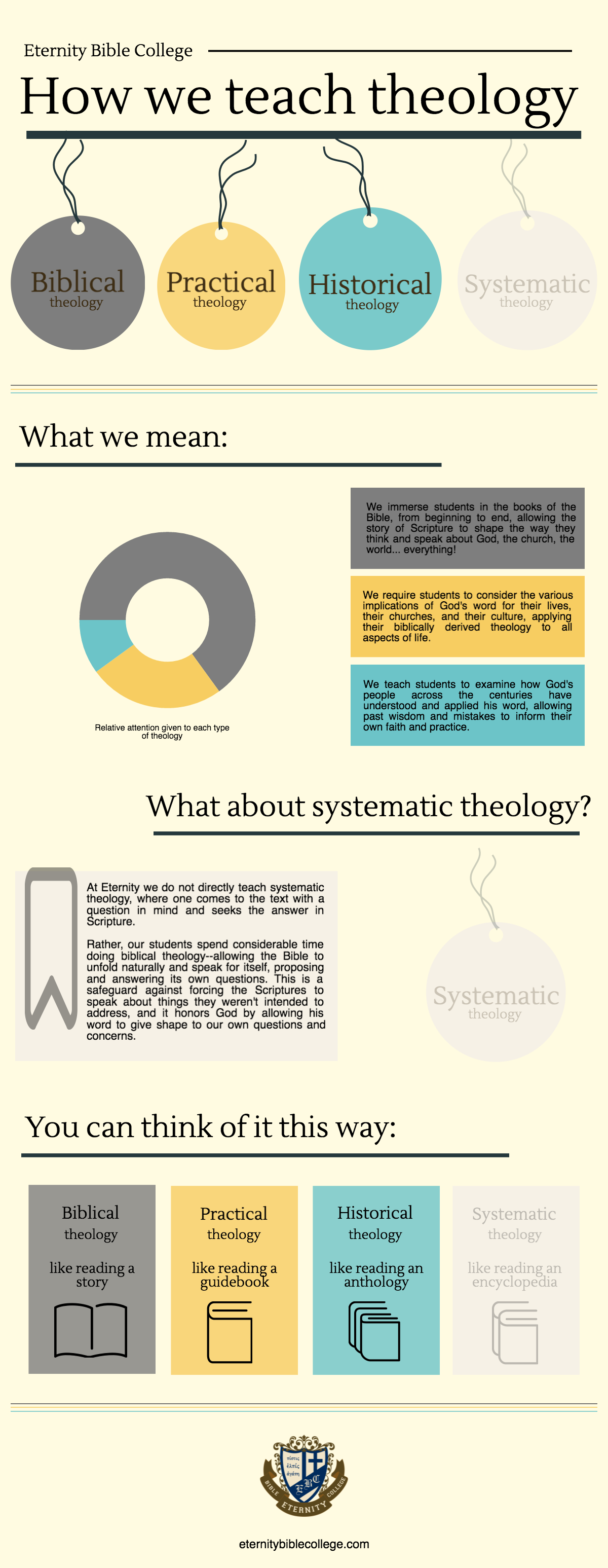
5 Reasons to Attend Eternity Bible College
TRENDING AT PATHEOS Evangelical

The REST of Your Life: A Creative Wrestles...
This week I had a conversation with a good friend from church....

How the author of the world's best hymn...
I've been working with John Newton for a while now. This makes...

Long before this Lectio Divina, Psalm 130 - the song - started...

What About the Trees? Another Living Parable
After I finished writing the last article about falling leaves as a...

Why Classical Education Is a Conversation, Not a...
Come and Read: Joy in Classical Education When I was a little...

Cornell University has received a great deal of negative publicity and intense...
view all Evangelical blogs
Ad-Free & Subscriber Log-In Subscription Support
- About Us
- 2026 Calendar
- Videos
- Podcasts
- Library of World Religions
- Faith In Media Tracker
- Advertise With Us
- Write for Us
- Privacy Policy
- Terms of Service
- Do Not Sell My Data
- Contact Us
- Radiant Digital
- Manage Newsletter Subscriptions
- Unsubscribe From Notifications
- Sitemap
Copyright 2008-2026, Patheos. All rights reserved.
Subscription Support Ad-Free & Subscriber Log-In
Follow Patheos