
BuddhistCatholicContemplativeEvangelicalGeneral ChristianHinduJewishLatter-day SaintMuslimNew VisionsProgressive Christian
Beliefs
- Buddhist
- Catholic
- Contemplative
- Evangelical
- General Christian
- Hindu
- Jewish
- Latter-day Saint
- More Voices
- Muslim
- New Visions
- Pagan
- Progressive Christian
Topics
- Religion News
- Food and Religion
- Sports and Religion
- Religious Art
- Religious Music and Entertainment
- Religious Events
- History and Religion
- Style and Religion
- Politics and Religion
- Women in Religion
- Recreation Outdoors and Religion
- Business Finance and Religion
- Careers Workplace and Religion
- Education and Religion
- Family Parenting and Religion
- Health Fitness and Religion
- Home and Religion
- Relationships and Religion
- Technology and Religion
- Travel and Religion
Columnists
- Buddhist Columnists
- Business Finance and Religion Columnists
- Careers Workplace and Religion Columnists
- Catholic Columnists
- Contemplative Columnists
- Education and Religion Columnists
- Evangelists Columnists
- Family Parenting and Religion Columnists
- General Christian Columnists
- Health Fitness and Religion Columnists
- Hindu Columnists
- History and Religion Columnists
- Home and Religion Columnists
- Jewish Columnists
- More Voices Columnists
- Latter Day Columnists
- Muslim Columnists
- New Visions Columnists
- Nonreligious Columnists
- Pagan Columnists
- Politics and Religion Columnists
- Progressive Columnists
- Recreation Outdoors and Religion Columnists
- Relationships and Religion Columnists
- Religion News Columnists
- Religious Art Columnists
- Religious Events Columnists
- Religious Music and Entertainment Columnists
- Sports and Religion Columnists
- Style and Religion Columnists
- Technology and Religion Columnists
- Travel and Religion Columnists
- Women in Religion Columnists
Resource Library
- 2026 Calendar
- Library of World Religions
- The 100 Most Holy Places on Earth
- Patheos Answers
- Podcasts
- Videos
- Faith Leaders Database
- Anglican Episcopalian
- Bahai
- Baptist
- Buddhism
- Christianity
- Confucianism
- Eastern Orthodoxy
- Hinduism
- Holiness and Pentecostal
- ISKCON
- Islam
- Judaism
- Lutheran
- Methodist
- The Church of Jesus Christ of Latter-day Saints
- New Age
- Paganism
- Presbytarian and Reformed
- Protestantism
- Religion Behind the Scenes
- Roman Catholic
- Scientology
- Shia Islam
- Sikhism
- Sufism
- Sunni Islam
- Taoism
- Zen
- See all religions
Research Tools
 Ad-Free & Subscriber Log-In Subscription Support
Ad-Free & Subscriber Log-In Subscription Support
Follow Patheos 

- Trending:
- Forgiveness
- |
- Marriage
- |
- Consciousness
- |
- Death Penalty
- |
- Election
- |
- Halloween
 Theology in the Raw
- Home
- About
- Publications
- Comment Policy
- Preston Sprinkle Website
- Eternity Bible College
- Speaking
- Event Calendar
- Living in a Gray World
- People to Be Loved
- Podcast
- Archive Index
- Home
- Evangelical
- Bobble-Head Christians
Bobble-Head Christians
Last updated on: January 14, 2015 at 3:39 pm by Preston Sprinkle
Bobble-Head Christians 2015-01-14T15:39:47-06:00 Preston Sprinkle
Patheos Explore the world's faith through different perspectives on religion and spirituality! Patheos has the views of the prevalent religions and spiritualities of the world.
I’ve spent the last month working through two brilliant books by Christian philosopher, James K. A. Smith: Desiring the Kingdom and Imagining the Kingdom. After reading these books, the Center for Pastoral Theologians, of which I’m a member, invited Jamie to come mix it up with us at our annual gathering through dialogue, discussion, and debate. It’s been a brilliant couple of days!
Jamie’s work has been nothing short of revolutionary in my thinking. If you’re a pastor, lay leader, worship leader—especially if you’re a worship leader—or any sort of thinking Christian, I can’t more highly recommend that you buy, read, and re-read Jamie’s first book, Desiring the Kingdom. (The second one is good, but the first one is groundbreaking.) It’ll reconfigure everything you’ve thought about human nature, worship, liturgy, and what it means to be a Christian.
I’m not going to do justice to the book in one short little blog, but let me share some nuggets. Jamie’s overarching thesis is that humans are not fundamentally thinking creatures, or believing creatures, but desiring creatures. Yes of course, thinking is important, and believing is super important, but what pushes and pulls our actions has more to do with what captures our desires, our affections—our hearts.
A 13-year old girl living in America, for instance, doesn’t become a consumer through analytical reasoning. Rather, her heart is wooed into the mall through forces that touch her heart and inflame her affections (branding, marketing, friends, secular narratives, etc.).
This is true of all people. Yes, we think and believe, but what moves us to action is our heart, our affections, our desires. “[O]ur identity is shaped by what we ultimately love or what we love AS ultimate” (Desiring the Kingdom [DK], 26-27). Or more picturesque: “the way we inhabit the world is not primarily as thinkers, or even believers, but as more affective, embodied creatures who make our way in the world more by feeling our way around it” (DK, 47).
If Jamie is right (and he’s certainly not alone in his argument), then Christian discipleship and education that seek only to transform the mind will not produce true holiness until it captures our hearts—which includes our imaginations, bodies, and emotions.
Therefore, the church that focuses almost exclusively on the mind (reconfiguring worldviews) treats Christians like walking “bobble-head” dolls. But we are more than just minds with legs, as Smith says: “We do not merely have bodies, but are our bodies.” Discipleship must capture our bodies, hearts, emotions and imaginations—our whole humanity, not just a piece of it. When it does, it will be more effective in producing holistic holiness.
Jamie’s thesis cuts against the age-old paradigm that right thinking will lead to right living. Such “read these two verses and call me in the morning” type sanctification has not proven to be very effective. As one member of our society said, “I memorized Romans 6-8 so that I wouldn’t masturbate any more, but 30 years later, I’m still masturbating.” The problem is not that cognitive affirmation is bad; it’s just insufficient. We must confess with our mouth and believe with our hearts. The gospel must capture, captivate, and reconfigure both our minds and hearts, our intellect and emotions, our bodies and our imagination. We must affectionally desire obedience as “the good life.”
One of the more incisive implications to Jamie’s project relates to Christian education. “According to this dominate paradigm,” referring to how most Christian universities do education, “the goal of a Christian education is to produce professionals who do pretty much the same sorts of things that gradates of Ivy League and state universities do, but who do them ‘from a Christian perspective.” But “what if a Christian perspective turns out to be a way of domesticating the radicalism of the gospel” (DK, 218). Smith goes on to prophetically say:
In too may cases, a Christian perspective doesn’t seem to challenge the very configuration of these careers and vocations. To be blunt, our Christian colleges and universities generate an army of alumni who look pretty much like all the rest of their suburban neighbors, except that our graduates drive their SUVs, inhabit their executive homes, and pursue the frenetic life of the middle class and the corporate ladder “from a Christian perspective” (DK, 219).
Wow. Stuff that in your theological pipe and smoke it.
What if the entire project of success, career, vocation, the values of the marketplace, and (the American) life as we know it is at odds with the gospel? What if the gospel of suburbia is far from the good life of Eden?
In many ways, Christianity has affirmed what secular culture affirms as “the good life” and simply added Jesus to that vision. But what Smith is proposing is that we turn the entire system inside out. That we think about education, discipleship, and “the good life” through the lens of the countercultural gospel that announces: blessed are the meek, weak, and lowly of heart.
What would education look like if the goal was not information but formation; dying to worldly values rather than becoming vivified by worldly success seasoned with a pinch of Jesus?
I must say, that I was nearly laughing as I read Smith’s work, because he articulates with philosophical sophistication and rhetorical persuasion what Eternity Bible College has been seeking to accomplish for the last ten years.
What if education was more about formation than information?
What if theology was organically connected to doxology and practice?
What if students could exegete culture as well as they exegete the Bible?
What if rigorously studying the Bible cultivated worship and humility?
What students were free to engage the story of God through writing, art, poetry, rap, videography—or whatever other creative avenue they’ve been gifted with by their Creator?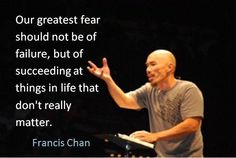
What if a Bible College targeted all aspects of our humanity in order to transform it by and for the gospel of the risen Lamb?
Come to Eternity Bible College and find out.
Previous Post

October 13, 2014
Bringing Theology Back to the Church
Next Post
October 15, 2014 We Are Creatures of Habit
Browse Our Archives
Select a Category 40 Questions A Letter to my congregation adoption Alan Chambers Alcohol America american Jesus andrew marin angels Anne Paulk Annihilation apology Apostles creed atonement AudioFeed Balkhu Baptism bastard being biblical believer's baptism bible Bible College biblical love biblical studies Boise book review Books buzzwords called celibacy Center for Pastoral Theologians Charis charleston shooting cherubim christian movies Christian teens Christianeze Christmas church Church Refugees civil rights college debt communal faith Conditional Immortality conference david gushee debt free education Dechurched derwin gray desiring the kingdom Discipleship Don Miller Dones ecclesia and ethics Erasing Hell Esther eternal conscious torment Eternity Bible College ethnic diversity ETS eunuch evangelicalism Fight Four Views on Hell Francis Chan Francis Watson Free Bible Resources French Quarter grace gran torino gun control haters hell holy war homeschool homosexuality house church immigration Incarnation individualism Infant Baptism interpretation Intersex Israel James Dunn james smith Jerry Fallwell Jr. Jessica Minassian Jesus Jesus refugee Joey Dodson John MacArthur John Piper John Stott Josh Packard Joshua Ryan Butler judgment Justification Karl Barth Ken Wilson Kevin DeYoung Lance Hancock Leper lesbian LGBT LGBTQ Life Love God liturgy living in a gray world Luke 22 martin luther king mary magdalene Matthew Vines Megan DeFranza Michael Bird millennials Ministry Missions mixed orientation marriage movies Multiethnic churches Music Festival My Exodus N.T. Wright nationalism New Perspective New Year resolution nonviolence obedience Old Testament Online Biblical Training orlando massacre Pacifism parenting pastoral ministry Pastoral Theologian patriotism people to be loved personal relationship with Jesus politics poverty Prayer Preston Sprinkle Project Bayview public square Q Conference qualifications for ministry Racial Reconciliation radio show Reading reading plan real Christianity Reformed refugee refugee crisis rick hogaboam robb bell robert gagnon Romans Romans 13 Romans 9 sam allberry same sex attraction sanctification school segrated churches seraphim sex Sex Difference in Christian Theology sexual fluidity Shawn Gordon short term missions Skeletons in God's Closet Slums Sodom Speaking syrian refugee crisis technology teen girls texting The Bible Project The Gospel Coalition the high definition leader theology Third Way Tim Mackie Touch Nepal trols UK Tour Uncategorized Urban Ministry Us vs. Us Vieux Carre Baptist Church violence vocation Waiting warfare welcome the stranger women women in ministry worship songs writing
Select a Month August 2016 June 2016 May 2016 April 2016 March 2016 February 2016 January 2016 December 2015 November 2015 October 2015 September 2015 August 2015 July 2015 June 2015 May 2015 April 2015 March 2015 February 2015 January 2015 December 2014 November 2014 October 2014 September 2014
Follow Us!
TAKE THE
Religious Wisdom Quiz
Who wrote the most books in the New Testament?
Select your answer to see how you score.
Peter John Paul Luke
Related posts from Theology in the Raw
5 Reasons to Attend Eternity Bible College

TRENDING AT PATHEOS Evangelical

The REST of Your Life: A Creative Wrestles...
This week I had a conversation with a good friend from church....

How the author of the world's best hymn...
I've been working with John Newton for a while now. This makes...

Long before this Lectio Divina, Psalm 130 - the song - started...

What About the Trees? Another Living Parable
After I finished writing the last article about falling leaves as a...

Why Classical Education Is a Conversation, Not a...
Come and Read: Joy in Classical Education When I was a little...

Cornell University has received a great deal of negative publicity and intense...
view all Evangelical blogs
Ad-Free & Subscriber Log-In Subscription Support
- About Us
- 2026 Calendar
- Videos
- Podcasts
- Library of World Religions
- Faith In Media Tracker
- Advertise With Us
- Write for Us
- Privacy Policy
- Terms of Service
- Do Not Sell My Data
- Contact Us
- Radiant Digital
- Manage Newsletter Subscriptions
- Unsubscribe From Notifications
- Sitemap
Copyright 2008-2026, Patheos. All rights reserved.
Subscription Support Ad-Free & Subscriber Log-In
Follow Patheos