
BuddhistCatholicContemplativeEvangelicalGeneral ChristianHinduJewishLatter-day SaintMuslimNew VisionsProgressive Christian
Beliefs
- Buddhist
- Catholic
- Contemplative
- Evangelical
- General Christian
- Hindu
- Jewish
- Latter-day Saint
- More Voices
- Muslim
- New Visions
- Pagan
- Progressive Christian
Topics
- Religion News
- Food and Religion
- Sports and Religion
- Religious Art
- Religious Music and Entertainment
- Religious Events
- History and Religion
- Style and Religion
- Politics and Religion
- Women in Religion
- Recreation Outdoors and Religion
- Business Finance and Religion
- Careers Workplace and Religion
- Education and Religion
- Family Parenting and Religion
- Health Fitness and Religion
- Home and Religion
- Relationships and Religion
- Technology and Religion
- Travel and Religion
Columnists
- Buddhist Columnists
- Business Finance and Religion Columnists
- Careers Workplace and Religion Columnists
- Catholic Columnists
- Contemplative Columnists
- Education and Religion Columnists
- Evangelists Columnists
- Family Parenting and Religion Columnists
- General Christian Columnists
- Health Fitness and Religion Columnists
- Hindu Columnists
- History and Religion Columnists
- Home and Religion Columnists
- Jewish Columnists
- More Voices Columnists
- Latter Day Columnists
- Muslim Columnists
- New Visions Columnists
- Nonreligious Columnists
- Pagan Columnists
- Politics and Religion Columnists
- Progressive Columnists
- Recreation Outdoors and Religion Columnists
- Relationships and Religion Columnists
- Religion News Columnists
- Religious Art Columnists
- Religious Events Columnists
- Religious Music and Entertainment Columnists
- Sports and Religion Columnists
- Style and Religion Columnists
- Technology and Religion Columnists
- Travel and Religion Columnists
- Women in Religion Columnists
Resource Library
- 2026 Calendar
- Library of World Religions
- The 100 Most Holy Places on Earth
- Patheos Answers
- Podcasts
- Videos
- Faith Leaders Database
- Anglican Episcopalian
- Bahai
- Baptist
- Buddhism
- Christianity
- Confucianism
- Eastern Orthodoxy
- Hinduism
- Holiness and Pentecostal
- ISKCON
- Islam
- Judaism
- Lutheran
- Methodist
- The Church of Jesus Christ of Latter-day Saints
- New Age
- Paganism
- Presbytarian and Reformed
- Protestantism
- Religion Behind the Scenes
- Roman Catholic
- Scientology
- Shia Islam
- Sikhism
- Sufism
- Sunni Islam
- Taoism
- Zen
- See all religions
Research Tools
 Ad-Free & Subscriber Log-In Subscription Support
Ad-Free & Subscriber Log-In Subscription Support
Follow Patheos 

- Trending:
- Forgiveness
- |
- Marriage
- |
- Consciousness
- |
- Death Penalty
- |
- Election
- |
- Halloween

- Home
- Evangelical
- Politics and Religion
- Three Features of CRT That Hurt Us (part 2): Pure Politics
Three Features of CRT That Hurt Us (part 2): Pure Politics
Last updated on: September 9, 2024 at 12:10 pm by Anthony Costello
Three Features of CRT That Hurt Us (part 2): Pure Politics 2024-09-09T12:10:44-07:00 Anthony Costello
Patheos Explore the world's faith through different perspectives on religion and spirituality! Patheos has the views of the prevalent religions and spiritualities of the world.
In the previous post, I claimed there are three core features of Critical Race Theory (CRT) that are harmful to human beings. These features are: 1) CRT is not truth-oriented, 2) CRT is inherently and only political, and 3) that CRT is moralistic. In this second essay, I outline how CRT is purely political and why that matters to human flourishing.
Feature #2: CRT is Inherently and Only Political
In part 1, I noted that Critical Theories, unlike traditional or classical theory, have abandoned the pursuit of transcendent knowledge or knowledge as grasped by an inquiring intellect. “Knowledge” on Critical Theory is a product of the will: be it the individual will, the will of the masses, or the will of the dominant racial group.
Duncan Kennedy arguing for affirmative action in the legal academy makes this idea explicit in the domain of law:
I favor large scale race-based affirmative action, using quotas are necessary to produce results. The first basis for this view is that law school teaching positions are a small but significant part of the wealth of the United States. They are also a small but significant part of the political apparatus of the United States, by which I mean that the knowledge law teachers produce is intrinsically political and actually effective in our political system. In short, legal knowledge is ideological.
Duncan Kennedy, “A Cultural Pluralist Case for Affirmative Action in Legal Academia” in Duke Law Journal, 1990 [emphasis added].
As such, Critical Theories are inherently and only political. They presuppose there are no pre-political values or duties, nothing ontological by which to ground values or obligations: no God, no essences, no universal Reason, nothing.
Pope Benedict XVI, formerly Josef Ratzinger, best described this aspect of modern Critical Theories in his writing on contemporary legal theories. He states:
The “end of metaphysics,” which in broad sectors of modern philosophy is imposed as an irreversible fact, has led to juridical positivism, which today especially has taken on the form of a theory of consensus: if reason is no longer able to find the way to metaphysics as the source of law, the state can only refer to the common convictions of its citizens’ values, convictions that are reflected in the democratic consensus.
Truth does not create consensus, and consensus does not create truth as much as it does a common ordering. The majority determines what must be regarded as true and just. In other words, law is exposed to the whim of the majority and depends on awareness of the values of the society at any given moment, which, in turn, is determined by a multiplicity of factors. This is manifested concretely by the progressive disappearance of the fundamentals of law inspired by the Christian tradition.
Pope Benedict XVI, “Crises of Law,” in The Essential Pope Benedict XVI, His Central Writings & Speeches (New York: HarperSanFrancisco, 2007), 376-380, and at 376-377.
This articulation of truth as a truth of the “consensus” has plagued legal studies for decades. Judicial positivism, generally speaking, went hand in hand with modernist views of power and authority, decoupled from any grounding in metaphysics or a natural law. The Marxian alternative, Critical Legal Studies, pushes back against some aspects of legal positivism, but nevertheless remains as ontologically empty as its modernist predecessor.
It is out of Critical Legal Studies itself that Critical Race Theory emerges. Most, almost all, of the brightest CRT scholars have been legal minds (Crenshaw, Harris, Bell, et al.), even if behind those minds stand the earlier Critical Theory philosophers (e.g. Marx, Fromm, Horkheimer, Marcuse, et al.). Kenneth B. Nunn, for example, echoes Benedict’s analysis when he talks about law as a “eurocentric enterprise,”
Law is a Eurocentric enterprise, meaning that law is part of a broader cultural endeavor that attempts to promote European values and interests at the expense of all others. Law carries out a eurocentric program as it organizes and directs culture. Law does this by reinforcing a Eurocentric way of thinking, promoting Eurocentric values and affirming-indeed celebrating-the Eurocentric cultural experience.
Kenneth B. Nunn, “Law as a Euorcentric Enterprise” in Minnesota Journal of Law and Inequality
The implications are clear, the Eurocentric “program” may be presented as if it were true, but it is not actually “True.” To promote something as “true” is itself a political machination according to critical legal scholars like Nunn and Kennedy. Law, or the Law, is a purely political project as is any human endeavor on this view.
It is this political view of law and life that is now being applied to every aspect of our own society. All is now political as Critical Theories take over, even at the most primary levels of education. This is also why any Critical Theory, race or otherwise, will inevitably clash with any traditional religious belief. It is also why politics, as one theologian has put it, has become religion:
However, under the conditions of our ever-deepening anthropological crisis, where our politics is not about securing conditions in which we can transcend our animal needs in the cultural sphere of distinctive human life, our politics has taken on the role of determining what it ought to look like for us to transcend animal needs: rather than arising from culture, our political life has become about forging culture. But that means our political life has come to be about fundamental metaphysical claims about the human being and what separates the human from the animals.
In other words, our politics has become religion.
Matthew Burdette, “We No Longer Know What a Human Is”
Getting Political: CRT in California K-12 Schools
A few years ago now I attended a meeting of concerned parents in a local school district of Southern California. The parents, most Christian but not all, were quite upset about a new regiment of diversity training that was being rammed through the California state school system to all K-12 classrooms. This curriculum, the Social Justice Standards, avows to train children in four areas: Identity, Diversity, Justice, and Action. Not once in the outline for this new training program is the idea of truth mentioned.
Further, the notion of “critical thinking” is entirely absent. The reason is simple: the curriculum is only interested in the training of social behavior. It is social engineering in its purest form, because it has abandoned any hope that truth can be known or discovered. Moreover, social behavior is most easily altered through the manipulation of emotions via the redefinition of words, not through the training of the intellect in the seeking of the meaning of words.
It is in this sense that Critical Race Theory aligns with postodernism. Since there is no objective reality, let alone design to the world we are meant to grasp and align with, the human person is reduced to a purely political organism. We are merely creatures whose sole purpose is to act as agents of sociological change. It is through persistent structural revolution– through bending society towards a dominant political will– that we will usher in our own liberation. Here we see how Critical Race Theory, like Critical Feminist Theory or Queer Theory, also finds its roots in 20th-century existentialism.
Moreover, as purely political creatures, creatures embedded in ever-changing historical conditions, we not only create the standards by which we seek this liberation, but also choose the means by which new standards are implemented. Again, religious beliefs and values, and principles of right reason are all downstream from the culture producing them. The means by which we realize any newly devised standard are not subject to some higher authority, some tradition or set of universal virtues. They are implemented through a sheer act of political will, through the will to power. As such, phenomenon like “Cancel Culture” are nothing but milder, albeit perhaps more effect, methods of the older Leninist impulse.
Even a cursory look at the new Social Justice Standards, devised by the most accusatory organization in the country, the Southern Poverty Law Center, should make anyone who holds to a pre-political view of morality shudder. The introduction to the new curriculum couches this will to power in moralistic language, but any thoughtful reader understands the inherent danger in this kind of view:
Prejudice reduction seeks to minimize conflict and generally focuses on changing the attitudes and behaviors of a dominant group. Collective action challenges inequality directly by raising consciousness and focusing on improving conditions for under-represented groups.
TT-Social-Justice-Standards-June-2019[1]
Nothing is mentioned in the new guidelines about whether the attitudes or behaviors of the dominant group are “good,” “true,” “virtuous” or “right.” If anything is referred to at all as “good” or “true,” it is only in the context of a personal narrative being true (for the individual). However, a personal narrative that is true (or genuine) also becomes normative, it becomes a moral standard. “Feeling good,” whereby the term “good” operates solely as a marker of a positive emotional state, is the new norma normans of the social justice worldview.
These terms: “good, true, virtuous, right, wrong” are otherwise not allowable in the new curriculum, at least not in a referential sense. They are purely heuristic. On CRT, classical virtues or values that have acted as terms used to make objective or absolute, i.e., trans-cultural, moral claims must be rejected. According to some CRT scholars, the claim to objectivity, scientific or moral, itself is nothing more than a product of an aggressive and power hungry White Eurocentric culture (see Kenneth B. Nunn, “Law as A Eurocentric Enterprise“).
Finally it is never said whether or how the elevating of minority or under-represented group views will increase goodness, virtue or right living. The curriculum assumes that under-represented groups are morally superior to majority groups and, vice-versa, that majority groups must have their attitudes changed to be more accommodating to the views of the minority. But, why believe this is the case? Is moral rightness or wrongness really connected to where one is in society? The Bible suggests the answer to this question is “no,”
You must not follow a crowd in wrongdoing. Do not testify in a lawsuit and go along with a crowd to pervert [justice]. Do not show favoritism to a poor person in a lawsuit.
Exodus 23:2-3
The Marxist externalizes morality, making the moral component a matter of any discrepancy in the social relation itself. Born out of Marxist materialism, CRT assumes this classical Marxist flaw. Immorality just is social disparity. But, this is not the biblical view of morality.
While those in under-represented or marginalized communities are clearly more susceptible to the abuse of power that they are more moral is nowhere in Scripture. The moral component according to the Word of God is always in the will (i.e, the heart) of the individuals who are occupying the social roles. Jesus’ words are sufficiently clear on this issue, “For out of the heart come evil intentions, murder, adultery, fornication, theft, false witness, slander” (Matthew 15:19).
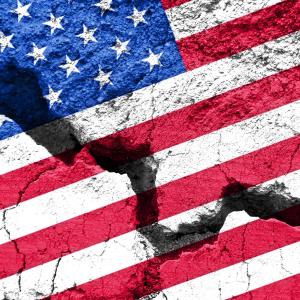
If All is Politics, What Can Unite Us?
Conclusion: Christianity Must Point Beyond the Political
CRT claims there are no objective or universally accessible criteria by which normative evaluations can be made. All there is is the apparent existence of disparities in social “power,” whatever that might be or however it might be calculated.
As C.S. Lewis pointed out poignantly in The Screwtape Letters, the very questions of truth or falsehood, or prudence or virtue, are exactly what this particular California-state curriculum tries to keep children from asking, or even being able to ask. Screwtape mentoring Wormwood says,
“The Enemy [God] loves platitudes. Of a proposed course of action He [God] wants men, so far as I can see, to ask very simple questions; is it righteous? is it prudent? is it possible? Now if we [the Demons] can keep men asking ‘Is it in accordance with the general movement of our time? Is it progressive or reactionary? Is this the way that History is going?’ they will neglect the relevant questions. And the questions they do ask are, of course, unanswerable; for they do not know the future, and what the future will be depends very largely on just those choices which they now invoke the future to help them to make.”
Excerpt From: C. S. Lewis. “The Screwtape Letters.” Apple Books. https://books.apple.com/us/book/the-screwtape-letters/id360640935
The new CRT-inspired approach to education ultimately aims to preclude individuals who might be identified as members of an under-represented group, from aspiring, espousing or accepting the values of the dominant group. This even if they feel compelled to accept those values based on their discovery that they actually are true or good or right or prudent.
As such, when the very idea of all people being endowed by their Creator with certain inalienable rights is no longer considered “self-evident,” but is seen as a merely political statement operating as a mechanism of power, then truly all things have become political. There is nothing left prior to politics. But, man is more than a political beast. He is a spiritual and religious creature. For humans to flourish we must resist the temptation to see all things through the lens of a metaphysically empty and epistemically skeptical Realpolitik. We must transcend this lower-level nature and the Church must be there to point the way. The final post will discuss how politics and morality are the same on a CRT view.
Politics and Religion
Education and Religion
California k-12 Social Justice Standards

About Anthony Costello
Born and raised on the South Side of Chicago to a devout and loving Roman Catholic family, I fell away from my childhood faith as a young man. For years I lived a life of my own design-- a life of sin. But, at the age of 34, while serving in the United States Army, I set foot in my first Evangelical church. Hearing the Gospel preached, as if for the first time, I had a powerful, reality-altering experience of Jesus Christ. That day, He called me to Himself and to His service, and I have walked with Him ever since. You can read more about the author here.
Previous Post
June 7, 2021
Three Features of CRT and How They Harm Society (Part 1)
Next Post

June 14, 2021 Three Features of CRT That Hurt Us (Part 3): Moral Legalism
Browse Our Archives
Select a Category Analytic Theology Apologetics Biblical Theology Critical Theory Cultural Apologetics Devotional Epistemology Existentialism Fred Sanders Historical Jesus Historical Theology Metaphysics Moral Theology Philosophy of Religion Politics Problem of Evil Roman Catholicism Social Justice Spiritual Formation Systematic Theology The Trinity Uncategorized
Select a Month April 2026 March 2026 February 2026 January 2026 December 2025 October 2025 September 2025 July 2025 May 2025 April 2025 February 2025 January 2025 December 2024 November 2024 October 2024 July 2024 June 2024 May 2024 April 2024 March 2024 February 2024 January 2024 December 2023 November 2023 October 2023 September 2023 August 2023 July 2023 June 2023 May 2023 April 2023 March 2023 February 2023 January 2023 December 2022 November 2022 October 2022 September 2022 August 2022 July 2022 June 2022 May 2022 April 2022 March 2022 February 2022 January 2022 December 2021 November 2021 October 2021 September 2021 August 2021 July 2021 June 2021
Follow Us!
TAKE THE
Religious Wisdom Quiz
True or False: James says that whoever keeps the whole law but stumbles at just one point is guilty of breaking all of it.
Select your answer to see how you score.
FALSE TRUE
Related posts from Anthony Costello

Moral Combat: Critical Theory versus Christianity

The Final Turning Point: On The Martyrdom of...
The Two Faces of Evil: On Magical and...
TRENDING AT PATHEOS Evangelical

Letters on Living the Faith by C.S. Lewis
Most of us met C.S. Lewis as a public intellectual. Mere Christianity....

When Halloween Unmasks Married Hearts
Written by Dr. David K. Ewen from Eternal Truth Bible College Behind...

Aristotle. He’s been called the father of logic, the father of the...

Methodist Central Hall and Westminster Abbey
Situated on the same square is Methodist Central Hall and Westminster Abbey. ...

57th Dove Awards Honor Dolly Parton, Crown New...
On gospel music’s biggest night, the 57th annual GMA Dove Awards honored...

The First Eucharistic Controversy: Christ’s Real Presence
For Catholics, the Eucharist is the source and summit of the Christian...
view all Evangelical blogs
Ad-Free & Subscriber Log-In Subscription Support
- About Us
- 2026 Calendar
- Videos
- Podcasts
- Library of World Religions
- Faith In Media Tracker
- Advertise With Us
- Write for Us
- Privacy Policy
- Terms of Service
- Do Not Sell My Data
- Contact Us
- Radiant Digital
- Manage Newsletter Subscriptions
- Unsubscribe From Notifications
- Sitemap
Copyright 2008-2026, Patheos. All rights reserved.
Subscription Support Ad-Free & Subscriber Log-In
Follow Patheos