
BuddhistCatholicContemplativeEvangelicalGeneral ChristianHinduJewishLatter-day SaintMuslimNew VisionsProgressive Christian
Beliefs
- Buddhist
- Catholic
- Contemplative
- Evangelical
- General Christian
- Hindu
- Jewish
- Latter-day Saint
- More Voices
- Muslim
- New Visions
- Pagan
- Progressive Christian
Topics
- Religion News
- Food and Religion
- Sports and Religion
- Religious Art
- Religious Music and Entertainment
- Religious Events
- History and Religion
- Style and Religion
- Politics and Religion
- Women in Religion
- Recreation Outdoors and Religion
- Business Finance and Religion
- Careers Workplace and Religion
- Education and Religion
- Family Parenting and Religion
- Health Fitness and Religion
- Home and Religion
- Relationships and Religion
- Technology and Religion
- Travel and Religion
Columnists
- Buddhist Columnists
- Business Finance and Religion Columnists
- Careers Workplace and Religion Columnists
- Catholic Columnists
- Contemplative Columnists
- Education and Religion Columnists
- Evangelists Columnists
- Family Parenting and Religion Columnists
- General Christian Columnists
- Health Fitness and Religion Columnists
- Hindu Columnists
- History and Religion Columnists
- Home and Religion Columnists
- Jewish Columnists
- More Voices Columnists
- Latter Day Columnists
- Muslim Columnists
- New Visions Columnists
- Nonreligious Columnists
- Pagan Columnists
- Politics and Religion Columnists
- Progressive Columnists
- Recreation Outdoors and Religion Columnists
- Relationships and Religion Columnists
- Religion News Columnists
- Religious Art Columnists
- Religious Events Columnists
- Religious Music and Entertainment Columnists
- Sports and Religion Columnists
- Style and Religion Columnists
- Technology and Religion Columnists
- Travel and Religion Columnists
- Women in Religion Columnists
Resource Library
- 2026 Calendar
- Library of World Religions
- The 100 Most Holy Places on Earth
- Patheos Answers
- Podcasts
- Videos
- Faith Leaders Database
- Anglican Episcopalian
- Bahai
- Baptist
- Buddhism
- Christianity
- Confucianism
- Eastern Orthodoxy
- Hinduism
- Holiness and Pentecostal
- ISKCON
- Islam
- Judaism
- Lutheran
- Methodist
- The Church of Jesus Christ of Latter-day Saints
- New Age
- Paganism
- Presbytarian and Reformed
- Protestantism
- Religion Behind the Scenes
- Roman Catholic
- Scientology
- Shia Islam
- Sikhism
- Sufism
- Sunni Islam
- Taoism
- Zen
- See all religions
Research Tools
 Ad-Free & Subscriber Log-In Subscription Support
Ad-Free & Subscriber Log-In Subscription Support
Follow Patheos 

- Trending:
- Forgiveness
- |
- Marriage
- |
- Consciousness
- |
- Death Penalty
- |
- Election
- |
- Halloween
 The Muslim Monad
- Home
- Muslim
- American Mosques; Third, Fourth and Fifth Spaces
American Mosques; Third, Fourth and Fifth Spaces
Last updated on: February 14, 2019 at 3:57 pm by Inas Younis
American Mosques; Third, Fourth and Fifth Spaces 2019-02-14T15:57:44-05:00 Inas Younis
Patheos Explore the world's faith through different perspectives on religion and spirituality! Patheos has the views of the prevalent religions and spiritualities of the world.

State sponsored mosques are designed to serve a singular purpose; to provide a space for congregational religious services and prayers. In Muslim majority countries, mosques do not operate independently of political authority. The utility of the mosque is then limited, if not profoundly curtailed, within this context.
But in the United States, the mosque is not just a place to pray but also doubles as a community center. American mosques are the nerve center of the Muslim community with year round activities including cultural enrichment, social services, and Islamic education.
In secular societies, where religion is an active choice and not a passive reality, a community center style mosque with a program-driven agenda is not just an ambition but an absolute necessity.
Yet, according to the 2014 report by the Institute for Social Policy and Understanding (ISPU), “There’s a growing narrative within the American Muslim community that paints a picture of alarming exclusion, especially for women, youth, and converts. Some mosque-goers feel increasingly disconnected from the mosque community and some have stopped going to the mosque altogether, because of it.” In 2019, not much has changed.
Ideally, the spirit with which we approach our spaces of worship should be one that encapsulates the heart of Islam and offers its congregation the kind of inspirational energy that will help them to sustain a metaphysical rather than material view of reality.
But unfortunately, a significant number of young Muslims surveyed will tell you that their mosques are so lacking in spiritual ambiance that to keep the faith, they sometimes feel like they have to keep their distance. They are routinely disheartened and disenchanted and therefore disengaged.
The litany of grievances are well known and were spotlighted in a popular documentary titled Unmosqued ,which raised critical concerns about women’s roles in mosques, ethnocentrism, and the limited access of a new generation to positions of leadership.
Third Spaces
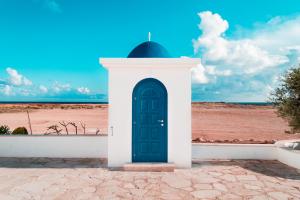
Alternative spaces or what has come to be known as ‘third spaces’ are emerging as a substitute for those who not only no longer feel welcome or comfortable in strictly traditional mosques but who are also not willing to completely assimilate into secular culture.
The popular emergence of these ‘third spaces’ is not just an indication that there are serious grievances with our mosques but its an admission that there are no real opportunities to fix them. A Disruption in the status quo requires far more than an invocation to “get more involved!”
What makes this even more depressing is that there is no shortage of resources within the Muslim community. Not only is the Muslim community financially capable of sustaining sophisticated and program driven communal spaces, but our community has tremendous energy and expertise in a widening variety of fields.
According to a 2009 Gallup poll, US Muslims have the second-highest level of education among major religious groups in the United States. American Muslims have the skills and ambition to run massive corporations and manage mega projects, but when it comes to contributing to their Islamic Centers they feel completely locked out and helpless.
This sense of helplessness is not unwarranted. When our organizational structures are built around personalities and subjective considerations rather than objective principles, the challenge to innovate, expand and grow becomes too arduous, if not impossible to achieve.
It has never been a question of how hard or dedicated we are, but a question of gridlock; of drains clogged by the sludge of a petrifying culturally driven approach to governance; One where policies and procedures are replaced by random and arbitrary efforts of well meaning individuals with no organizing principle.

I believe that the chaos we often witness in our Islamic centers has an element of intentionality to it.
The theory underlying my claim is this: So long as our Islamic centers maintain a functional level of chaos, their operations become dependent on specific individuals instead of a system that can stand independently of them.
Just the right amount of chaos ensures that the mosque eventually ends up developing a cult of personalities instead of a culture of productivity. And for those fearful of change, this is a desirable outcome.
The failure of our institutions is a failure of understanding. It’s a failure to recognize and implement a strategic process. It’s a failure to incorporate governing principles where power has to be relinquished to an ever expanding pool of volunteers and employees. And It’s a failure of formal regulatory oversights.
Without procedural formalities many mosques are overwhelmed with informal negotiations with obstructionists who are psychologically invested in maintaining a conservative and counterproductive status quo.
That status quo promises to restrict communication by enforcing meaningless taboos. That status quo lacks transparency and maintains a kind of structural ambiguity designed to mimic the organizational formation of a village polity, where professional and personal boundaries are blurred by privilege and favoritism.
As a community, we have reached the next developmental phase of our growth. I am not of the opinion that we need massive reforms as much as we do alternative institutions.
Spiritual growth and community development is complicated and each individual has a right to progress at their own rate. Each individual needs the institutional representation to evolve in an environment free from judgment.
The modernized Muslim majority are clearly disenchanted, but we must remember that part of the modern spirit is to accept that even the most conservative status quo has a right to their own communal space of worship.
More options and institutional alternatives is how every religious community in America has managed not only to survive, but to thrive.
What the American Muslim community needs to do is to create those options and to provide more and more community centers that reflect their social and organizational values.
This approach is in keeping with the American impulse towards diversity and choice rather than forced conformity and gridlock. When we offer ourselves an alternative rather than an impossible mission, we are more likely to remain faithful to both God and community.
- A version of this article was first published on aboutIslam.net
Previous Post

September 17, 2018
Islam and the Origins of Capitalism
Next Post

February 14, 2019 Long Live Love
Browse Our Archives
Select a Category conspiracy cults Donald Trump election faith Jesus Christianity love mental health philosophy politics post truth era psychology QAnon self help Uncategorized
Select a Month September 2021 August 2021 July 2021 March 2021 February 2021 December 2020 November 2020 August 2020 August 2019 June 2019 February 2019 September 2018 August 2018 July 2018 May 2018
Follow Us!
TAKE THE
Religious Wisdom Quiz
Who said, "I have fought the good fight, I have finished the race"?
Select your answer to see how you score.
Paul Peter James John
Related posts from The Muslim Monad
The Problem of Hate and Bigotry

The Unstoppable Power of Moral Conviction
TRENDING AT PATHEOS Muslim

25 Years Later: How Much Has Changed for...
As we approach the 25th anniversary of September 11th, I’ve found myself...

Podcast: Third Spaces & The Rise of Yemeni...
In the latest episode of The Artistic Foodies Podcast, hosts Abbas...

HalalFest Picks: Best 60 Halal Spots for Super...
Back in 2016, I came up with a list of 29...

Unity Is America’s Strength — Division Is Its...
by Hidayatullah Ahsan When Valentina Gomez, a Republican candidate for Congress in...

Zohran Mamdani and New York’s Fight Against Islamophobia
This past June, against all odds, Zohran Mamdani won the Democratic primary...

What the Fourth of July Means to a...
As we mark another Fourth of July, millions of Americans will celebrate...
view all Muslim blogs
Ad-Free & Subscriber Log-In Subscription Support
- About Us
- 2026 Calendar
- Videos
- Podcasts
- Library of World Religions
- Faith In Media Tracker
- Advertise With Us
- Write for Us
- Privacy Policy
- Terms of Service
- Do Not Sell My Data
- Contact Us
- Radiant Digital
- Manage Newsletter Subscriptions
- Unsubscribe From Notifications
- Sitemap
Copyright 2008-2026, Patheos. All rights reserved.
Subscription Support Ad-Free & Subscriber Log-In
Follow Patheos