
BuddhistCatholicContemplativeEvangelicalGeneral ChristianHinduJewishLatter-day SaintMuslimNew VisionsProgressive Christian
Beliefs
- Buddhist
- Catholic
- Contemplative
- Evangelical
- General Christian
- Hindu
- Jewish
- Latter-day Saint
- More Voices
- Muslim
- New Visions
- Pagan
- Progressive Christian
Topics
- Religion News
- Food and Religion
- Sports and Religion
- Religious Art
- Religious Music and Entertainment
- Religious Events
- History and Religion
- Style and Religion
- Politics and Religion
- Women in Religion
- Recreation Outdoors and Religion
- Business Finance and Religion
- Careers Workplace and Religion
- Education and Religion
- Family Parenting and Religion
- Health Fitness and Religion
- Home and Religion
- Relationships and Religion
- Technology and Religion
- Travel and Religion
Columnists
- Buddhist Columnists
- Business Finance and Religion Columnists
- Careers Workplace and Religion Columnists
- Catholic Columnists
- Contemplative Columnists
- Education and Religion Columnists
- Evangelists Columnists
- Family Parenting and Religion Columnists
- General Christian Columnists
- Health Fitness and Religion Columnists
- Hindu Columnists
- History and Religion Columnists
- Home and Religion Columnists
- Jewish Columnists
- More Voices Columnists
- Latter Day Columnists
- Muslim Columnists
- New Visions Columnists
- Nonreligious Columnists
- Pagan Columnists
- Politics and Religion Columnists
- Progressive Columnists
- Recreation Outdoors and Religion Columnists
- Relationships and Religion Columnists
- Religion News Columnists
- Religious Art Columnists
- Religious Events Columnists
- Religious Music and Entertainment Columnists
- Sports and Religion Columnists
- Style and Religion Columnists
- Technology and Religion Columnists
- Travel and Religion Columnists
- Women in Religion Columnists
Resource Library
- 2026 Calendar
- Library of World Religions
- The 100 Most Holy Places on Earth
- Patheos Answers
- Podcasts
- Videos
- Faith Leaders Database
- Anglican Episcopalian
- Bahai
- Baptist
- Buddhism
- Christianity
- Confucianism
- Eastern Orthodoxy
- Hinduism
- Holiness and Pentecostal
- ISKCON
- Islam
- Judaism
- Lutheran
- Methodist
- The Church of Jesus Christ of Latter-day Saints
- New Age
- Paganism
- Presbytarian and Reformed
- Protestantism
- Religion Behind the Scenes
- Roman Catholic
- Scientology
- Shia Islam
- Sikhism
- Sufism
- Sunni Islam
- Taoism
- Zen
- See all religions
Research Tools
 Ad-Free & Subscriber Log-In Subscription Support
Ad-Free & Subscriber Log-In Subscription Support
Follow Patheos 

- Trending:
- Forgiveness
- |
- Marriage
- |
- Consciousness
- |
- Death Penalty
- |
- Election
- |
- Halloween
 The Muslim Hippie
- Home
- Muslim
- Health, Fitness and Religion
- It All Matters and So Do You
It All Matters and So Do You
Last updated on: November 5, 2018 at 4:58 am by Karen Kaiser
It All Matters and So Do You 2018-11-05T04:58:46-04:00 Karen Kaiser
Patheos Explore the world's faith through different perspectives on religion and spirituality! Patheos has the views of the prevalent religions and spiritualities of the world.
All Voices Count in the Muslim Mental Health Movement
“Your lived experience is needed.”
This is part of a quote tweeted by the Depression and Bipolar Support Alliance. It was the first thing I saw the other day when I logged onto my social media account. I’d gone looking for inspiration during a particularly challenging mental health episode. I was experiencing symptoms related to my mental illnesses and couldn’t shake the negative feelings associated with my anxiety and OCD diagnoses. My bipolar has been doing ok lately. It’s stable, and my medications are working well. But I’ve been ruminating a lot and having too many intrusive thoughts. About what people think of me, how I’m perceived, if I’m doing enough to combat stigma, if I’m raising my kids right, if I’ll ever get remarried again, if I’m pretty enough, if people are making fun of me, if I’ll have enough money for food, if I’m saying the right thing, if I’m embarrassing myself, and so forth. It’s truly agonizing. When I know people are at home with loved ones safe and secure, though everyone has challenges, but I’m sitting in my room alone and in pain, it really hurts. And having no one to talk to or distract me from my negative feelings is draining. Sometimes people think I rely too much on my lived experience when using my voice as a mental health advocate in the Muslim community and it’s puzzling. I’m not sure where that comes from. So, on this day, seeing that tweet felt like a breath of fresh air. I realized, the stigma of living with mental illness is multifold and it runs deep.
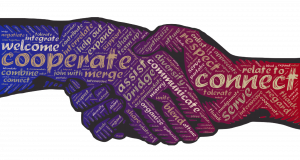
A few years ago, I had the opportunity to write an article outlining the different methods of mental health advocacy. Now that the Muslim community is beginning to embrace the concept of mental health and mental illness, I wanted to reiterate the different ways people can effectively advocate for mental health and get involved in the conversation. I also wanted to remind Muslims that the entire ummah is needed to fight stigma against mental health issues and mental illness. In working together, we can form a global team inshaAllah.
The first thing to mention is that this conversation on mental health is for everyone. Everyone has mental health. Wherever you fall on the continuum, you matter. However, you have been affected by this phenomenon it is important. And your story counts. There is often a temptation to get involved what is known as the “Oppression Olympics” and the shame game. And also, to compare notes about who has been fighting for the longest and who is the most important piece of the puzzle. This is the most damaging thing we can do to people living with mental illness. It not only harms everyone who is trying to heal and move on to live a better life, but it also is really not germane to the overall conversation. No one is more important than anyone else. And as Muslims, we should combat stigma as one body, rather than individuals. We are not in competition with one another, rather we shouldn’t be.
Next, the mental health community is diverse. There are many pieces to the puzzle and all of it is important. As Muslims, it behooves us to learn how the community operates rather than to step on toes and discount any one piece. There are any number of national and local organizations doing important work in the mental health field that have been in operation for decades. They offer valuable training resources and information about mental health and mental illness. Many times, Muslims are tempted to bypass these organizations or dismiss their work. However, as a patient who has been trained by many of these professional organizations, and helped by them as well, I would urge my brothers and sisters to take a closer look at the work being done by professionals in the mental health field. For example, I recently took an ASIST or Applied Suicide Intervention Skills Training Course in Northern Virginia which was recommended by one of my colleagues. The course is a two-day interactive workshop geared toward teaching the basics of suicide first aid. I took it in the hopes of furthering my education and experience, in order to enhance my advocacy work. But I ended up not only using the skills I learned that weekend on myself in a crisis but also realizing just how much cooperation is needed in the fight against mental health stigma. From that course, I also received 15 CEUs(Continuing Education Units). In the past, I wouldn’t have seen this as necessarily valuable in my life. However, since I’ll be working toward a degree in addiction studies, this training was valuable to me. I’m also hopeful I can resume my Islamic Studies work in order to incorporate that into my mental health advocacy. I really was rejuvenated by that tweet and I’ve been focused on my long-term goals ever since I saw it.
Finally, I’d like to give a brief overview of a few different types of advocacy that people can get involved in; though, mental health advocacy is not limited to the bulleted list below. Here are the typical ways people in my community combat the stigma against mental illness:
- Blogging – Whether casually or professionally, people write about their personal experiences with mental illness. They may also talk about what mental illness is and how to cope with certain conditions. Examples of popular blogging communities are: The Mighty, The Blurt, Time to Change, etc
- Social Media – This is a popular method for advocacy work. It is also an outlet and a coping mechanism. People use social media to discuss multiple conditions, symptoms, dispel myths, talk about medications, mention alternative treatments, vent about their symptoms, generate hashtag activism for different causes and so forth. There are both Muslim and non-Muslim organizations dedicated to promoting mental wellness and discussing mental health on social media. Because the topic can be culturally specific, I would recommend searching places like twitter and facebook generally. Even typing in ‘Muslim mental health’ may be a good place to begin.
- Writing – Many people with mental illness write books about their conditions whether to discuss their progress, tips on healing, create journals, etc. Doctors and therapists write books as well. Writing is therapeutic and can put difficult feelings in a safe place. It helps one move on.
- Legislation – Local and State. Getting involved with organizations like NAMI and participating in advocacy days is helpful in creating change. Patients and families can use their voice to speak to legislators and share their experience in order to enact change with the legislature. Organizations in your local district affiliated with NAMI can also help you connect with your legislators and share your concerns.
- Podcasts – Patients/People living with mental health conditions are using their voice to share what it’s like to live with mental illness and are helping others. This is one of the best mediums in combatting stigma. It’s easy to reach a wide audience.
“Before anything else, know this isn’t your suicide”. In the ASIST class, one of our instructors said this as we started a role-playing exercise on the last day of class. He said, in order to be effective when helping someone who is having thoughts of suicide, you have to give up control. You can’t go into it thinking you’re going to change their mind or force them to do anything. “This isn’t your suicide”, he said. And I realized it’s actually like that with the whole of mental health. This is why this conversation about mental health in the Muslim community is a group exercise. We have to work together, as a ‘team. As an ummah. It’s my hope that we can learn how the best ways to tackle this global epidemic, together.
*In addition to ASIST, organizations that help with suicide prevention and training are the American Foundation for Suicide Prevention, the American Association of Suicidology, National Suicide Prevention Lifeline, and many others. We can all do our part to help raise awareness about the importance of looking after our mental health. This is something we need to take seriously as an ummah. And it is our collective responsibility as conscientious Muslims.
Previous Post

April 19, 2018
Acceptance: My Illness, Working with My Body and Losing Weight
Next Post
November 6, 2018 You Get an Ice Cream Sandwich! *Oprah voice*
Browse Our Archives
Select a Category Anxiety Bipolar Borderline Personality Disorder General Mental Health Islam Mental Illness Uncategorized
Select a Month November 2018 April 2018 March 2018 February 2018 December 2017 September 2017 August 2017 July 2017 June 2017 May 2017 April 2017 March 2017 February 2017 January 2017 August 2016 July 2016
Follow Us!
TAKE THE
Religious Wisdom Quiz
True or False: The Ten Commandments were written on three stone tablets.
Select your answer to see how you score.
FALSE TRUE
Related posts from The Muslim Hippie

You Get an Ice Cream Sandwich! *Oprah voice*

Acceptance: My Illness, Working with My Body and...

I’m a Mental Health Patient First

TRENDING AT PATHEOS Muslim

25 Years Later: How Much Has Changed for...
As we approach the 25th anniversary of September 11th, I’ve found myself...

Podcast: Third Spaces & The Rise of Yemeni...
In the latest episode of The Artistic Foodies Podcast, hosts Abbas...

HalalFest Picks: Best 60 Halal Spots for Super...
Back in 2016, I came up with a list of 29...

Unity Is America’s Strength — Division Is Its...
by Hidayatullah Ahsan When Valentina Gomez, a Republican candidate for Congress in...

Zohran Mamdani and New York’s Fight Against Islamophobia
This past June, against all odds, Zohran Mamdani won the Democratic primary...

What the Fourth of July Means to a...
As we mark another Fourth of July, millions of Americans will celebrate...
view all Muslim blogs
Ad-Free & Subscriber Log-In Subscription Support
- About Us
- 2026 Calendar
- Videos
- Podcasts
- Library of World Religions
- Faith In Media Tracker
- Advertise With Us
- Write for Us
- Privacy Policy
- Terms of Service
- Do Not Sell My Data
- Contact Us
- Radiant Digital
- Manage Newsletter Subscriptions
- Unsubscribe From Notifications
- Sitemap
Copyright 2008-2026, Patheos. All rights reserved.
Subscription Support Ad-Free & Subscriber Log-In
Follow Patheos