
BuddhistCatholicContemplativeEvangelicalGeneral ChristianHinduJewishLatter-day SaintMuslimNew VisionsProgressive Christian
Beliefs
- Buddhist
- Catholic
- Contemplative
- Evangelical
- General Christian
- Hindu
- Jewish
- Latter-day Saint
- More Voices
- Muslim
- New Visions
- Pagan
- Progressive Christian
Topics
- Religion News
- Food and Religion
- Sports and Religion
- Religious Art
- Religious Music and Entertainment
- Religious Events
- History and Religion
- Style and Religion
- Politics and Religion
- Women in Religion
- Recreation Outdoors and Religion
- Business Finance and Religion
- Careers Workplace and Religion
- Education and Religion
- Family Parenting and Religion
- Health Fitness and Religion
- Home and Religion
- Relationships and Religion
- Technology and Religion
- Travel and Religion
Columnists
- Buddhist Columnists
- Business Finance and Religion Columnists
- Careers Workplace and Religion Columnists
- Catholic Columnists
- Contemplative Columnists
- Education and Religion Columnists
- Evangelists Columnists
- Family Parenting and Religion Columnists
- General Christian Columnists
- Health Fitness and Religion Columnists
- Hindu Columnists
- History and Religion Columnists
- Home and Religion Columnists
- Jewish Columnists
- More Voices Columnists
- Latter Day Columnists
- Muslim Columnists
- New Visions Columnists
- Nonreligious Columnists
- Pagan Columnists
- Politics and Religion Columnists
- Progressive Columnists
- Recreation Outdoors and Religion Columnists
- Relationships and Religion Columnists
- Religion News Columnists
- Religious Art Columnists
- Religious Events Columnists
- Religious Music and Entertainment Columnists
- Sports and Religion Columnists
- Style and Religion Columnists
- Technology and Religion Columnists
- Travel and Religion Columnists
- Women in Religion Columnists
Resource Library
- 2026 Calendar
- Library of World Religions
- The 100 Most Holy Places on Earth
- Patheos Answers
- Podcasts
- Videos
- Faith Leaders Database
- Anglican Episcopalian
- Bahai
- Baptist
- Buddhism
- Christianity
- Confucianism
- Eastern Orthodoxy
- Hinduism
- Holiness and Pentecostal
- ISKCON
- Islam
- Judaism
- Lutheran
- Methodist
- The Church of Jesus Christ of Latter-day Saints
- New Age
- Paganism
- Presbytarian and Reformed
- Protestantism
- Religion Behind the Scenes
- Roman Catholic
- Scientology
- Shia Islam
- Sikhism
- Sufism
- Sunni Islam
- Taoism
- Zen
- See all religions
Research Tools
 Ad-Free & Subscriber Log-In Subscription Support
Ad-Free & Subscriber Log-In Subscription Support
Follow Patheos 

- Trending:
- Forgiveness
- |
- Marriage
- |
- Consciousness
- |
- Death Penalty
- |
- Election
- |
- Halloween
 The Mu'mina Lifestyle
- Home
- Muslim
- Style and Religion
- Unveiling Veil On World Hijab Day
Unveiling Veil On World Hijab Day
Last updated on: January 31, 2023 at 4:35 pm by Nadia Ahmed
Unveiling Veil On World Hijab Day 2023-01-31T16:35:16-05:30 Nadia Ahmed
Patheos Explore the world's faith through different perspectives on religion and spirituality! Patheos has the views of the prevalent religions and spiritualities of the world.
On February 1st each year, the world pauses to recognize World Hijab Day – an international observance day dedicated to promoting religious freedom and respect for Muslim women. This special day was founded in 2013 by Nazma Khan which serves as a reminder of why hijab is worn: it’s both a signifier of dignity and empowerment!
World Hijab Day is the perfect time to explore this captivating and often misunderstood cultural practice. The fundamental meaning of ‘hijab’ in Arabic is a ‘barrier’. This provides an important insight into its primary purpose: shielding Muslim women from unwanted attention or oppression while simultaneously expressing modesty, privacy, morality, and spirituality in one bold gesture!
In Islam, the concept of hijab goes beyond a mere headscarf – it encompasses how women present and express themselves in both their attire and attitudes.
As stated in the Quran:
“And say to the believing women that they should lower their gaze and guard their modesty; and that they should not display their beauty and ornaments except what must ordinarily appear thereof; that they should draw their veils over their bosoms and not display their beauty except to their husbands…” (Holy Qur’an 24:31)
The term ” veil” here refers to the head covering. In ancient times, women irrespective of their religion used to cover their heads but would not cover their chests. So, this ayah was revealed to tell women to cover not just their heads but also their modesty.
Further interpretation of this ayah makes up 6 rules that imply Islamic modest dressing
- The clothes should cover the entire body except for the face, palms and area below her ankle.
- It should be loose fitting such that the shape of a woman’s body is not revealed.
- It should not be transparent.
- The outfit shouldn’t attract attention like clothing with trinkets or something flashy.
- It shouldn’t resemble the clothes of the opposite gender.
- It shouldn’t resemble the religious attire of others.
This is the Islamic ruling of hijab for a muslim women. But, not just Muslims, but women of all backgrounds have traditionally donned some form of head covering as a sign respect. Whether it’s a burqa or beret, centuries-old customs honor the beauty and power within.
Now, that we know what Islamic hijab is, let’s dive into some history about head-covering
The history of the head covering and present
The origin of the headscarf has been traced back to Ancient Greek and Assyrian civilizations. In both societies, women were known to cover their heads with veils while they attended religious ceremonies or when they went out in public. Head covering was always a part of orthodox Jewish and Christian women. In the 19th century, head covering among Jewish women became a symbol of religious identification and piety. The veil has thus been an integral part of many cultures and religions for centuries.
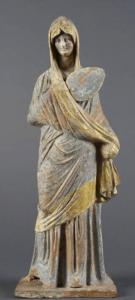
As times changed, so did the perception and purpose of a woman wearing a veil. During the Middle Ages, the veil was used to signify a woman’s marital status and social class. It was banned for women of lower class or prostitutes. During this time it was worn as an identification of their class in the society.
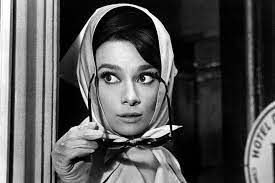
In the early 19’s, headscarves were included as statement fashion pieces in bright and luxurious fabric. The trend was mainly popular among the upper class but soon spread to other classes too. The 1960 witnessed the statement head scarf look by the iconic Audrey Hepburn.
In the ancient Saudi peninsula, the hijab has always been part of their attire even before the ayah about hijab was revealed. The Bedouin women, who lived in the desert, used to cover their faces with a cloth when they went out.
Today, the hijab has grown far beyond what it was in its origin and is embraced by Muslim women all around the world as a symbol of identity and pride. It is inspiring to see how many young Muslim women are wearing hijabs with pride and making their voices heard. On this World Hijab Day, we should celebrate how far we have come in recognizing and respecting the hijab and its significance for Muslim women around the world. We should also continue to strive for an understanding that promotes inclusion and respect for all religious practices.
Challenges faced by Hijabi Muslim women
Despite the progress we have made in accepting hijabs, many women still face discrimination and harassment due to their choice of covering. In some countries, hijab is frowned upon or even banned completely. Women are often seen as oppressed if they choose to cover up and don’t conform to certain beauty standards. The pressure to fit in can be overwhelming and it can take a toll on their mental health.
Hijabis also still struggle to find clothing options that suit their modesty needs. In many countries, there are limited stores with modest clothing options for women which makes finding the right outfit much harder. This is why we need more initiatives to promote inclusion of hijabi women in the fashion industry.
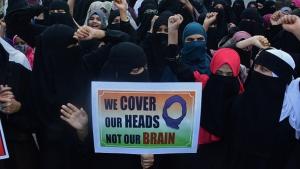
In addition, hijabis are often excluded from certain activities because of their choice to cover up. We need to raise awareness about the importance of religious freedom and make sure everyone feels safe and respected regardless of what they choose to wear.
The benefits of wearing a hijab
Islamically, the hijab was introduced to protect women from the unwanted male gaze. Her hijab gives out a message that she cannot be treated casually by the opposite gender. Plus, it will show her identity as a muslim women.
Apart from that, the hijab has various physical and psychological benefits for those who choose to wear it. Physically, the hijab can protect women from harsh sunlight, wind and dust, as well as provide warmth in cold climates. It also helps keep them cool in hot weather by providing an extra layer of insulation. As far as psychological benefits are concerned, wearing the hijab can give a sense of comfort and security, as well as boost confidence.

CSA Images/Getty Images
Moreover, the hijab has become a symbol of female empowerment and is seen by many as a way to reclaim their identity and stand up for what they believe in. It is a form of self-expression which allows women to take control over how they present themselves to the world.
Above all, let us celebrate the beauty of hijab and the courage of hijabi women who choose to wear it despite all the challenges they face. Wearing hijab should be a choice that is respected and appreciated by others around them. Let’s work together to create an environment where all religious practices are accepted and celebrated with respect!
Happy World Hijab Day!
Style and Religion
Religious Events
Previous Post

October 27, 2022
Why is a piece of cloth on a woman's head politicized?
Next Post

February 22, 2023 How can faith help you rekindle the love in your relationship?
Recent Comments
Browse Our Archives
Select a Category Religious Events Uncategorized
Select a Month June 2024 December 2023 October 2023 May 2023 February 2023 January 2023 October 2022 September 2022 August 2022 July 2022 June 2022 May 2022
Follow Us!
TAKE THE
Religious Wisdom Quiz
What does "Ebenezer" mean in Hebrew?
Select your answer to see how you score.
Stone of Help City of Refuge House of the Lord Gift from God
Related posts from The Mu'mina Lifestyle

What Separates Humans More: Race, Religion, or Language?

Prayer in the Eyes of Americans: A Survey...

Inside Out 2: A Muslim Perspective

7 Famous People Who Converted To Islam Late...
TRENDING AT PATHEOS Muslim

25 Years Later: How Much Has Changed for...
As we approach the 25th anniversary of September 11th, I’ve found myself...

Podcast: Third Spaces & The Rise of Yemeni...
In the latest episode of The Artistic Foodies Podcast, hosts Abbas...

HalalFest Picks: Best 60 Halal Spots for Super...
Back in 2016, I came up with a list of 29...

Unity Is America’s Strength — Division Is Its...
by Hidayatullah Ahsan When Valentina Gomez, a Republican candidate for Congress in...

Zohran Mamdani and New York’s Fight Against Islamophobia
This past June, against all odds, Zohran Mamdani won the Democratic primary...

What the Fourth of July Means to a...
As we mark another Fourth of July, millions of Americans will celebrate...
view all Muslim blogs
Ad-Free & Subscriber Log-In Subscription Support
- About Us
- 2026 Calendar
- Videos
- Podcasts
- Library of World Religions
- Faith In Media Tracker
- Advertise With Us
- Write for Us
- Privacy Policy
- Terms of Service
- Do Not Sell My Data
- Contact Us
- Radiant Digital
- Manage Newsletter Subscriptions
- Unsubscribe From Notifications
- Sitemap
Copyright 2008-2026, Patheos. All rights reserved.
Subscription Support Ad-Free & Subscriber Log-In
Follow Patheos