
BuddhistCatholicContemplativeEvangelicalGeneral ChristianHinduJewishLatter-day SaintMuslimNew VisionsProgressive Christian
Beliefs
- Buddhist
- Catholic
- Contemplative
- Evangelical
- General Christian
- Hindu
- Jewish
- Latter-day Saint
- More Voices
- Muslim
- New Visions
- Pagan
- Progressive Christian
Topics
- Religion News
- Food and Religion
- Sports and Religion
- Religious Art
- Religious Music and Entertainment
- Religious Events
- History and Religion
- Style and Religion
- Politics and Religion
- Women in Religion
- Recreation Outdoors and Religion
- Business Finance and Religion
- Careers Workplace and Religion
- Education and Religion
- Family Parenting and Religion
- Health Fitness and Religion
- Home and Religion
- Relationships and Religion
- Technology and Religion
- Travel and Religion
Columnists
- Buddhist Columnists
- Business Finance and Religion Columnists
- Careers Workplace and Religion Columnists
- Catholic Columnists
- Contemplative Columnists
- Education and Religion Columnists
- Evangelists Columnists
- Family Parenting and Religion Columnists
- General Christian Columnists
- Health Fitness and Religion Columnists
- Hindu Columnists
- History and Religion Columnists
- Home and Religion Columnists
- Jewish Columnists
- More Voices Columnists
- Latter Day Columnists
- Muslim Columnists
- New Visions Columnists
- Nonreligious Columnists
- Pagan Columnists
- Politics and Religion Columnists
- Progressive Columnists
- Recreation Outdoors and Religion Columnists
- Relationships and Religion Columnists
- Religion News Columnists
- Religious Art Columnists
- Religious Events Columnists
- Religious Music and Entertainment Columnists
- Sports and Religion Columnists
- Style and Religion Columnists
- Technology and Religion Columnists
- Travel and Religion Columnists
- Women in Religion Columnists
Resource Library
- 2026 Calendar
- Library of World Religions
- The 100 Most Holy Places on Earth
- Patheos Answers
- Podcasts
- Videos
- Faith Leaders Database
- Anglican Episcopalian
- Bahai
- Baptist
- Buddhism
- Christianity
- Confucianism
- Eastern Orthodoxy
- Hinduism
- Holiness and Pentecostal
- ISKCON
- Islam
- Judaism
- Lutheran
- Methodist
- The Church of Jesus Christ of Latter-day Saints
- New Age
- Paganism
- Presbytarian and Reformed
- Protestantism
- Religion Behind the Scenes
- Roman Catholic
- Scientology
- Shia Islam
- Sikhism
- Sufism
- Sunni Islam
- Taoism
- Zen
- See all religions
Research Tools
 Ad-Free & Subscriber Log-In Subscription Support
Ad-Free & Subscriber Log-In Subscription Support
Follow Patheos 

- Trending:
- Forgiveness
- |
- Marriage
- |
- Consciousness
- |
- Death Penalty
- |
- Election
- |
- Halloween
 The Mu'mina Lifestyle
- Home
- Muslim
- Style and Religion
- Why is a piece of cloth on a woman’s head politicized?
Why is a piece of cloth on a woman’s head politicized?
Last updated on: December 2, 2022 at 6:02 pm by Nadia Ahmed
Why is a piece of cloth on a woman’s head politicized? 2022-12-02T18:02:14-05:30 Nadia Ahmed
Patheos Explore the world's faith through different perspectives on religion and spirituality! Patheos has the views of the prevalent religions and spiritualities of the world.
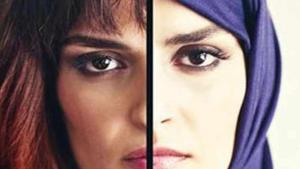
Hijab is often seen as a symbol of modesty, religious devotion, empowerment and independence. Although hijabs have been worn by Muslim women for centuries, there is still a great deal of debate surrounding them.
In recent years, there has been an increase in the number of women choosing to wear hijabs in public places, despite opposition from some quarters. But there also a section of Muslim women who feel that hijabs are a sign of oppression and they are doing so because they feel compelled to do so by their religion or by their families. Others argue that women who choose to wear them should be free to do so without fear of discrimination or harassment.
Several different arguments have been made in favour of allowing Muslim women to wear the hijab in public places. One argument is that the hijab is a sign of religious freedom and that Muslim women should be able to express their religious beliefs freely. Vice-versa another argument is that the hijab is a sign of modesty and that Muslim women should not be allowed to show their hair in public. However, it is important to remember that each woman who wears a hijab or not does so for her reasons.
There have been various attempts to ban or enforce hijabs in public places, such as schools and workplaces. However, these attempts have often led to chaos and controversy. But why did wearing a hijab become a political statement?
In today’s society, it seems that wearing a hijab has taken on a new meaning – one of defiance and resistance. And as a woman who chooses to wear or not wear the hijab, we find ourselves at the center of a heated debate about religious freedom and women’s rights.
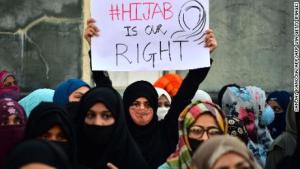
India – choose education or choose hijab??
This is the question on every girl’s mind in India, as the government is proposing a ban on the headscarf in educational institutions. The hijab is an important part of many Muslim women’s religious faith, and they believe that it is their right to wear it. However, the Indian government is saying that the hijab is a “security risk” and that it should not be allowed in schools and colleges. This has caused a lot of debate and controversy in the country, with many people arguing for and against the ban.
India is a highly religious country consisting of people belonging to diverse religions. Every person has the freedom of religious expression in this country. Hindus wear a tilak, Sikhs wear a turban , Christians wear a cross, and Muslim women wear a hijab. Then why is only the hijab being banned? Is it because it’s a security risk or does the government want to show that they are secular by banning only one religious symbol?
Many girls want to study but can’t because of this hijab ban. They are being forced to choose between their education and their religious beliefs. This is not fair, and the government needs to rethink its decision. Muslims are an important part of the Indian population, and they should not be discriminated against.
The hijab is a symbol of modesty and religious faith, and it should be respected. Muslim women have a right to wear it, and the government should not take that away from them.
Iran – Wear hijab or get arrested?
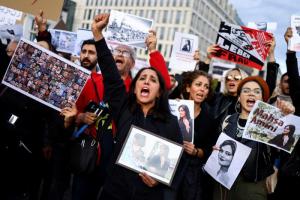
In Iran, the hijab is compulsory for all women and girls over the age of seven. If they do not wear it, they can be arrested, fined, or even killed. The Iranian government says that the hijab is necessary to protect women’s modesty and virtue, but many women see it as a form of oppression.
The compulsory wearing of the hijab has led to a lot of discontent among Iranian women, and there have been many protests against it. In 2018, a group of Iranian women started a campaign called “White Wednesdays” in which they would wear white hijabs or no hijab at all to protest the compulsory wearing of the hijab. This campaign was met with a lot of resistance from the government, and many of the women involved were arrested.
Despite the risks, many Iranian women continue to protest the compulsory wearing of the hijab. They believe that it is their right to choose whether or not to wear it, and they should not be forced to do so.
In Islam, the hijab is a mandatory act to be practised by every woman irrespective of where you live. But treating women badly and arresting them based on their hijab is also not right. In the end, Allah(SWT) is the one to judge a person based on his deeds, not us humans.
For more questions on hijab, read this article ‘The ultimate list of FAQs about the hijab‘
In my opinion, banning the hijab and enforcing a strict law to wear them in both scenarios it’ll lead to the restricting of women’s rights. I feel that Muslim women should be educated about the purpose of hijab from a young age and then let them decide if or when they want to practice it. I also feel that women should be sensitive to each other’s choice of dressing. Iran’s protest shows the women burning their hijabs and dancing with joy. I found that quite unacceptable towards the women who choose to wear it with pride. Also, the women who wear it should not be judgmental about the ones who don’t.
Making an inclusive society for all women
There needs to be more dialogue and understanding between different groups of people to create a more inclusive society for all women. We need to respect each other’s beliefs and opinions and learn to live together peacefully.
The government also needs to do its part in creating an inclusive society. It should not be imposing bans on religious practices. But it should instead be working towards creating an environment where everyone is free to express their beliefs.
Lastly, we need to educate people about the importance of women’s rights and equality. Only then can we hope to create a society where all women are treated with respect and dignity.
Style and Religion
Politics and Religion
Previous Post

September 27, 2022
Striking a Balance in Portraying Religion in News Media
Next Post

January 31, 2023 Unveiling Veil On World Hijab Day
Browse Our Archives
Select a Category Religious Events Uncategorized
Select a Month June 2024 December 2023 October 2023 May 2023 February 2023 January 2023 October 2022 September 2022 August 2022 July 2022 June 2022 May 2022
Follow Us!
TAKE THE
Religious Wisdom Quiz
What New Testament letter includes the "fruit of the Spirit"?
Select your answer to see how you score.
Galatians Hebrews Ephesians James
Related posts from The Mu'mina Lifestyle

Inside Out 2: A Muslim Perspective

7 Famous People Who Converted To Islam Late...

Harmony Within: Nurturing Mental Health Through Spiritual Practice
How can faith help you rekindle the love...
TRENDING AT PATHEOS Muslim

25 Years Later: How Much Has Changed for...
As we approach the 25th anniversary of September 11th, I’ve found myself...

Podcast: Third Spaces & The Rise of Yemeni...
In the latest episode of The Artistic Foodies Podcast, hosts Abbas...

HalalFest Picks: Best 60 Halal Spots for Super...
Back in 2016, I came up with a list of 29...

Unity Is America’s Strength — Division Is Its...
by Hidayatullah Ahsan When Valentina Gomez, a Republican candidate for Congress in...

Zohran Mamdani and New York’s Fight Against Islamophobia
This past June, against all odds, Zohran Mamdani won the Democratic primary...

What the Fourth of July Means to a...
As we mark another Fourth of July, millions of Americans will celebrate...
view all Muslim blogs
Ad-Free & Subscriber Log-In Subscription Support
- About Us
- 2026 Calendar
- Videos
- Podcasts
- Library of World Religions
- Faith In Media Tracker
- Advertise With Us
- Write for Us
- Privacy Policy
- Terms of Service
- Do Not Sell My Data
- Contact Us
- Radiant Digital
- Manage Newsletter Subscriptions
- Unsubscribe From Notifications
- Sitemap
Copyright 2008-2026, Patheos. All rights reserved.
Subscription Support Ad-Free & Subscriber Log-In
Follow Patheos