
BuddhistCatholicContemplativeEvangelicalGeneral ChristianHinduJewishLatter-day SaintMuslimNew VisionsProgressive Christian
Beliefs
- Buddhist
- Catholic
- Contemplative
- Evangelical
- General Christian
- Hindu
- Jewish
- Latter-day Saint
- More Voices
- Muslim
- New Visions
- Pagan
- Progressive Christian
Topics
- Religion News
- Food and Religion
- Sports and Religion
- Religious Art
- Religious Music and Entertainment
- Religious Events
- History and Religion
- Style and Religion
- Politics and Religion
- Women in Religion
- Recreation Outdoors and Religion
- Business Finance and Religion
- Careers Workplace and Religion
- Education and Religion
- Family Parenting and Religion
- Health Fitness and Religion
- Home and Religion
- Relationships and Religion
- Technology and Religion
- Travel and Religion
Columnists
- Buddhist Columnists
- Business Finance and Religion Columnists
- Careers Workplace and Religion Columnists
- Catholic Columnists
- Contemplative Columnists
- Education and Religion Columnists
- Evangelists Columnists
- Family Parenting and Religion Columnists
- General Christian Columnists
- Health Fitness and Religion Columnists
- Hindu Columnists
- History and Religion Columnists
- Home and Religion Columnists
- Jewish Columnists
- More Voices Columnists
- Latter Day Columnists
- Muslim Columnists
- New Visions Columnists
- Nonreligious Columnists
- Pagan Columnists
- Politics and Religion Columnists
- Progressive Columnists
- Recreation Outdoors and Religion Columnists
- Relationships and Religion Columnists
- Religion News Columnists
- Religious Art Columnists
- Religious Events Columnists
- Religious Music and Entertainment Columnists
- Sports and Religion Columnists
- Style and Religion Columnists
- Technology and Religion Columnists
- Travel and Religion Columnists
- Women in Religion Columnists
Resource Library
- 2026 Calendar
- Library of World Religions
- The 100 Most Holy Places on Earth
- Patheos Answers
- Podcasts
- Videos
- Faith Leaders Database
- Anglican Episcopalian
- Bahai
- Baptist
- Buddhism
- Christianity
- Confucianism
- Eastern Orthodoxy
- Hinduism
- Holiness and Pentecostal
- ISKCON
- Islam
- Judaism
- Lutheran
- Methodist
- The Church of Jesus Christ of Latter-day Saints
- New Age
- Paganism
- Presbytarian and Reformed
- Protestantism
- Religion Behind the Scenes
- Roman Catholic
- Scientology
- Shia Islam
- Sikhism
- Sufism
- Sunni Islam
- Taoism
- Zen
- See all religions
Research Tools
 Ad-Free & Subscriber Log-In Subscription Support
Ad-Free & Subscriber Log-In Subscription Support
Follow Patheos 

- Trending:
- Forgiveness
- |
- Marriage
- |
- Consciousness
- |
- Death Penalty
- |
- Election
- |
- Halloween
 The Mu'mina Lifestyle
- Home
- Muslim
- Style and Religion
- The need to make modesty and fashion co-exist
The need to make modesty and fashion co-exist
Last updated on: August 26, 2022 at 4:28 am by Nadia Ahmed
The need to make modesty and fashion co-exist 2022-08-26T04:28:54-05:30 Nadia Ahmed
Patheos Explore the world's faith through different perspectives on religion and spirituality! Patheos has the views of the prevalent religions and spiritualities of the world.

“Fashion is a distinctive and often constant trend in the style in which people present themselves.” Most commonly, fashion is defined as the prevailing style of dress or behavior at any given time. Fashion trends are often started by looking at other cultures. – Wikipedia.
On the flip side, Modesty can be defined in different ways, but generally, it is seen as a quality that helps people to behave and dress in a way that avoids drawing unnecessary attention to themselves.
There are different standards of modesty around the world, and what is considered modest in one culture may not be considered modest in another. For example, in some cultures, women are expected to cover their heads and faces, while in others it is considered more modest to dress in loose-fitting clothes that cover the body from shoulder to toe.

Why is modesty important?
There are a number of reasons why people might choose to dress modestly. For some, it is a way to show respect for themselves and others. For others, it may be a way to express their religious or cultural beliefs. Modesty can also be seen as a way to avoid drawing unwanted attention or sexual harassment. The way we dress says a lot about who we are and what we believe in.
In Islamic tradition, women are commanded to dress modestly in order to protect themselves from harm. Muslim women cover themselves as a sign of dedication to their god and to protect themselves from unnecessary attention. Modesty is an integral part of their identity. It is a way of showing respect for oneself and others and creating an environment conducive to learning, working, and interacting with others.
However, in today’s society, modesty is often seen as old-fashioned or outdated. The fashion industry is constantly pushed to be more revealing and sexy, and many people feel like they have to keep up with the latest trends in order to be considered fashionable.
This can be a difficult balance for those who value modesty. On the one hand, they want to stay true to their beliefs and values. Also, they don’t want to be seen as frumpy or behind the times.
The conflict between modesty and fashion.
The conflict between modesty and fashion is nothing new. In fact, it goes back to the early days of the fashion industry. In the late 19th century, designers began pushing the boundaries of what was considered acceptable clothing. Hemlines rose and necklines lowered, and fashion became increasingly sexualized.
This trend continued throughout the 20th century, and by the 21st century, modesty was seen as increasingly old-fashioned. Many people felt like they had to choose between being fashionable and being modest.
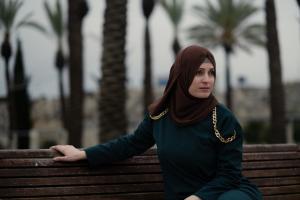
The need for modesty and fashion to co-exist.
The conflict between modesty and fashion doesn’t have to be a zero-sum game. There is room for both in today’s world. Modesty doesn’t have to mean boring or frumpy, and fashion doesn’t have to mean sexy or revealing.
There are many designers who are creating beautiful, stylish, and modest clothing. And there are more and more people who are interested in wearing modest clothing. By supporting these designers and shoppers, we can create a market for modest fashion.
This doesn’t mean that everyone has to start dressing modestly. But it does mean that we should be open to the idea of modesty and fashion co-existing. It is possible to be fashionable and modest, and there is no reason why these two things should be seen as mutually exclusive.
The trend of modest fashion is on the rise, and it is here to stay. But still, there is a gap in the market. Many brands showcase their clothing as modest even if the neckline is low, the dress has a long slit or is skin-tight. While these items may not be considered outright revealing, they aren’t exactly modest either.
As more and more people become interested in dressing modestly, the fashion industry will continue to evolve to meet these needs. This is where the need for more modest fashion brands comes in. We need brands that will create clothing that is both stylish and modest. Only then we can truly have a market for modest fashion.

Some popular modest brands like Modanisa, Haute Hijab, Modish Muslimah, and Aab Collection are already doing a great job in providing such clothing options. These brands are slowly but surely changing the landscape of the fashion industry, and we need more of them to meet the growing demand for modest fashion. As we know from the statistics, the global Islamic clothing market alone is expected to reach $361 billion by 2023.
In order for modest fashion to be truly successful, we need to see more support from both the fashion industry and consumers. We need more designers creating modest clothing, and we need more people buying and wearing it. Only then can modest fashion become the norm, rather than the exception.
But Why? What’s the benefit of this revolution of modest fashion?
Naturally, women have an inclination towards the way they look or dress up. And today’s youth living in this world of fashion, trends, and Instagram feeds, it’s hard not to get caught up in it all.
Modest fashion as a trend can help women to adopt new styles comfortably. They don’t feel alienated or FOMO about the latest trends. Other people will be more accepting of the way they dress. This may even open up many opportunities for them, as they will not have to worry about their clothing choices as much.
As this modest fashion trend starts to grow, there are already many benefits that are starting to show. For one, it is slowly helping to break the stereotype that all Muslims are anti-fashion. In addition, it is also increasing the visibility of Muslim women in the fashion industry.
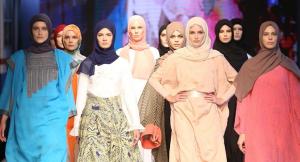
With more and more brands and designers catering to modest fashion, it is only a matter of time before this trend goes mainstream. And when that happens, it will be a win-win for everyone involved. The fashion industry will get a new customer base, and Muslim women will finally have access to the latest trends without compromising their modesty.
In a world where fashion is often seen as superficial and materialistic, modest fashion is a refreshing change. It’s a way of dressing that puts emphasis on inner beauty and self-respect. And that is something we can all get behind.
So let’s continue to support the modest fashion movement, and help it grow even further. Let’s break down the barriers between modesty and fashion, and show the world that they can co-exist. We can be fashionable and modest, and there is no reason why these two things should be seen as mutually exclusive.
Do you think modest dressing and the fashion industry can co-exist? Why or why not? Let us know in the comments below!
Style and Religion
Previous Post

July 1, 2022
Can a Muslim Marry a Non-Muslim?
Next Post
July 29, 2022 Tame Your Thoughts Before It Tames You
Browse Our Archives
Select a Category Religious Events Uncategorized
Select a Month June 2024 December 2023 October 2023 May 2023 February 2023 January 2023 October 2022 September 2022 August 2022 July 2022 June 2022 May 2022
Follow Us!
TAKE THE
Religious Wisdom Quiz
What New Testament letter includes the "fruit of the Spirit"?
Select your answer to see how you score.
Galatians Hebrews Ephesians James
Related posts from The Mu'mina Lifestyle

Inside Out 2: A Muslim Perspective

7 Famous People Who Converted To Islam Late...

Harmony Within: Nurturing Mental Health Through Spiritual Practice
How can faith help you rekindle the love...
TRENDING AT PATHEOS Muslim

25 Years Later: How Much Has Changed for...
As we approach the 25th anniversary of September 11th, I’ve found myself...

Podcast: Third Spaces & The Rise of Yemeni...
In the latest episode of The Artistic Foodies Podcast, hosts Abbas...

HalalFest Picks: Best 60 Halal Spots for Super...
Back in 2016, I came up with a list of 29...

Unity Is America’s Strength — Division Is Its...
by Hidayatullah Ahsan When Valentina Gomez, a Republican candidate for Congress in...

Zohran Mamdani and New York’s Fight Against Islamophobia
This past June, against all odds, Zohran Mamdani won the Democratic primary...

What the Fourth of July Means to a...
As we mark another Fourth of July, millions of Americans will celebrate...
view all Muslim blogs
Ad-Free & Subscriber Log-In Subscription Support
- About Us
- 2026 Calendar
- Videos
- Podcasts
- Library of World Religions
- Faith In Media Tracker
- Advertise With Us
- Write for Us
- Privacy Policy
- Terms of Service
- Do Not Sell My Data
- Contact Us
- Radiant Digital
- Manage Newsletter Subscriptions
- Unsubscribe From Notifications
- Sitemap
Copyright 2008-2026, Patheos. All rights reserved.
Subscription Support Ad-Free & Subscriber Log-In
Follow Patheos