
BuddhistCatholicContemplativeEvangelicalGeneral ChristianHinduJewishLatter-day SaintMuslimNew VisionsProgressive Christian
Beliefs
- Buddhist
- Catholic
- Contemplative
- Evangelical
- General Christian
- Hindu
- Jewish
- Latter-day Saint
- More Voices
- Muslim
- New Visions
- Pagan
- Progressive Christian
Topics
- Religion News
- Food and Religion
- Sports and Religion
- Religious Art
- Religious Music and Entertainment
- Religious Events
- History and Religion
- Style and Religion
- Politics and Religion
- Women in Religion
- Recreation Outdoors and Religion
- Business Finance and Religion
- Careers Workplace and Religion
- Education and Religion
- Family Parenting and Religion
- Health Fitness and Religion
- Home and Religion
- Relationships and Religion
- Technology and Religion
- Travel and Religion
Columnists
- Buddhist Columnists
- Business Finance and Religion Columnists
- Careers Workplace and Religion Columnists
- Catholic Columnists
- Contemplative Columnists
- Education and Religion Columnists
- Evangelists Columnists
- Family Parenting and Religion Columnists
- General Christian Columnists
- Health Fitness and Religion Columnists
- Hindu Columnists
- History and Religion Columnists
- Home and Religion Columnists
- Jewish Columnists
- More Voices Columnists
- Latter Day Columnists
- Muslim Columnists
- New Visions Columnists
- Nonreligious Columnists
- Pagan Columnists
- Politics and Religion Columnists
- Progressive Columnists
- Recreation Outdoors and Religion Columnists
- Relationships and Religion Columnists
- Religion News Columnists
- Religious Art Columnists
- Religious Events Columnists
- Religious Music and Entertainment Columnists
- Sports and Religion Columnists
- Style and Religion Columnists
- Technology and Religion Columnists
- Travel and Religion Columnists
- Women in Religion Columnists
Resource Library
- 2026 Calendar
- Library of World Religions
- The 100 Most Holy Places on Earth
- Patheos Answers
- Podcasts
- Videos
- Faith Leaders Database
- Anglican Episcopalian
- Bahai
- Baptist
- Buddhism
- Christianity
- Confucianism
- Eastern Orthodoxy
- Hinduism
- Holiness and Pentecostal
- ISKCON
- Islam
- Judaism
- Lutheran
- Methodist
- The Church of Jesus Christ of Latter-day Saints
- New Age
- Paganism
- Presbytarian and Reformed
- Protestantism
- Religion Behind the Scenes
- Roman Catholic
- Scientology
- Shia Islam
- Sikhism
- Sufism
- Sunni Islam
- Taoism
- Zen
- See all religions
Research Tools
 Ad-Free & Subscriber Log-In Subscription Support
Ad-Free & Subscriber Log-In Subscription Support
Follow Patheos 

- Trending:
- Forgiveness
- |
- Marriage
- |
- Consciousness
- |
- Death Penalty
- |
- Election
- |
- Halloween
 The Mormon Politico
- Home
- Latter-day Saint
- Religion News
- “They Were [Not] Still His Brethren in the Lord”
“They Were [Not] Still His Brethren in the Lord”
Last updated on: September 13, 2017 at 1:05 pm by Gary A.
“They Were [Not] Still His Brethren in the Lord” 2017-09-13T13:05:22-04:00 Gary A.
Patheos Explore the world's faith through different perspectives on religion and spirituality! Patheos has the views of the prevalent religions and spiritualities of the world.
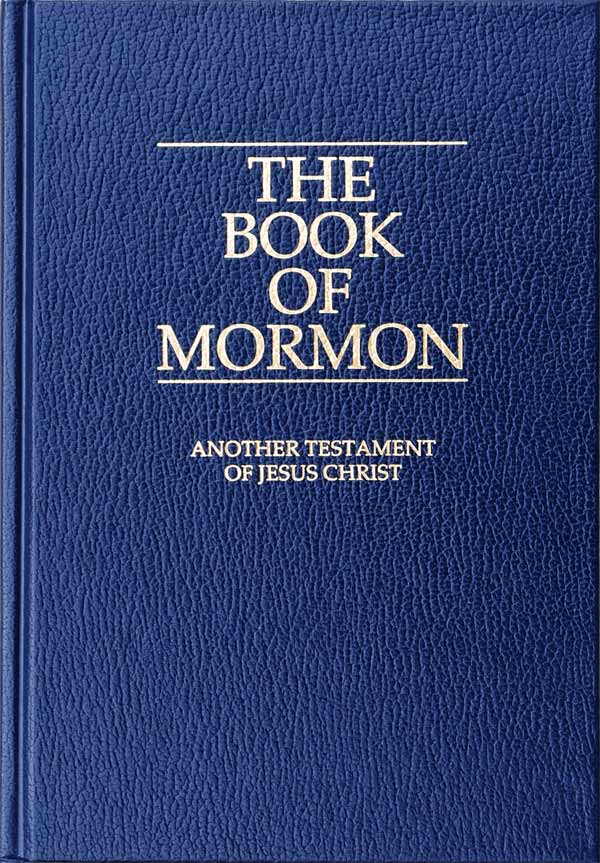
The Book of Mormon contains the story of Alma reuniting with the sons of Mosiah. Obtained through Creative Commons.
How would Alma have felt if, when he reunited with the sons of Mosiah, they were no longer part of the Church?
Over the past few months, I’ve met with several longtime friends who have left the Church. As we shared meals and chatted, I couldn’t help but think about Alma 17. In that chapter, Alma the Younger runs into his old pals, the sons of Mosiah. Below is a description of their encounter:
“And now it came to pass that as Alma was journeying from the land of Gideon southward, away to the land of Manti, behold, to his astonishment, he met with the sons of Mosiah journeying towards the land of Zarahemla. Now these sons of Mosiah were with Alma at the time the angel first appeared unto him; therefore Alma did rejoice exceedingly to see his brethren; and what added more to his joy, they were still his brethren in the Lord.” (emphasis added)
I’m not one to wear my religion on my sleeve, and when I talked with my friends, we largely avoided topics of faith. Still, I came away from my time with them with a vague sense of sadness. While we were still buddies and still shared many of the same interests, there was something missing – there wasn’t quite the connection we once had.
What caused these feelings of estrangement? You could argue that it was just the passage of time – after all, we hadn’t seen each other in ages. You could also argue that it was simply encountering each other in a different place and context – we weren’t meeting in the same city we had once inhabited. But I would argue that our disconnect was a product of something else – of our knowledge, unspoken yet painfully palpable, that our now-different beliefs had fundamentally altered the essence of who we were and the nature of our relationship.
Don’t get me wrong – I don’t blame anyone for leaving the Church. There is much in its history and the current state of things to be upset about or get hung up on. Just last month, as I read a book about the Epicurean origins of the philosophy of America’s Founding Fathers, I couldn’t help but notice the many startling parallels between Enlightenment Deist thought and the contents of the supposedly ancient Mormon canon. Of course, approaching my reading from a faithful perspective, I chalked up these similarities to the timelessness of truth and, possibly, to an “inspiration” as opposed to a “transcription” model of Joseph Smith’s translation process. But I could easily see how a skeptical mind, and especially a cynical mind, could view such “borrowing” and see it as evidence of the Book of Mormon’s nineteenth-century, as opposed to ancient, origins.
Even though I can understand why someone might grow disaffected with the LDS Church, that doesn’t make my sorrow at their departure any less poignant. To be part of the Church, to be “Mormon,” is an identity-defining experience. You subscribe to a set of beliefs that much of the world finds ridiculous, and you join a people whose tight-knit solidarity has been forged by almost two centuries of persecution and discrimination. You grow up singing the same children’s songs, attending Scout camps, sitting through testimony meetings, and performing service projects. You join your fellow Mormons once a month in fasting for the poor, and you breathe life into one of the world’s last “mystery religions” by attending ceremonies in its temples.
Often, you’ve spent eighteen months to two years immersed in a somewhat monastic experience, pledging to abstain from many worldly pleasures, like television, movies, and dating, while spending almost every waking hour trying to improve the lives of others. You’ve also endured the uncomfortable questions when, at a work happy hour or a morning meet-up, you’re the only one nursing a soda or sipping from a hot chocolate. And let’s not forget the ever-present sacrifice you make when you donate one-tenth of each paycheck to the Church.
Let’s face it – Mormonism is an identity-defining experience. It’s not just a set of beliefs, though that is the foundation of the Mormon experience. It’s a history, a culture, a people – some might even argue an ethnicity. And though someone doesn’t have to abandon the historical and cultural trappings of Mormonism when they choose to withdraw their faith in the Church’s doctrines, their rejection of the very beliefs that created Mormonism and define what it is seems, to some extent, like they’re doing just that. It’s like claiming to be Christian while denying that a man named Jesus Christ ever walked the earth or labeling oneself a Buddhist while asserting that Siddhartha never lived.
I don’t mean this post to be a condemnation of my friends and acquaintances who have left the Church. Like I said, I fully understand that people have very good reasons for disembarking from the “old ship Zion.” Rather, this post should taken as an expression of grief and, to some extent, mourning. I empathize with what Alma may have felt if, rather than finding the sons of Mosiah still strong in the faith, he had discovered that they had abandoned their beliefs. These were people with whom he had shared soul-shaking, life-altering experiences, and now they had turned their backs on that. Alma is described as “rejoicing exceedingly” when he came upon his long-lost brethren – I can only imagine the sorrow that would have enveloped him if they were no longer his “brethren in the Lord.”
Previous Post

September 11, 2017
Sayyid Qutb in America: An Unwitting Fusion of Sartre and Camus
Next Post

September 13, 2017 Trump Cabinet Meeting: Rameumpton Edition
Browse Our Archives
Select a Category Book of Mormon Brigham Young BYU Donald Trump General Conference Hillary Clinton Islam LDS Mormon nationalism Nuclear weapons Philosophy Politics Racism Romney The Church of Jesus Christ of Latter-day Saints Uncategorized War
Select a Month February 2018 December 2017 October 2017 September 2017 August 2017 July 2017
Follow Us!
TAKE THE
Religious Wisdom Quiz
What does "Shema," the central Jewish prayer, mean?
Select your answer to see how you score.
Pray Hear Light Peace
Related posts from The Mormon Politico

"I should have told her to divorce him":...

Remind me why Mormons hang out with the...


Elders Ballard & Anderson Confront the Nationalist Plague
TRENDING AT PATHEOS Latter-day Saint

Did Prayer Cure His Cancer? Or Was It...
At 4 AM one morning, Joshua W. Brown’s wife awoke to a...

8 Ways a Near-Death Experience Rewires the Soul
Does Consciousness Survive Physical Death? After 50 Years of Research, Dr. Raymond...

Holy Longing: What Our Restlessness Is Telling Us
“One can find so many pains when the rain is falling.” -John...

What this is NOT about. This blog is definitely not about...

Who said the Israelites were God’s chosen? That’s right, they did. Who...

The Spirit World Is the Real World: God...
A Monk’s Wisdom on Body and Spirit I sit with Brother Martin...
view all Latter-day Saint blogs
Ad-Free & Subscriber Log-In Subscription Support
- About Us
- 2026 Calendar
- Videos
- Podcasts
- Library of World Religions
- Faith In Media Tracker
- Advertise With Us
- Write for Us
- Privacy Policy
- Terms of Service
- Do Not Sell My Data
- Contact Us
- Radiant Digital
- Manage Newsletter Subscriptions
- Unsubscribe From Notifications
- Sitemap
Copyright 2008-2026, Patheos. All rights reserved.
Subscription Support Ad-Free & Subscriber Log-In
Follow Patheos