
BuddhistCatholicContemplativeEvangelicalGeneral ChristianHinduJewishLatter-day SaintMuslimNew VisionsProgressive Christian
Beliefs
- Buddhist
- Catholic
- Contemplative
- Evangelical
- General Christian
- Hindu
- Jewish
- Latter-day Saint
- More Voices
- Muslim
- New Visions
- Pagan
- Progressive Christian
Topics
- Religion News
- Food and Religion
- Sports and Religion
- Religious Art
- Religious Music and Entertainment
- Religious Events
- History and Religion
- Style and Religion
- Politics and Religion
- Women in Religion
- Recreation Outdoors and Religion
- Business Finance and Religion
- Careers Workplace and Religion
- Education and Religion
- Family Parenting and Religion
- Health Fitness and Religion
- Home and Religion
- Relationships and Religion
- Technology and Religion
- Travel and Religion
Columnists
- Buddhist Columnists
- Business Finance and Religion Columnists
- Careers Workplace and Religion Columnists
- Catholic Columnists
- Contemplative Columnists
- Education and Religion Columnists
- Evangelists Columnists
- Family Parenting and Religion Columnists
- General Christian Columnists
- Health Fitness and Religion Columnists
- Hindu Columnists
- History and Religion Columnists
- Home and Religion Columnists
- Jewish Columnists
- More Voices Columnists
- Latter Day Columnists
- Muslim Columnists
- New Visions Columnists
- Nonreligious Columnists
- Pagan Columnists
- Politics and Religion Columnists
- Progressive Columnists
- Recreation Outdoors and Religion Columnists
- Relationships and Religion Columnists
- Religion News Columnists
- Religious Art Columnists
- Religious Events Columnists
- Religious Music and Entertainment Columnists
- Sports and Religion Columnists
- Style and Religion Columnists
- Technology and Religion Columnists
- Travel and Religion Columnists
- Women in Religion Columnists
Resource Library
- 2026 Calendar
- Library of World Religions
- The 100 Most Holy Places on Earth
- Patheos Answers
- Podcasts
- Videos
- Faith Leaders Database
- Anglican Episcopalian
- Bahai
- Baptist
- Buddhism
- Christianity
- Confucianism
- Eastern Orthodoxy
- Hinduism
- Holiness and Pentecostal
- ISKCON
- Islam
- Judaism
- Lutheran
- Methodist
- The Church of Jesus Christ of Latter-day Saints
- New Age
- Paganism
- Presbytarian and Reformed
- Protestantism
- Religion Behind the Scenes
- Roman Catholic
- Scientology
- Shia Islam
- Sikhism
- Sufism
- Sunni Islam
- Taoism
- Zen
- See all religions
Research Tools
 Ad-Free & Subscriber Log-In Subscription Support
Ad-Free & Subscriber Log-In Subscription Support
Follow Patheos 

- Trending:
- Forgiveness
- |
- Marriage
- |
- Consciousness
- |
- Death Penalty
- |
- Election
- |
- Halloween
 The Mormon Politico
- Home
- Latter-day Saint
- Religion News
- When Americans Forced Muslims to “Immigrate” to the U.S.
When Americans Forced Muslims to “Immigrate” to the U.S.
Last updated on: September 4, 2017 at 10:10 am by Gary A.
When Americans Forced Muslims to “Immigrate” to the U.S. 2017-09-04T10:10:01-04:00 Gary A.
Patheos Explore the world's faith through different perspectives on religion and spirituality! Patheos has the views of the prevalent religions and spiritualities of the world.
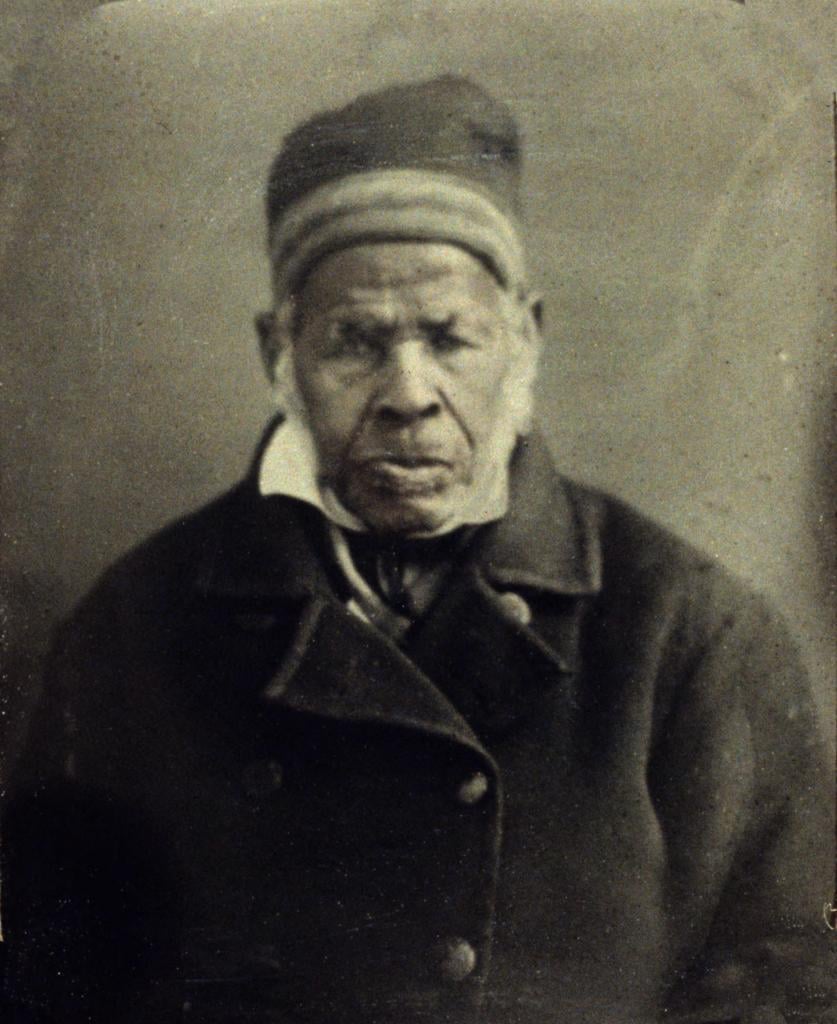
Omar Ibn Said, a native of present-day Senegal, was a Muslim scholar forced into slavery in the Carolinas. Obtained through Creative Commons.
The Trump Administration has sought to bar Muslim immigrants from our shores. Hundreds of years ago, Americans forced countless Muslims to “immigrate” here.
Over the past few days, I’ve been reading Peter Manseau’s 2014 book One Nation, Under Gods: A New American History. In it, he deflates the myth that America is a “Christian nation” and outlines the influence that so-called “marginal religions” have had on the country since its founding. One of the most interesting portions of the book, especially given our current political climate, is a chapter that examines the countless enslaved Africans who, when coerced into coming to the New World, brought with them their Islamic faith.
When describing America’s enslaved Muslims, Manseau cites one source that estimates that as many as 20% of those Africans brought here via the transatlantic slave trade subscribed to Mohamed’s teachings. He also details the stories of some Muslim-American slaves whose knowledge of Islamic scripture set them apart from their fellows. For example, he relates the tale of Omar Ibn Said, an affluent man in what is now Senegal who was captured by a marauding army and sold into slavery. Said would later gain popular attention when he was detained in Fayetteville, NC, during an escape attempt. While incarcerated there, Said, who had been taught Arabic by his brother who was an Islamic scholar, passed the time by using coal to write what were likely Quranic verses in Arabic script on the jailhouse walls. Rumors of his exotic scribblings spread around the countryside, and soon Fayetteville’s modest lockup was inundated with North Carolinians eager to catch a glimpse of Said’s unusual calligraphy. Perturbed by the flood of visitors to his jail, and with Said’s “owner” nowhere in sight, the county sheriff, Robert Mumford, decided to take the Muslim transplant to his home, where he assumed “ownership” of him. Later, Mumford’s family would commission Said to write his life story in what became the first Arabic-language autobiography in America, The Life of Omar ibn Said, Written by Himself.
Also chronicled in Manseau’s book is the story of Ayuba Suleiman Diallo. A native of modern-day Angola, Diallo was the son of an affluent imam who taught him Arabic. One day, he was tasked by his father with selling two of their own slaves to an English slaver on the coast. After negotiating the “sale” of his captives, Ayuba was himself taken prisoner and shipped to America. There, he was forced to work on a tobacco plantation on Kent Island, Maryland, from which he eventually escaped. After being captured near Delaware Bay, his captors noticed that he was an educated man who could write Arabic. Believing that a scholarly, literate man was not fit for slavery, Diallo’s freedom was soon purchased and he was sent back to Africa to reunite with his family.
Perhaps the most serendipitous account of a Muslim slave regaining his freedom, Manseau also relates the story of Abd al-Rahman. Born in Timbuktu, al-Rahman labored on a Mississippi plantation for forty years before a visiting Irish doctor, who had traveled through West Africa in the past, recognized him. Word of the “African prince” soon reached U.S. Secretary of State Henry Clay, who notified the sultan of Morocco of the man’s circumstances. That Muslim ruler declared that he would finance al-Rahman’s return to Africa, and the old man was soon freed from bondage and sent back across the Atlantic. Unfortunately, he died shortly after reaching the West African nation of Liberia and was never reunited with the land of his birth.
The accounts of Said, Diallo, al-Rahman, and other Muslim slaves highlight how history is often filled with irony. Hundreds of years ago, Americans forced thousands, if not millions, of Muslims to leave their homes and enter captivity in the U.S. Now, America is enduring the presidency of Donald Trump, a man who promised to ban Muslims from our nation during his campaign and who recently issued a travel ban on immigrants from six Muslim-majority countries. But while America’s position on Muslim “immigration” has changed, its underlying motivations haven’t. America once condemned Muslims to a life of servitude, based on an ideology of demonizing the other and deeming them ineffably “different” from us. Now, the Trump Administration is sentencing desperate Muslim refugees to a life spent in dangerous war zones, based once again on a bigoted characterization of our fellow human beings.
The Church of Jesus Christ of Latter-day Saints
Previous Post

September 4, 2017
A Standard for Removing Offensive Statues: A Resort to Contract Law
Next Post

September 10, 2017 Is Christianity a Violent Faith?
Browse Our Archives
Select a Category Book of Mormon Brigham Young BYU Donald Trump General Conference Hillary Clinton Islam LDS Mormon nationalism Nuclear weapons Philosophy Politics Racism Romney The Church of Jesus Christ of Latter-day Saints Uncategorized War
Select a Month February 2018 December 2017 October 2017 September 2017 August 2017 July 2017
Follow Us!
TAKE THE
Religious Wisdom Quiz
What did David use to calm Saul when Saul was troubled by a harmful spirit?
Select your answer to see how you score.
Drum Trumpet Harp Flute
Related posts from The Mormon Politico

"I should have told her to divorce him":...
Remind me why Mormons hang out with the...

The Evening Redness in Alabama: Roy Moore and...
TRENDING AT PATHEOS Latter-day Saint

Did Prayer Cure His Cancer? Or Was It...
At 4 AM one morning, Joshua W. Brown’s wife awoke to a...

8 Ways a Near-Death Experience Rewires the Soul
Does Consciousness Survive Physical Death? After 50 Years of Research, Dr. Raymond...

Holy Longing: What Our Restlessness Is Telling Us
“One can find so many pains when the rain is falling.” -John...

What this is NOT about. This blog is definitely not about...

Who said the Israelites were God’s chosen? That’s right, they did. Who...

The Spirit World Is the Real World: God...
A Monk’s Wisdom on Body and Spirit I sit with Brother Martin...
view all Latter-day Saint blogs
Ad-Free & Subscriber Log-In Subscription Support
- About Us
- 2026 Calendar
- Videos
- Podcasts
- Library of World Religions
- Faith In Media Tracker
- Advertise With Us
- Write for Us
- Privacy Policy
- Terms of Service
- Do Not Sell My Data
- Contact Us
- Radiant Digital
- Manage Newsletter Subscriptions
- Unsubscribe From Notifications
- Sitemap
Copyright 2008-2026, Patheos. All rights reserved.
Subscription Support Ad-Free & Subscriber Log-In
Follow Patheos